Artwork
Trinity
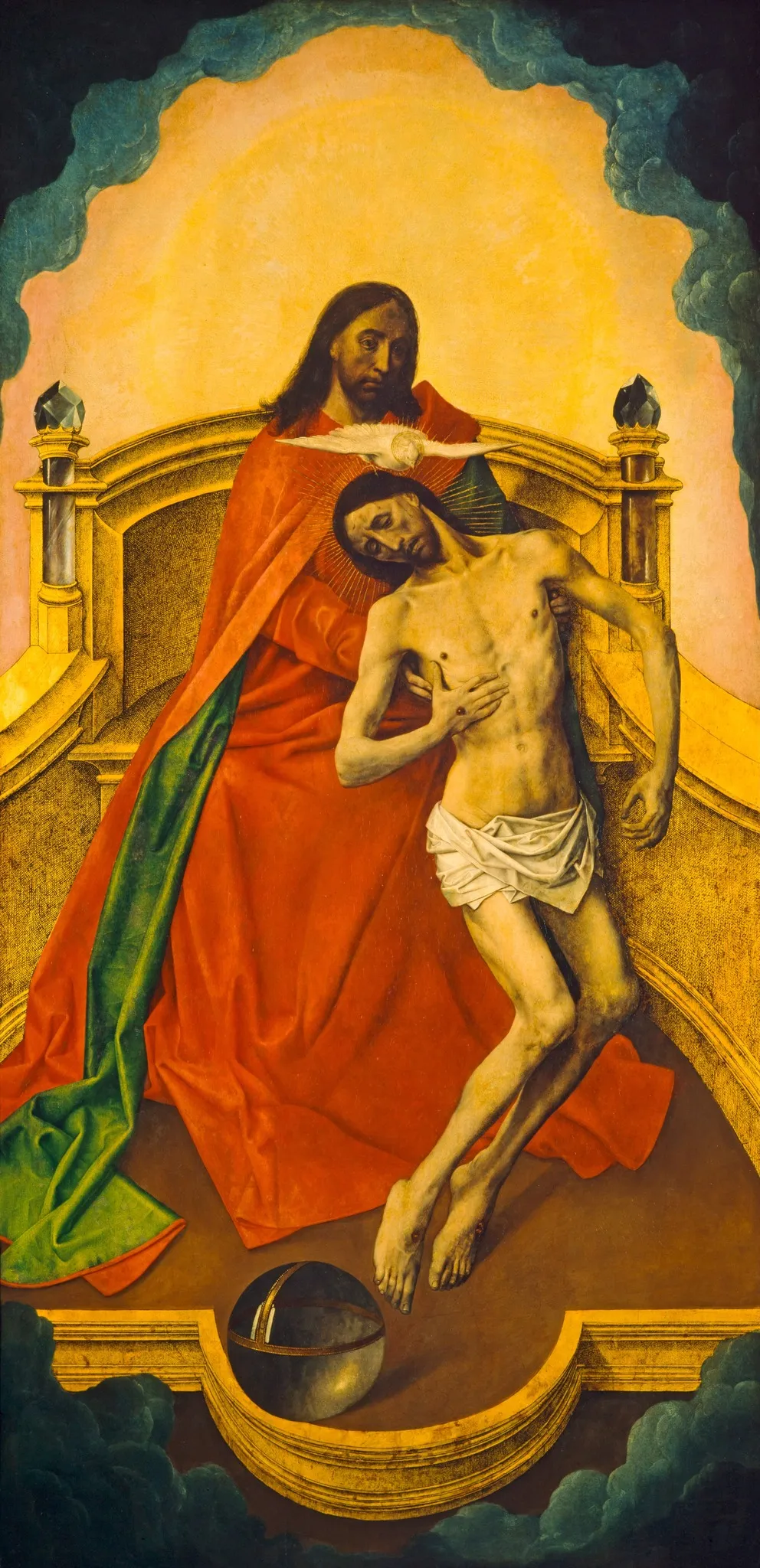
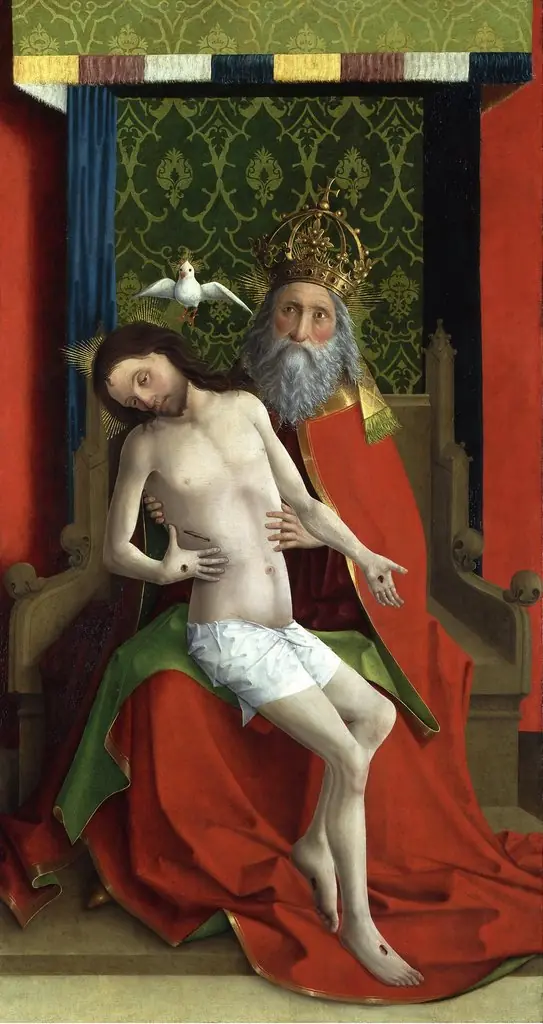
Trinity is an oil painting by the Northern Renaissance artist Hugo Van der Goes. It is held in the collection of the Scottish National Gallery.
About this work
Overview
Trinity is an oil painting created by Hugo van der Goes around 1490, characteristic of the Northern Renaissance and Early Netherlandish painting styles.
Subject & Meaning
The painting depicts a somber Lamentation of Christ scene, where God the Father, dressed in a vibrant red robe with green lining, cradles Jesus' lifeless body. Symbolic elements include a small white bird (Holy Spirit) above Jesus and a bowl in the foreground, conveying solemnity and reverence.
Technique & Style
Van der Goes employs his distinctive monumental style and innovative color use, evident in the contrasting colors of the robe and the detailed, symbolic representation typical of the period.
History & Provenance
Created circa 1490 by Hugo van der Goes, a leading Flemish painter of altarpieces and portraits. Specific provenance details are not provided.
Context
Part of the Northern Renaissance, reflecting the era's emphasis on detailed religious scenes with symbolic elements, as seen in the composition's use of color and objects to convey religious themes.
Artist & collection
Artist
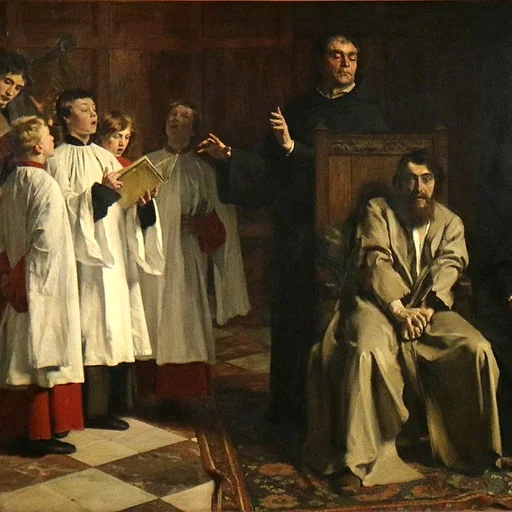
Hugo van der Goes (c. 1430/1440 – 1482) was a Flemish painter who was one of the most significant and original Early Netherlandish painters of the late 15th century. Van der Goes was an important painter of altarpieces…

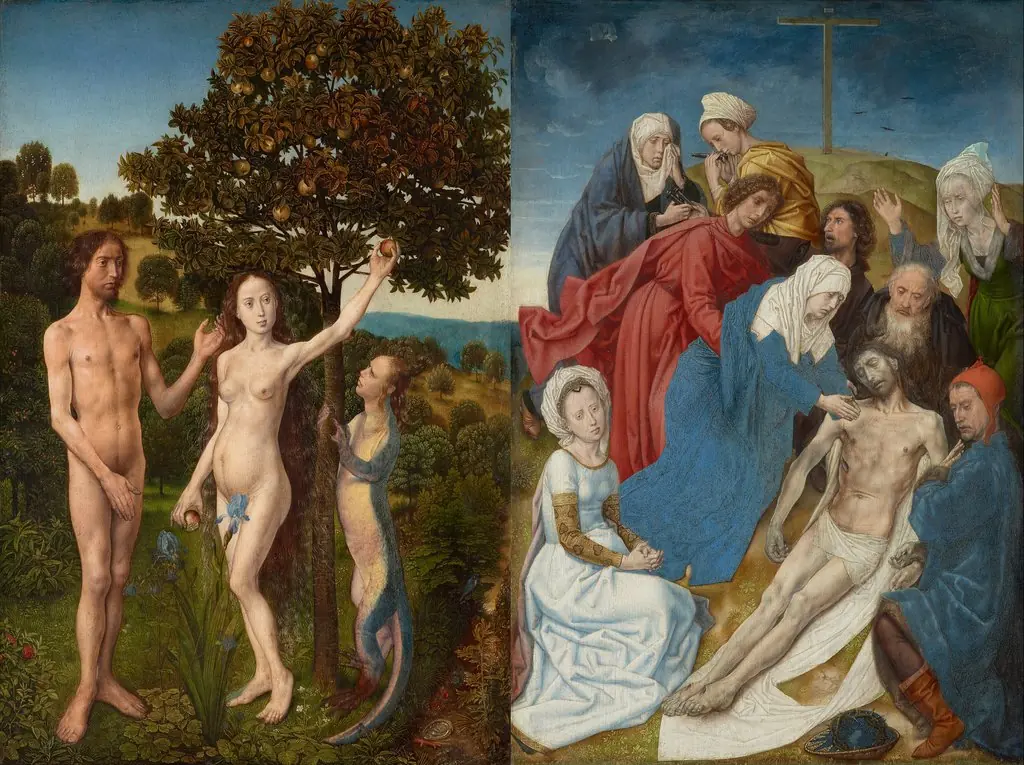 Vienna Diptych
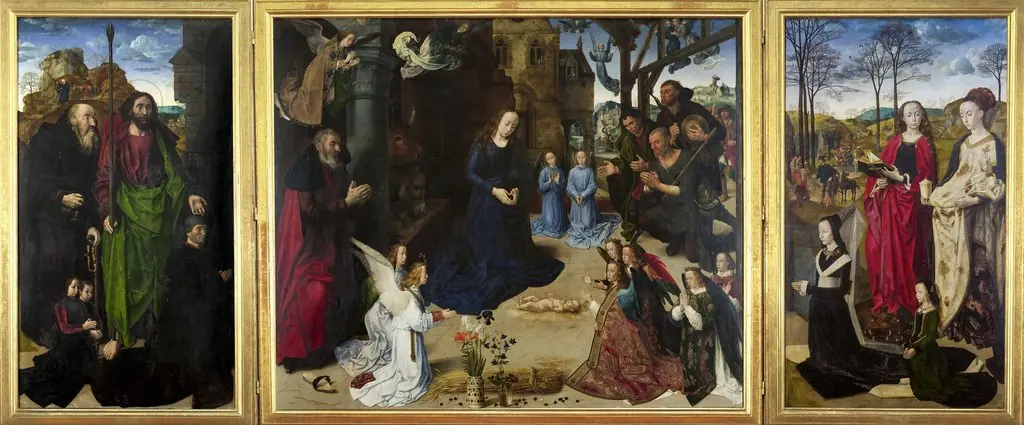 Portinari Triptych
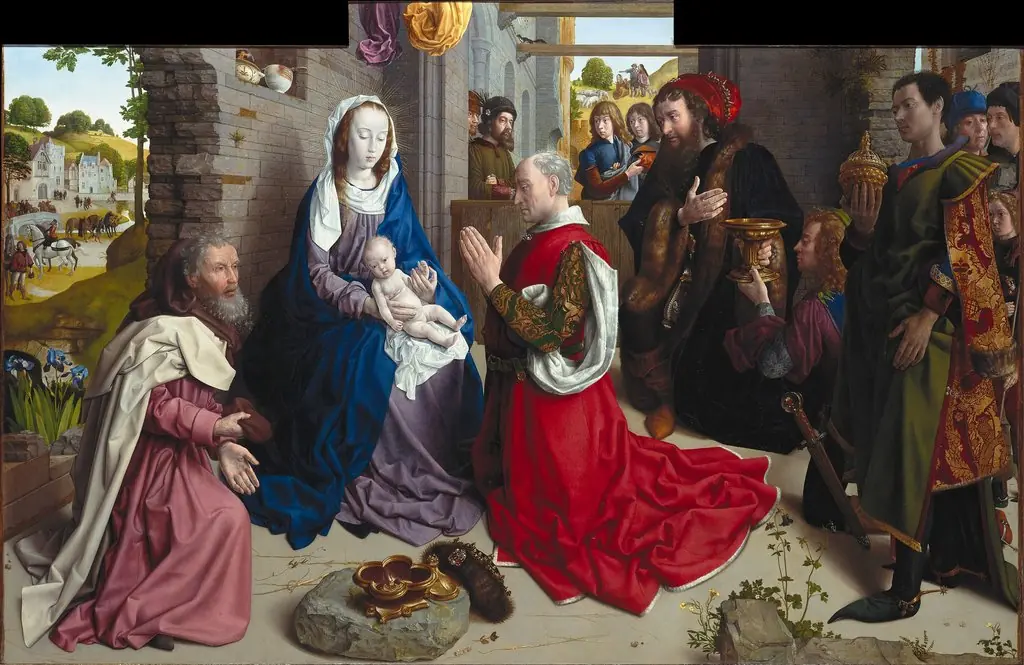 Monforte Altarpiece
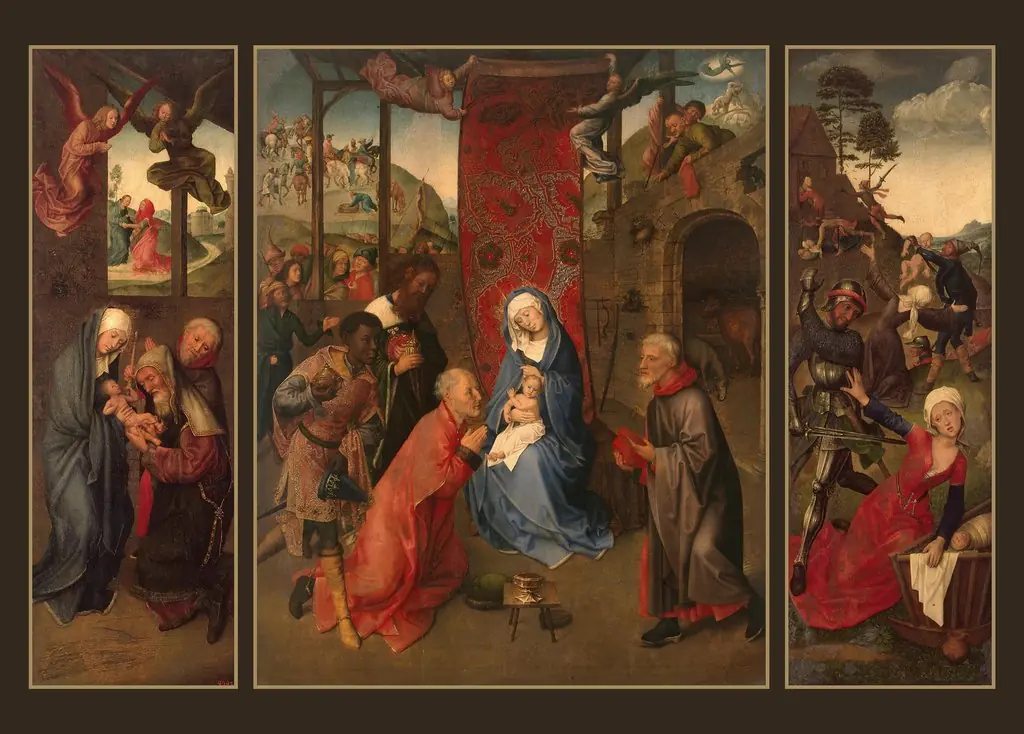 Adoration of the Magi (Triptych)
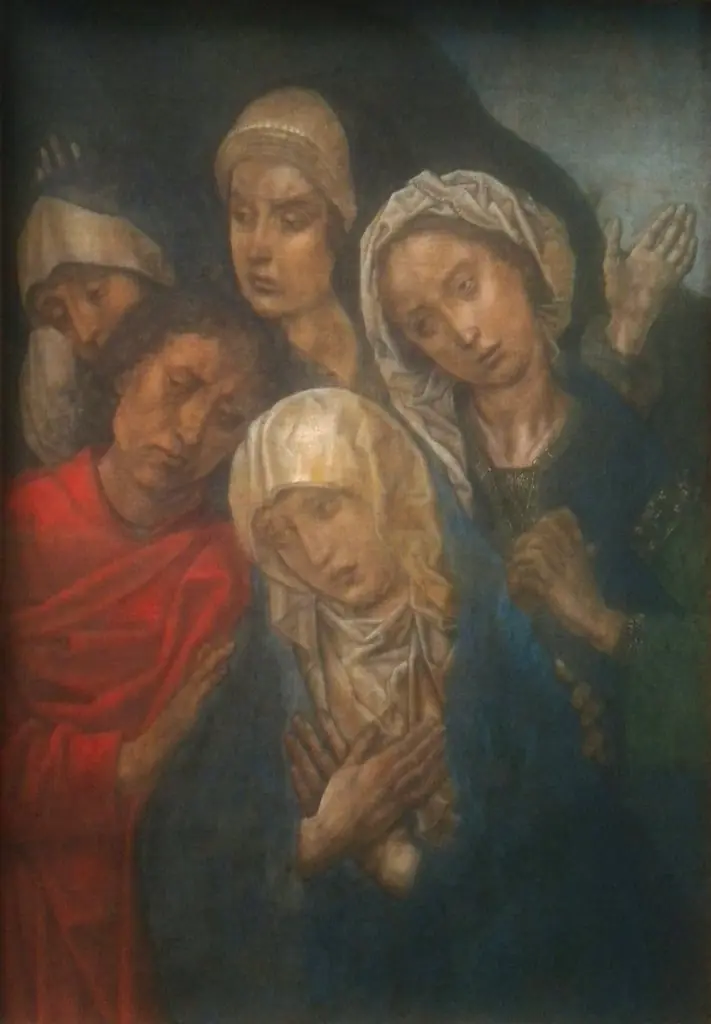 The Mourning of Christ
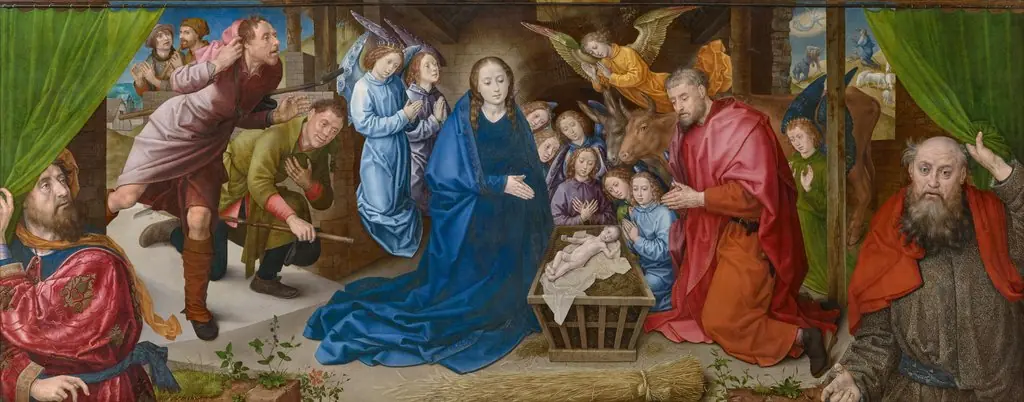 Adoration of the Shepherds
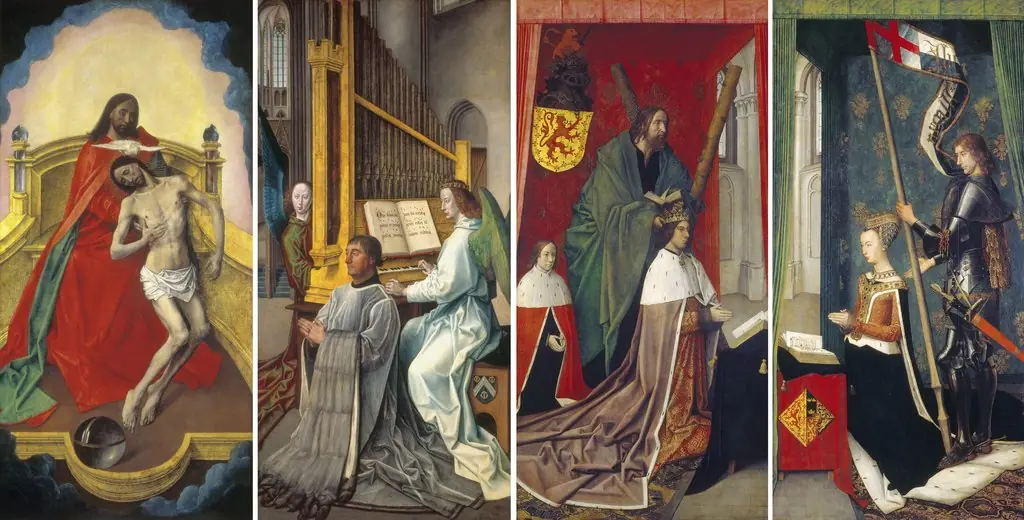 Trinity Altarpiece
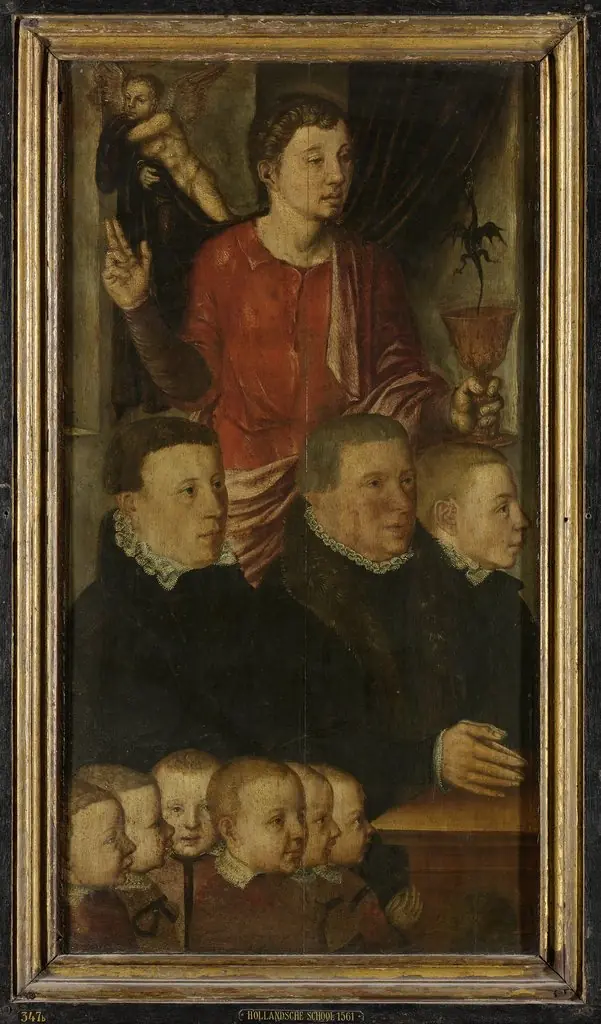 Left wing of a Memorial Triptych, formerly called the Gertz Memorial Triptych, with nine male Donor Portraits with Saint John the Evangelist (inner), and Saint Peter (outer)