Artwork
Eric XIV, King of Sweden
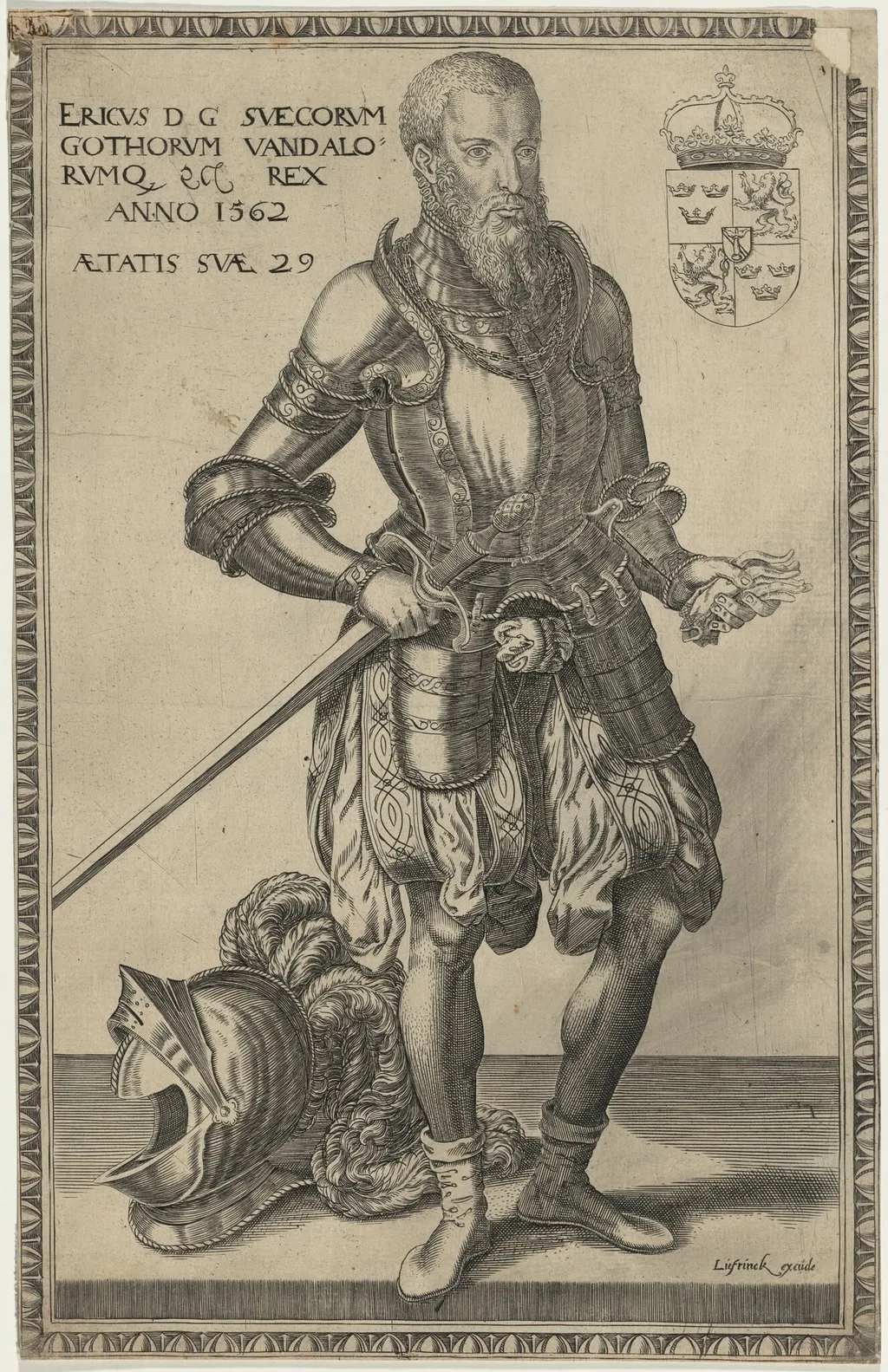
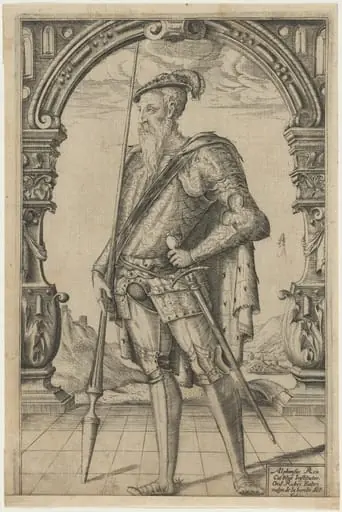
Eric XIV, King of Sweden is an ink print by the Renaissance artist Frans Huys. It dates from 1542 and is held in the collection of the National Gallery of Art.
About this work
Overview
His beard and stern expression convey authority, while the pile of discarded armor at his feet suggests a moment of pause between action and rule.
This black-and-white engraving depicts Eric XIV, King of Sweden, rendered in fine linear detail by Frans Huys in 1542. The portrait presents the monarch in full armor, holding a sword and helmet, with a shield bearing his family’s coat of arms behind him. His beard and stern expression convey authority, while the pile of discarded armor at his feet suggests a moment of pause between action and rule. The artist’s signature appears at the base, affirming authorship.
Subject & Meaning
Eric XIV is portrayed not as a warrior in battle, but as a sovereign in repose, emphasizing his dual role as military leader and ruler. The armor, though worn, is not bloodied; the helmet and sword are held, not raised. The shield and Latin inscriptions reinforce his royal lineage and titles, while his age—29—is noted to underscore his youth in power. The discarded garments imply transition: from soldier to sovereign, from action to governance.
Technique & Style
Frans Huys employed precise engraving techniques to render texture and form with sharp, controlled lines. The folds of fabric, the etched patterns on armor, and the grain of the beard are meticulously detailed, demonstrating mastery of the medium. The composition is frontal and symmetrical, typical of portrait prints of the period, designed for clarity and dignity rather than dynamism. The absence of tone or shading relies entirely on line weight to suggest volume and depth.
History & Provenance
Created in 1542, the engraving was made during Eric XIV’s early reign, before his descent into mental instability. It likely served as a political portrait, circulated among nobility or used in diplomatic contexts to project royal legitimacy. The work’s survival suggests it was valued in contemporary collections, possibly commissioned by court circles or printed for wider dissemination among educated elites in Northern Europe.
Context
In mid-16th century Sweden, portraiture in print was emerging as a tool of state identity. As the Vasa dynasty consolidated power after independence from Denmark, visual representations of monarchs became essential for asserting authority. Huys, a Flemish artist active in the Low Countries, brought continental engraving traditions to Swedish royal imagery, blending Northern European realism with heraldic formality.
Legacy
This engraving remains one of the earliest known printed portraits of Eric XIV, offering a visual reference for later depictions of the king. While not widely reproduced in modern times, it contributes to the historical record of how Swedish royalty was visually constructed during the Reformation era. Its technical precision and formal composition reflect the broader European trend of using print to stabilize and disseminate monarchical image.
Artist & collection


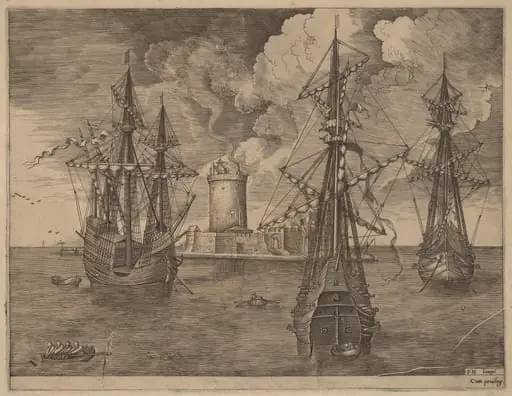 Four-Master (Left) and Two Three-Masters Ancored Near a Fortified Island with a Lighthouse
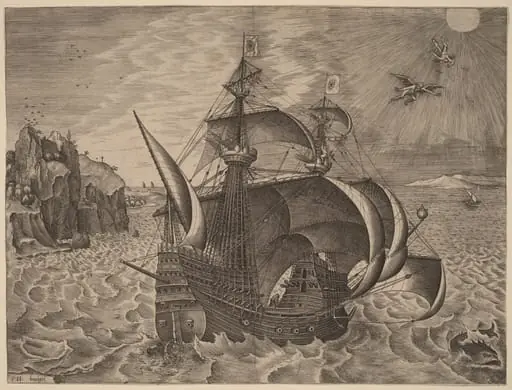 Armed Three-Master with Daedalus and Icarus in the Sky
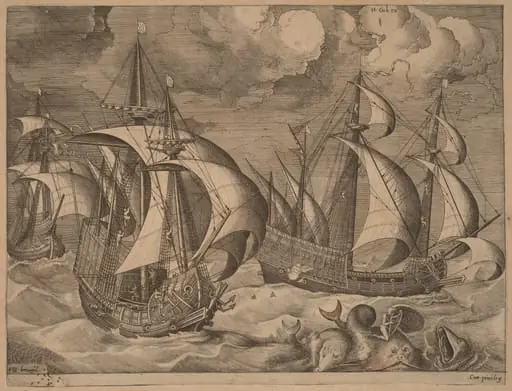 Three Caravels in a Rising Squall with Adrion on a Dolphin
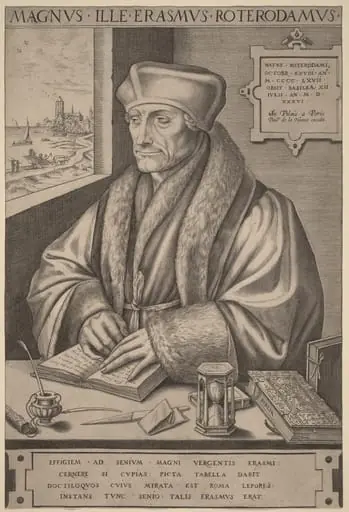 Erasmus of Rotterdam
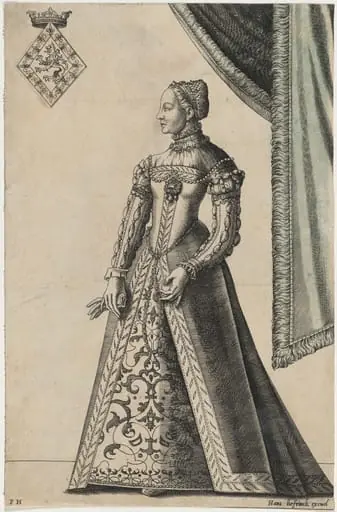 Mary, Queen of Scots
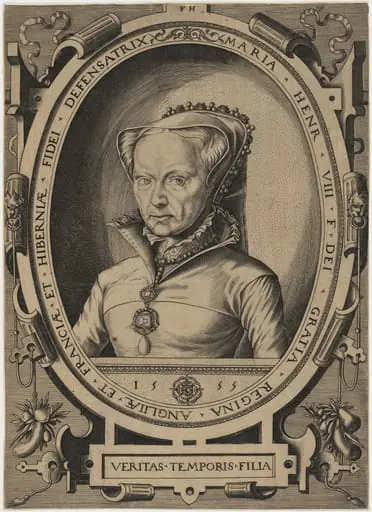 Queen Mary of England
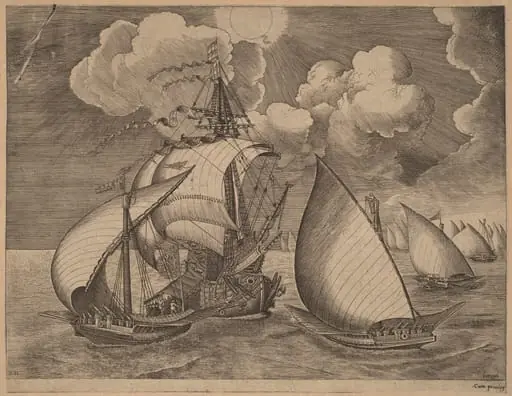 A Fleet of Galleys Escorted by a Caravel
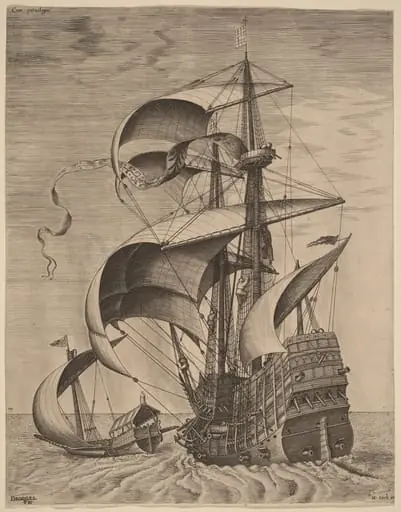 Armed Three-Master on the Open Sea, Accompanied by a Galley
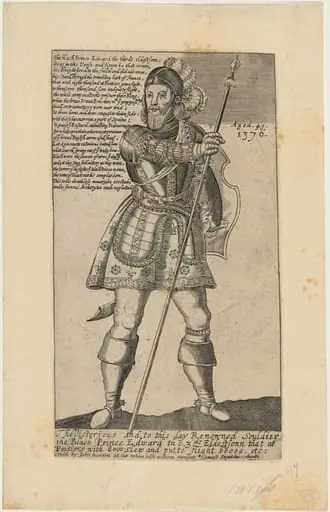 Edward, the Black Prince at the Age of 49
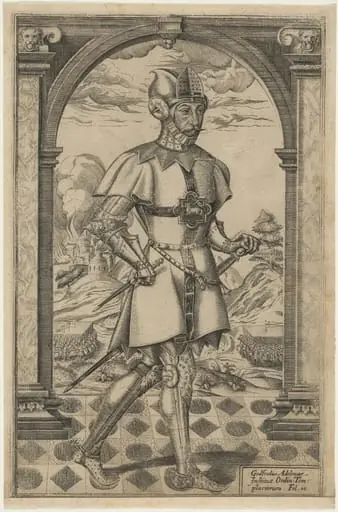 Godfrey Adelmar, Founder of the Knights Templar
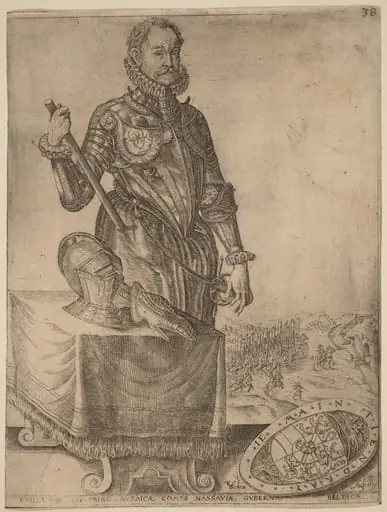 William of Nassau, Prince of Orange
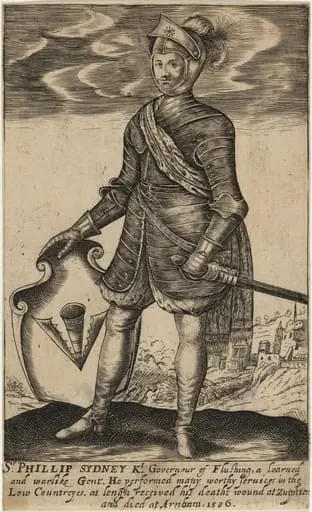 Sir Philip Sidney
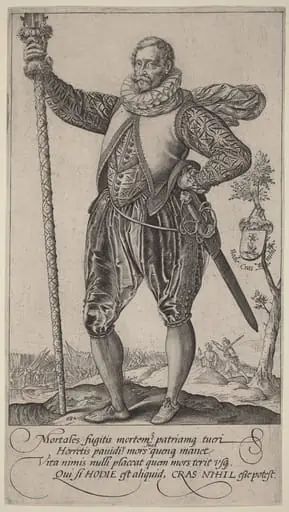 A Pike-Man Turned to the Left
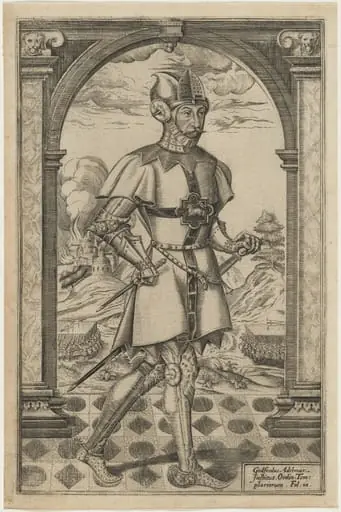 Godfredus Aldemarus Alexandrino (Godfrey Adelmar)
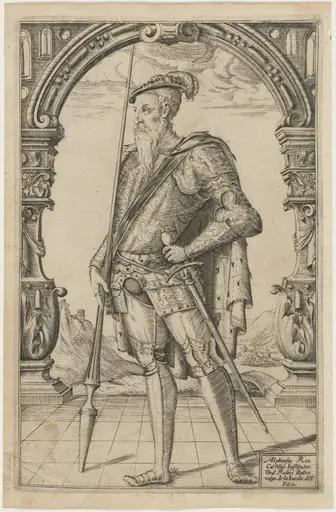 Alphonso, King of Castile
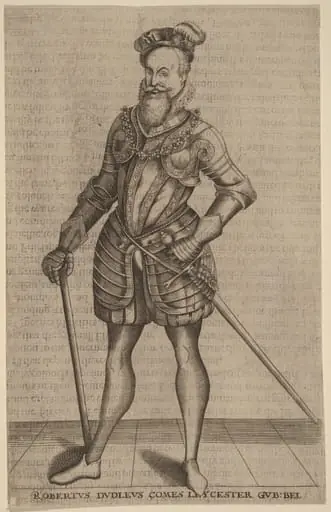 Robert Dudley, Earl of Leicester
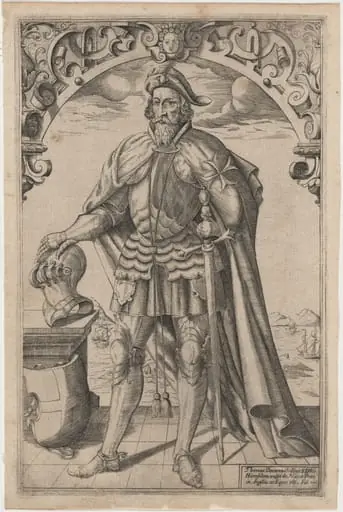 Sir Thomas Docwra
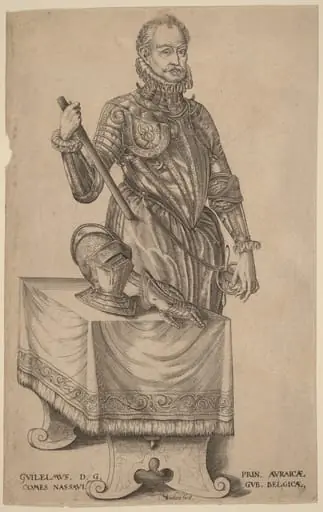 William of Nassau, Prince of Orange
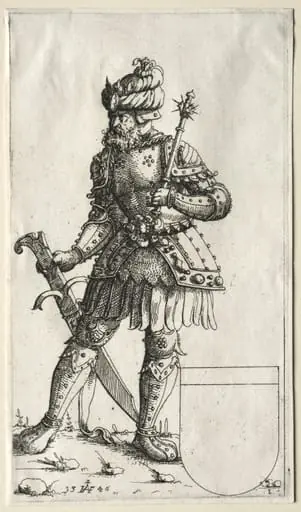 Sigismund II, King of Poland
 Alphonso, King of Castile