Artwork
東京名所之内吾妻橋新築之図|Illustration of the Opening of Azuma Bridge in Tokyo (Tokyo meisho no uchi azuma bashi shinchiku no zu)
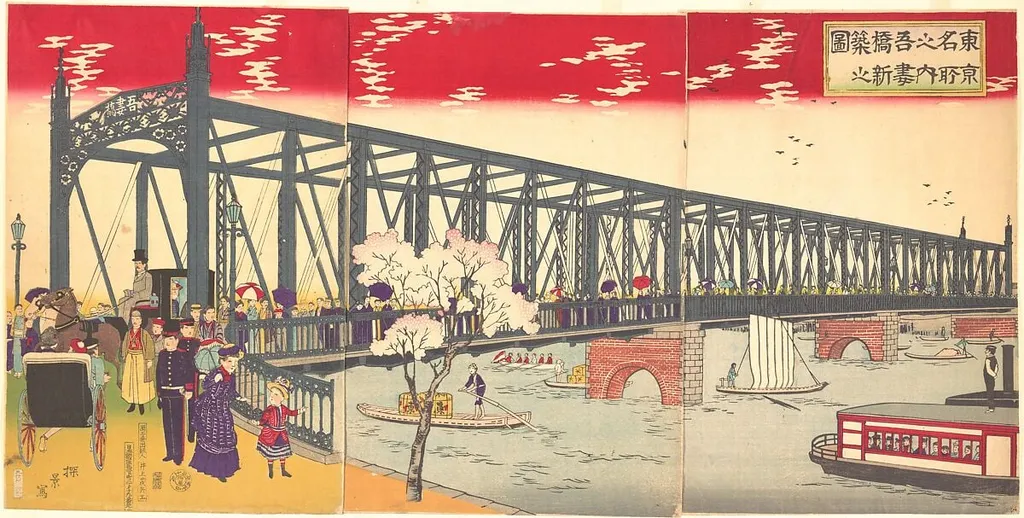
東京名所之内吾妻橋新築之図|Illustration of the Opening of Azuma Bridge in Tokyo (Tokyo meisho no uchi azuma bashi shinchiku no zu) is an ink print by the Impressionist artist Inoue Yasuji. It dates from 1887 and is held in the collection of the Metropolitan Museum of Art.
About this work
Overview
Part of a series documenting notable urban sites, it captures a moment of transition as modern infrastructure integrates into the city’s traditional landscape.
Created in 1887 by Inoue Yasuji, this triptych woodblock print depicts the newly completed Azuma Bridge in Tokyo. Part of a series documenting notable urban sites, it captures a moment of transition as modern infrastructure integrates into the city’s traditional landscape. The composition spans three panels, presenting a bustling riverside scene with careful attention to architectural detail and atmospheric effects.
Subject & Meaning
The scene portrays the bridge’s opening day, filled with pedestrians, a horse-drawn carriage, and boats on the river below. Figures wear a blend of Western-style hats and traditional Japanese garments, signaling societal change. Cherry blossoms frame the structure, linking the new construction to seasonal customs. The red sky suggests either dawn or sunset, evoking both renewal and the fleeting nature of progress.
Technique & Style
Inoue employed fine linework and layered color to render texture and depth. The bridge’s iron framework is sharply defined in black, contrasting with the soft washes of the sky and water. Cross-hatching builds shadow and volume in clothing and foliage, while delicate brushwork suggests ripples and blossoms. The triptych format allows for a panoramic view, enhancing the sense of movement and scale.
History & Provenance
The print was produced during Japan’s Meiji era, a period of rapid modernization. It was likely distributed as a commercial print, documenting public events for a growing urban audience. The work entered The Metropolitan Museum of Art’s collection through established channels of early 20th-century Japanese art acquisition, preserving its role as a visual record of Tokyo’s transformation.
Context
Azuma Bridge was one of Tokyo’s first iron bridges, symbolizing the city’s adoption of Western engineering. Its construction coincided with broader urban reforms, including street widening and public transportation. The print reflects a cultural moment when traditional aesthetics coexisted with industrial innovation, offering citizens a familiar visual language to interpret unfamiliar change.
Legacy
As part of the 'Tokyo Meisho' series, the print contributes to a genre that documented urban landmarks during Japan’s modernization. It remains a valuable resource for understanding how visual culture mediated public perception of technological progress. Its preservation in major institutions underscores its significance as a historical document rather than merely a decorative object.
Artist & collection

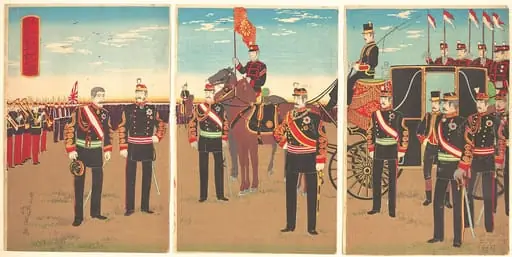 青上練兵場観兵式之図|Illustration of Emperor's Military Review of a Parade Ground at Aoyama (Aoyama renpeijō kanpeishiki no zu)
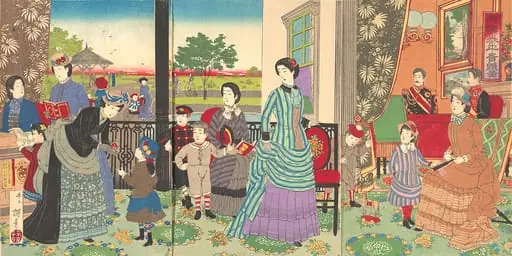 井上安治画 『共楽泰平貴顕図』|Peaceful Pleasures of the Highest Nobility (Kyōraku taihei kiken zu)
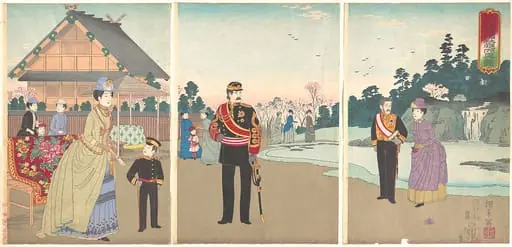 九段坂上靖国神社庭内真図|True View of the Courtyard of Yasukuni Shrine at Kudan Sakaue (Kudan Sakaue Yasukuni jinsha teinai shin zu)
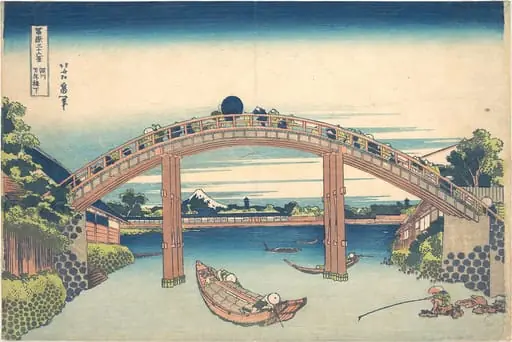 葛飾北斎画 冨嶽三十六景 深川万年橋下|Under the Mannen Bridge at Fukagawa (Fukagawa Mannenbashi shita), from the series Thirty-six Views of Mount Fuji (Fugaku sanjūrokkei)
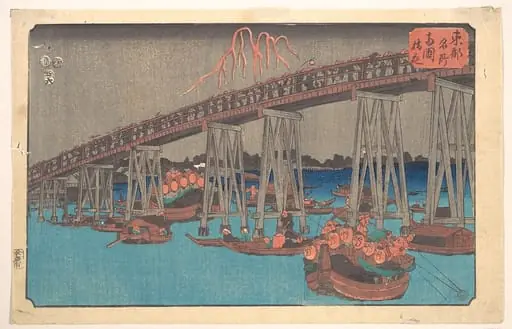 Untitled
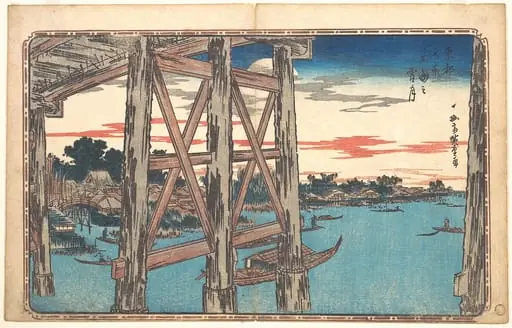 Ryogoku no yoizuki|東都名所 両国之宵月|Twilight Moon at Ryōgoku Bridge
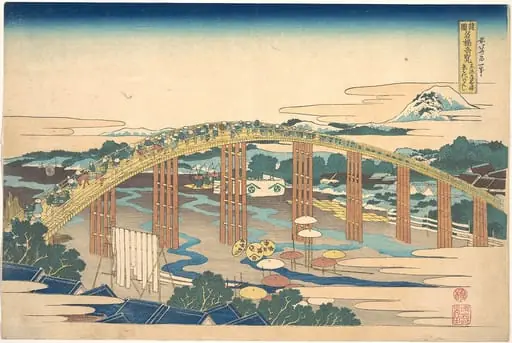 諸國名橋奇覧 東海道岡崎矢はぎのはし|Yahagi Bridge at Okazaki on the Tōkaidō (Tōkaidō Okazaki Yahagi no hashi), from the series Remarkable Views of Bridges in Various Provinces (Shokoku meikyō kiran)
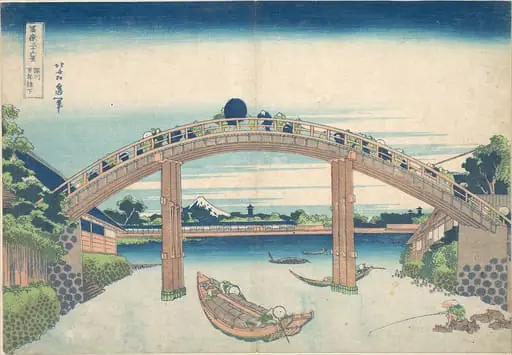 冨嶽三十六景 深川万年橋下|Under the Mannen Bridge at Fukagawa (Fukagawa Mannenbashi shita), from the series Thirty-six Views of Mount Fuji (Fugaku sanjūrokkei)
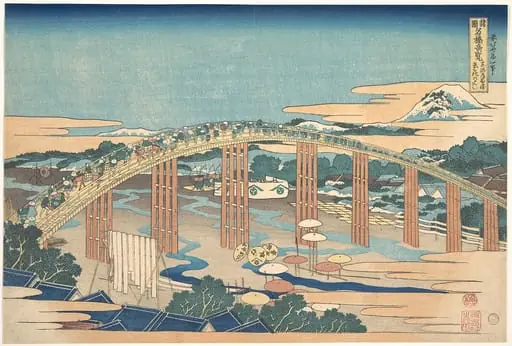 諸國名橋奇覧 東海道岡崎矢はぎのはし|Yahagi Bridge at Okazaki on the Tōkaidō (Tōkaidō Okazaki Yahagi no hashi), from the series Remarkable Views of Bridges in Various Provinces (Shokoku meikyō kiran)
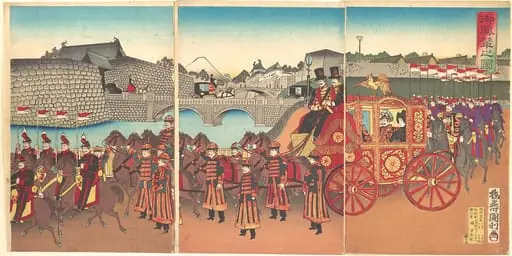 Go Horen no zu|View of the Imperial Carriage