Artwork
九段坂上靖国神社庭内真図|True View of the Courtyard of Yasukuni Shrine at Kudan Sakaue (Kudan Sakaue Yasukuni jinsha teinai shin zu)
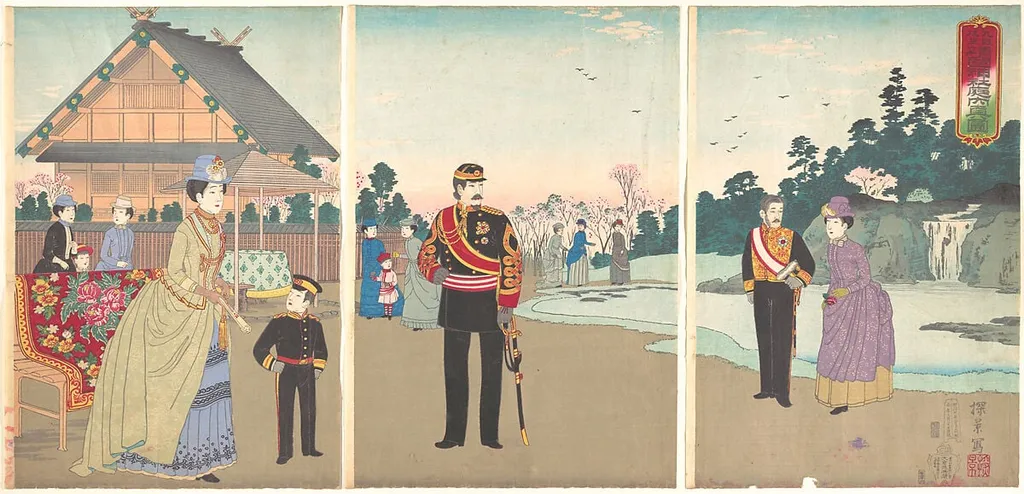
九段坂上靖国神社庭内真図|True View of the Courtyard of Yasukuni Shrine at Kudan Sakaue (Kudan Sakaue Yasukuni jinsha teinai shin zu) is an ink print by the Impressionist artist Inoue Yasuji. It dates from 1888 and is held in the collection of the Metropolitan Museum of Art.
About this work
Overview
Kudan Sakaue Yasukuni jinsha teinai shin zu, created in 1888 by Inoue Yasuji, is a triptych of woodblock prints depicting scenes from the courtyard of Yasukuni Shrine at Kudan Sakaue. Composed of ink and color on paper, the work is part of The Metropolitan Museum of Art's collection.
Subject & Meaning
The triptych captures three distinct vignettes of life at the shrine. The first panel shows a woman in elaborate attire with a child near a traditional building, the second a solitary figure in a dark military uniform, and the third a formally dressed couple strolling by a pond. These scenes convey a sense of serene, orderly daily life within the shrine's grounds.
Technique & Style
Inoue Yasuji employs a blend of vibrant colors and meticulous detail in the prints. Notable elements include the intricate patterns on the woman's sleeves and the polished boots of the military figure, set against the backdrop of neatly rendered buildings and gardens, achieving a quasi-photographic realism.
History & Provenance
Produced in 1888, the work reflects the late 19th-century Japanese woodblock print tradition. It is currently housed at The Metropolitan Museum of Art, though the full provenance history prior to its acquisition is not detailed here.
Context
While stylistically rooted in Japanese woodblock printing, the emphasis on realism and color palette might draw parallels with contemporaneous Impressionist movements in the West, though this work remains distinctly Japanese in theme and technique.
Legacy
As a specific legacy of 'Kudan Sakaue Yasukuni jinsha teinai shin zu' is not widely documented in provided sources, its impact is primarily noted through its preservation in a major museum collection, contributing to the global appreciation of late 19th-century Japanese printmaking.
Artist & collection

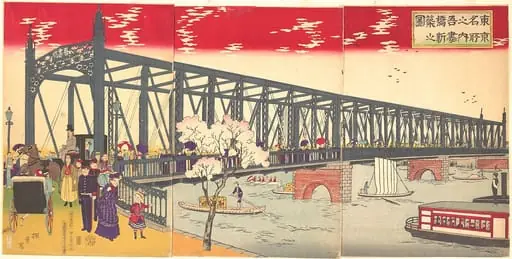 東京名所之内吾妻橋新築之図|Illustration of the Opening of Azuma Bridge in Tokyo (Tokyo meisho no uchi azuma bashi shinchiku no zu)
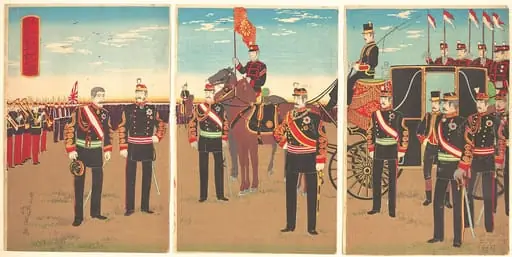 青上練兵場観兵式之図|Illustration of Emperor's Military Review of a Parade Ground at Aoyama (Aoyama renpeijō kanpeishiki no zu)
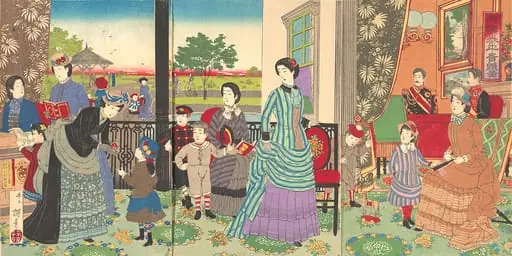 井上安治画 『共楽泰平貴顕図』|Peaceful Pleasures of the Highest Nobility (Kyōraku taihei kiken zu)
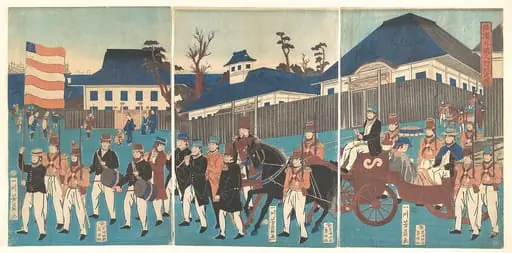 Yokohama Gankirō gaikokujin gyōretsu no zu|Picture of a Procession of Foreigners at Yokohama
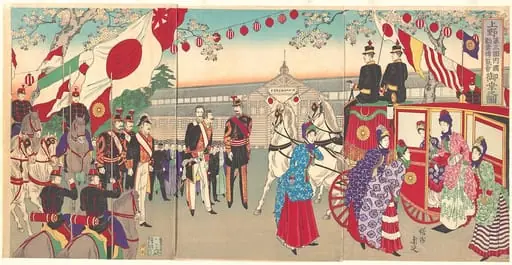 『上野第三回内国勧業 博覧会御幸之図』|Visit of the Empress to the Third National Industrial Promotional Exhibition at Ueno Park (Ueno dai sankai naikoku kangyō hakuran kai gyokō no zu)
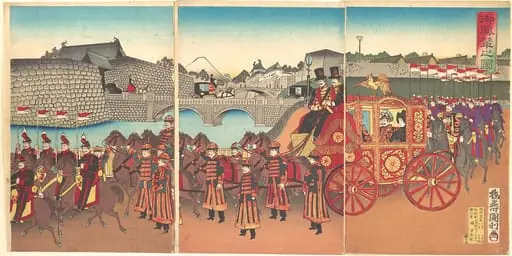 Go Horen no zu|View of the Imperial Carriage
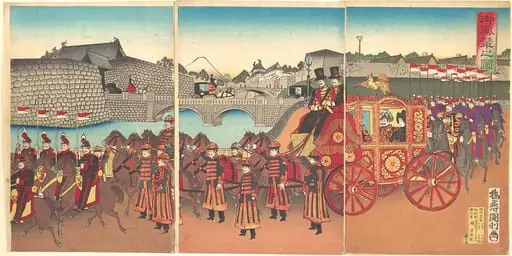 御鳳輦之図|Illustration of the Imperial Carriage (Gohōren no zu)
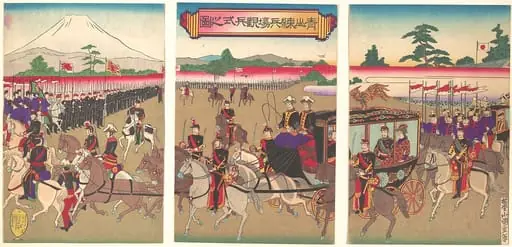 Untitled
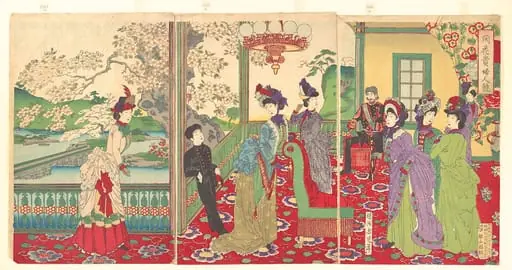 楊洲周延画 『開花貴婦人競』|A Contest of Elegant Ladies among the Cherry Blossoms (Kaika kifujin kisoi)
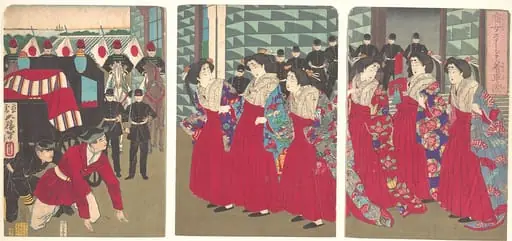 官女ステーション着車図|Illustration of Ladies-in-waiting boarding at a station (Kanjo sutēshon chakusha zu)
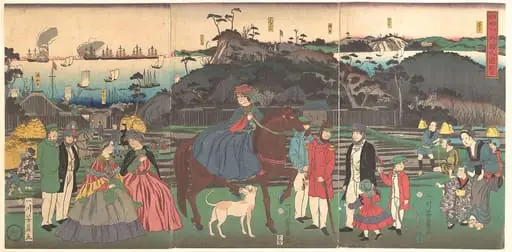 Kanagawa Gongenyama Gaikokujin yūran|Foreigners Visiting the Famous Site of Mt. Gongen in Kanagawa
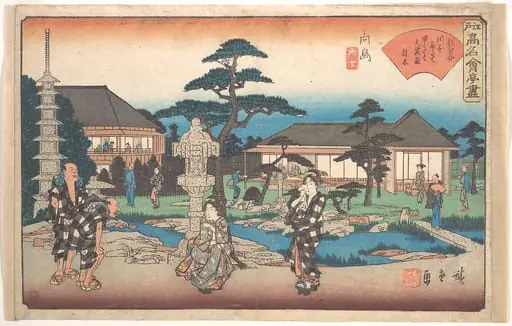 Mukōjima (Daikokuya)|江戸高名会亭尽 向島 大七|The Daikokuya at Mukojima