Artwork
Untitled
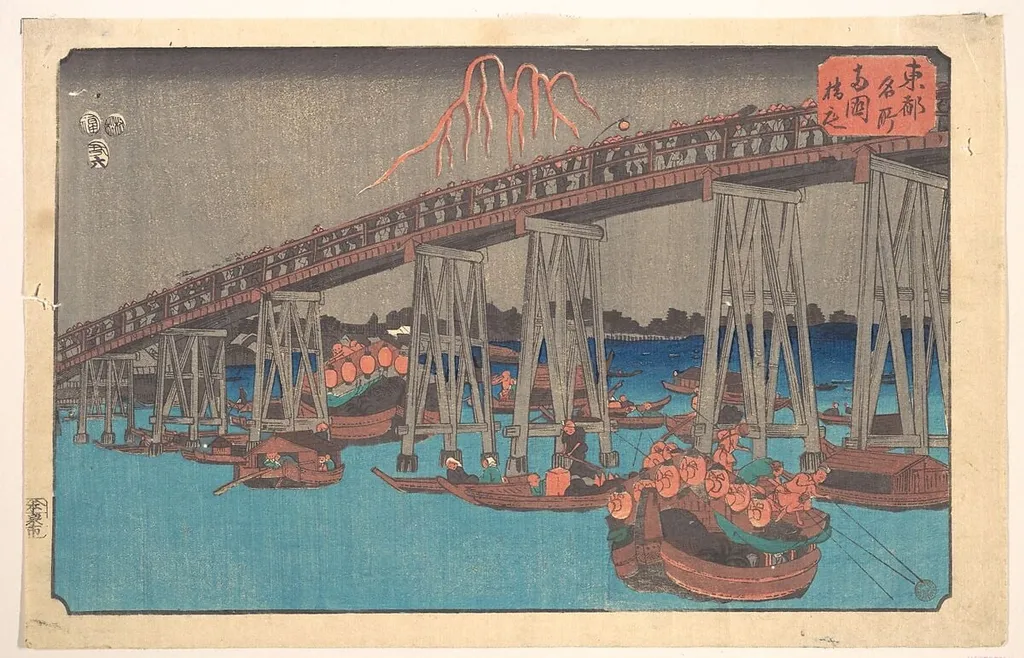
Untitled is an ink print by the Impressionist artist Utagawa Hiroshige. It dates from 6 and is held in the collection of the Metropolitan Museum of Art.
About this work
Overview
Executed in ink and color on paper, it reflects Hiroshige’s shift toward natural landscapes rather than the urban entertainments common in the genre.
This woodblock print, created by Utagawa Hiroshige in the mid-19th century, is part of the broader tradition of Japanese ukiyo-e. Executed in ink and color on paper, it reflects Hiroshige’s shift toward natural landscapes rather than the urban entertainments common in the genre. The work is held in The Metropolitan Museum of Art’s print collection, where it contributes to the understanding of Edo-period visual culture beyond its more famous series.
Subject & Meaning
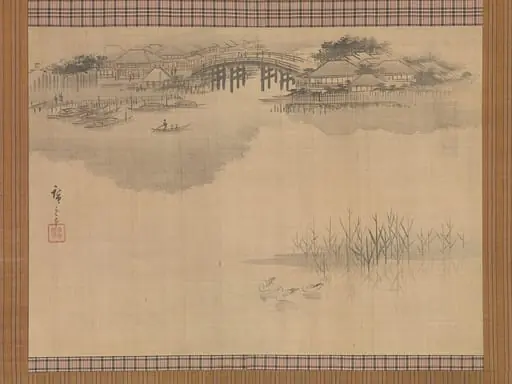
The scene depicts a long, arched bridge with metal reinforcements spanning a river, beneath which several boats glide. Figures aboard the vessels are engaged in quiet activities—rowing or resting—suggesting a moment of daily life rather than spectacle. The contrast between the dark sky and vivid blue water, punctuated by red lanterns, evokes twilight or early evening, implying transition and stillness. The composition invites contemplation of human presence within the natural and built environment.
Technique & Style
Hiroshige employed bold, clean lines to define the bridge’s structural elements and the rhythmic motion of the boats. Color application is restrained yet deliberate: the bright blue of the water and the red of the lanterns stand out against muted tones, creating visual harmony without excess. The woodblock technique allows for precise registration of forms, while subtle gradations in ink suggest atmospheric depth, characteristic of Hiroshige’s mature style.
History & Provenance
The print was produced during Hiroshige’s active years in Edo, likely between the 1830s and 1850s, though its exact date remains unconfirmed. It was not part of a published series, making it a standalone work. Acquired by The Metropolitan Museum of Art in the early 20th century, it entered the collection as part of a broader effort to preserve Japanese prints, reflecting growing Western interest in Edo-period art.
Context
While many ukiyo-e artists focused on courtesans, actors, and city life, Hiroshige carved a distinct niche through landscape imagery. His works responded to rising domestic travel and a cultural fascination with place. This print aligns with his interest in capturing specific locations and atmospheric conditions, contributing to a broader shift in Japanese art toward nature as a subject worthy of serious depiction.
Legacy
Though lesser known than his series like 'One Hundred Famous Views of Edo,' this untitled print exemplifies Hiroshige’s quiet mastery of mood and composition. Its emphasis on everyday scenes and subtle color contrasts influenced later Western artists, including the Impressionists, who admired the flattened perspectives and poetic simplicity of Japanese prints. It remains a quiet but significant example of his contribution to global printmaking traditions.
Artist & collection
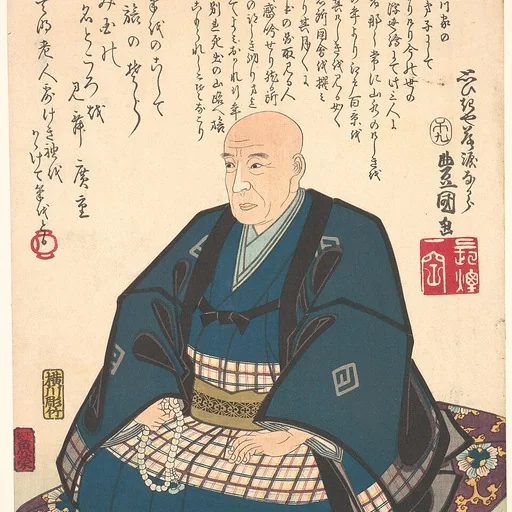
Artist
Utagawa Hiroshige (歌川 広重) or Andō Hiroshige (安藤 広重), born Andō Tokutarō (安藤 徳太郎; 1797 – 12 October 1858), was a Japanese ukiyo-e artist, considered the last great master of that tradition.

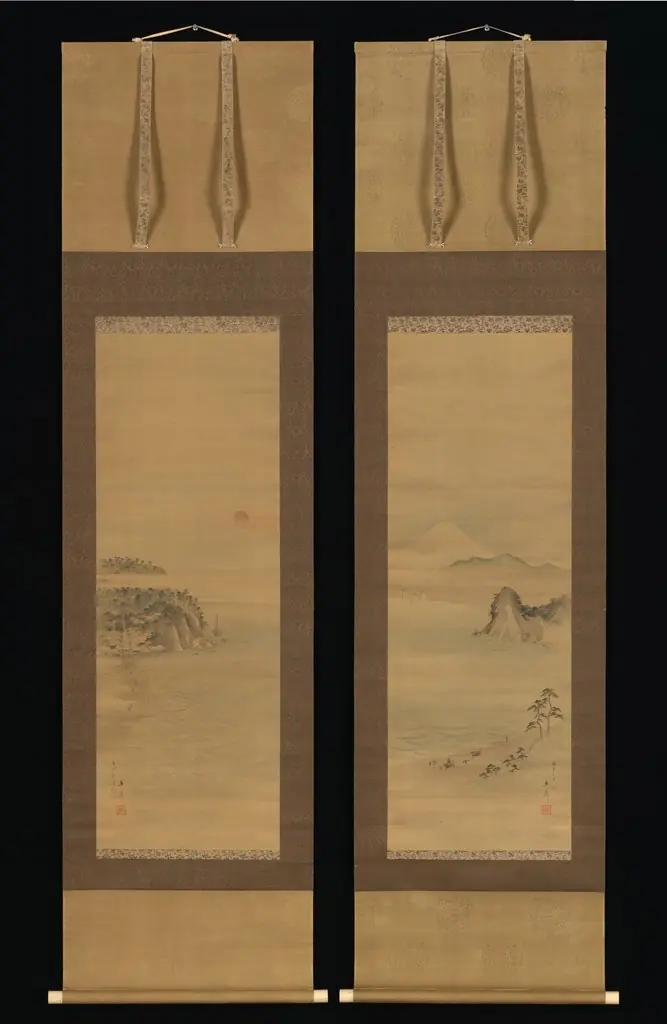
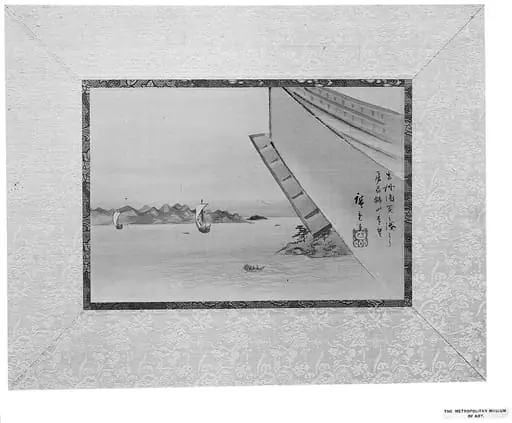
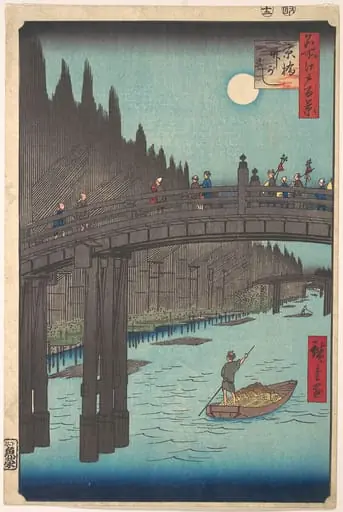 名所江戸百景 京橋竹がし|Full Moon Over Canal, with Bridge and Huge Stacks of Bamboo along the Bank
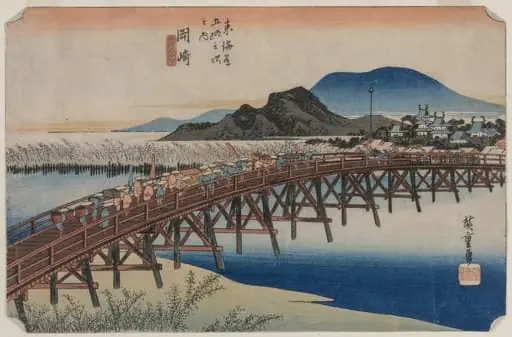 Yahagi Bridge at Okazaki (Station 39), From the series Fifty-Three Stations of the Tokaido
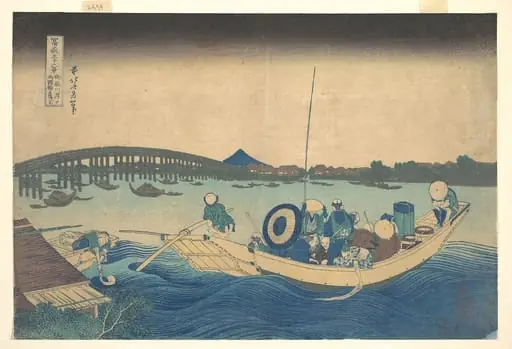 冨嶽三十六景 御厩川岸より両国橋夕陽見|Viewing the Sunset over Ryōgoku Bridge from the Onmayagashi Embankment (Onmayagashi yori Ryōgokubashi sekiyō o miru), from the series Thirty-six Views of Mount Fuji (Fugaku sanjūrokkei)
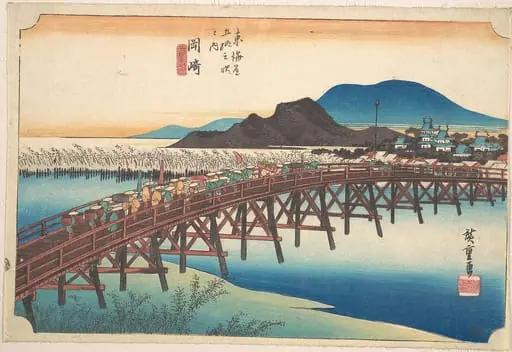 東海道五十三次之内 岡崎 矢矧の橋|Okazaki, Tenshin no Hashi
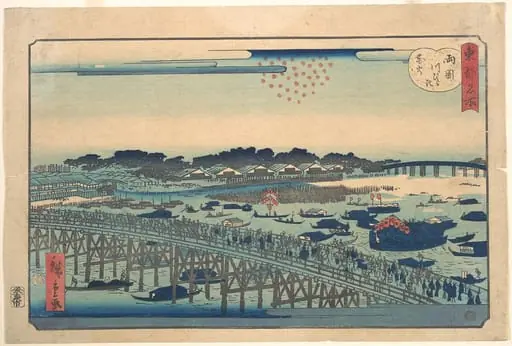 Untitled
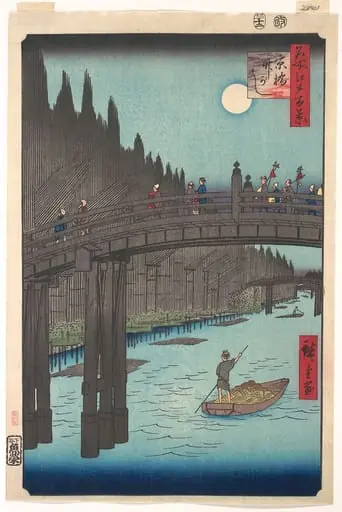 名所江戸百景 京橋竹がし|Bamboo Market at Capital Bridge
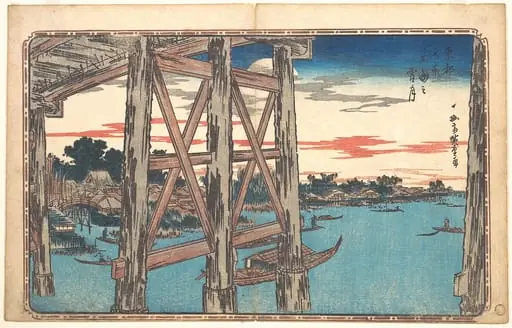 Ryogoku no yoizuki|東都名所 両国之宵月|Twilight Moon at Ryōgoku Bridge
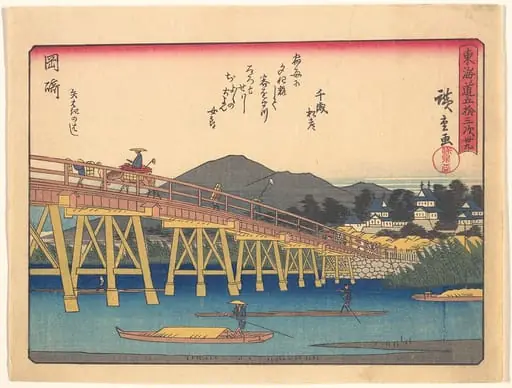 東海道五十三次 岡崎|Okazaki, from the series The Fifty-three Stations of the Tōkaidō Road
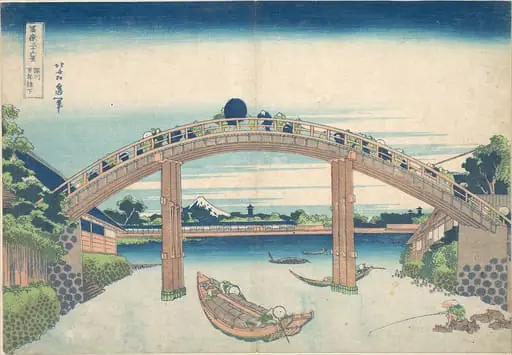 冨嶽三十六景 深川万年橋下|Under the Mannen Bridge at Fukagawa (Fukagawa Mannenbashi shita), from the series Thirty-six Views of Mount Fuji (Fugaku sanjūrokkei)
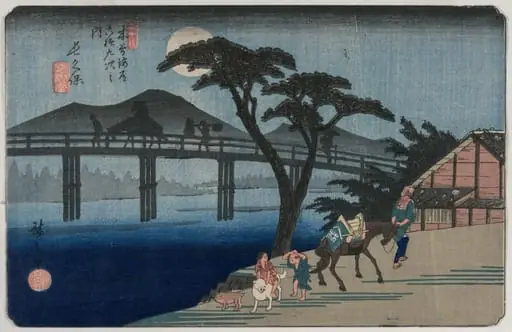 Nagakubo (Station 28) from the series Sixty-Nine Stations of the Kisokaido