Artwork
『上野公園開花図』|Blossoming Cherry Trees in Ueno Park (Ueno kōen kaika zu)
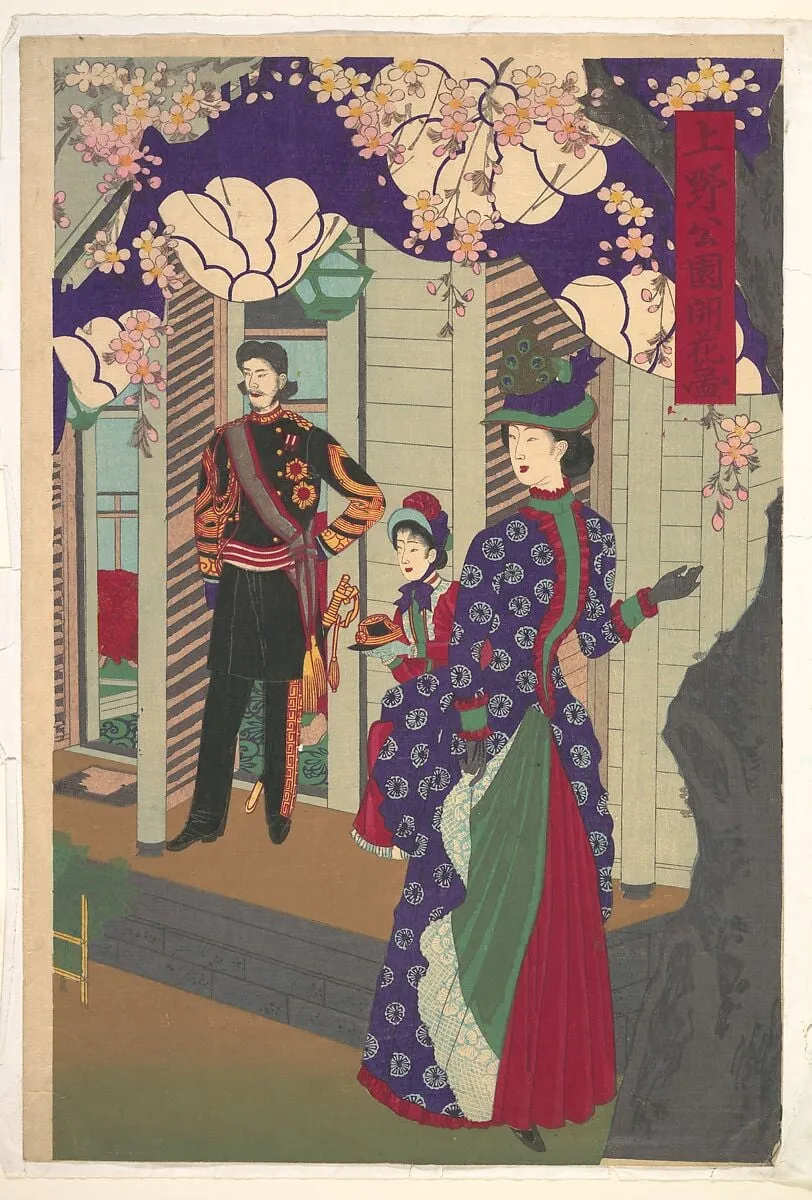
『上野公園開花図』|Blossoming Cherry Trees in Ueno Park (Ueno kōen kaika zu) is an ink print by the Impressionist artist Yōshū (Hashimoto) Chikanobu. It dates from 1888 and is held in the collection of the Metropolitan Museum of Art.
About this work
Overview
Blossoming Cherry Trees in Ueno Park is a triptych woodblock print created in 1888 by Yōshū Chikanobu, now part of The Metropolitan Museum of Art's collection.
Subject & Meaning
The scene conveys a sense of leisure amidst the iconic seasonal beauty of cherry blossoms, a common motif in Japanese art symbolizing spring.
The print depicts three figures under blooming cherry blossoms in a park setting. A man in a dark military uniform with red and gold trim stands centrally, flanked by a woman in a purple robe with green and red sashes holding a fan, and a child in a red dress. The scene conveys a sense of leisure amidst the iconic seasonal beauty of cherry blossoms, a common motif in Japanese art symbolizing spring.
Technique & Style
Executed in ink and color on paper, the triptych format and woodblock print technique are characteristic of traditional Japanese ukiyo-e art. Vibrant colors, particularly the dominant pink of the blossoms, and detailed rendering of textures (e.g., uniforms, fabrics, lattice windows) showcase Chikanobu's mastery of the medium.
History & Provenance
Created in 1888, the work is attributed to Yōshū Chikanobu, a late Edo to early Meiji period artist known for his ukiyo-e prints. It is currently housed at The Metropolitan Museum of Art.
Context
Set in Ueno Park, a well-known location for cherry blossom viewing (hanami), the print captures a popular leisure activity of the time. The military uniform suggests a contemporary (late 19th century) setting, blending traditional themes with modern elements of the Meiji era.
Artist & collection


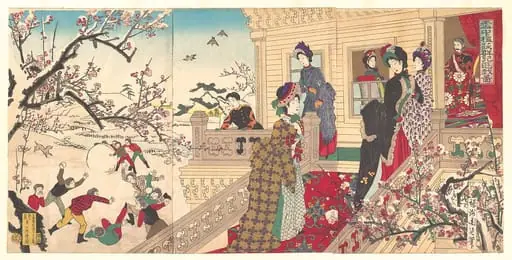 『雪中梅荘群児遊戯 図』|Children Playing in the Snow under Plum Trees in Bloom (Secchū baisō gunji yūgi zu)
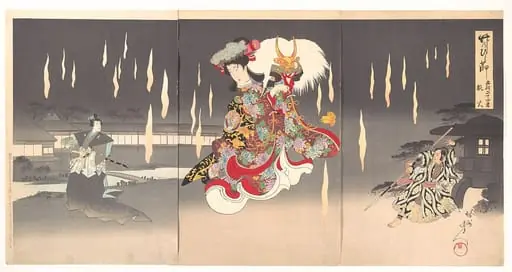 Untitled
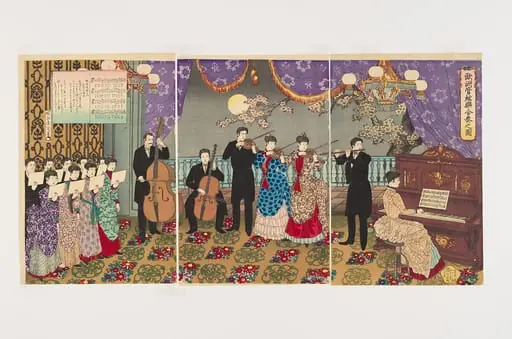 『欧州管絃楽合奏之図』|Concert of European Music (Ōshū kangengaku gassō no zu)
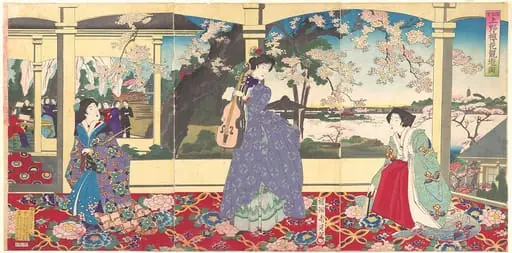 『踏舞会 上野桜花観 遊ノ図』|A Dance Party: Enjoying Cherry Blossom Viewing at Ueno (Tōbukai Ueno ōka yūran no zu)
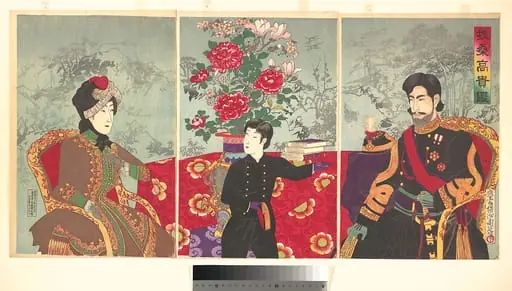 『扶桑高貴鑑』|A Mirror of Japan’s Nobility: The Emperor Meiji, His Wife, and Prince Haru (Fūsō kōki kagami)
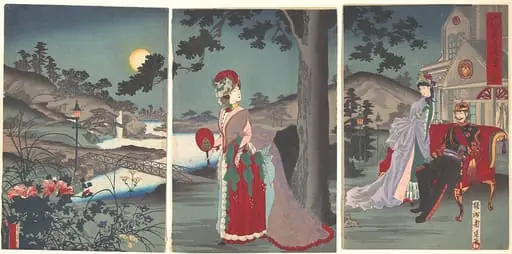 『高貴納涼ノ図』|Nobility in the Evening Cool (Koki nōryō no zu)
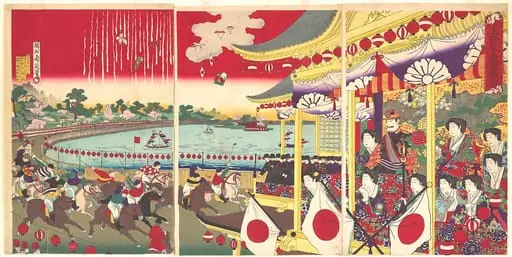 『上野不忍競馬図』|View of the Horse Track at Shinobazu in Ueno Park (Ueno shinobazu keiba zu)
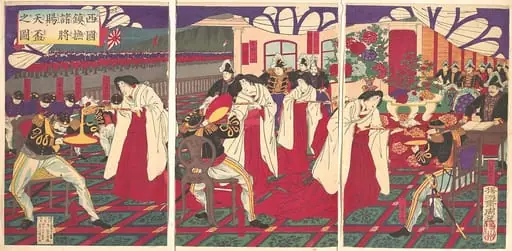 西国鎮静撫諸将天杯賜之図|Illustration of the Commanders who Pacified Western Japan, Receiving the Emperor's Gift Cups (Saigoku chinbu shoshō tenpai o tamau no zu)
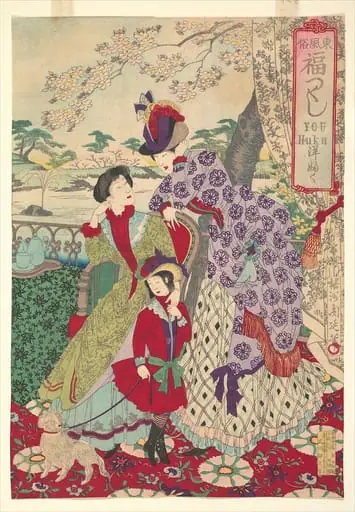 『東風俗福づくし 洋 ふく』|Western Clothing from the series An Array of Auspicious Customs of Eastern Japan (Azuma fūzoku, fukuzukushi-Yōfuku)
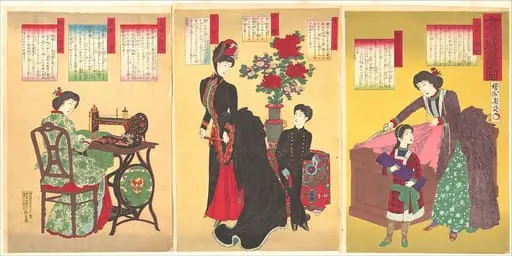 楊洲周延画 『女官洋服裁縫之図』|Court Ladies Sewing Western Clothing (Jokan yōfuku saihō no zu)
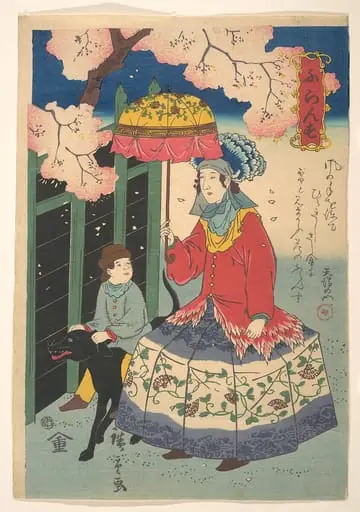 Furansu|ふらんす|French Woman, Her Child and Pet Dog
![Motomura no yūdachi|Evening Glow at Motomura [Two Englishmen looking at the sunset], by Utagawa Yoshitora](https://artifactworldgallery.com/img/utagawa-yoshitora--motomura-no-yudachi-evening-glow-at-motomura-two-englishmen--2e8bfdf3deec941b-w320.webp) Motomura no yūdachi|Evening Glow at Motomura [Two Englishmen looking at the sunset]
Motomura no yūdachi|Evening Glow at Motomura [Two Englishmen looking at the sunset]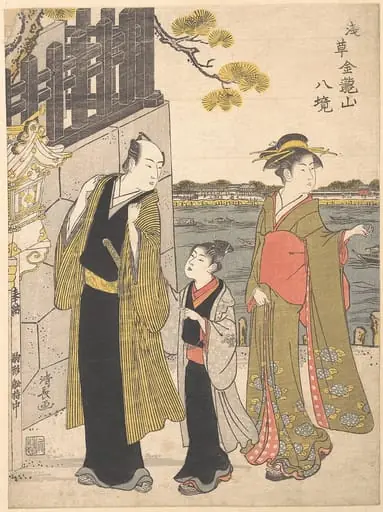 Untitled
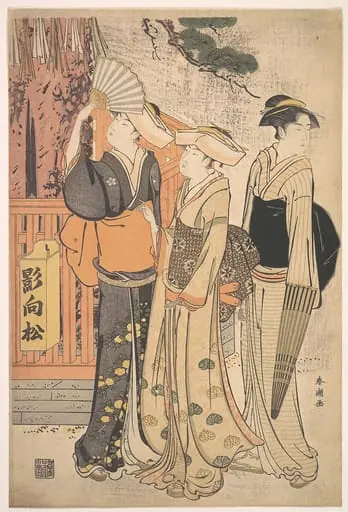 Untitled
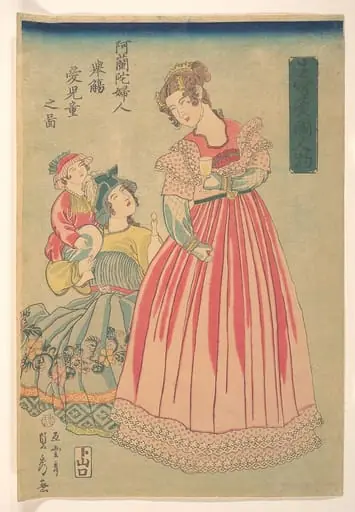 歌川五雲亭貞秀画 『生写異国人物 阿蘭陀婦人舉觴 愛児童之図』|Dutch Woman and Child (Seisha ikoku jinbutsu Oranda fujin aijidō no zu)
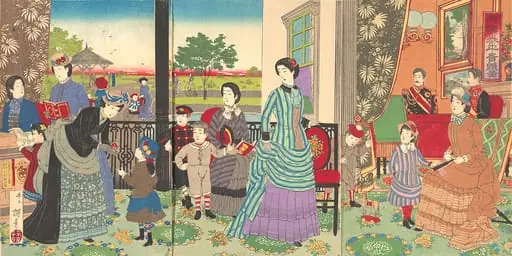 井上安治画 『共楽泰平貴顕図』|Peaceful Pleasures of the Highest Nobility (Kyōraku taihei kiken zu)
 Untitled