Artwork
官女ステーション着車図|Illustration of Ladies-in-waiting boarding at a station (Kanjo sutēshon chakusha zu)
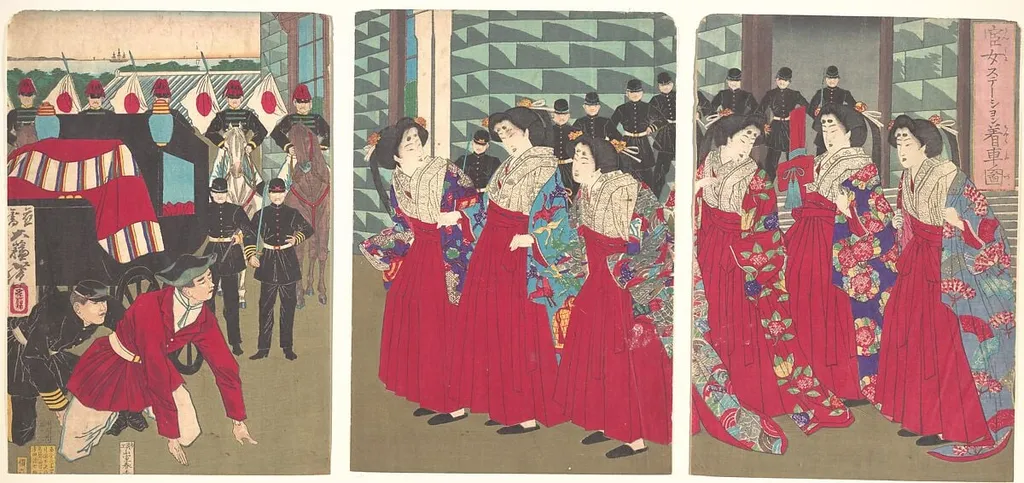
官女ステーション着車図|Illustration of Ladies-in-waiting boarding at a station (Kanjo sutēshon chakusha zu) is an ink print by the Impressionist artist Yoshitoshi. It dates from 1879 and is held in the collection of the Metropolitan Museum of Art.
About this work
The women wear traditional Japanese hairstyles and clothing, while men in Western-style uniforms stand nearby.
This print shows three panels of women in bright red robes with floral patterns, boarding a train. The women wear traditional Japanese hairstyles and clothing, while men in Western-style uniforms stand nearby. The background has tents, flags, and a busy station with patterned walls.
The women’s robes contrast sharply with the men’s dark uniforms, highlighting the mix of old and new cultures. This print was made in 1879, a time when Japan was changing fast.
Look up *The Metropolitan Museum of Art* to see more prints like this.
Overview
Created in 1879 by Tsukioka Yoshitoshi, this woodblock print captures a moment of cultural transition in Meiji-era Japan. Depicting ladies-in-waiting boarding a train, it merges traditional Japanese aesthetics with emerging modern infrastructure. The work is part of a broader series documenting societal change, and it resides in the collection of The Metropolitan Museum of Art, where it stands as a quiet testament to the era’s shifting norms.
Subject & Meaning
The scene portrays court women in ornate, floral-patterned red robes boarding a railway station, surrounded by men in Western-style uniforms. Their presence amid modern architecture and industrial elements suggests the integration of aristocratic traditions into a rapidly modernizing state. The contrast between their attire and the utilitarian uniforms of station staff underscores a broader tension between inherited social roles and new public realities.
Technique & Style
Executed in the ukiyo-e tradition, the print uses fine linework and layered color to render texture and movement. The three-panel format guides the viewer’s eye across the boarding process, while bold reds and intricate patterns in the robes draw attention to the figures. Background details—flags, tents, and patterned walls—are rendered with precision, balancing decorative richness with spatial clarity typical of late 19th-century Japanese printmaking.
History & Provenance
Produced during the Meiji Restoration, the print reflects Yoshitoshi’s engagement with contemporary life as Japan opened to Western influence. It was likely published as part of a serialized series on modern scenes. The work entered The Metropolitan Museum of Art’s collection through established channels of early 20th-century acquisitions, preserving its role as a visual record of Japan’s transformation during a pivotal historical moment.
Context
In 1879, Japan’s railway network was expanding rapidly, symbolizing national modernization. The presence of court women—traditionally confined to private spheres—in a public, mechanized space marked a significant social shift. Yoshitoshi’s depiction does not idealize this change but observes it with nuance, acknowledging both the elegance of tradition and the inevitability of progress within a society redefining its identity.
Legacy
This print contributes to a body of work that documents Japan’s cultural reconfiguration during the Meiji period. Rather than celebrating technological advancement, it quietly records the coexistence of old and new, offering insight into how social hierarchies and gender roles adapted. Today, it remains a key reference for scholars studying visual culture during Japan’s transition from feudalism to modernity.
Artist & collection
Artist
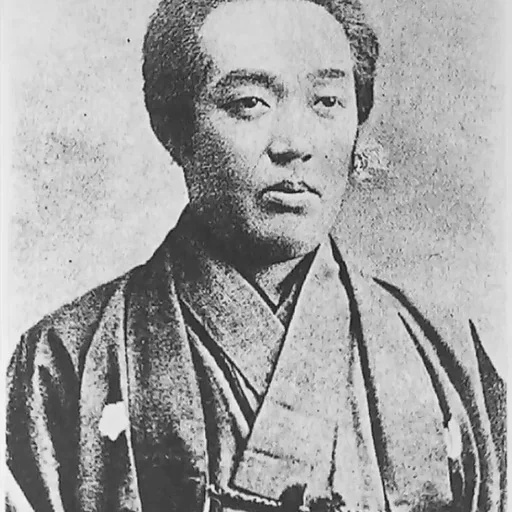
Tsukioka Yoshitoshi (Japanese: 月岡芳年; also named Taiso Yoshitoshi 大蘇芳年; 30 April 1839 – 9 June 1892) was a Japanese printmaker.

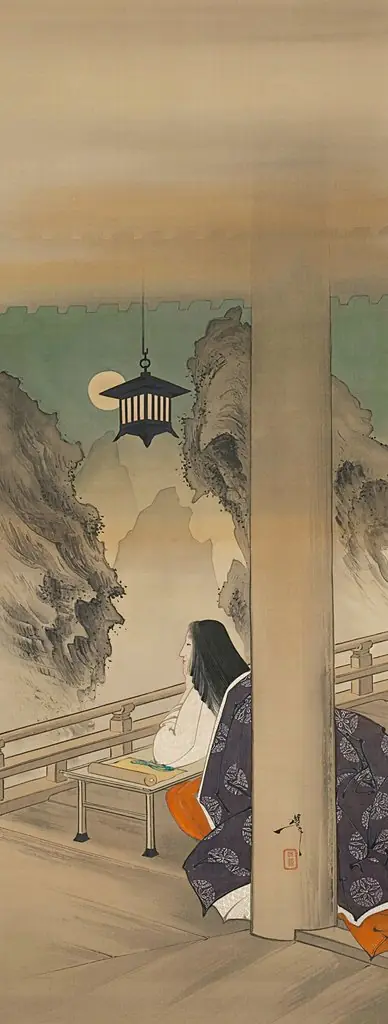 Murasaki Shikibu at Ishiyamadera Temple, based on the print “The Moon at Ishiyama,” from the series One Hundred Aspects of the Moon (Tsuki hyakushi: Ishiyama no tsuki)
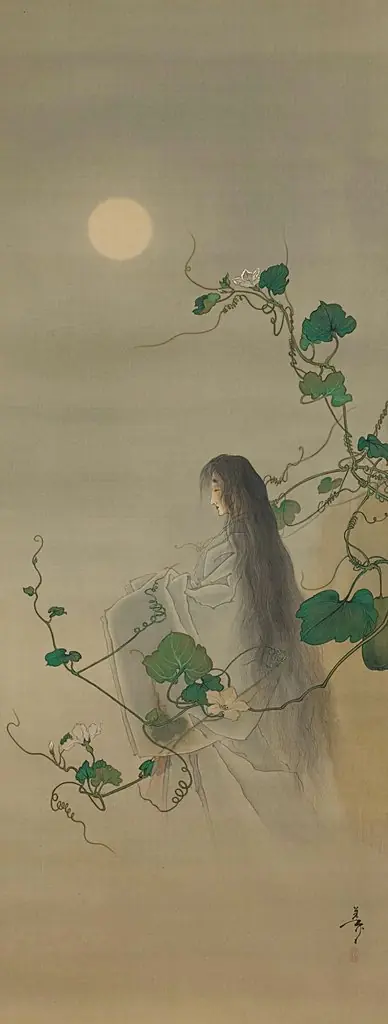 The Spirit of the Deceased Yūgao Entwined in Moonflower Vines, based on the print “The Lady of the Evening Faces,” from the series One Hundred Aspects of the Moon (Tsuki hyakushi: Genji Yūgao no maki)
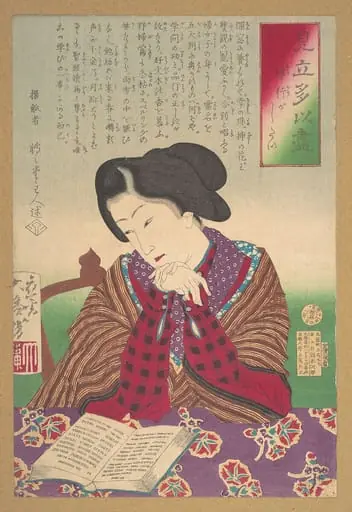 見立多以尽 - 洋行がしたい|Collection of Desires, Wish for Foreign Travel (Mitate Tai zukushi-yōkō ga shitai)
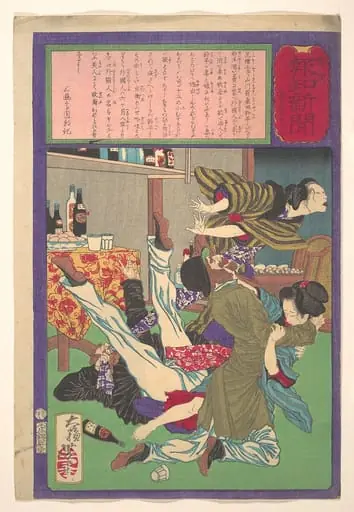 郵便報知新聞 645号|Postal Hōchi Newspaper no. 645, Englishman raping a wine shopkeeper's daughter (Yūbin Hōchi shinbun, roppyaku yonjū gogō)
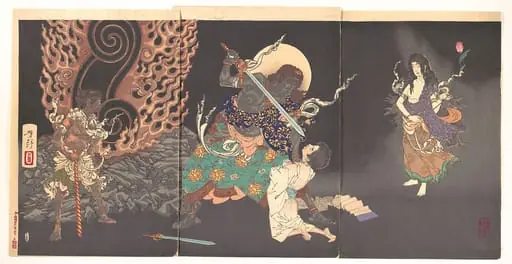 月岡芳年筆 不動明王∙祐天上人図|Fudō Myōō Threatening a Novice
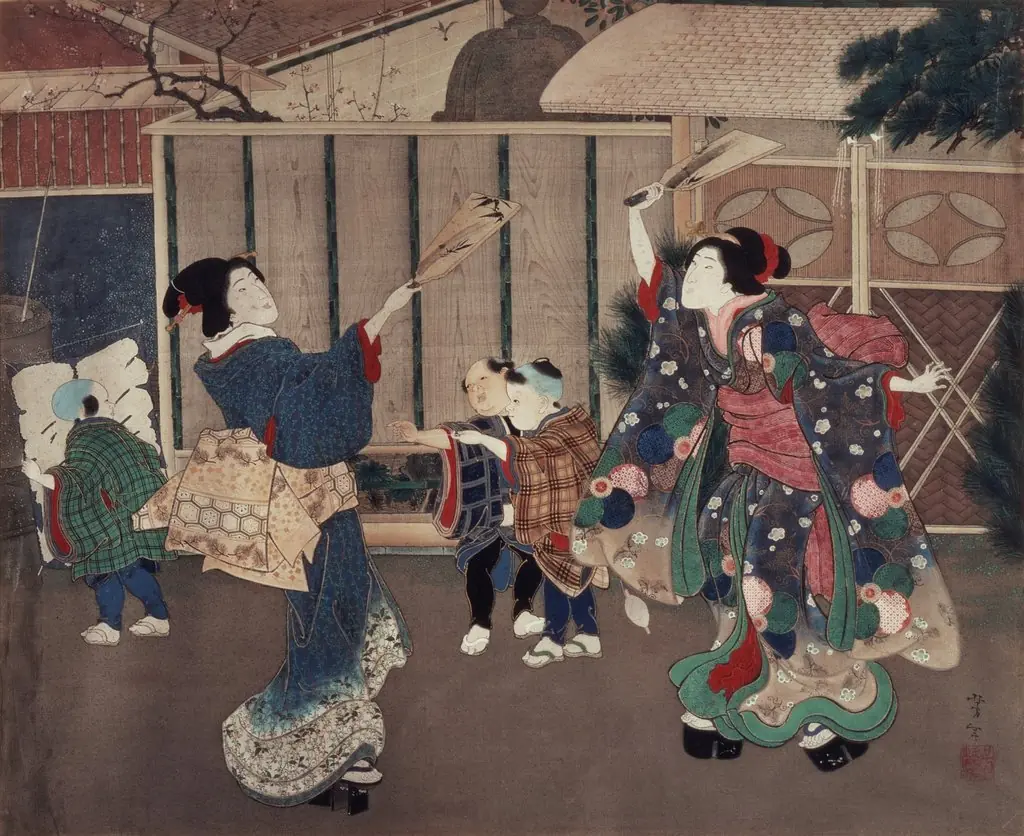 January: Celebrating the New Year
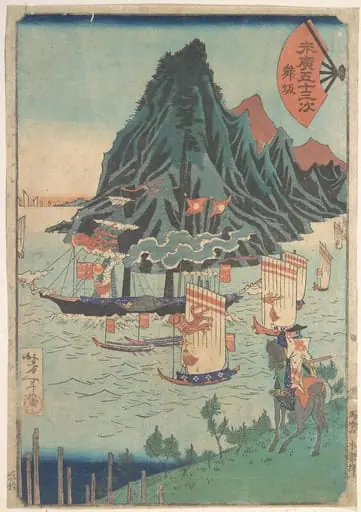 Untitled
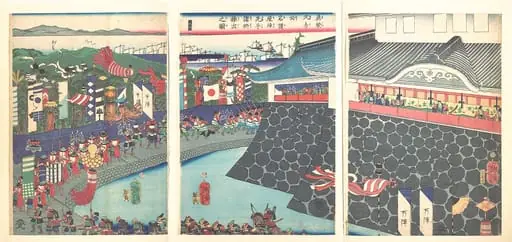 真柴秀吉公名護屋陣先手諸将繰出之図|Hideyoshi and His Troops Leaving Nagoya Camp (Mashiba Hideyoshi kō nagoya jin saki te no shoshō kuridashi no zu)
 三代歌川広重画 『東京名所 従上野公園 不忍池中嶋弁天之景』|View of Benten Shrine on Nakanoshima Island in Shinobazu Pond, Ueno Park, from the series Famous Views of Tokyo (Tōkyō Tokyo meisho yori Ueno kōen Shinobazu no ike Nakanoshima Benten no kei)
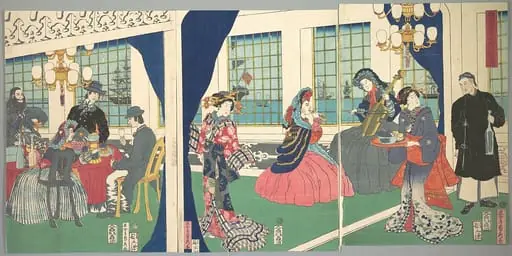 Untitled
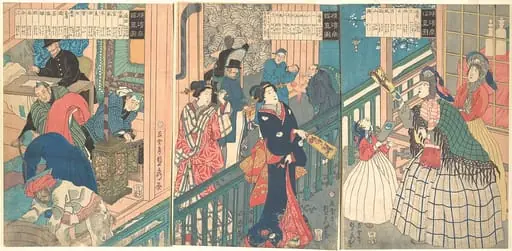 歌川(五雲亭)貞秀画 「横濱商館真圖」|A True View of a Trading House of a Yokohama Merchant
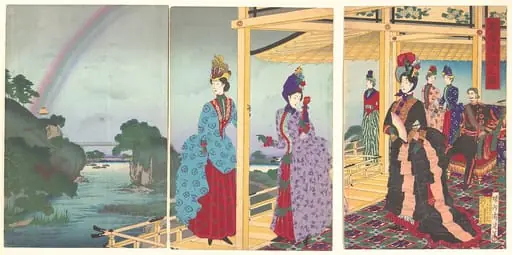 『雨過洗庭之図』|A Garden Refreshed by the Passing Rain (Ukasentei no zu)
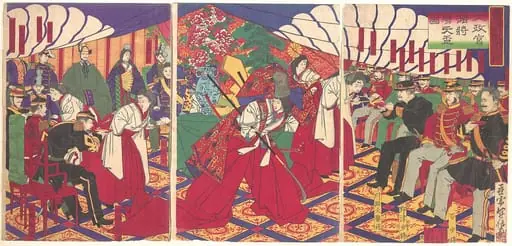 Taiseikan Shosho Shiten|Commanders Receiving the Emperor's Drinking Cups
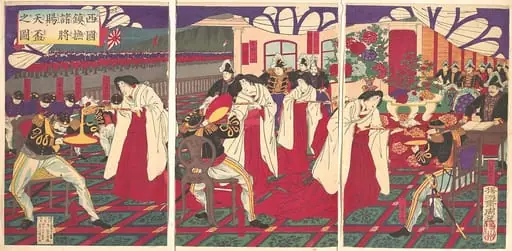 西国鎮静撫諸将天杯賜之図|Illustration of the Commanders who Pacified Western Japan, Receiving the Emperor's Gift Cups (Saigoku chinbu shoshō tenpai o tamau no zu)
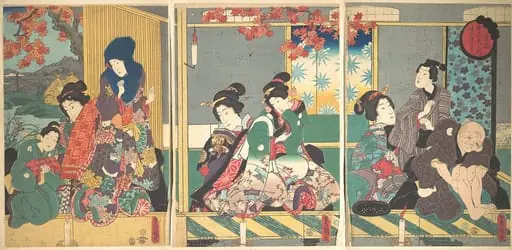 重陽後の月宴 十二月ノ内|Banquet of the Next Full Moon at the Chrysanthemum Festival, from the series The Twelve Months (Chōyō nochi no tsuki no en, Jūni tsuki no uchi)
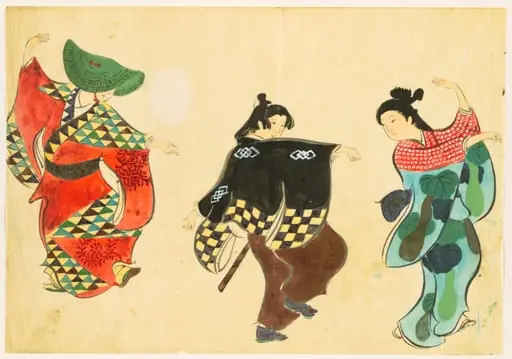 Flowers of a Hundred Worlds (Momoyogusa): Dancing (Odori)
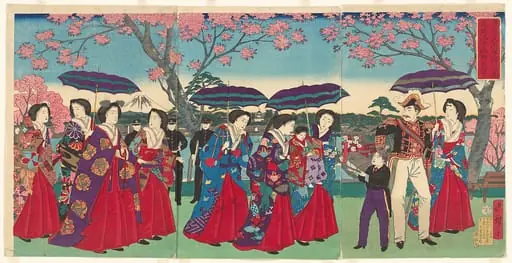
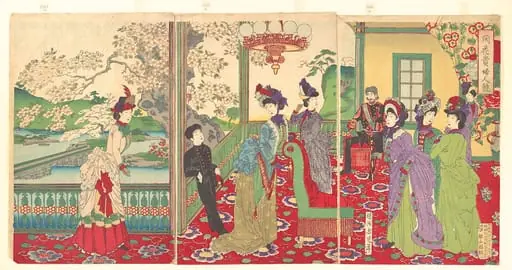 楊洲周延画 『開花貴婦人競』|A Contest of Elegant Ladies among the Cherry Blossoms (Kaika kifujin kisoi)
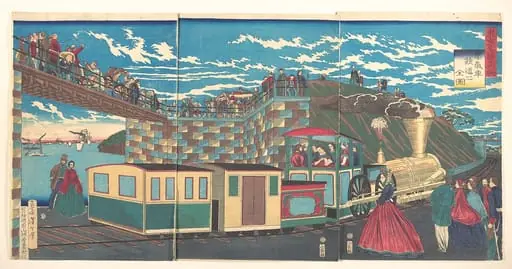 東京名勝高輪 蒸気車鉄道之全図|Illustration of Steam Locomotive Tracks at Takanawa, from the series Famous Places in Tokyo (Tōkyō meishō Takanawa-jōki kikansha no zen zu)