Artwork
御鳳輦之図|Illustration of the Imperial Carriage (Gohōren no zu)
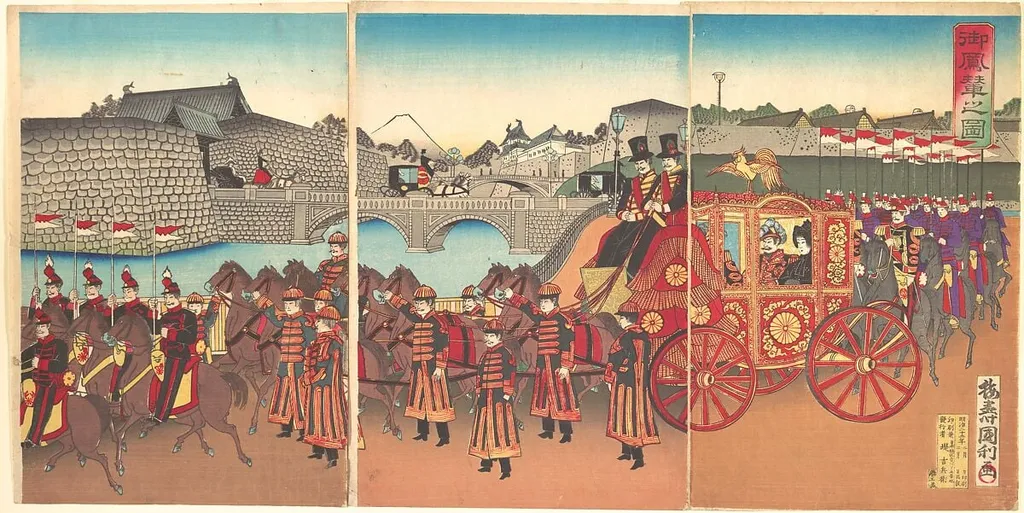
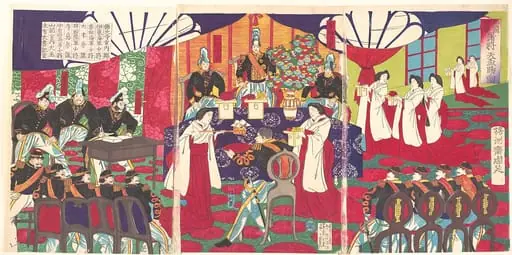
御鳳輦之図|Illustration of the Imperial Carriage (Gohōren no zu) is an ink print by the Impressionist artist Utagawa Kunitoshi. It dates from 1889 and is held in the collection of the Metropolitan Museum of Art.
About this work
Overview
The work is part of The Metropolitan Museum of Art’s collection, preserved as an example of late 19th-century ukiyo-e craftsmanship.
Created in 1889 by Utagawa Kunitoshi, this woodblock print is one panel of a triptych depicting an imperial procession. Rendered in ink and color on paper, it was produced during the Meiji period, a time when traditional Japanese subjects were often reimagined through the lens of modern printmaking. The work is part of The Metropolitan Museum of Art’s collection, preserved as an example of late 19th-century ukiyo-e craftsmanship.
Subject & Meaning
The central image portrays a red-lacquered imperial carriage, adorned with gold details, carried by attendants under a canopy. Soldiers in dark uniforms with red accents lead the procession, followed by bearers holding banners and poles. The figure within the carriage, though minimally rendered, signifies imperial presence. The orderly formation and ceremonial elements suggest a state ritual, likely commemorating an imperial event during Japan’s rapid modernization.
Technique & Style
Kunitoshi employed precise linework and flat areas of color typical of ukiyo-e, with bold outlines defining figures and structures. The palette features vivid reds, golds, and deep blacks, contrasting against muted backgrounds. Perspective is stylized rather than linear, emphasizing symbolic hierarchy over realism. The composition balances movement and stillness, guiding the eye toward the carriage as the visual and ceremonial focal point.
History & Provenance
The print was produced in 1889, near the end of Kunitoshi’s career, during a period when woodblock printing faced competition from photography and Western-style art. It was likely commissioned for public distribution, reflecting continued interest in imperial imagery despite societal changes. The Metropolitan Museum of Art acquired it as part of its broader collection of Japanese prints, preserving its historical and artistic context.
Context
In Meiji-era Japan, traditional court rituals were being revived as symbols of national identity amid Western influence. This print aligns with a broader trend of depicting imperial ceremonies to reinforce cultural continuity. While Western techniques influenced Japanese art, Kunitoshi maintained classical ukiyo-e conventions, bridging historical themes with contemporary print culture.
Legacy
Though Kunitoshi is less widely known than contemporaries like Hiroshige or Kunisada, this work exemplifies the endurance of ukiyo-e into the late 19th century. The triptych serves as a visual record of imperial pageantry during a transformative era, offering insight into how tradition was visually sustained amid modernization. It remains a reference for scholars studying the intersection of ceremony and print in Meiji Japan.
Artist & collection

 Untitled
 Yokohama Gankirō gaikokujin gyōretsu no zu|Picture of a Procession of Foreigners at Yokohama
 『上野第三回内国勧業 博覧会御幸之図』|Visit of the Empress to the Third National Industrial Promotional Exhibition at Ueno Park (Ueno dai sankai naikoku kangyō hakuran kai gyokō no zu)
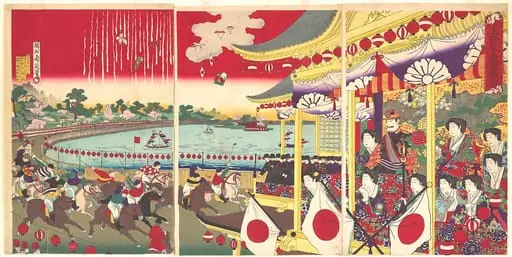 『上野不忍競馬図』|View of the Horse Track at Shinobazu in Ueno Park (Ueno shinobazu keiba zu)
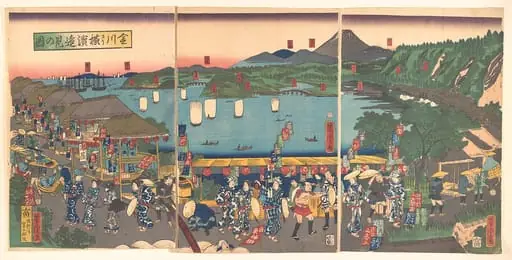 Kanagawa yōri Yokohama...ken no zu|A Distant View of Yokohama from Kanagawa
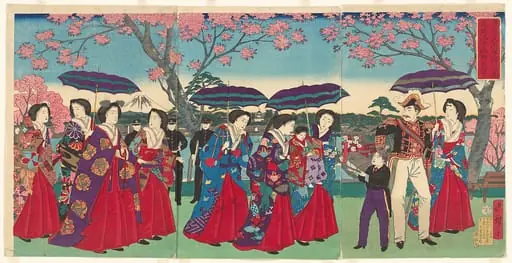 三代歌川広重画 『東京名所 従上野公園 不忍池中嶋弁天之景』|View of Benten Shrine on Nakanoshima Island in Shinobazu Pond, Ueno Park, from the series Famous Views of Tokyo (Tōkyō Tokyo meisho yori Ueno kōen Shinobazu no ike Nakanoshima Benten no kei)
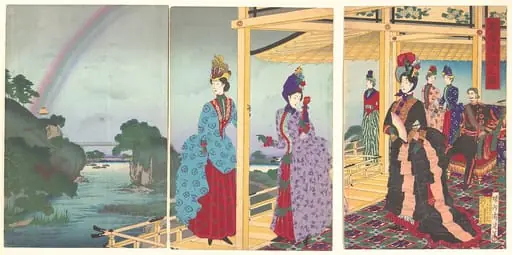 『雨過洗庭之図』|A Garden Refreshed by the Passing Rain (Ukasentei no zu)
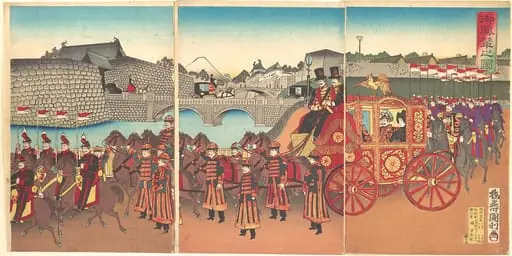 Go Horen no zu|View of the Imperial Carriage
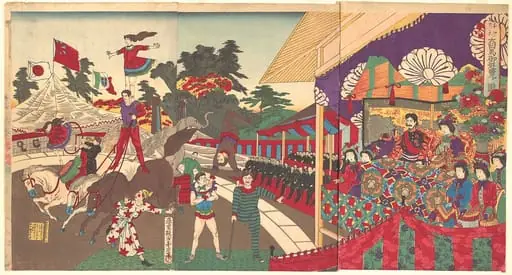 チャリネ大曲馬御遊覧ノ図|Illustration of the Imperial Excursion to see the Charini's Circus (Charine daikyokuba goyūran no zu)
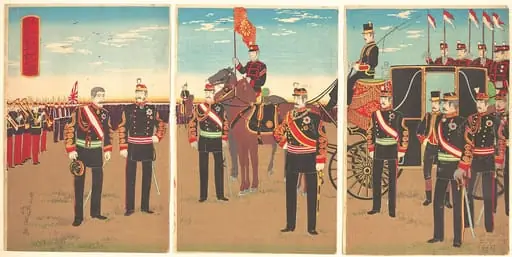 青上練兵場観兵式之図|Illustration of Emperor's Military Review of a Parade Ground at Aoyama (Aoyama renpeijō kanpeishiki no zu)
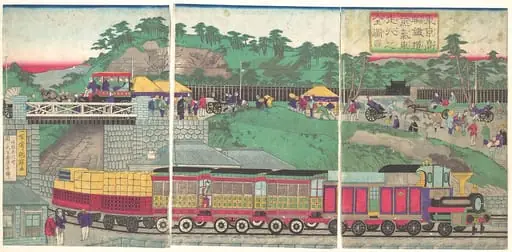 東京高輪鉄道蒸気車走行之図|Illustration of a Steam Locomotive Running on the Takanawa Railroad in Tokyo (Tōkyō takanawa tetsudō jōkisha sōkō no zu)
 西国諸将鎮静天杯賜ル之図|Illustration of the Commanders who Pacified Western Japan, Receiving the Emperor's Gift Cups (Saigoku chinsei shoshō tenpai o tamawaru no zu)