Artwork
Untitled
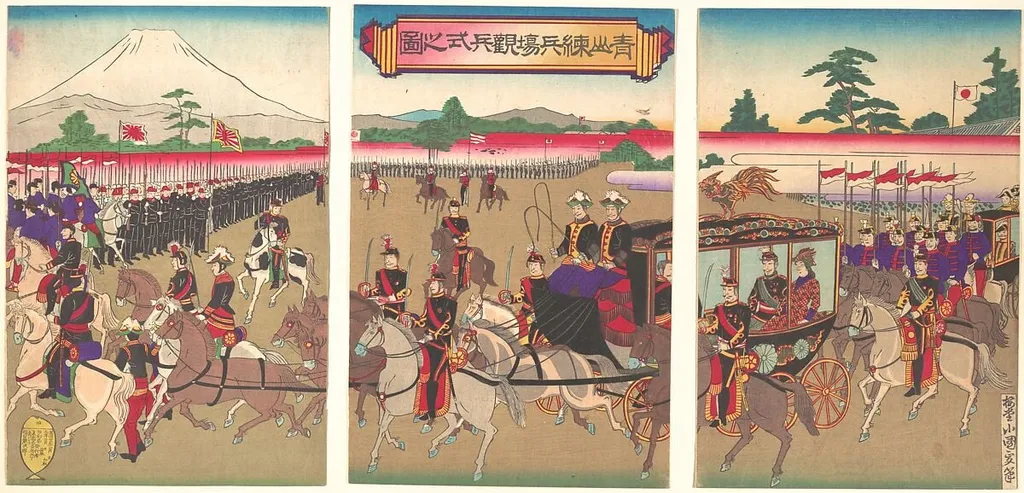
Untitled is an ink print by the Impressionist artist Utagawa Kunisada II. It is held in the collection of the Metropolitan Museum of Art.
About this work
Overview
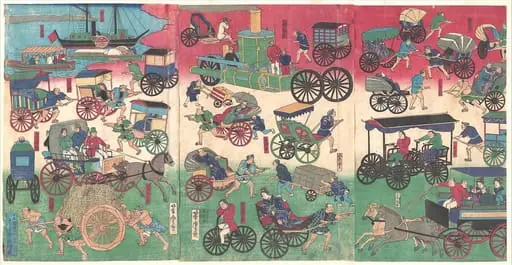
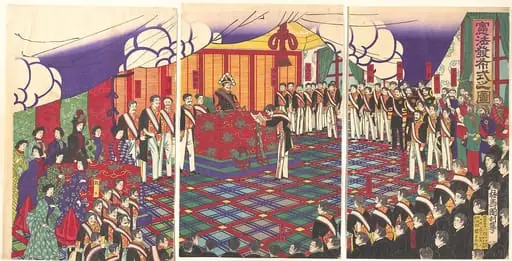
Created in 1889, this untitled triptych of woodblock prints by Utagawa Kunisada II consists of three adjoining sheets printed with ink and color on paper. The work is part of the collection of the Metropolitan Museum of Art. Each panel presents a compact, bustling scene that together form a continuous narrative across the three sheets.
Subject & Meaning
The three panels depict a procession of soldiers and commanders on horseback, their banners marked by red circles fluttering above the ranks. A richly decorated carriage moves centrally through the formation, while distant mountains and trees frame the background. The composition emphasizes martial display and ceremonial movement, reflecting contemporary interest in military pageantry.
Technique & Style
Kunisada II employed the traditional ukiyo‑e woodblock method, carving separate blocks for each color and layering them to achieve vivid hues. The artist’s characteristic use of bold outlines and saturated pigments highlights the bright, period uniforms and the dynamic motion of the figures, while the triptych format allows for an expansive, panoramic view.
History & Provenance
The print was produced during the late Meiji period, a time when Japanese printmakers increasingly addressed modern subjects. After its creation, the work entered private collections before being acquired by the Metropolitan Museum of Art, where it remains on display as part of the museum’s Japanese prints holdings.
Context
Utagawa Kunisada II, a leading figure of the late ukiyo‑e school, was known for his lively, colorful compositions that often portrayed contemporary events and popular culture. This triptych aligns with his broader oeuvre, which frequently featured bustling crowds, elaborate costumes, and detailed architectural or natural settings, reflecting the visual tastes of urban audiences in the 1880s.
Artist & collection

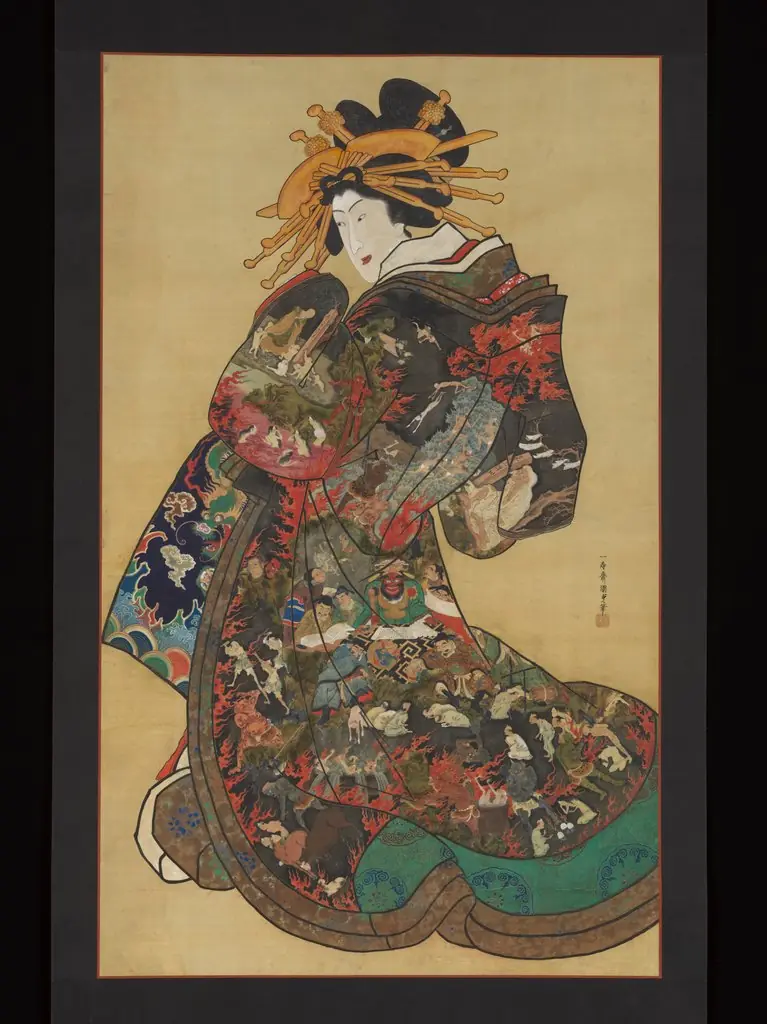 The Hell Courtesan
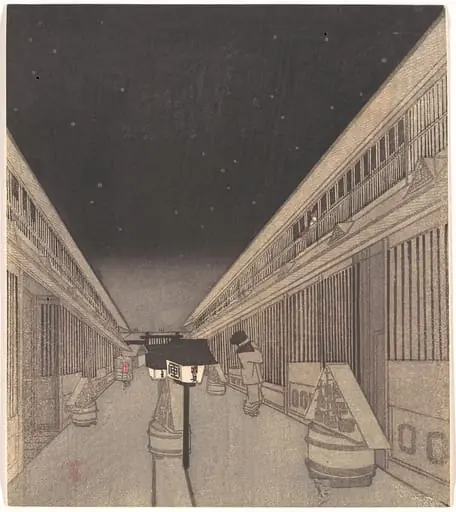 Untitled
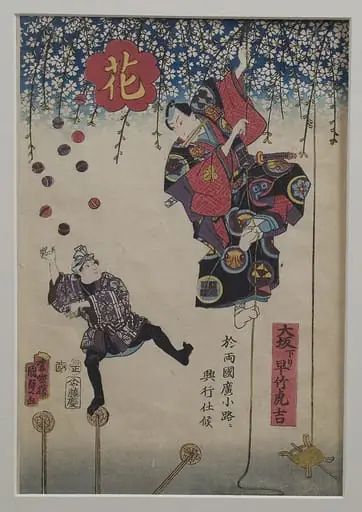 大坂下り早竹虎吉|Hayatake Torakichi from Osaka: Performance in Ryōgoku
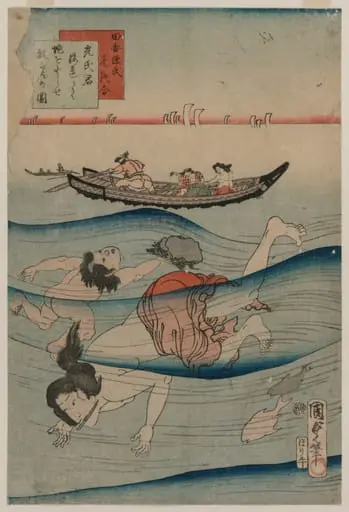 Rustic Genji's Poetry Contest: Mitsuuji's Excursion to the Seaside to See Abalone Diving (Inaka Genji shikishi awase, Mitsuuji umibe ni te awabi o torase yūran no zu)
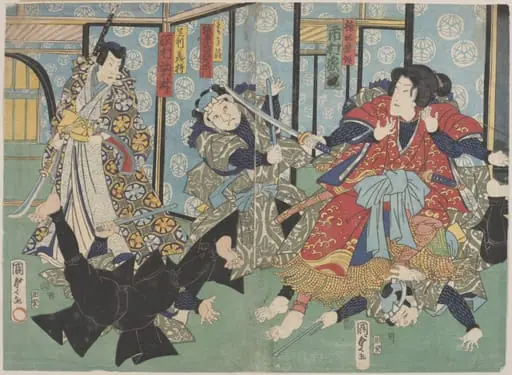 H Beard Print Collection
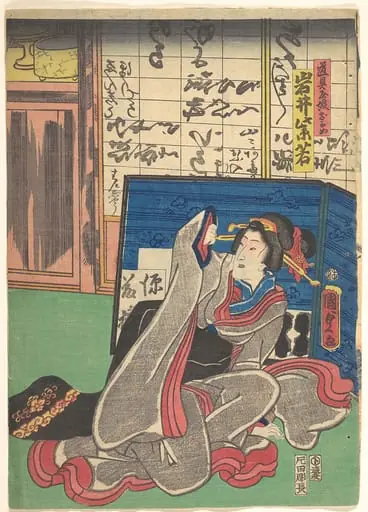 岩井紫若(二代目)の道具屋娘おかめ|Iwai Shijaku II as Okame, the Daughter of a Furniture Store
 Untitled
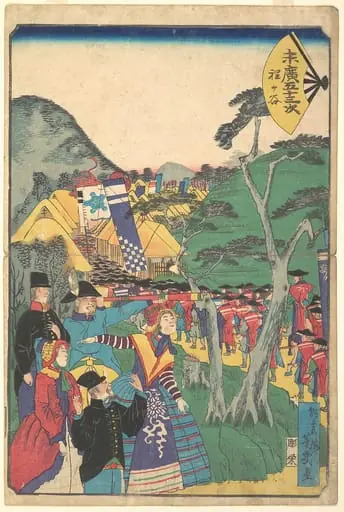 Untitled
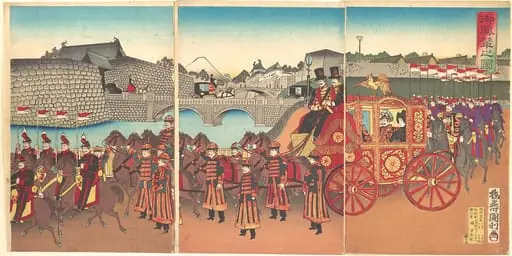 Go Horen no zu|View of the Imperial Carriage
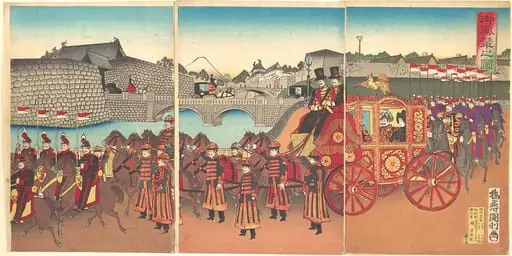 御鳳輦之図|Illustration of the Imperial Carriage (Gohōren no zu)
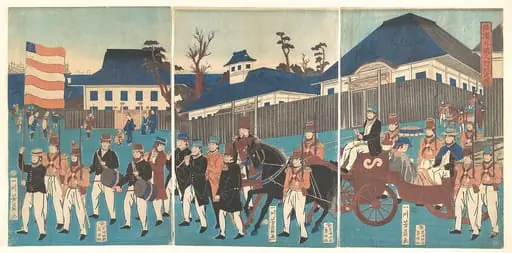 Yokohama Gankirō gaikokujin gyōretsu no zu|Picture of a Procession of Foreigners at Yokohama
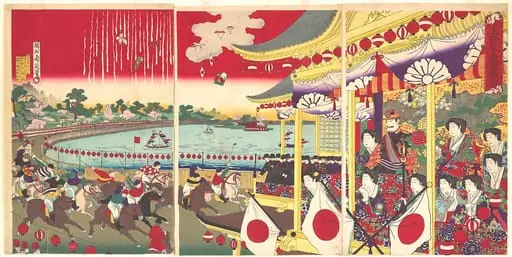 『上野不忍競馬図』|View of the Horse Track at Shinobazu in Ueno Park (Ueno shinobazu keiba zu)
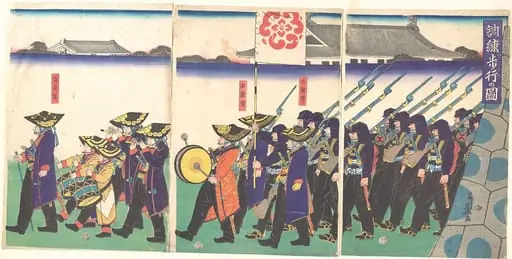 Untitled
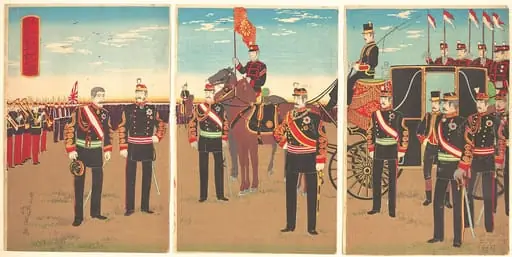 青上練兵場観兵式之図|Illustration of Emperor's Military Review of a Parade Ground at Aoyama (Aoyama renpeijō kanpeishiki no zu)
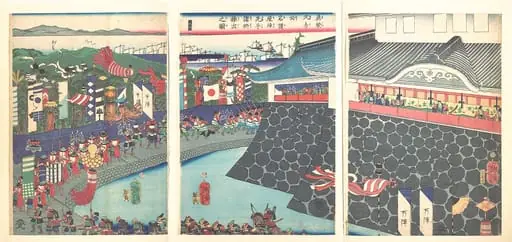 真柴秀吉公名護屋陣先手諸将繰出之図|Hideyoshi and His Troops Leaving Nagoya Camp (Mashiba Hideyoshi kō nagoya jin saki te no shoshō kuridashi no zu)
 Kempo happu shiki no zu|View of the Issuance of the Constitution