Artwork
Arhanghelii Mihail și Gavriil
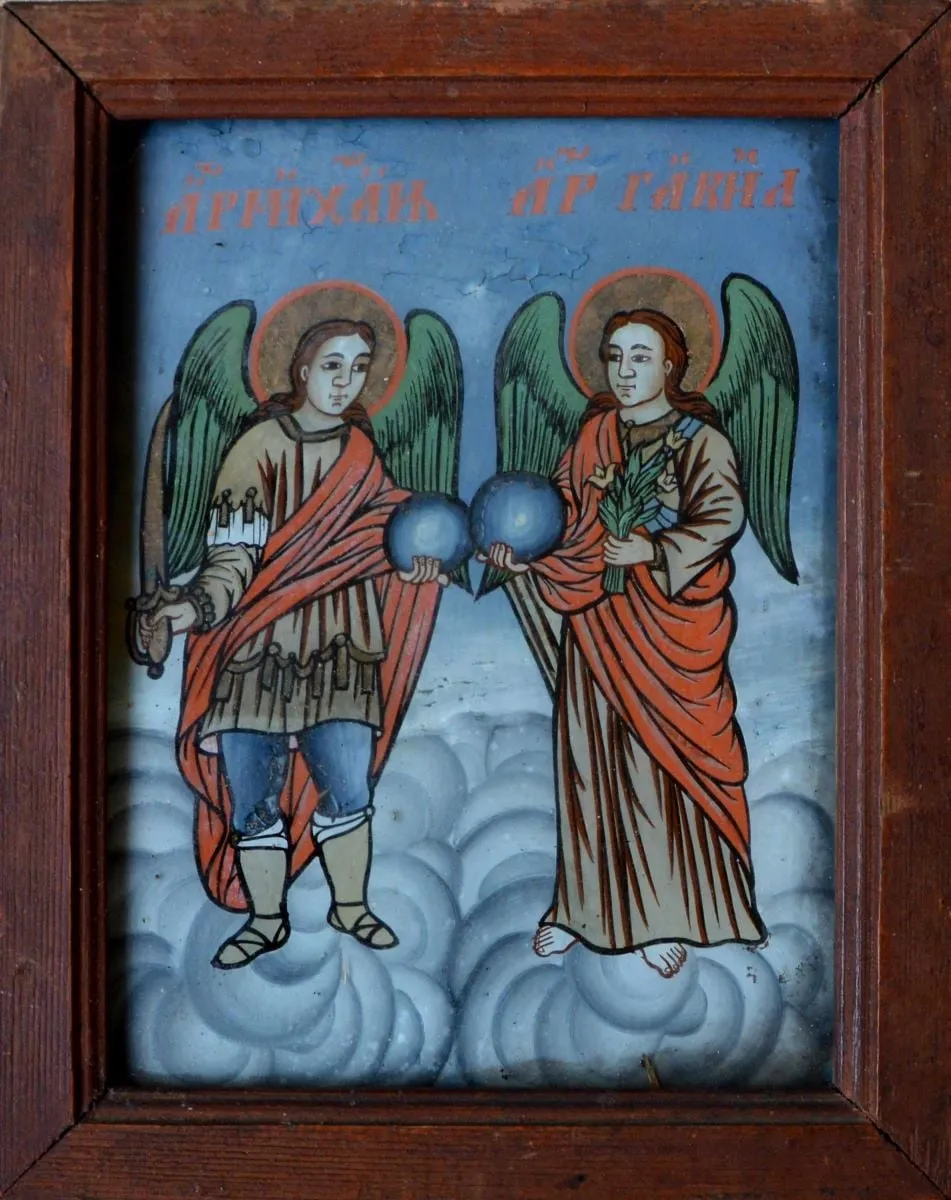
Arhanghelii Mihail și Gavriil is an unspecified painting by the Baroque artist Ioan Pop de la Făgăraș. It is held in the collection of the Alba Iulia Orthodox Archdiocese. The work depicts a pair of winged figures positioned side by side beneath a pale blue sky dotted with delicate clouds.
About this work
Overview
The work depicts a pair of winged figures positioned side by side beneath a pale blue sky dotted with delicate clouds. Both figures are robed in striped garments of red and brown, each crowned with a golden halo. One holds a blue sphere, while the other carries a modest bundle that may represent sticks or flowers, and both wear serene, stylized expressions.
Subject & Meaning
The composition presents the two figures as angels, a recurrent motif in Christian visual culture that symbolizes messengers or protectors. The contrasting objects they bear—a celestial sphere and a natural bundle—suggest a balance between heavenly authority and earthly life, reinforcing the spiritual role traditionally assigned to such beings.
Technique & Style
Executed in a flat, decorative manner, the painting relies on bold color contrasts: vivid reds and browns against the soft sky, highlighted by luminous gold halos. The figures are rendered with simplified, linear features, emphasizing iconic representation over realistic detail, a characteristic approach in folk and religious iconography.
History & Provenance
The piece belongs to the collection of the Museum of Ethnography, where it is displayed alongside other works of similar religious and cultural significance. Its acquisition details and original creator remain undocumented, reflecting the anonymous tradition of many devotional images.
Context
Angelic imagery has long served as a visual shorthand for divine presence in Eastern European religious art. The striped robes and stylized forms align with regional folk traditions that blend liturgical symbolism with local aesthetic conventions.
Artist & collection
Artist
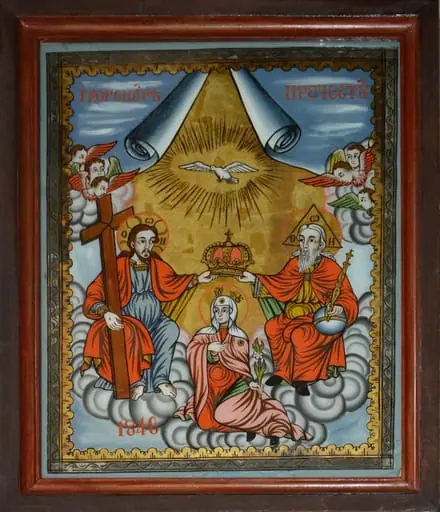
Ioan Pop de la Făgăraș painted religious scenes in the mid-1800s, like *Încoronarea Fecioarei* (1846) and *Duminica Floriilor*.
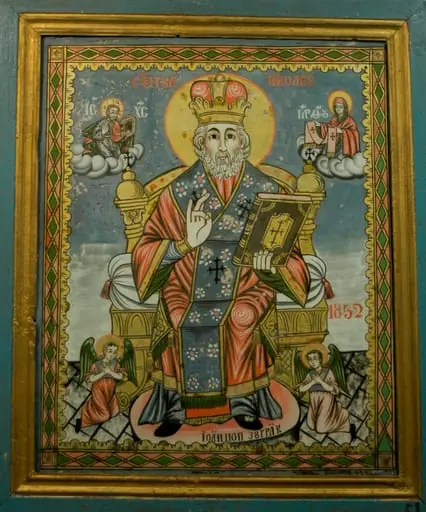
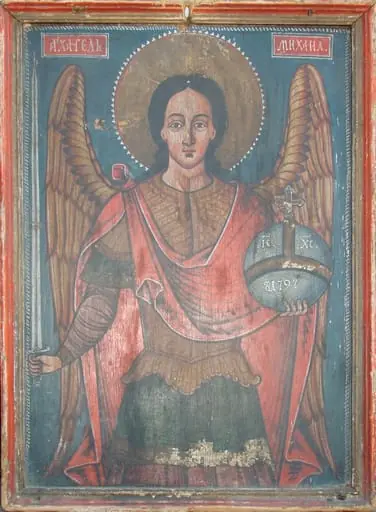 Arhanghelul Mihail
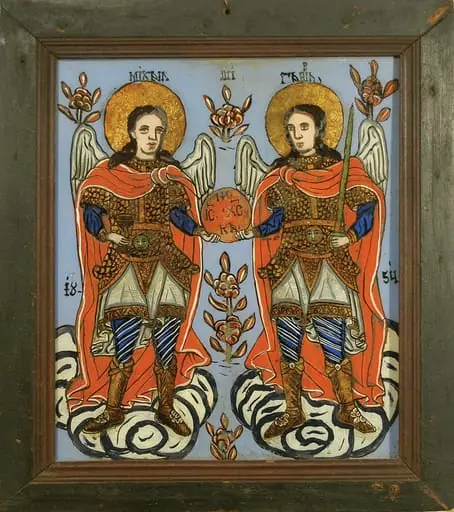 Arhanghelii Mihail și Gavriil
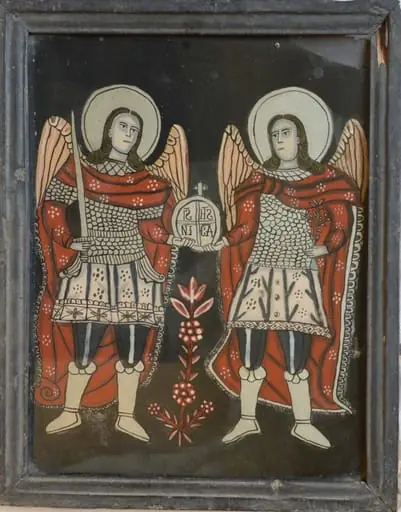 Arhanghelii Mihail și Gavriil
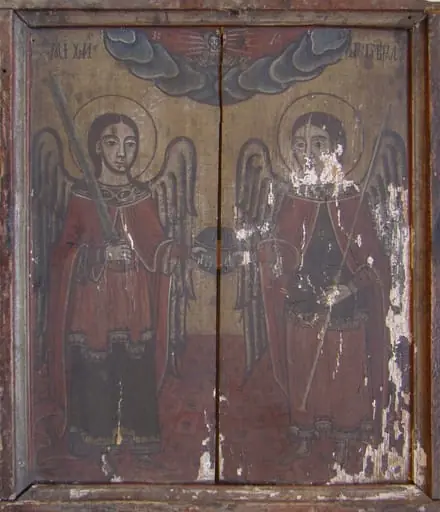 Arhanghelii Mihail și Gavriil
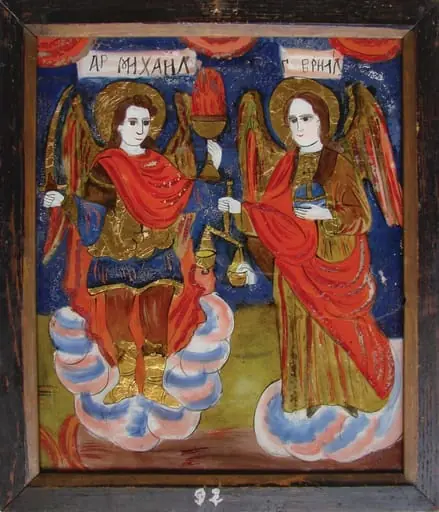 Sfinții Mihail și Gavril
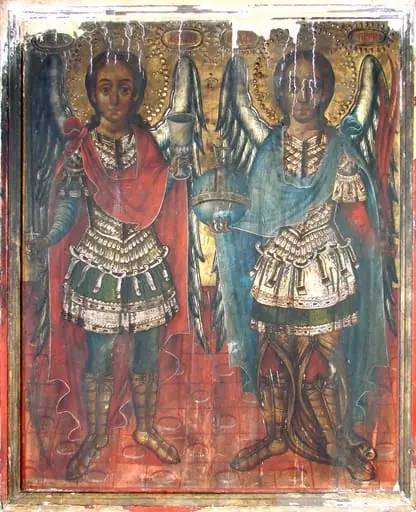 Arhanghelii Mihail și Gavriil
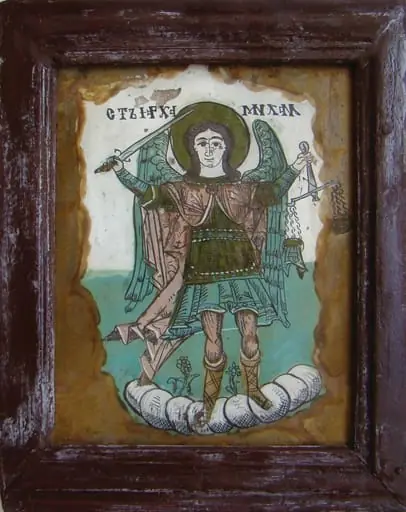 Arhanghelul Mihail
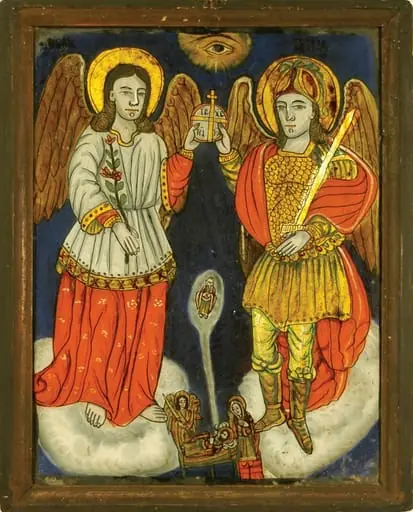 Arhanghelii Mihail și Gavriil
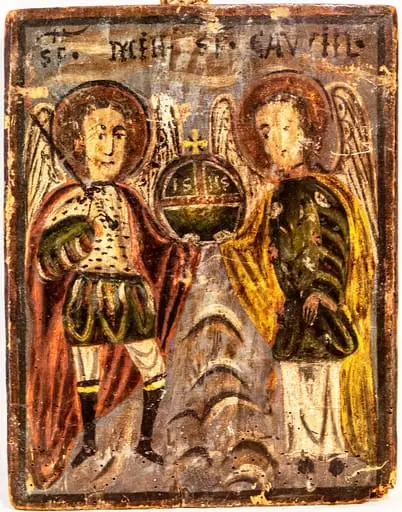 Icoana îi reprezintă pe Arhanghelii Mihail și Gavriil în picioare, din semiprofil,cu aripile strânse, ținând globul pământesc cruciger cu inițialele lui Isus Hristos. . Pictură de factură populară, naivă, stângace. Cei doi arhangheli redați conform erminiilor , Mihail în veșmânt militar, cu o sabie ridicată în mâna dreaptă(sabia de foc), Gavriil cu un crin în mâna stângă. Faldurile redate prin tușe groase de desn și culoare.Fețele sunt mari, ovale, corpurile disproporționate. Membrele mici. Cromatica dominată de contrastul dintre nuanțele pale de gri cu cele tari de verde, roșu și galben. Aureolele cu chenar accentuat. Fundalul gri, cu elemente de relief schițate în partea de jos, nori sus. Inscripție în română, scrisă stângaci cu majuscule negre. Chenar negru.
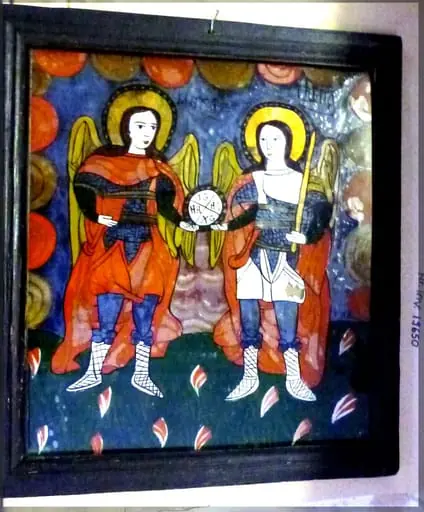 Arhanghelii Mihail și Gavriil
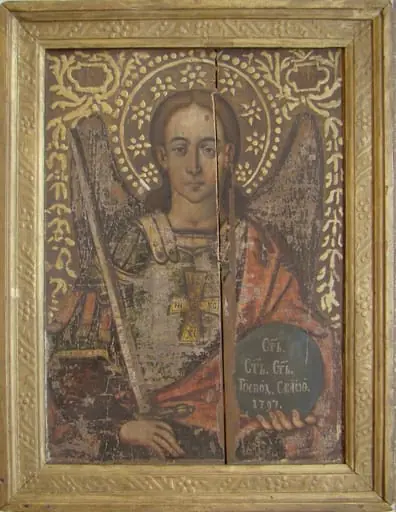 Arhanghelul Mihail
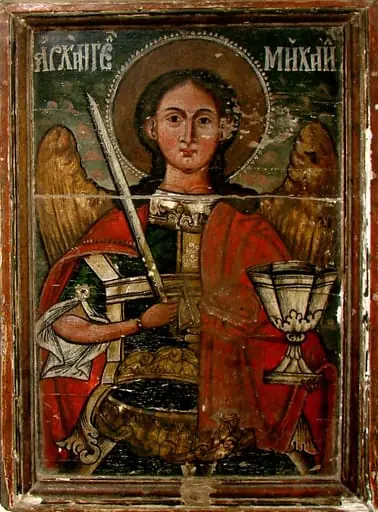 Arhanghelul Mihail