Artwork
Hellespontine Sibyl
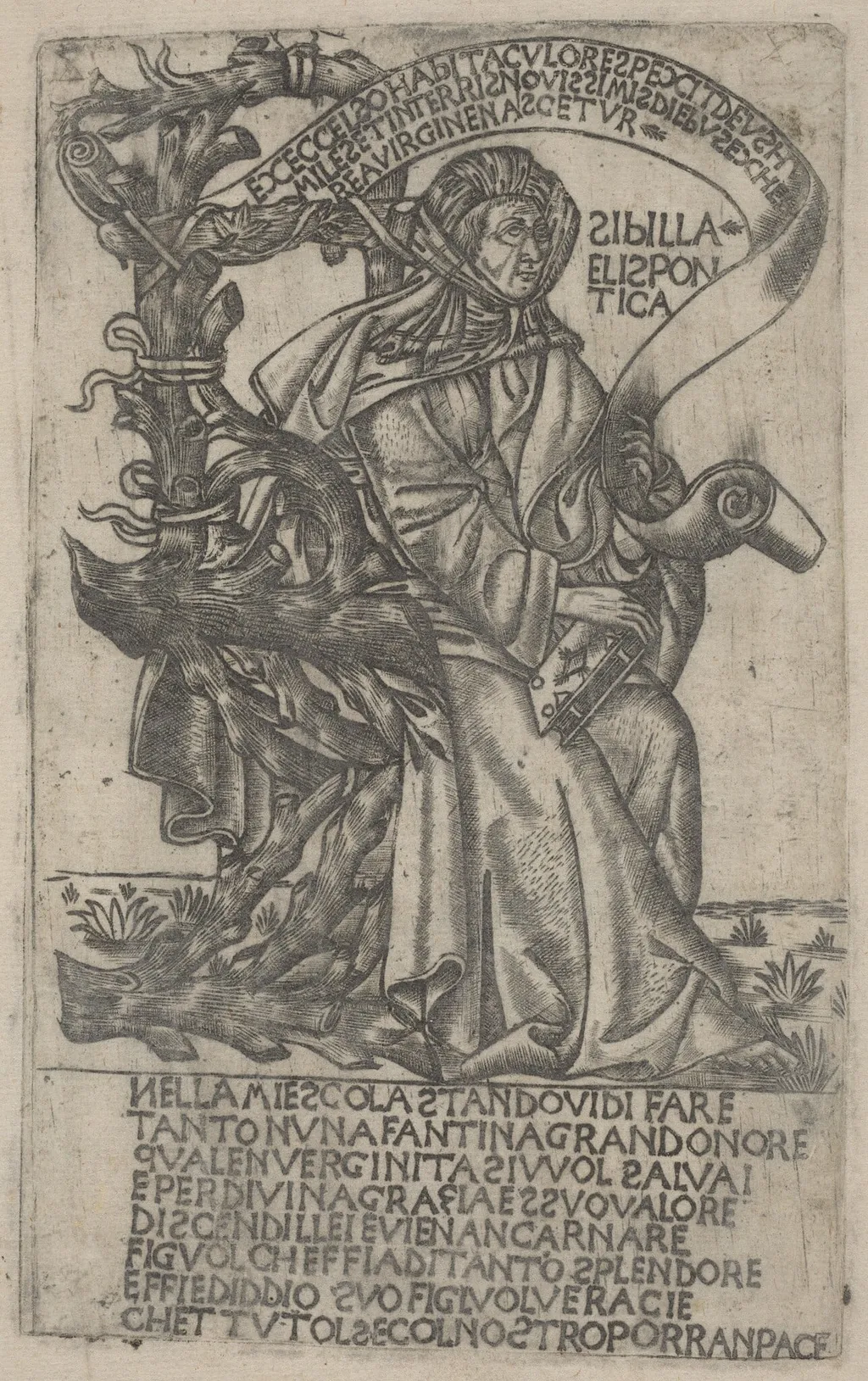
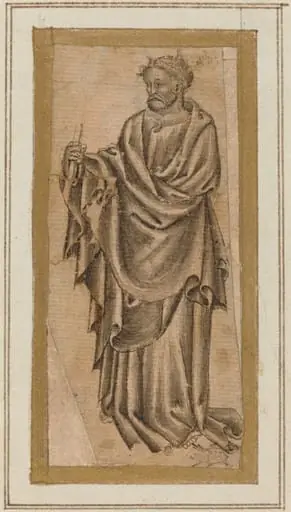
Hellespontine Sibyl is an ink print by the Renaissance artist Italian 15th Century. It dates from 1401 and is held in the collection of the National Gallery of Art.
About this work
Overview
Rendered in fine linear detail, the figure stands alone against a minimal background, emphasizing her solitary, otherworldly presence.
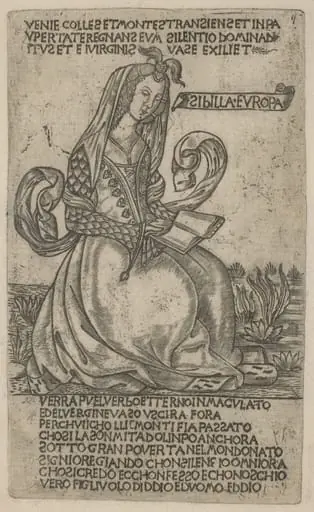
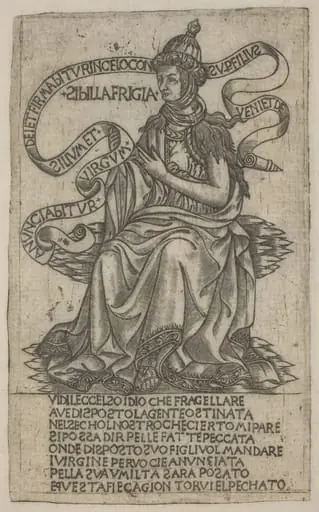
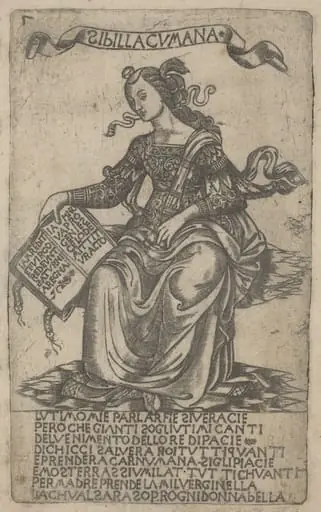
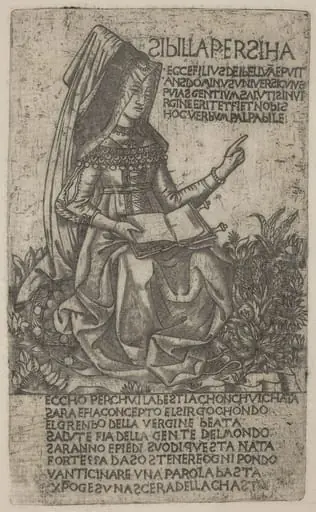
This engraving depicts the Hellespontine Sibyl, one of the prophetic women from classical antiquity. Rendered in fine linear detail, the figure stands alone against a minimal background, emphasizing her solitary, otherworldly presence. The artist employed precise incisions to model volume and texture, particularly in the heavy drapery and the staff she holds. A banner above her bears inscribed, non-legible script, reinforcing her role as a conduit of divine knowledge.
Subject & Meaning
The Hellespontine Sibyl was believed to foretell future events in ancient Greek and Roman tradition. Here, she is shown with a scroll—symbolizing prophecy—and a staff crowned with serpents, a motif linked to oracular power and divine communication. Her solemn expression and upright posture convey authority and detachment from the mundane. The ambiguous script above suggests sacred utterance beyond human comprehension.
Technique & Style
The image is executed in engraving, a technique involving incised lines on a metal plate inked and pressed onto paper. The artist used dense, controlled hatching to create depth and the illusion of heavy fabric, while sparse lines define the sparse flora at the base. The contrast between the detailed figure and the plain background focuses attention on form and symbolism, typical of Northern Renaissance printmaking.
History & Provenance
The engraving likely dates to the late 15th or early 16th century, a period when interest in classical sibyls flourished in European art. Though the artist’s identity is unconfirmed, the style aligns with regional printmakers influenced by Albrecht Dürer. Its survival in private and institutional collections suggests it was valued for its intellectual and devotional resonance during the Renaissance.
Context
During the Renaissance, sibyls were often paired with Old Testament prophets in religious art, symbolizing the universal anticipation of Christ’s coming. The Hellespontine Sibyl, though less common than others, appeared in manuscripts and prints as a bridge between pagan prophecy and Christian theology. This image reflects a broader cultural revival of classical antiquity filtered through medieval and early modern spiritual frameworks.
Legacy
This engraving contributes to a visual tradition that elevated sibyls as intellectual and spiritual figures beyond mere myth. Its restrained composition and technical precision influenced later depictions of prophetic women in print culture. Though not widely reproduced, it remains a quiet example of how classical themes were sustained and reinterpreted in early modern European visual language.
Artist & collection

Artist
This anonymous Italian engraver from the 1490s carved images that could be peeled apart like paper dolls—each knot in the "First Knot" print was cut from a single sheet so you could lift the loops right off the page.

![The Destruction of the Egyptian Idols [verso], by Italian 15th Century](https://artifactworldgallery.com/img/italian-15th-century--the-destruction-of-the-egyptian-idols-verso--646d3c2b8098cfee-w320.webp)
![The Flight into Egypt [recto], by Italian 15th Century](https://artifactworldgallery.com/img/italian-15th-century--the-flight-into-egypt-recto--8f4d5275d7f90f98-w320.webp)