Artwork
Libyan Sibyl
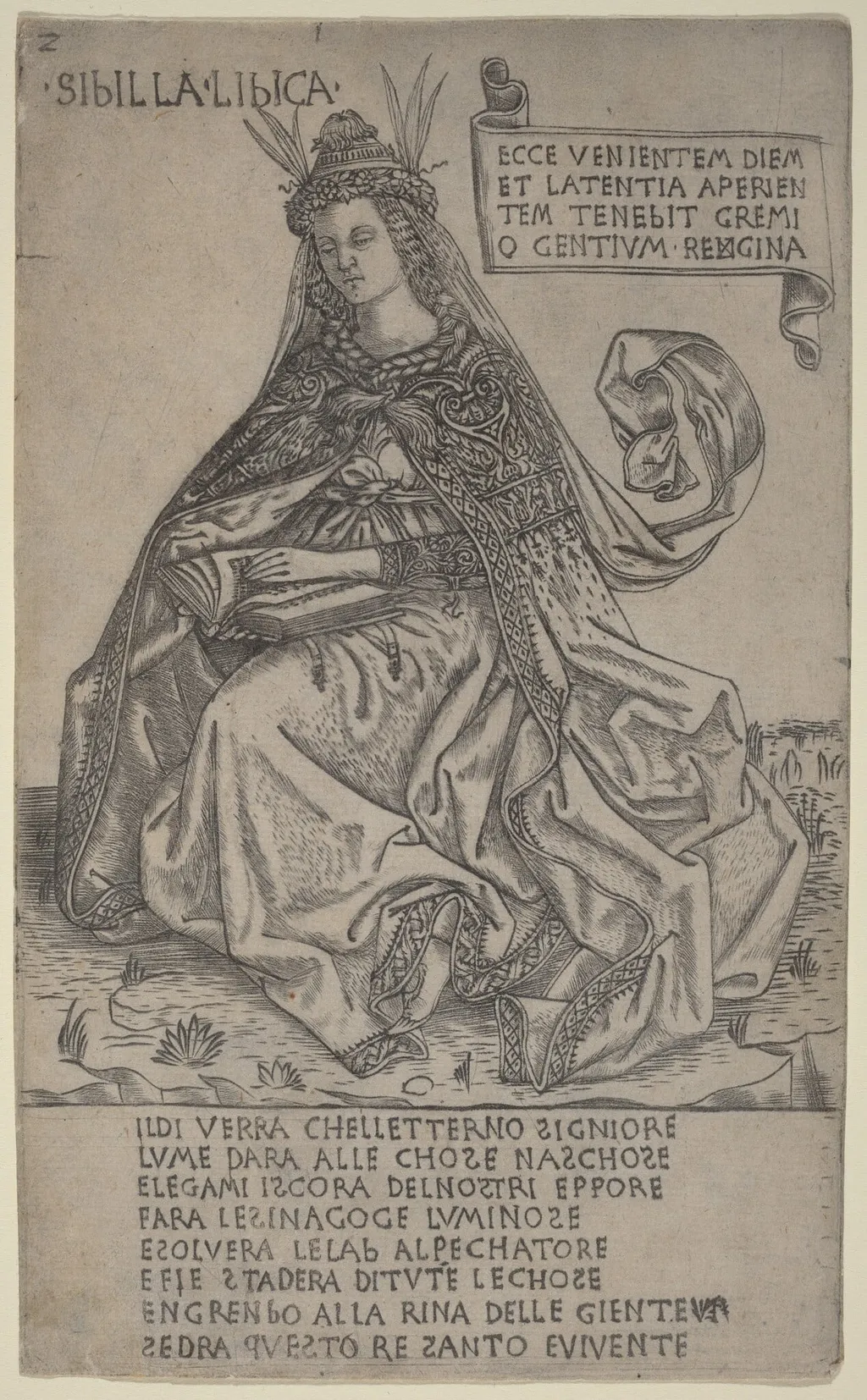
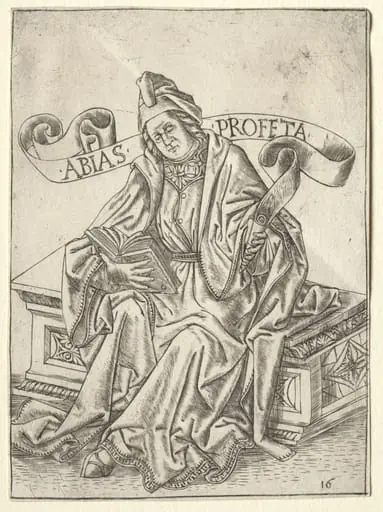
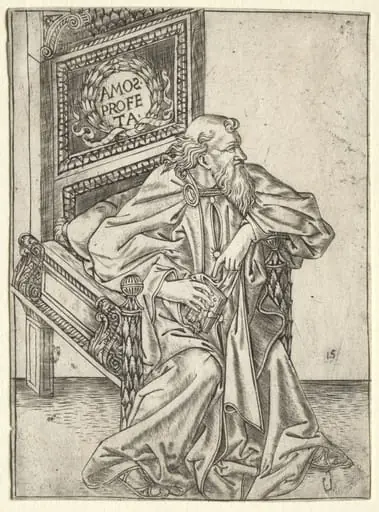
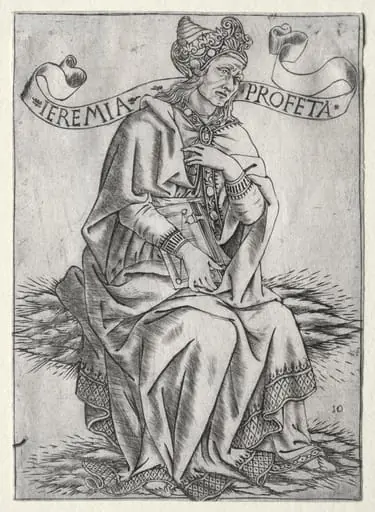
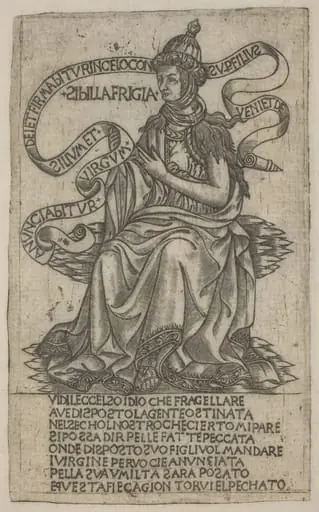
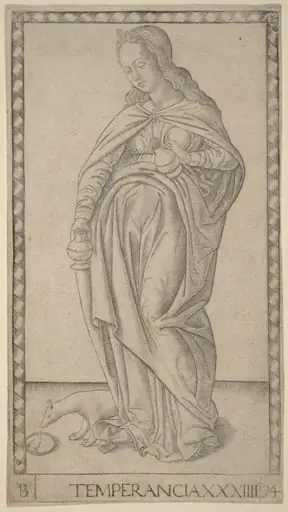
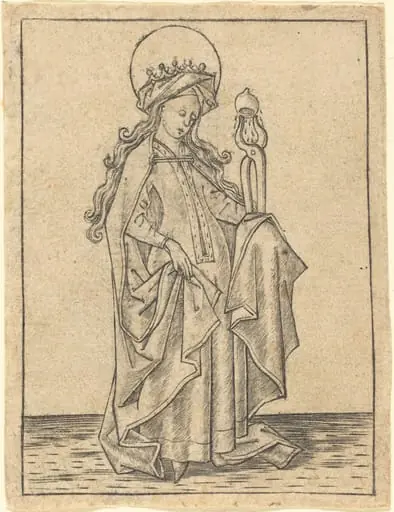
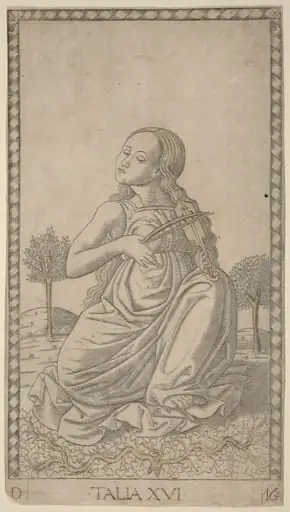
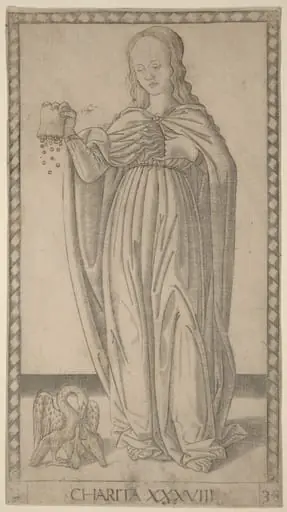
Libyan Sibyl is an ink print by the Renaissance artist Baccio Baldini. It dates from 1475 and is held in the collection of the National Gallery of Art.
About this work
Overview
Created around 1475 by the Florentine goldsmith and engraver Baccio Baldini, this print is among the early Italian engravings to emerge during the Renaissance.
Created around 1475 by the Florentine goldsmith and engraver Baccio Baldini, this print is among the early Italian engravings to emerge during the Renaissance. Though Baldini was trained in metalwork, his reputation as an engraver rests largely on his ability to translate established compositions into the medium. This work reflects the period’s growing interest in print as a vehicle for disseminating classical imagery.
Subject & Meaning
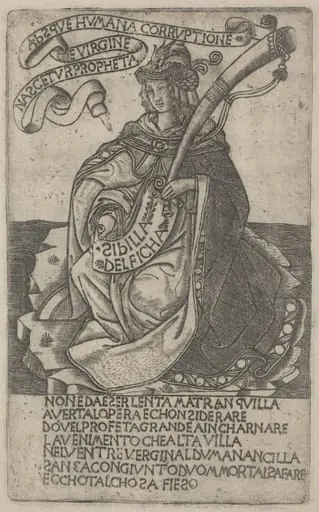
The figure is the Libyan Sibyl, one of the prophetic women from ancient tradition later incorporated into Christian iconography as a precursor to the coming of Christ. She is depicted seated, clothed in a flowing robe adorned with intricate patterns, wearing a leafy crown, and holding an open book—symbols of divine knowledge and foresight. Her downcast gaze and calm expression convey contemplative wisdom rather than dramatic revelation.
Technique & Style
Baldini employed fine, controlled lines to render texture in the fabric and delicate details in the sibyl’s crown and hair. The background is left unmodeled, creating contrast that draws focus to the figure. While the composition shows awareness of classical ideals, the engraving’s linear precision reflects the influence of Florentine draftsmanship, even as Baldini’s own hand was considered less inventive than his sources.
History & Provenance
The engraving was produced during a formative phase of Italian printmaking, when artists began adapting designs from painters for the print medium. Contemporary accounts, including those by Vasari, suggest Baldini frequently relied on drawings by Sandro Botticelli, indicating a collaborative dynamic between painters and engravers. No early ownership records are well documented, but the work survives in multiple impressions held in major print collections.
Context
In late 15th-century Florence, interest in classical antiquity fueled the revival of sibyl imagery, often paired with prophets in religious decoration. Printmaking offered a new way to circulate these ideas beyond frescoes and manuscripts. Baldini’s work contributed to this trend, bridging the goldsmith’s craft with the emerging market for small-scale, reproducible images among educated patrons and collectors.
Legacy
Though Baldini’s original designs were limited, his engravings helped establish technical standards for early Italian printmaking. His reliance on Botticelli’s compositions signaled a shift toward painterly authority in print production. Later engravers built upon his methods, and his sibyls became part of a broader visual language that linked classical prophecy with Renaissance humanist ideals.
Artist & collection

Artist
Baccio Baldini (c. 1436 – buried 12 December 1487) was an Italian goldsmith and engraver of the Renaissance, active in his native Florence. All that is known of Baldini's life, apart from the date of his burial in…