Artwork
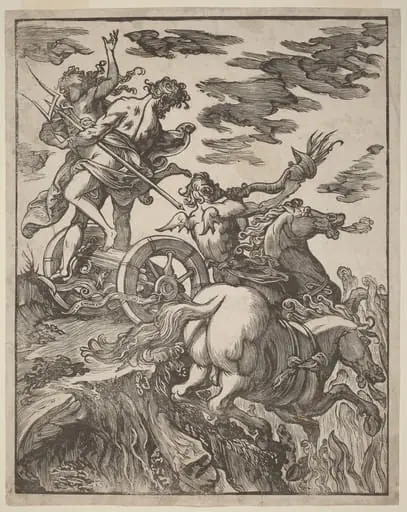
Fall of Phaeton
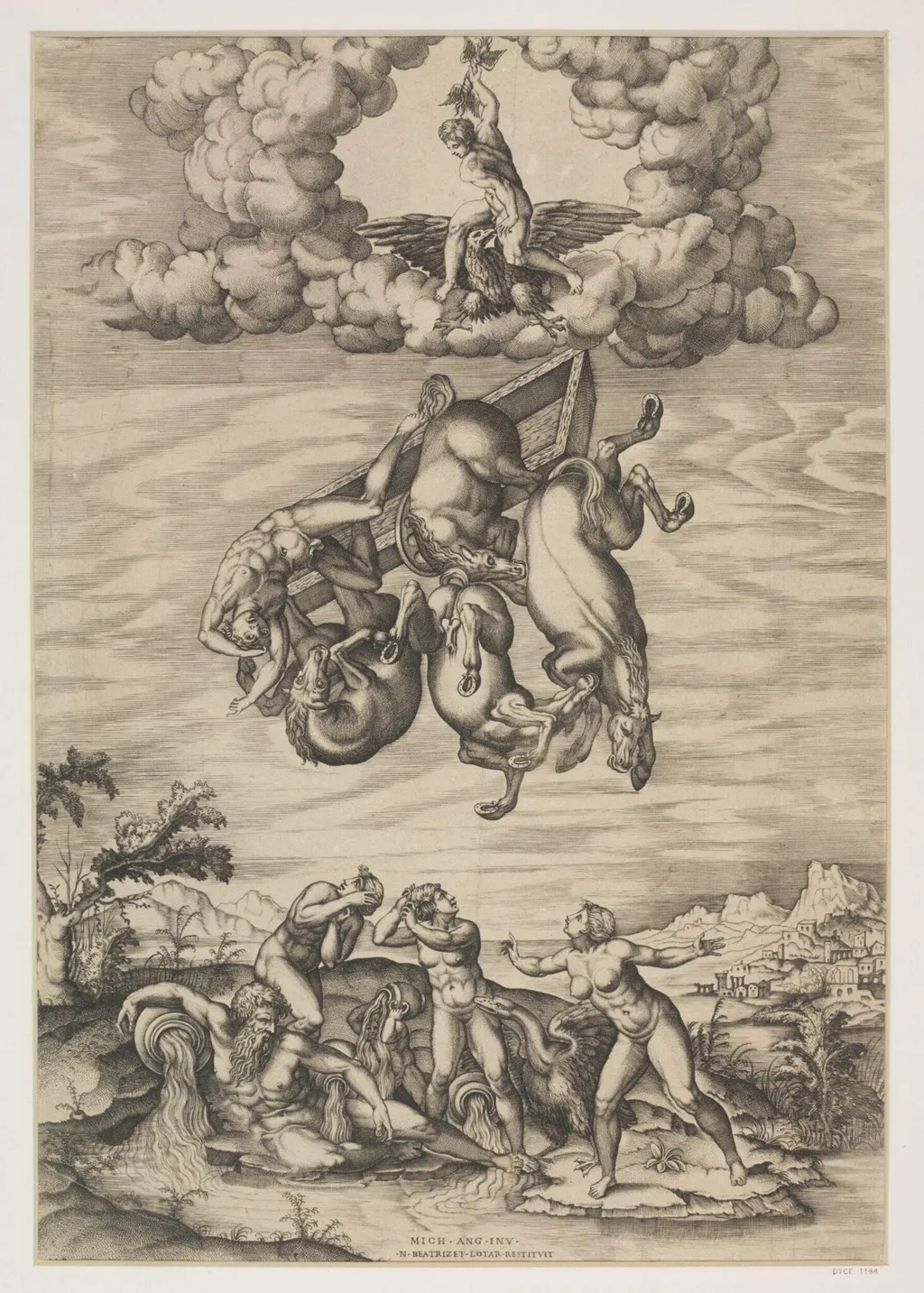
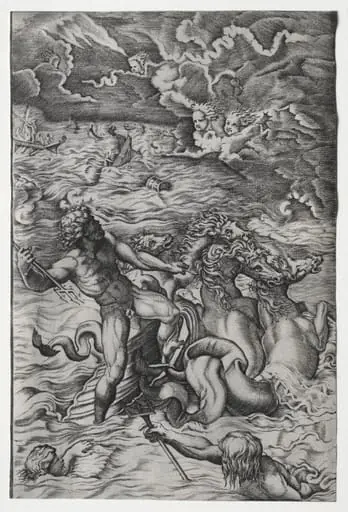
Fall of Phaeton is a print by the Renaissance artist Nicolas Beatrizet. It dates from 1520 and is held in the collection of the Victoria and Albert Museum.
About this work
Overview
This engraving, based on a design by Michelangelo and executed by Nicolas Beatrizet, illustrates the mythological scene of Phaeton's downfall. The print is characterized by its dynamic, two-tiered composition and detailed etching on paper.
Subject & Meaning
The work depicts the chaotic fall of Phaeton, a half-man, half-horse figure plummeting from a turbulent sky amidst swirling clouds, while below, a group of people flee in panic across a landscape dotted with trees and a distant town. The scene conveys the turmoil and consequence of Phaeton's failed attempt to drive the sun chariot.
Technique & Style
The engraving features sharp, expressive lines that convey tension and drama. Figures are rendered in a manner that emphasizes their emotional state, with a winged figure holding a torch and another clinging to the falling Phaeton, highlighting the dynamic interplay of elements in the scene.
History & Provenance
Attribution is provided in an inscription at the bottom, crediting Michelangelo as the 'inventor' of the design, Nicolas Beatrizet and 'Lotaring' as 'restorers', alongside the enigmatic initials 'A. L. F.' on the left, indicating the collaborative and possibly patron-driven nature of the work.
Context
Created in the context of Renaissance art's fascination with classical mythology and dramatic narratives, this print reflects the period's emphasis on expressive storytelling and the reinterpretation of ancient themes through contemporary artistic techniques.
Legacy
While specific lasting impacts of this individual print are not widely documented, it contributes to the broader legacy of Michelangelo's designs being disseminated through various media, influencing the visual representation of mythological subjects during the Renaissance.
Artist & collection


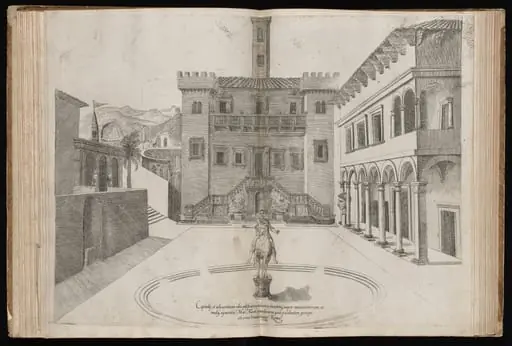
![Castello S. Angelo di Roma [Castel Sant'Angelo in Rome], by Nicolas Beatrizet](https://artifactworldgallery.com/img/nicolas-beatrizet--castello-s-angelo-di-roma-castel-sant-angelo-in-rome--6c77d3bfe127c436-w320.webp)
![Pantheum Romanum [The Roman Pantheon], by Nicolas Beatrizet](https://artifactworldgallery.com/img/nicolas-beatrizet--pantheum-romanum-the-roman-pantheon--8069db7dd8e6f190-w320.webp)