Artwork
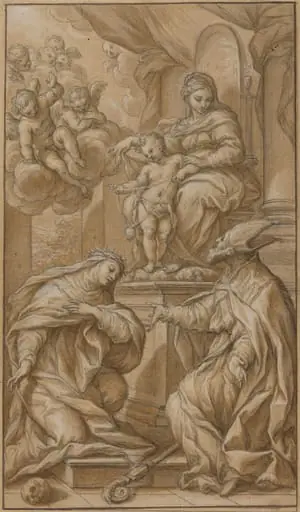
Design for three painted or sculptured panels in an ornamented frame: in the middle the Virgin and Child adorded by St Jerome and a king; to the left and right St Peter and St Paul
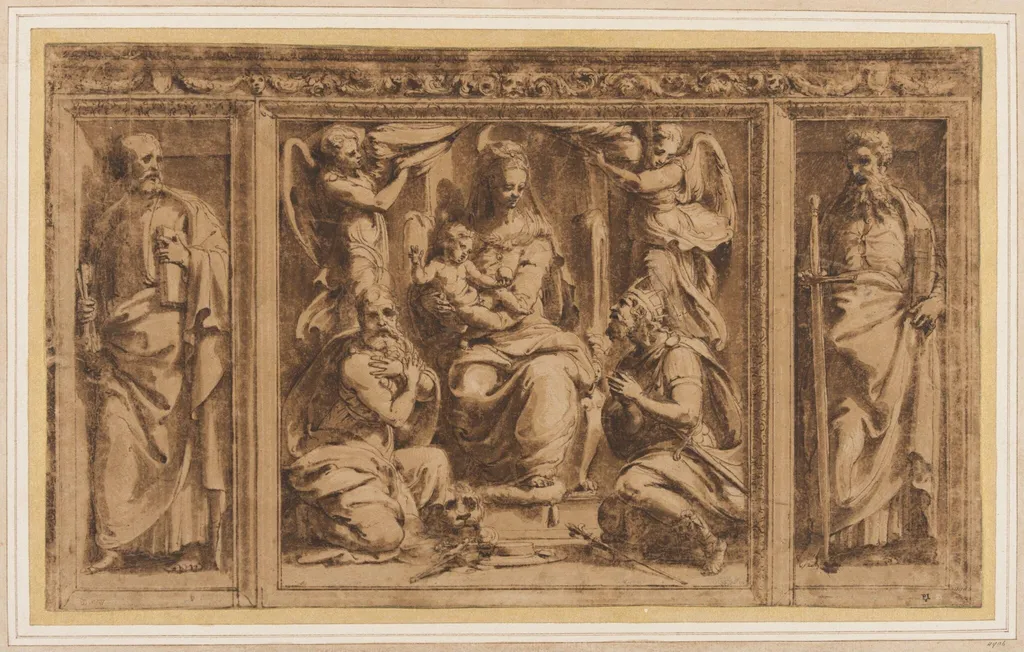
Design for three painted or sculptured panels in an ornamented frame: in the middle the Virgin and Child adorded by St Jerome and a king; to the left and right St Peter and St Paul is a drawing by the Renaissance artist Perino del Vaga. It dates from 1501 and is held in the collection of the Victoria and Albert Museum.
About this work
Overview
This ink drawing by Perino del Vaga serves as a preparatory design for a tripartite altarpiece, composed of three framed panels.
This ink drawing by Perino del Vaga serves as a preparatory design for a tripartite altarpiece, composed of three framed panels. It outlines a devotional composition centered on the Virgin and Child, flanked by Saint Jerome and a kneeling monarch, with Saints Peter and Paul positioned on the outer panels. The work is rendered in fluid, expressive lines, suggesting movement and volume without final detail, indicating its function as a working sketch for a larger commissioned piece.
Subject & Meaning
The central panel presents the Virgin and Child as the spiritual focus, honored by Saint Jerome, a scholar-saint, and a royal figure, symbolizing earthly devotion to divine authority. Saint Peter, holding keys, and Saint Paul, bearing a book, flank the scene as foundational apostles of the Church. The inclusion of royalty alongside clerical figures reinforces the fusion of sacred and secular power, common in Renaissance religious commissions.
Technique & Style
Perino employs rapid, confident pen strokes to define drapery, wings, and gestures, emphasizing motion and form over precision. The sketchy handling of fabric and angelic wings conveys dynamism, while the lack of shading or color suggests this was intended as a structural guide for painters or sculptors. The composition is tightly organized within an implied architectural frame, reflecting the artist’s focus on spatial arrangement.
History & Provenance
The drawing entered several prominent British collections during the 17th to 19th centuries, including those of Sir Peter Lely, Benjamin West, and Dr. Henry Wellesley. It was acquired by the museum in 1866 through the sale of J. C. Robinson’s collection, a key moment in the institutional preservation of Renaissance preparatory drawings. Its provenance reflects the Victorian era’s growing interest in artistic process and studio practice.
Context
Created during the High Renaissance, this drawing aligns with the practice of leading Roman artists who produced detailed sketches for altarpieces and decorative programs. Perino, a pupil of Raphael, worked on major ecclesiastical projects in Rome and Florence. Such preparatory drawings were essential for communicating complex iconographic schemes to workshop assistants and patrons before execution in paint or sculpture.
Legacy
As a well-preserved example of Renaissance design methodology, the drawing offers insight into how large-scale religious works were planned before execution. Its survival and collection history highlight changing attitudes toward artistic drafts—from functional tools to valued artifacts of creative thought. It remains a key reference for understanding the transition from concept to finished religious art in early 16th-century Italy.
Artist & collection

Artist
Piero Bonaccorsi (1501 – October 19, 1547), known as Perino (or Perin) del Vaga, was an Italian painter and draughtsman of the Late Renaissance/Mannerism.

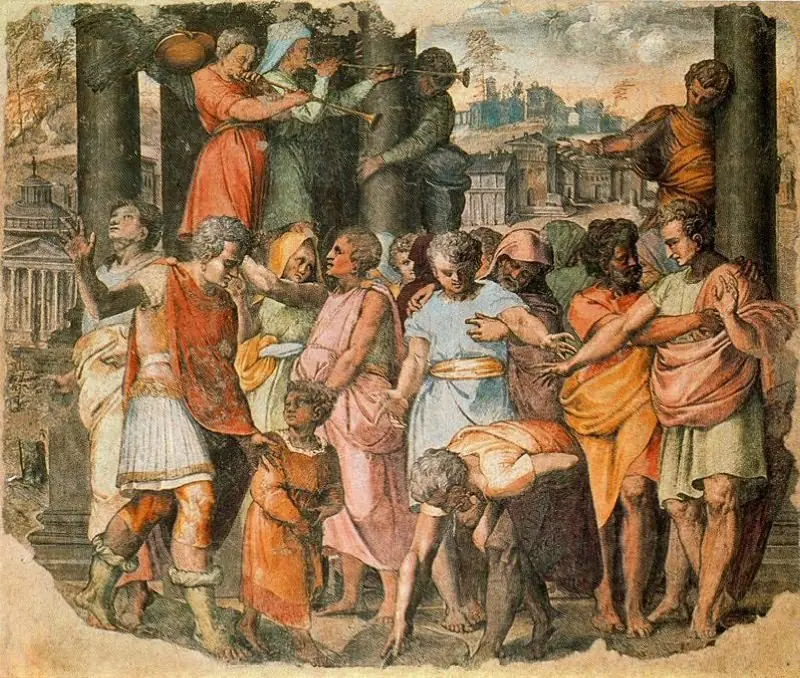
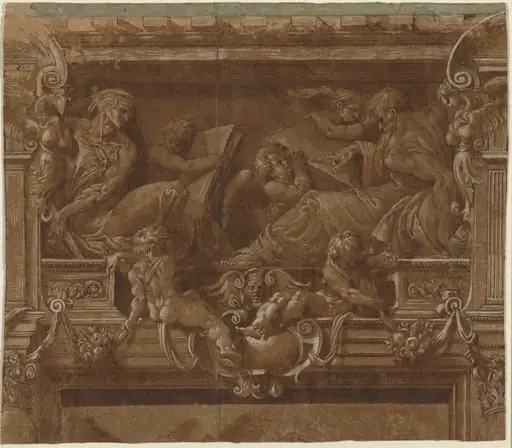 Prophet and Sybil
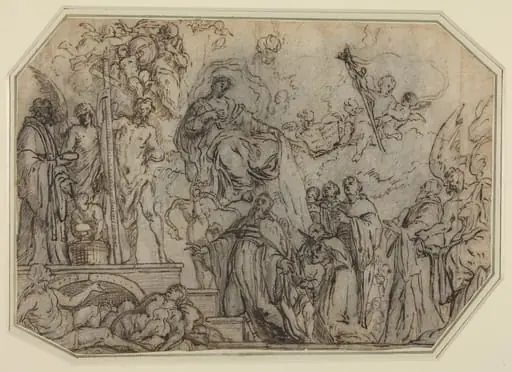 The Trinity and the Virgin Appearing to Ecclesiastics
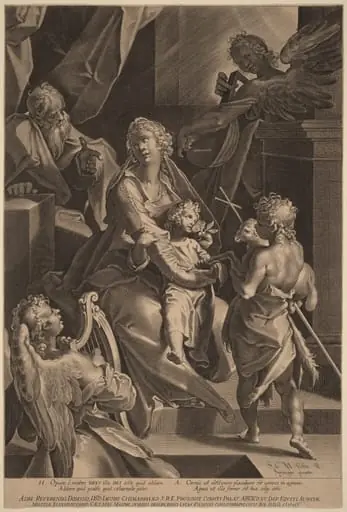 The Holy Family and Two Angels
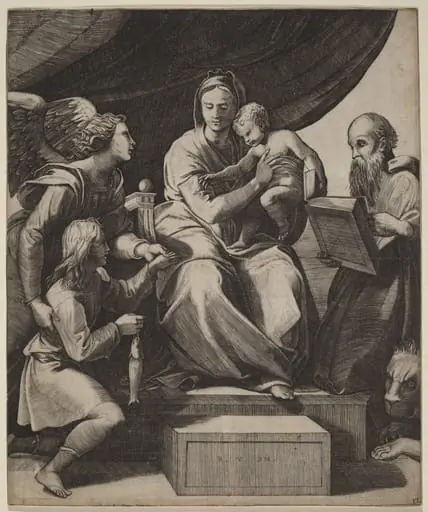 The Virgin with a Fish
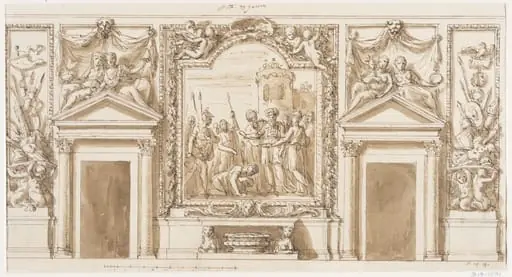 Design for the lower wall of the Great Hall at Moor Park, Hertfordshire
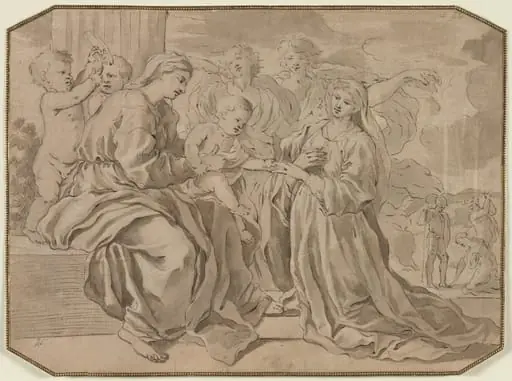 Mystic Marriage of St. Catherine
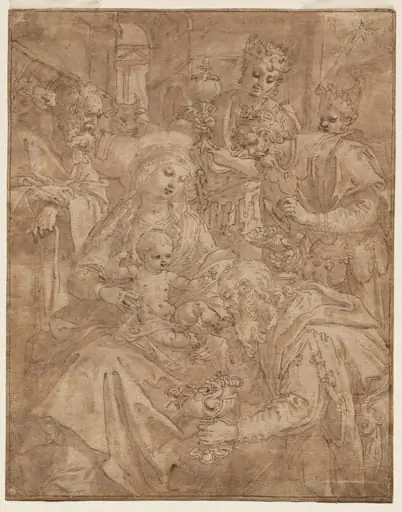 Adoration of the Magi
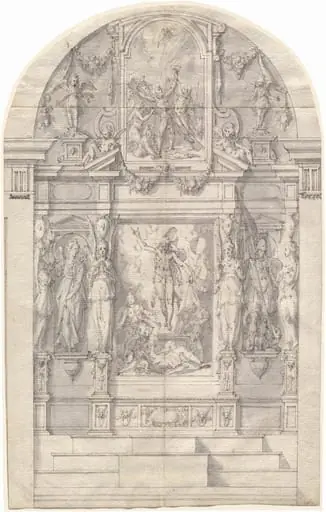 An Elaborate Altar with the Resurrection of Christ and the Martyrdom of Saint Andrew
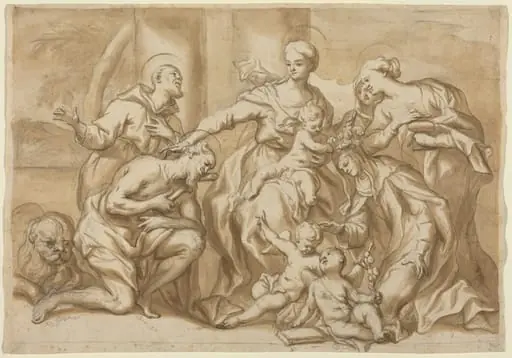 Madonna Surrounded by Saints
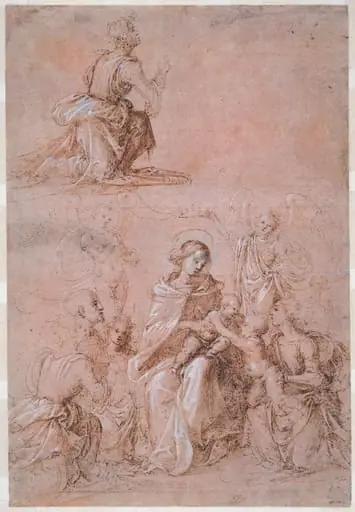 The Virgin and Child Surrounded by Saints and Angels
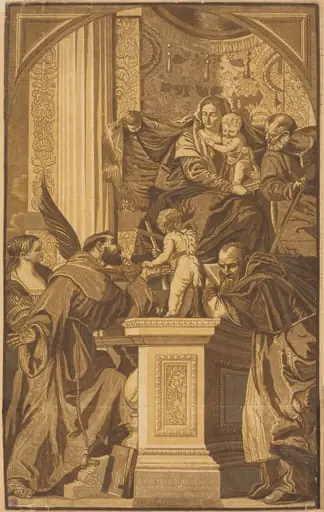 Holy Family and Four Saints
 The Madonna and Child Enthroned, Adored by Two Saints