Artwork
Saint Jude (Thaddeus)
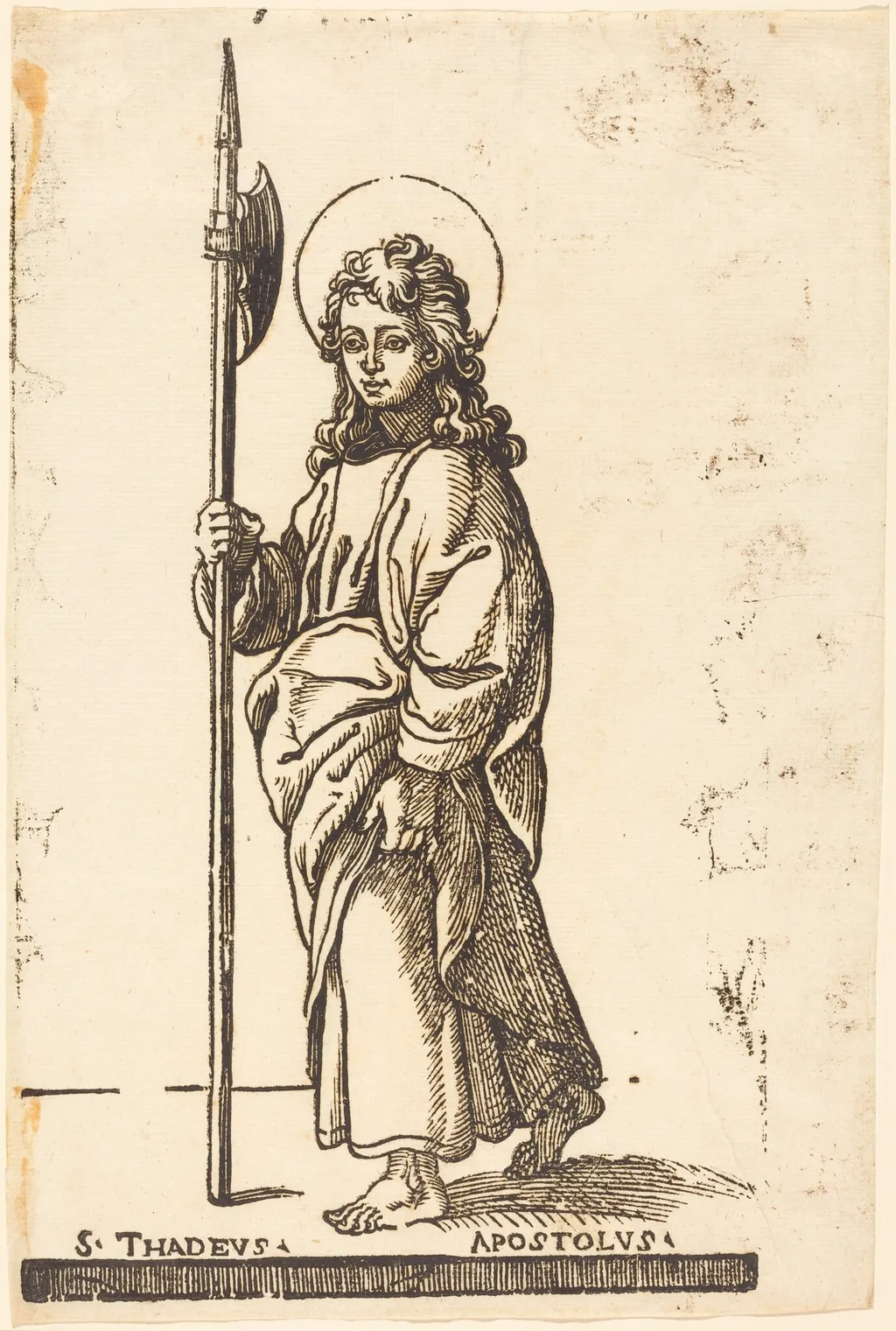
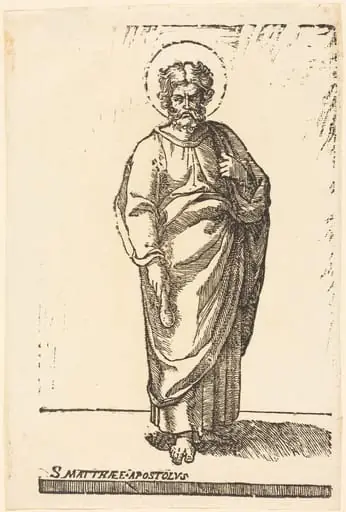
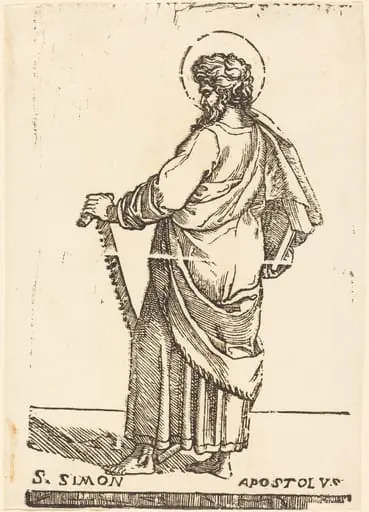
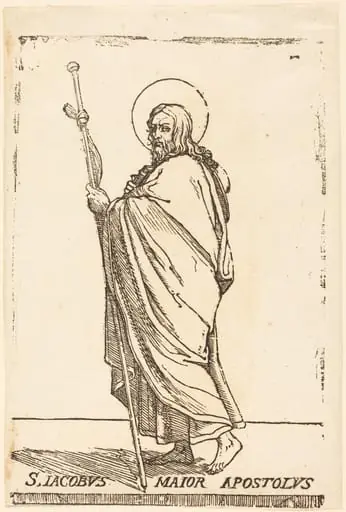
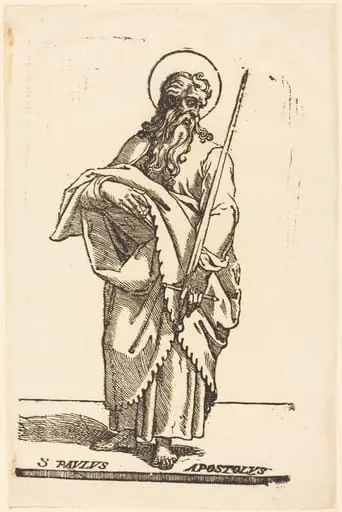
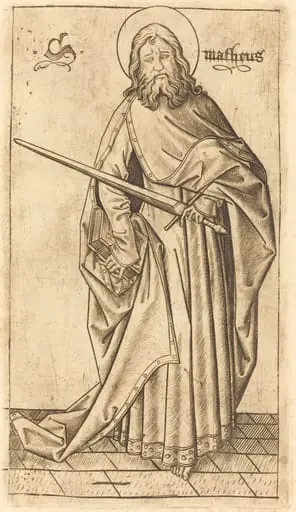
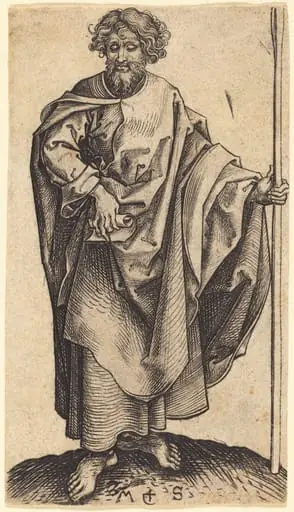
Saint Jude (Thaddeus) is an ink print by the Renaissance artist Italian 16th Century. It dates from 1626 and is held in the collection of the National Gallery of Art. The work is a black‑and‑white woodcut printed on laid paper, depicting a solitary figure in a robe clutching a long spear.
About this work
Overview
The work is a black‑and‑white woodcut printed on laid paper, depicting a solitary figure in a robe clutching a long spear. The saint is shown with a halo, curly hair, and a composed expression, standing on a simple ground rendered with a few linear marks that suggest grass or straw.
Subject & Meaning
Identified by the inscription “S. Thadeus Apostolus,” the image represents Saint Jude Thaddeus, one of the twelve apostles. The spear, a common attribute, alludes to his martyrdom, while the serene visage conveys his role as a patron of desperate causes and a figure of steadfast faith.
Technique & Style
Executed as a woodcut, the artist carved the design into a block of wood, inked the raised surfaces, and pressed the block onto laid paper. The medium yields stark contrasts and a textured quality in the drapery and hair, characteristic of Renaissance devotional prints intended for wide distribution.
History & Provenance
Woodcuts of saints were frequently produced in the Renaissance to disseminate religious imagery affordably. While the specific origin of this block is not recorded, its format and inscription align with the practice of early modern workshops that supplied images for private devotion and liturgical use.
Context
The print belongs to a broader tradition of devotional prints that circulated among lay audiences, complementing illuminated manuscripts and painted altarpieces. Its modest size and reproducibility reflect the growing demand for accessible visual aids to support personal piety during the period.
Artist & collection

Artist
A 16th-century Italian sculptor left us small bronze works in dark brown and gold.