Artwork
The Adoration of the Magi
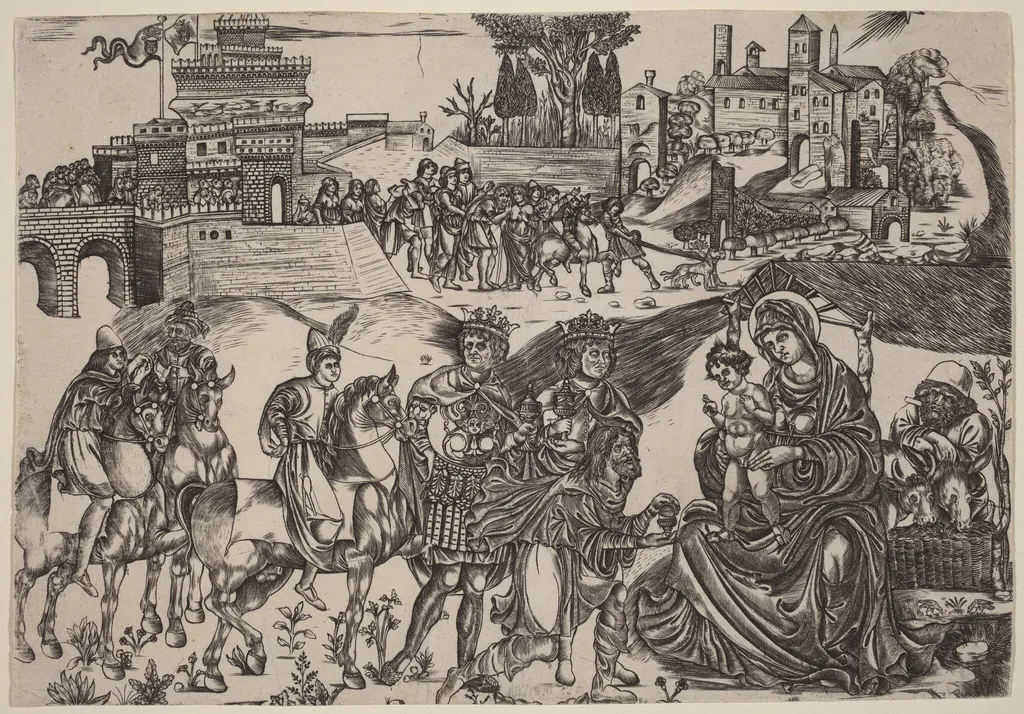
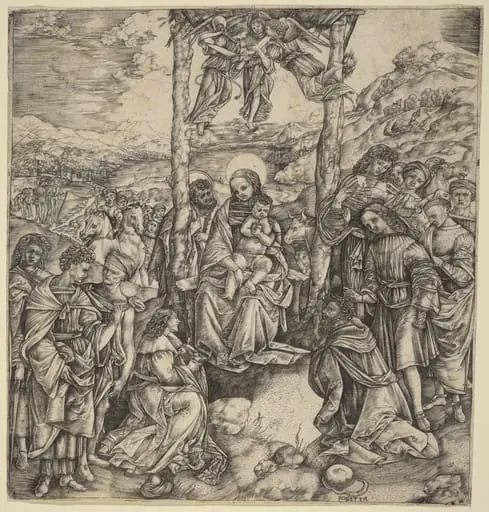
The Adoration of the Magi is an ink print by the Renaissance artist Italian 16th Century. It dates from 1508 and is held in the collection of the National Gallery of Art. This black-and-white engraving depicts the biblical moment when the Magi pay homage to the infant Jesus.
About this work
Overview
Rendered with fine, precise lines, the scene compresses a bustling urban environment into a single frame, blending sacred narrative with everyday medieval life.
This black-and-white engraving depicts the biblical moment when the Magi pay homage to the infant Jesus. Rendered with fine, precise lines, the scene compresses a bustling urban environment into a single frame, blending sacred narrative with everyday medieval life. The composition directs attention to the central figures while surrounding them with dense, detailed activity that suggests a world beyond the immediate moment.
Subject & Meaning
The scene centers on the three Magi, each mounted and offering gifts, bowing before the Virgin Mary and the Christ Child. Their gestures signify reverence and recognition of divine kingship. The crowded streets, distant castle, and varied onlookers imply the event’s public significance, framing the sacred as embedded within the ordinary life of a medieval town, reinforcing the theological idea of Christ’s revelation to all peoples.
Technique & Style
The artist employed fine parallel and cross-hatching lines to model form and depth without color. These meticulous strokes define textures—horseflesh, stone walls, fabric folds—and create atmospheric perspective. The density of line increases in shadowed areas, while lighter areas suggest sunlight or distance. This method, typical of Northern Renaissance engraving, demands precision and reveals the artist’s control over tone and spatial recession.
History & Provenance
The engraving likely dates to the late 15th or early 16th century, produced in a region where printmaking flourished, such as the Rhineland or Netherlands. Though the artist’s identity is unconfirmed, the style aligns with contemporaries who adapted religious themes for wide dissemination. Surviving impressions suggest it was circulated among collectors and clergy, serving both devotional and educational purposes.
Context
During this period, engravings of biblical scenes were widely distributed, allowing lay audiences to engage with sacred stories outside church walls. The inclusion of contemporary architecture and urban life reflects a trend toward naturalism in religious art. The castle and bridge may reference local landmarks or idealized cityscapes, grounding the divine event in a recognizable, earthly setting familiar to viewers.
Legacy
This engraving exemplifies how printmaking democratized religious imagery in early modern Europe. Its detailed technique influenced later generations of printmakers, and its fusion of sacred narrative with civic detail became a model for depicting biblical events in everyday contexts. Though not attributed to a major name, it remains a representative artifact of widespread devotional print culture.
Artist & collection

Artist
A 16th-century Italian sculptor left us small bronze works in dark brown and gold.

 The Adoration of the Magi
 The Adoration of the Magi
 The Adoration of the Magi
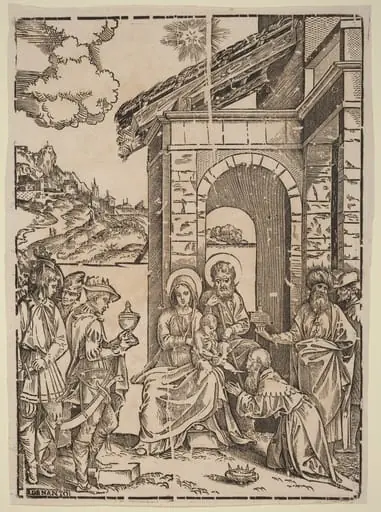 The Adoration of the Magi
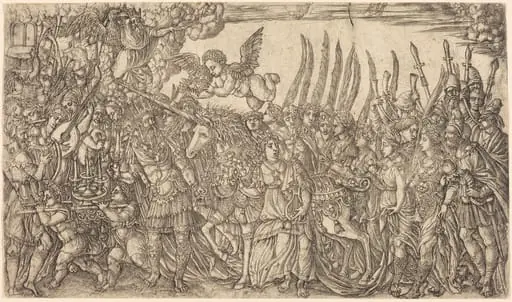 The Triumph of the Unicorn
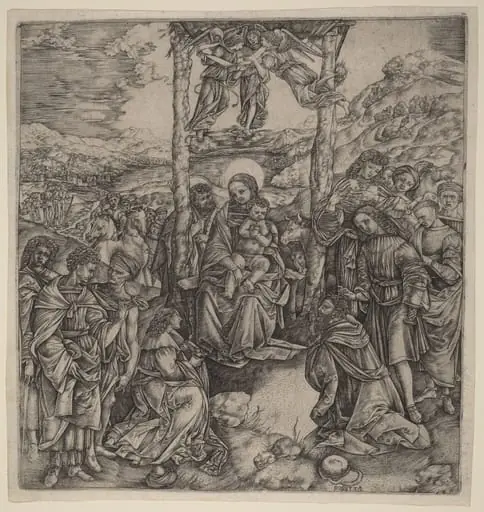 The Adoration of the Magi
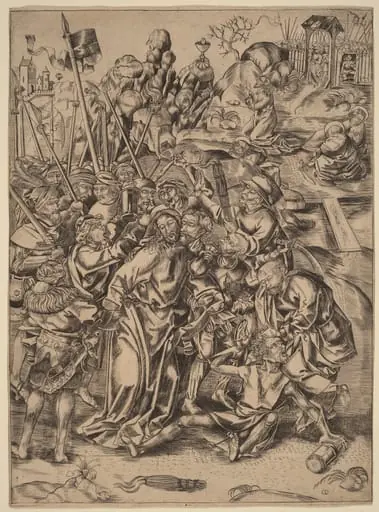 The Betrayal
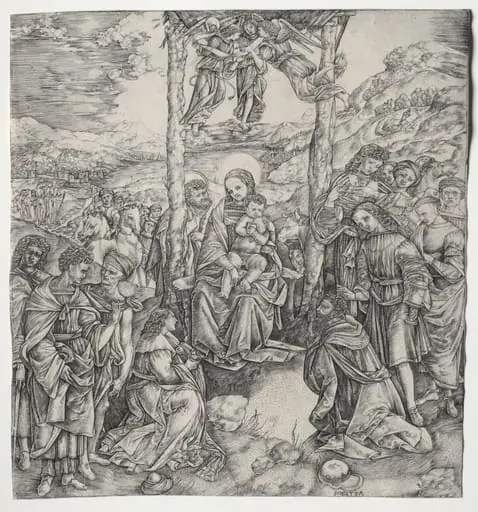 Adoration of the Magi
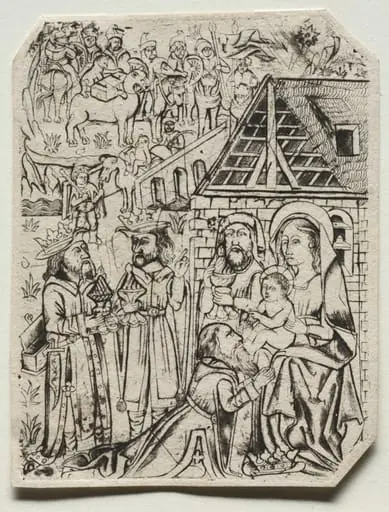 Adoration of the Magi
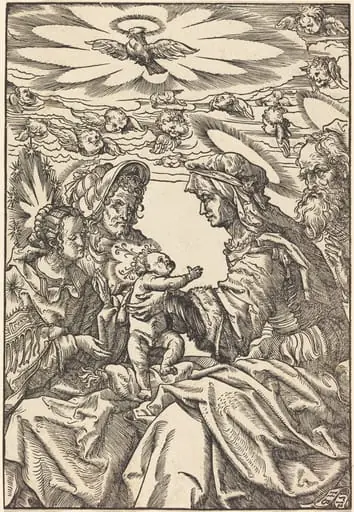 The Holy Family with Saint Anne and Saint Joachim
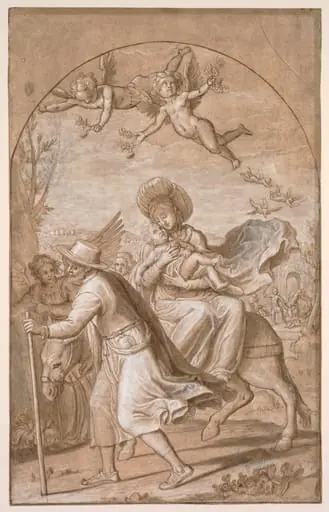 The Flight into Egypt
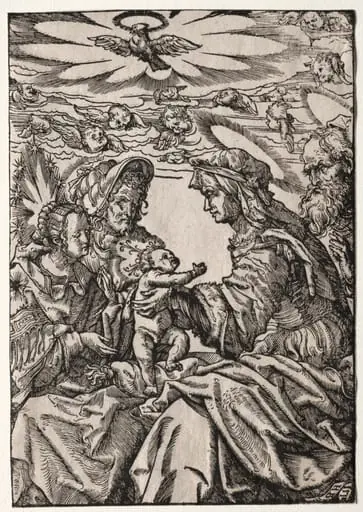 The Holy Family with St. Anne and Joachim