Artwork
The Sacrifice of Isaac
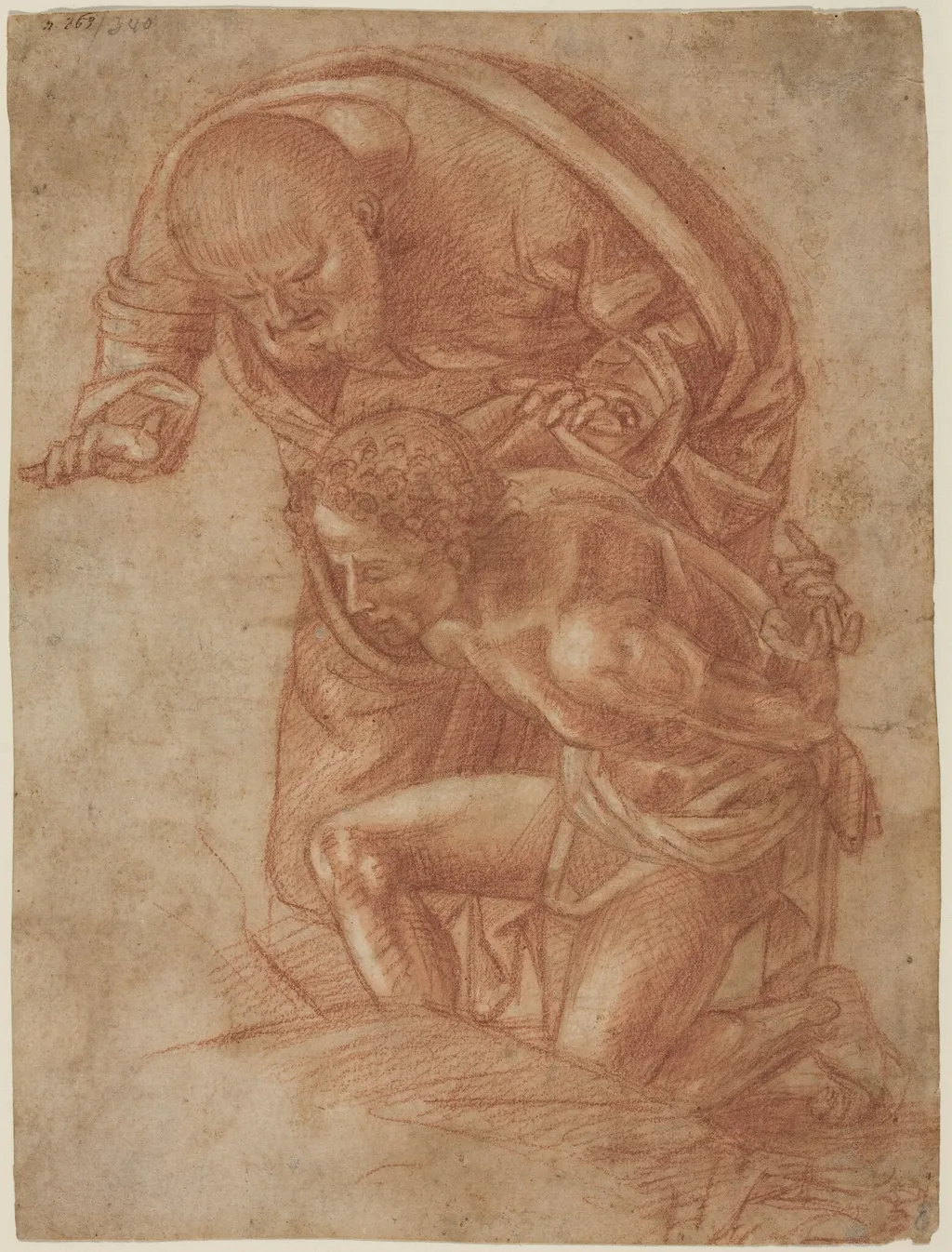
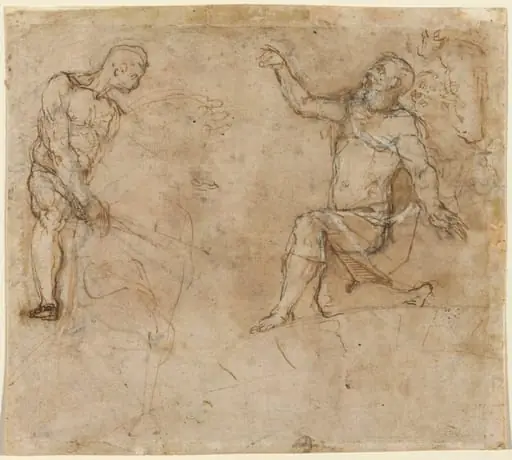
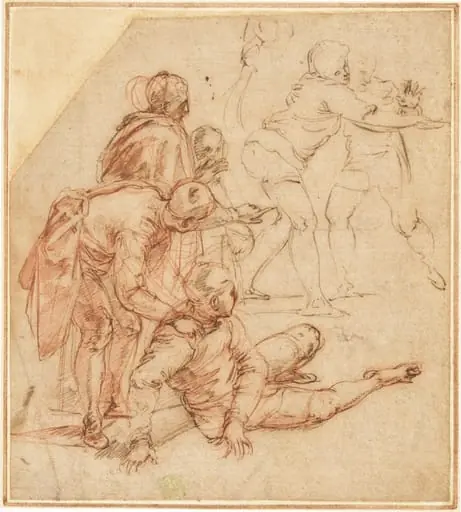
The Sacrifice of Isaac is a chalk drawing by the Renaissance artist Unknown. It dates from 1500 and is held in the collection of the National Gallery of Art. Created around 1500 by an Italian artist, this red‑chalk drawing on laid paper depicts a dramatic biblical moment.
About this work
Overview
The composition centers on a supine male figure with outstretched arms, his head thrown back, while a second figure hovers above, brandishing a curved knife.
Created around 1500 by an Italian artist, this red‑chalk drawing on laid paper depicts a dramatic biblical moment. The composition centers on a supine male figure with outstretched arms, his head thrown back, while a second figure hovers above, brandishing a curved knife. The work is rendered in a limited palette of red chalk complemented by white highlights to model form and suggest illumination.
Subject & Meaning
The scene illustrates the biblical narrative of Abraham’s intended sacrifice of his son Isaac, a story that explores themes of faith, obedience, and divine intervention. The juxtaposition of the vulnerable, reclined figure with the threatening weapon underscores the tension between human intent and divine mercy, inviting contemplation of the moral dilemma at the heart of the tale.
Technique & Style
Executed with red chalk on a rough‑textured laid paper, the drawing employs stark, scratchy lines that convey immediacy and vigor. White heightening is applied to accentuate light sources, creating a chiaroscuro effect that models the bodies despite the monochrome medium. This approach reflects the preparatory drawing practices of the Renaissance, where artists used limited media to explore composition and volume before committing to paint.
History & Provenance
The work dates to the early sixteenth century, a period when Italian artists frequently produced detailed studies for larger altarpieces or narrative paintings. Its survival on fragile paper suggests it was likely a working sketch rather than a finished piece, and it has been preserved within a collection of Renaissance drawings, though specific ownership records remain scarce.
Context
During the turn of the sixteenth century, Italian art was transitioning toward heightened naturalism and expressive storytelling. Artists increasingly employed preparatory drawings to experiment with complex human gestures and dramatic lighting, a practice evident in this piece’s dynamic pose and stark contrast.
Legacy
While not a finished painting, the drawing offers insight into the creative process of Renaissance masters, illustrating how they resolved narrative tension and anatomical challenges in preliminary studies. It continues to serve as a reference for scholars examining the development of compositional planning in early modern art.
Artist & collection

 Domestic Scene
 Giacomo and Cardinal Marco, investing Andrea, Abbot of San Zeno, with his Benefice
 The Nymph of Fontainebleau
 Portrait of a Woman
 Madonna and Child with Saints in the Enclosed Garden
 Venus and Minerva
 Family Group of Four on Sofa
 Wall painting from Room H of the Villa of P. Fannius Synistor at Boscoreale
![Studies of Legs and Drapery [recto], by Abraham Bloemaert](https://artifactworldgallery.com/img/abraham-bloemaert--studies-of-legs-and-drapery-recto--93eb35075fbdb28d-w320.webp)