Artwork
The Four Accomplishments
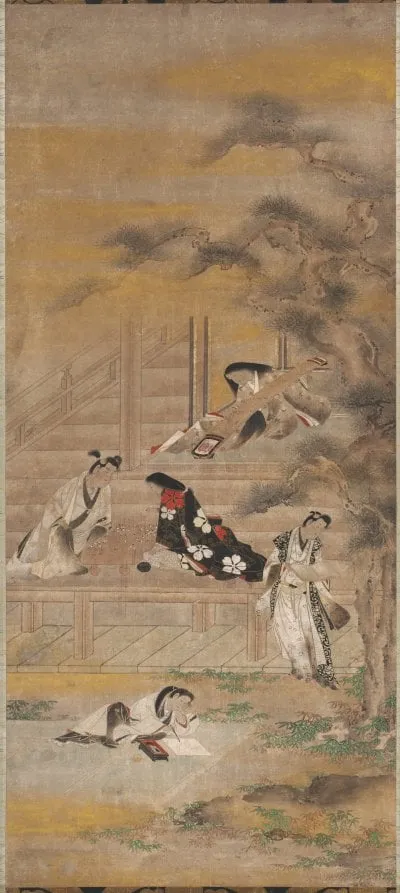
The Four Accomplishments is an unspecified painting by the Baroque artist Iwasa Matabei. It dates from 1635 and is held in the collection of the Cleveland Museum of Art. The work depicts four elegantly attired figures engaged in distinct leisure activities within a domestic interior.
About this work
You see four people in a room: one plucks a koto, two play Go, one reads, and a boy paints flowers.
You see four people in a room: one plucks a koto, two play Go, one reads, and a boy paints flowers. They wear fancy robes and look relaxed.
This painting shows what educated people in Japan enjoyed doing for fun. The theme comes from China, but the artist made it feel like daily life in the Edo period. The faces are calm, almost like a quiet party.
To see more art like this, look up *japan, edo period (1615–1868)*.
Overview
The work depicts four elegantly attired figures engaged in distinct leisure activities within a domestic interior. A woman plucks the strings of a koto, two individuals concentrate on a game of Go, a man is absorbed in reading, and a young boy applies brush to paper, rendering floral motifs. The composition conveys a tranquil, leisurely atmosphere characteristic of cultivated Edo‑period life.
Subject & Meaning
Each figure represents one of the traditional scholarly pastimes valued by the educated elite: music, board gaming, literary study, and painting. By arranging these pursuits together, the artist emphasizes a harmonious balance of intellectual and artistic cultivation, reflecting a cultural ideal that prized refinement and the gentle enjoyment of cultivated hobbies.
Technique & Style
Executed in the refined brushwork of Edo‑period painting, the scene combines delicate line with subtle washes of color to delineate clothing and interior details. The figures are rendered with calm, composed expressions, and the spatial arrangement uses a shallow perspective that invites the viewer into the intimate setting without dramatic depth.
Context
The subject matter derives from a Chinese motif that enumerated the four exemplary accomplishments of the learned class. Adapted to a Japanese setting, the painting translates the theme into a recognizable Edo household, illustrating how Chinese cultural models were localized during the early modern period.
History & Provenance
The artwork is attributed to a mid‑Edo school painter known for genre scenes, though the exact commission remains undocumented. It has been retained in private collections before entering a museum holding focused on Japanese decorative arts, where it serves as an example of cross‑cultural artistic exchange.
Artist & collection
Artist
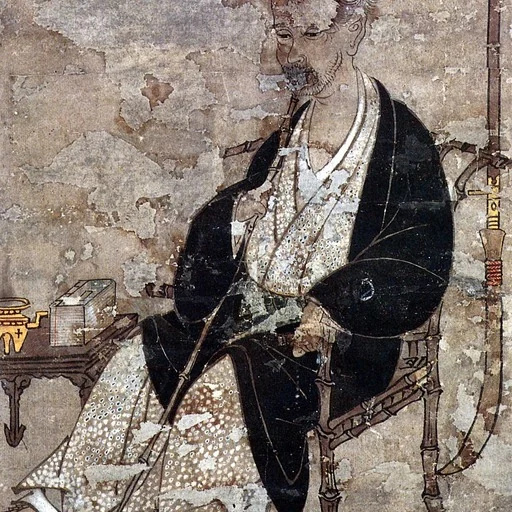
Iwasa Matabei (岩佐 又兵衛); original name Araki Katsumochi 1578 – July 20, 1650) was a Japanese artist of the early Tokugawa period, who specialized in genre scenes of historical events and illustrations of classical…

 Courtesan and Sleeping Attendant
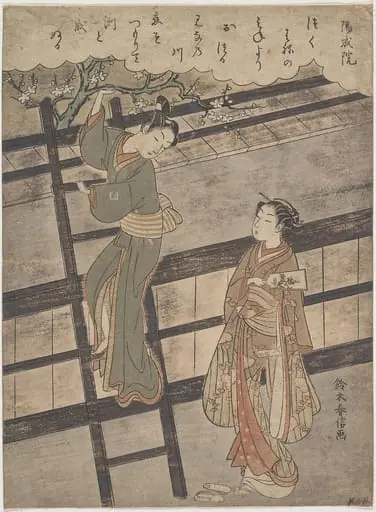 百人一首 陽成院|Yozei no In
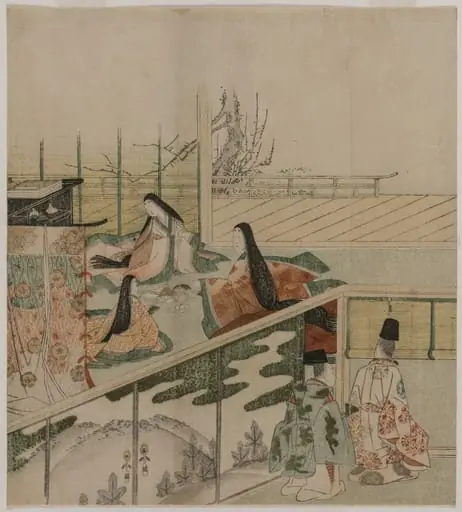 Court Ladies Making Dolls
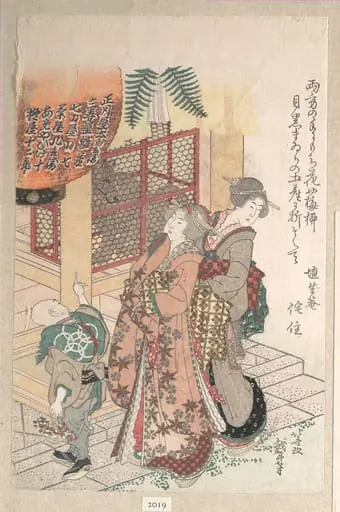 初詣|Young Women Visiting a Shinto Shrine
 Palace Ladies
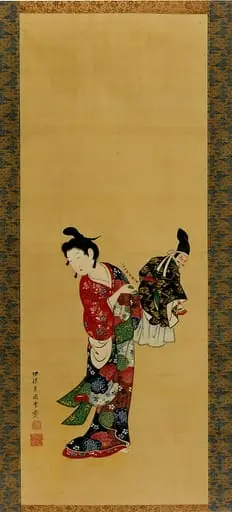 Untitled
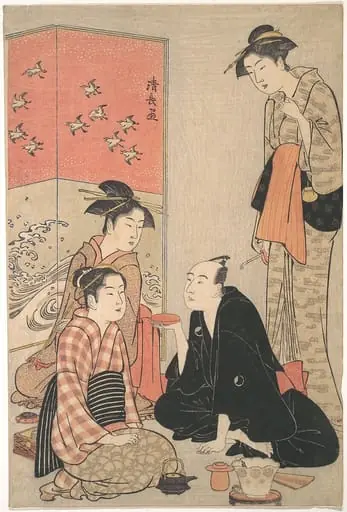 三代目沢村宗十郎と遊女|The Kabuki Actor Sawamura Sōjūrō III and Courtesans
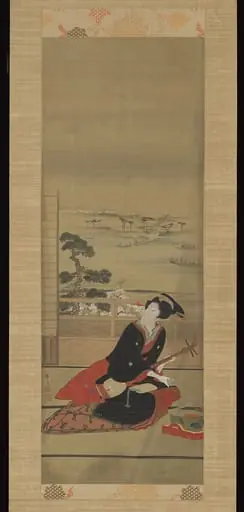 蹄斎北馬筆 三味線持つ美人図|Female Entertainer with Shamisen
 Untitled
 Untitled
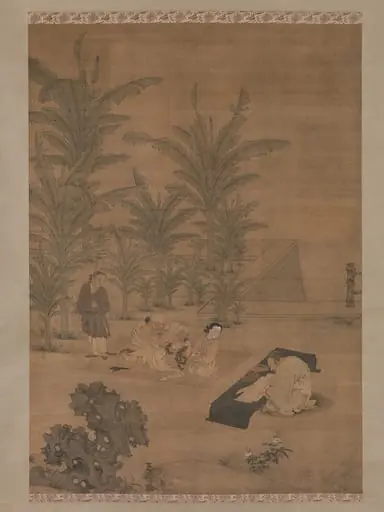 明 杜堇 伏生授經圖 軸|The Scholar Fu Sheng Transmitting the Book of Documents
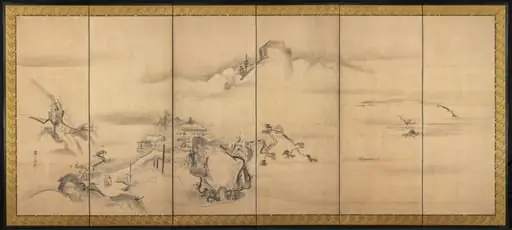 Eight Views of the Xiao and Xiang Rivers