Artwork
百人一首 陽成院|Yozei no In
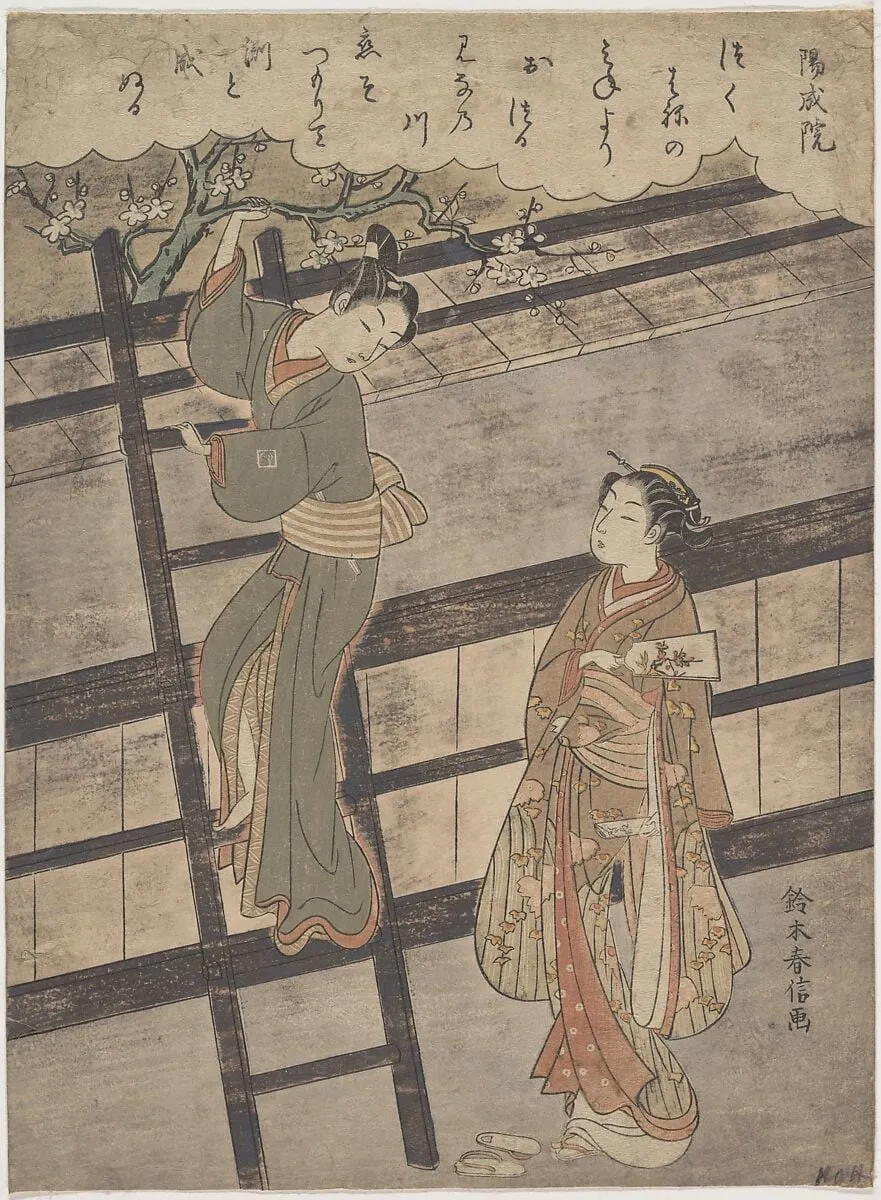
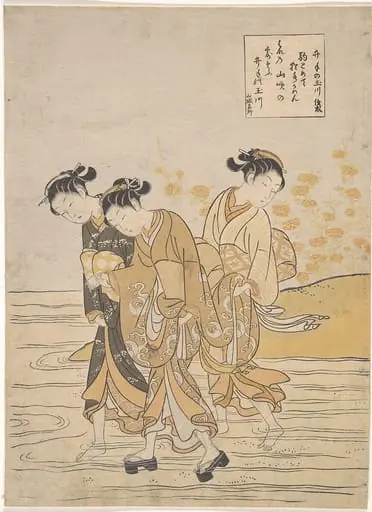
百人一首 陽成院|Yozei no In is an ink print by the Romanticist artist Suzuki Harunobu. It dates from 1766 and is held in the collection of the Metropolitan Museum of Art.
About this work
Overview
百人一首 陽成院|Yozei no In is a late 18th-century woodblock print by Suzuki Harunobu, dated circa 1766, executed in ink and color on paper.
Subject & Meaning
The print depicts a serene domestic moment: one woman in a greenish robe with a striped sash climbs a wooden ladder to pluck blossoming branches, while another, dressed in a floral-patterned robe, observes from below, holding a fan. The scene emphasizes everyday life’s quiet intimacy.
Technique & Style
Characterized by delicate lines and attention to textile detail, the print showcases Suzuki Harunobu’s mastery of woodblock printing. The composition balances simplicity (ladder, poses) with intricate patterns (robes), set against a subdued background featuring a tiled roof and Japanese script.
History & Provenance
The work is part of The Metropolitan Museum of Art’s collection. Created in the mid-Edo period, it reflects the era’s aesthetic preferences for ukiyo-e prints capturing daily life and nature.
Context
Produced during the Edo period (1603-1867), this print aligns with the growing interest in depicting the lives of the emerging middle class and the beauty of transient natural moments, such as blossoming branches.
Legacy
As a work by Suzuki Harunobu, a pivotal figure in the development of ukiyo-e, 百人一首 陽成院|Yozei no In contributes to the broader legacy of Japanese woodblock printing’s influence on global art, particularly in its portrayal of serene, everyday scenes.
Artist & collection

 Untitled
 Amagoi|Ono no Komachi Praying for Rain
 Untitled
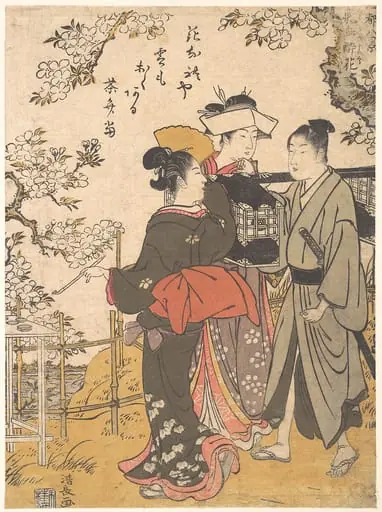 Untitled
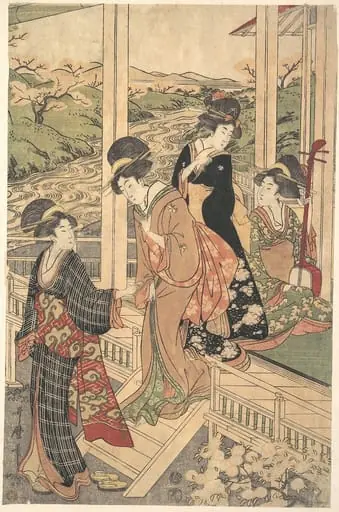 Untitled
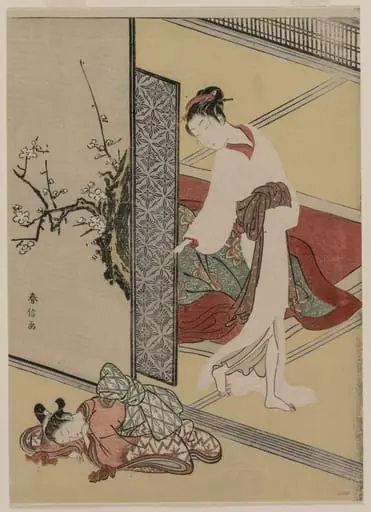 Courtesan and Sleeping Attendant
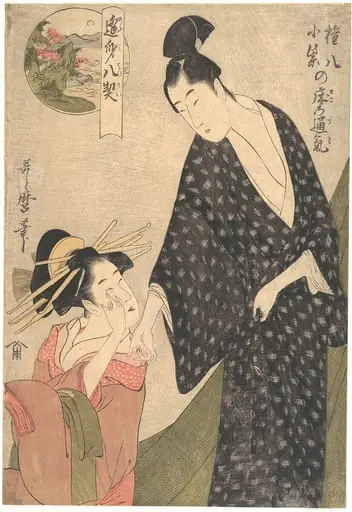 Gompachi Komurasaki no Toko no Tsuki|逢身八契 権八小紫の床の通気|Shared Feelings in the Bedchamber of Komurasaki and Gompachi
 Untitled
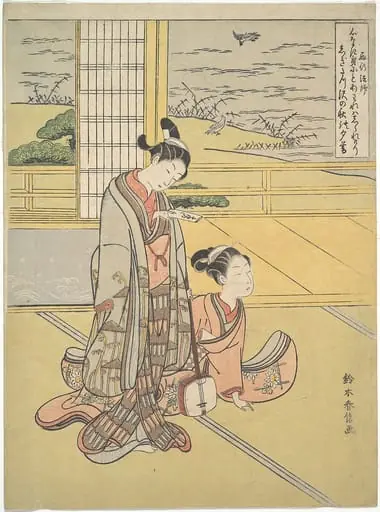 鈴木春信画 見立三夕 「西行法師」|A Young Man and Woman with a Shamisen; Monk Saigyō, from a series alluding to the Three Evening Poems (Sanseki waka)
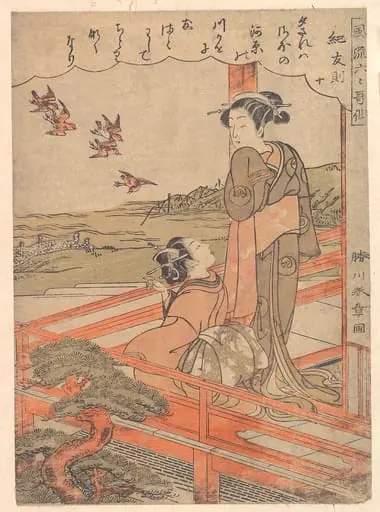 「風流六く歌仙紀友則 十」|“Two Young Women on a Verandah Watching Plovers,” from the series Stylish Six Poetic Immortals (Fūryū rokkasen: Ki no Tomonori, jū)
 Untitled
 井手の玉川|Jewel River at Ide (Ide no Tamagawa)