Artwork
Courtesan and Sleeping Attendant
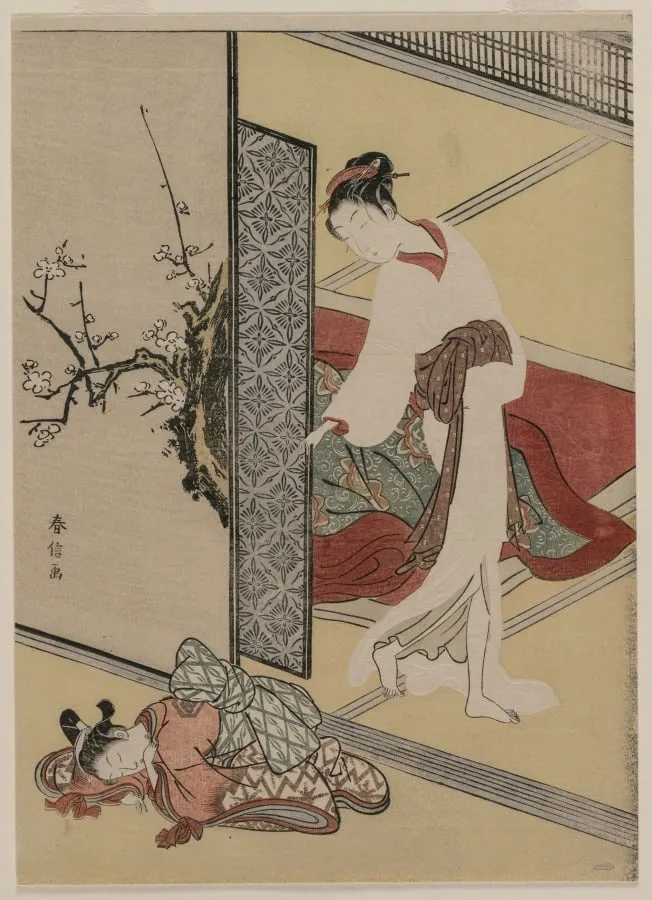
Courtesan and Sleeping Attendant is a print by the Romanticist artist Suzuki Harunobu. It dates from 1764 and is held in the collection of the Cleveland Museum of Art. The work is a woodblock print depicting a courtesan rising from a bed while her attendant remains asleep.
About this work
Overview
The work is a woodblock print depicting a courtesan rising from a bed while her attendant remains asleep. The scene is set within an interior where the courtesan’s bright garments contrast sharply with the muted tones of the surrounding textiles, creating a vivid visual focus on the two figures.
Subject & Meaning
The courtesan is shown in the act of leaving the bed, her obi sash tied at the front—a detail that signals her higher social rank. In contrast, the attendant’s sash is bound at the back, a conventional indicator of lower status. The juxtaposition of wakefulness and sleep may allude to the differing roles and responsibilities of the two women.
Technique & Style
The image is produced by pressing a carved woodblock, left uninked, onto the paper to emboss the folds of fabric, giving the impression of three‑dimensional texture. This method aligns with the delicate, decorative approach characteristic of mid‑Edo period prints, especially those associated with the artist Suzuki Harunobu.
History & Provenance
The print is part of the collection of the Cleveland Museum of Art. Its acquisition details are recorded in the museum’s catalog, confirming its status as a representative example of the genre.
Context
During the Edo period, prints often portrayed scenes from the lives of courtesans, using visual cues such as obi placement to convey social hierarchy. The work reflects contemporary aesthetic preferences for intricate patterning and subtle narrative detail.
Artist & collection

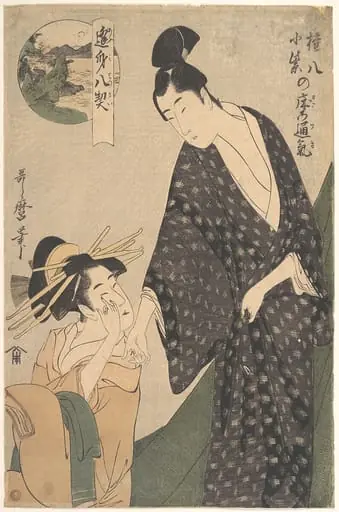 逢身八契 権八小紫の床の通気|Gonpachi ni Komurasaki no Toko no Tsuki
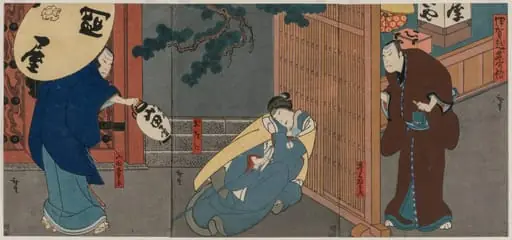 A Tale of Valor at Iga Pass
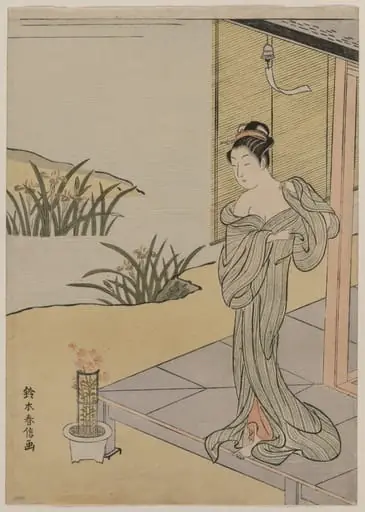 Young Woman Looking at a Pot of Pinks
 Untitled
 百人一首 陽成院|Yozei no In
 Hanaōgi of Ōgiya from the series Picture Puzzles
 百人一首 小式の内持|Koshikibu no Naishi (999–1025), from "Hyakunin Isshu" (One Hundred Poems by One Hundred Poets)
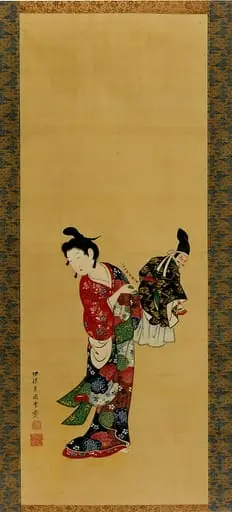 Untitled
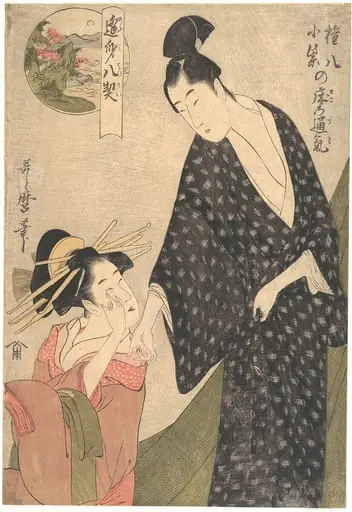 Gompachi Komurasaki no Toko no Tsuki|逢身八契 権八小紫の床の通気|Shared Feelings in the Bedchamber of Komurasaki and Gompachi
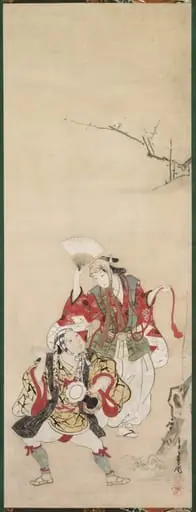 Spring Dancers (Manzai)
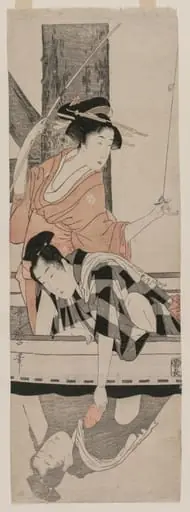 Couple in a Boat
 Courtesan