Artwork
Portrait of Mátyás Zitterbarth
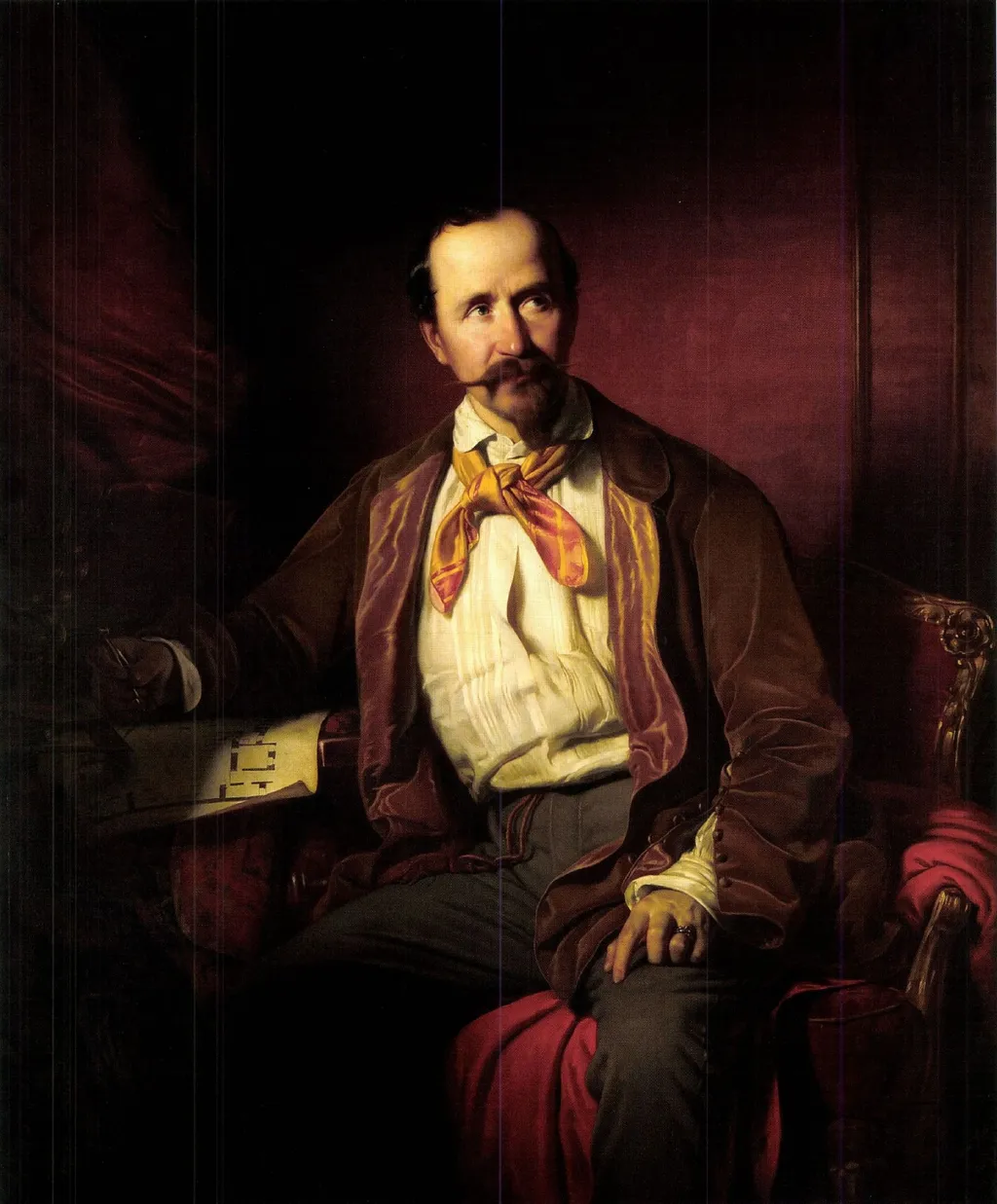
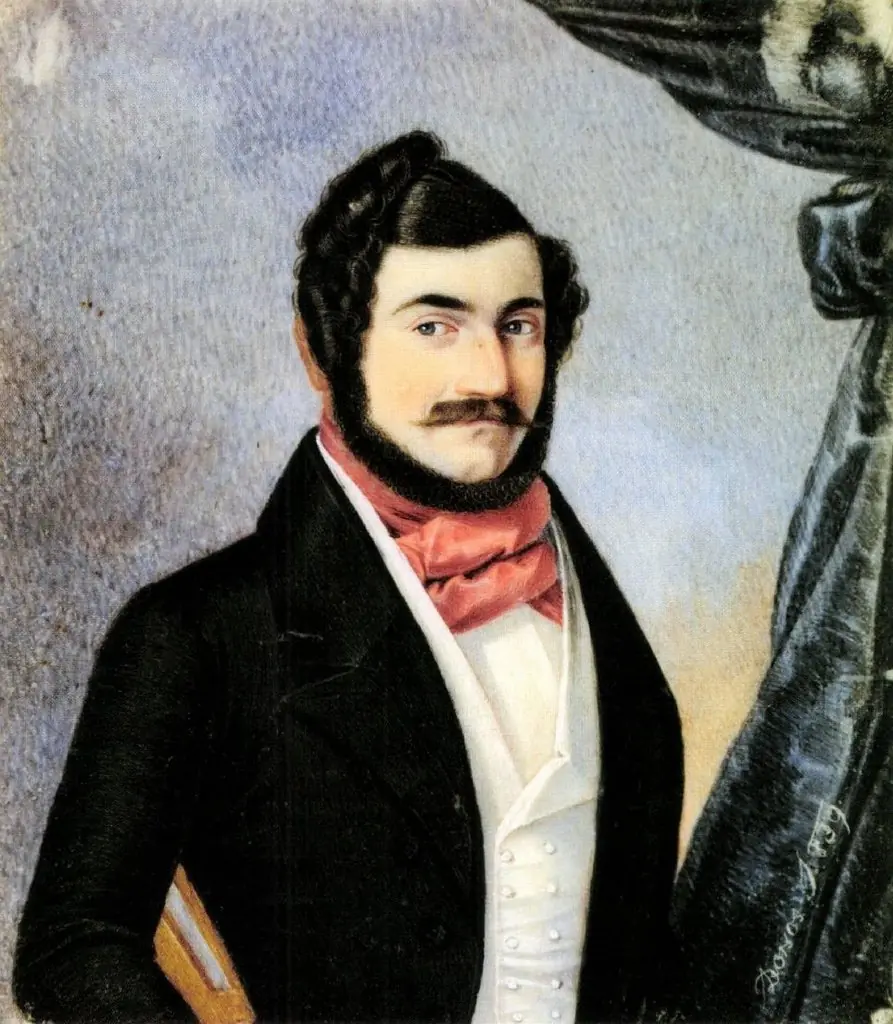
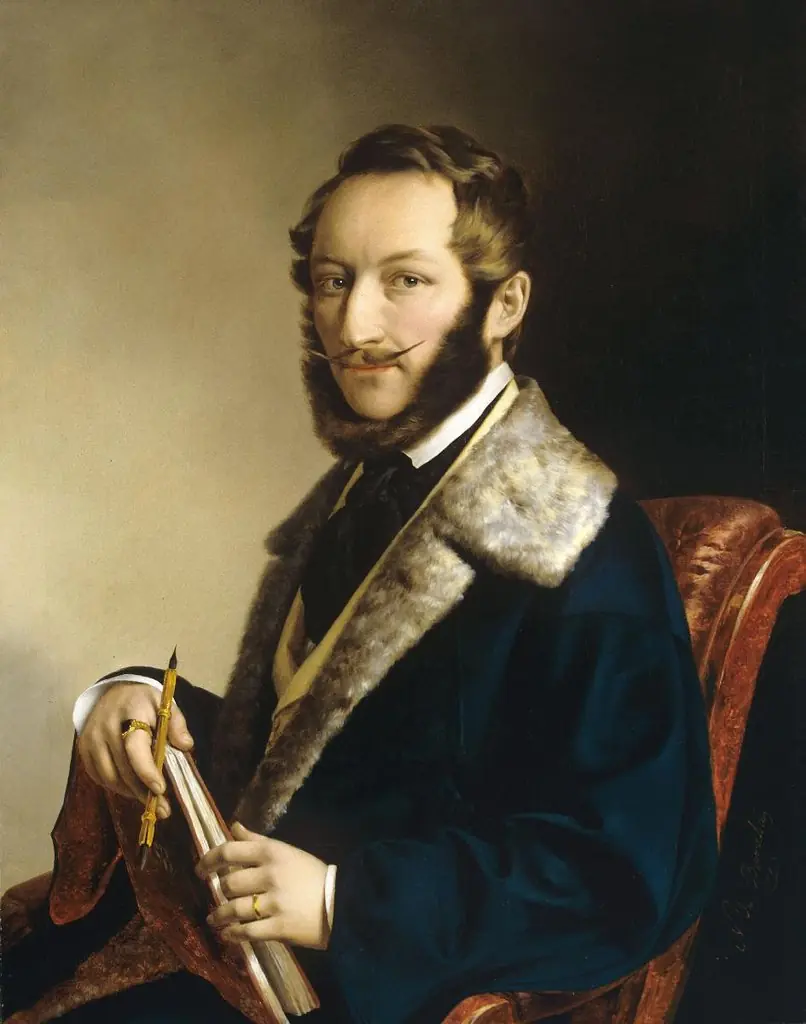
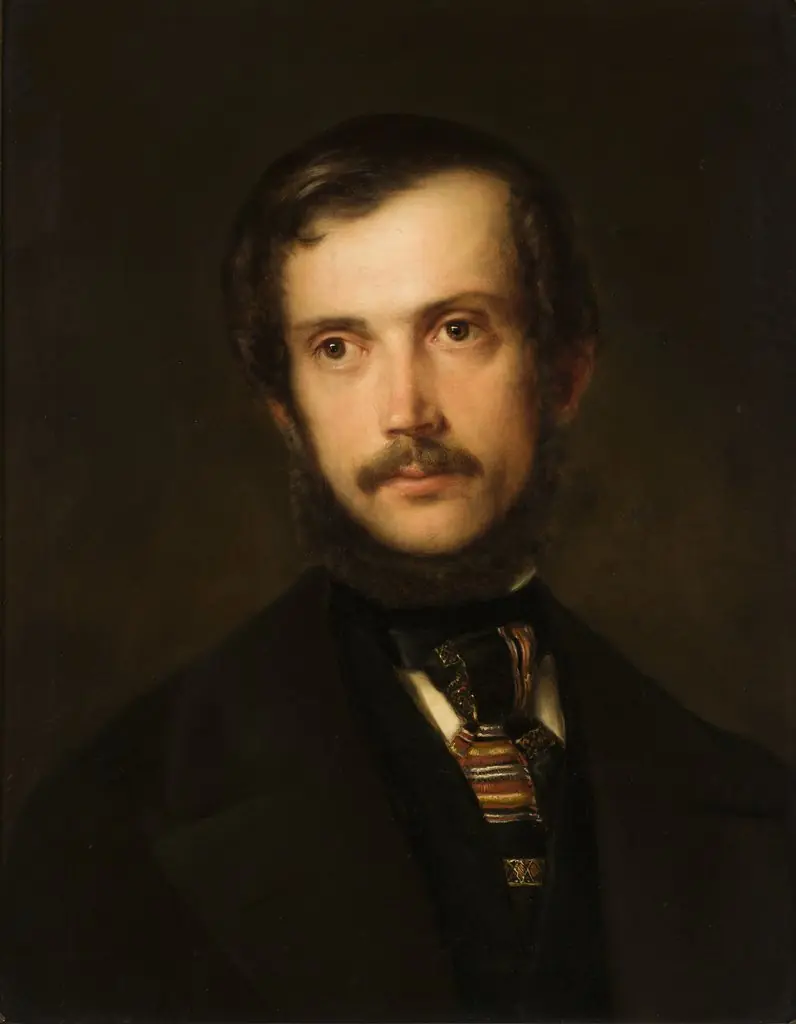
Portrait of Mátyás Zitterbarth is an oil painting by the Realist artist József Borsos. It dates from 1851 and is held in the collection of the Hungarian National Gallery.
About this work
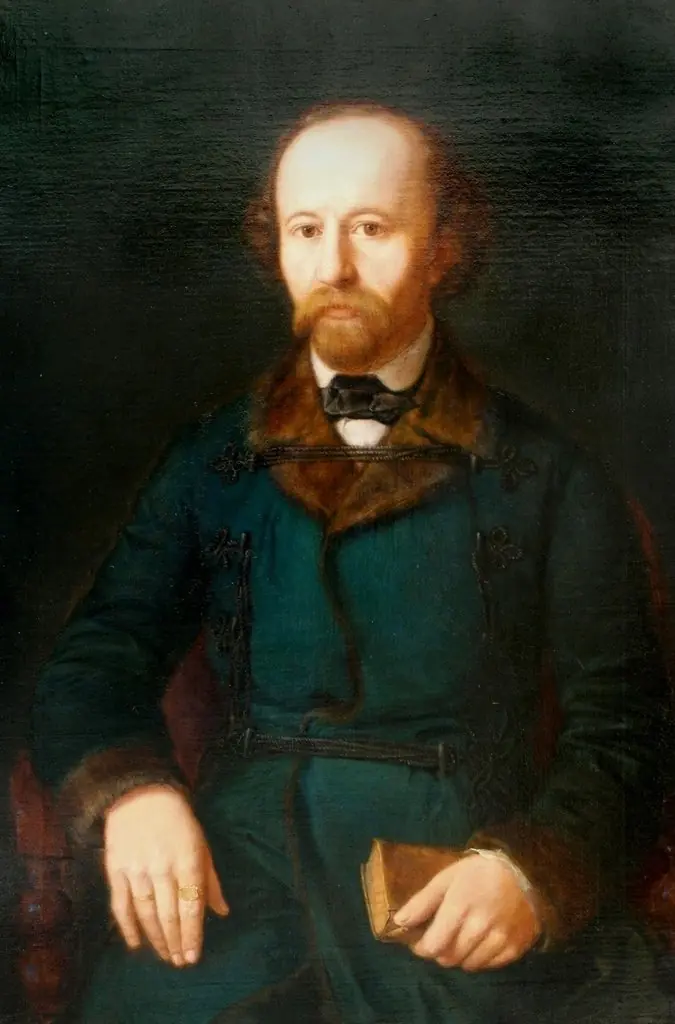
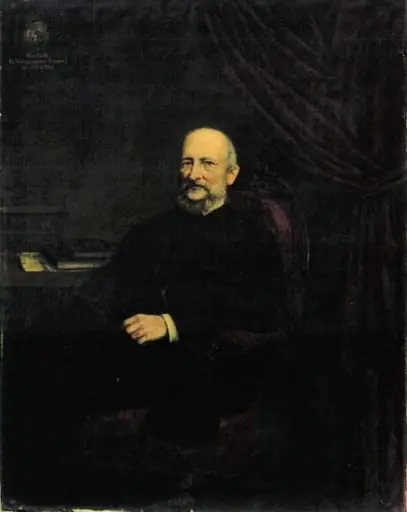
The painting features a man seated in a chair, dressed in a dark jacket over a white shirt and a yellow cravat.
The painting features a man seated in a chair, dressed in a dark jacket over a white shirt and a yellow cravat. He is positioned in front of a red curtain, with his left arm resting on a table beside him. The overall atmosphere of the painting is one of quiet contemplation.
The subject's attire and the setting suggest a formal portrait, possibly from the 19th century. The artist's use of color and lighting creates a sense of depth and dimensionality in the painting.
To learn more about the artist's techniques and style, explore the work of József Borsos.
Overview
Painted in 1851 by Hungarian artist József Borsos, this oil-on-canvas portrait captures Mátyás Zitterbarth in a composed, seated pose. Executed in the realist mode prevalent in mid-19th-century Central Europe, the work reflects the era’s preference for restrained elegance and psychological presence over theatricality. It is held in the collection of the Hungarian National Gallery, where it stands as a representative example of domestic portraiture from the period.
Subject & Meaning
Mátyás Zitterbarth is portrayed with quiet dignity, his gaze directed slightly beyond the viewer, suggesting introspection rather than performative engagement. His formal attire—a dark jacket, white shirt, and yellow cravat—signals social standing without ostentation. The absence of symbolic objects or elaborate backdrop implies an emphasis on personal presence rather than status display, aligning with the Biedermeier ideal of private virtue and understated refinement.
Technique & Style
Borsos employs subtle tonal gradations and controlled lighting to model the figure with quiet realism. The red curtain behind him provides a muted contrast that enhances the subject’s three-dimensionality without distracting from his form. Brushwork is precise yet unobtrusive, favoring smooth transitions over visible texture. The palette remains restrained, dominated by earth tones and soft contrasts, reinforcing the painting’s calm, intimate atmosphere.
History & Provenance
The portrait entered the Hungarian National Gallery’s collection in the late 19th or early 20th century, likely through state acquisition or donation. Its provenance prior to institutional ownership is not fully documented, but its preservation suggests it was valued within cultural circles of the time. The painting has remained in public hands since, with no record of significant restoration or relocation.
Context
Created during the height of Biedermeier influence in Hungary, the portrait reflects a broader cultural shift toward domesticity and individual dignity in portraiture. As urban middle-class identity grew, artists like Borsos moved away from aristocratic grandeur toward intimate, psychologically grounded depictions. This work aligns with similar portraits across Central Europe that prioritized quiet realism over narrative or allegorical content.
Legacy
While not widely reproduced or publicly celebrated, the portrait remains a key example of Borsos’s contribution to Hungarian realism. It illustrates the transition from romanticized portraiture to the more restrained, human-centered approach that defined 19th-century Central European art. Its presence in a national collection affirms its role as a document of social and artistic values of its time.
Artist & collection
Artist
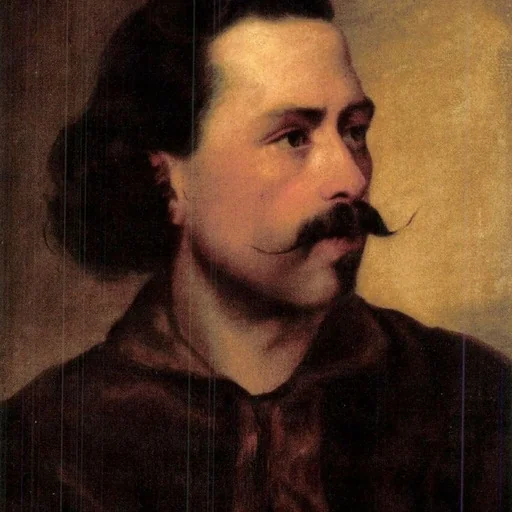
Jozsef Borsos (21 December 1821, in Veszprém – 19 August 1883, in Budapest) was a Hungarian portrait painter and photographer; best known for his genre paintings in the Biedermeier style.