Artwork
Christ on the Mount of Olives
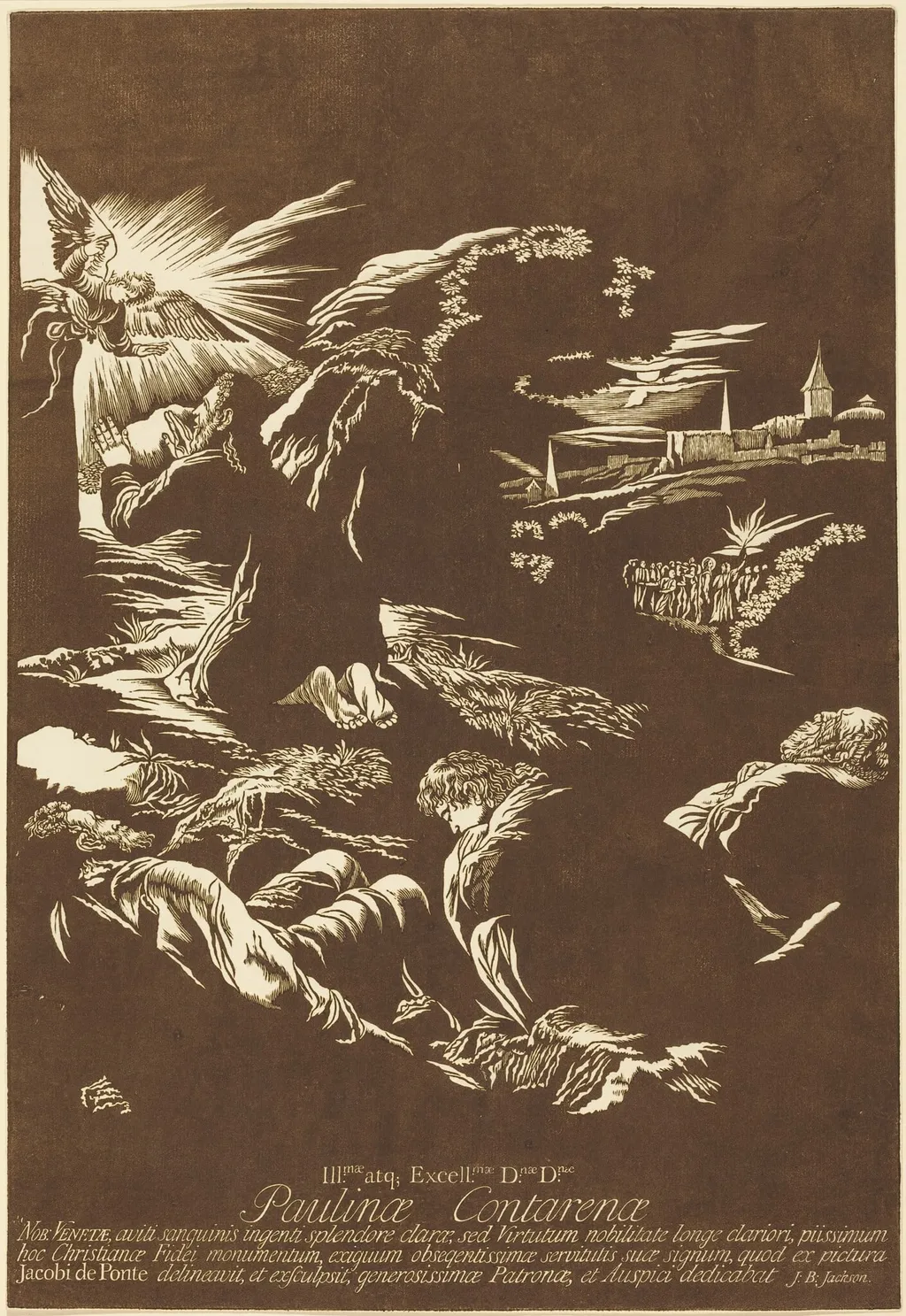
Christ on the Mount of Olives is an ink print by the Baroque artist John Baptist Jackson. It dates from 1743 and is held in the collection of the National Gallery of Art.
About this work
Overview
Created in 1743, *Christ on the Mount of Olives* is a brown-toned woodcut on laid paper by John Baptist Jackson, a British artist working in continental Europe.
Created in 1743, *Christ on the Mount of Olives* is a brown-toned woodcut on laid paper by John Baptist Jackson, a British artist working in continental Europe. The print reproduces a religious subject common in devotional imagery, rendered through the labor-intensive woodcut technique. Jackson’s approach emphasized tonal nuance over line detail, distinguishing his work from contemporaries who prioritized sharp outlines.
Subject & Meaning
The image depicts Christ in prayer on the Mount of Olives, moments before his arrest, his body contorted in emotional distress. One arm reaches upward as if in supplication, while the surrounding foliage and clouds suggest spiritual turmoil. A distant village, barely visible, anchors the scene in earthly reality, contrasting with the intensity of Christ’s inner struggle. The composition invites contemplation of solitude and sacrifice.
Technique & Style
Jackson employed a limited palette of two tones—light lines on a dark brown ground—to model form and movement. He enhanced depth through subtle overprinting and embossing, techniques uncommon in woodcut at the time. The swirling branches and atmospheric clouds were carved with fluid, irregular lines, creating a sense of agitation. The absence of fine detail focuses attention on emotional weight rather than narrative precision.
History & Provenance
Jackson, active in Paris and Venice during the mid-eighteenth century, specialized in translating oil paintings into prints for broader audiences. This work likely derived from a now-lost painting, consistent with his commercial practice. While few of his prints survive in large numbers, *Christ on the Mount of Olives* is documented in European collections from the late 1700s, suggesting modest circulation among religious and artistic circles.
Context
In the 1740s, religious imagery remained popular in print form, especially among private collectors and clergy. Woodcuts, though increasingly overshadowed by engraving, retained value for their tactile quality and affordability. Jackson’s work reflects a transitional moment: traditional devotional subjects met emerging technical experimentation, bridging older craft methods with newer aesthetic priorities in printmaking.
Legacy
Jackson’s use of embossing and tonal layering in woodcut influenced later practitioners seeking to expand the medium’s expressive range. Though not widely celebrated in his lifetime, his technical innovations contributed to a quiet evolution in printmaking, demonstrating how simplicity of means could convey psychological depth. His prints remain rare, studied primarily for their craftsmanship rather than their popularity.
Artist & collection

Artist
John Baptist Jackson (1701–1780) was a British artist, a woodcut printmaker of the eighteenth century.

![The Marriage at Cana [left plate], by John Baptist Jackson](https://artifactworldgallery.com/img/john-baptist-jackson--the-marriage-at-cana-left-plate--22bae83d46cc40b5-w320.webp)
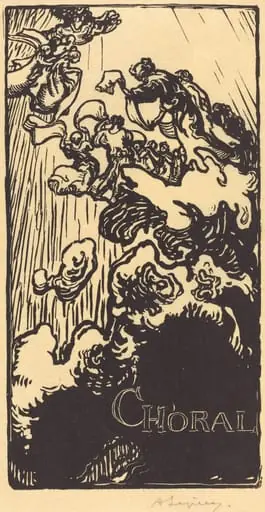 Choral
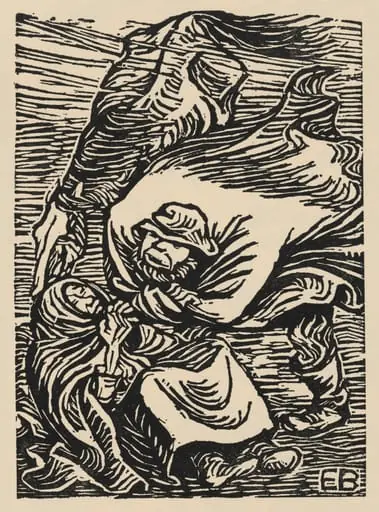 Gruppe im Sturm (Couple in a Storm) from Deutsche Graphiker der Gegenwart (German Printmakers of Our Time)
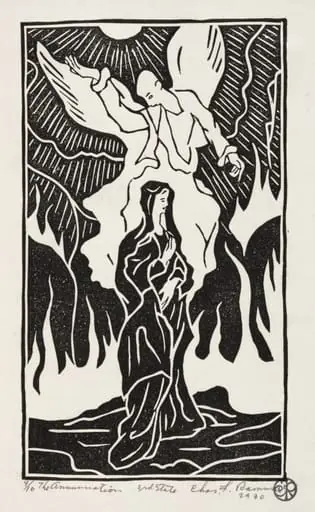 The Annunciation, Christmas Card for 1929
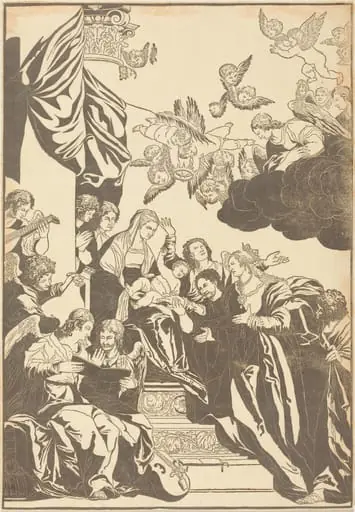 The Mystic Marriage of Saint Catherine
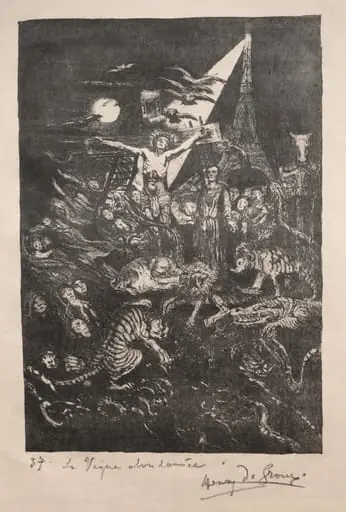 The Vintages!: The Abandoned Vine
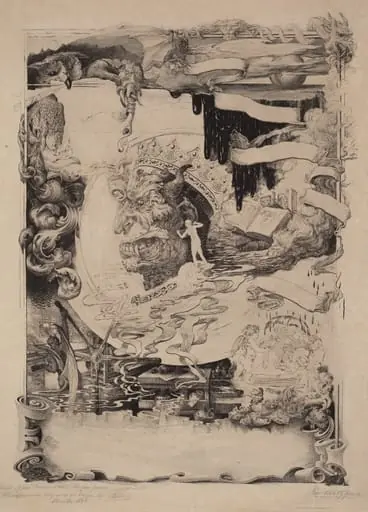 The Bookplate of the Printer's Devil
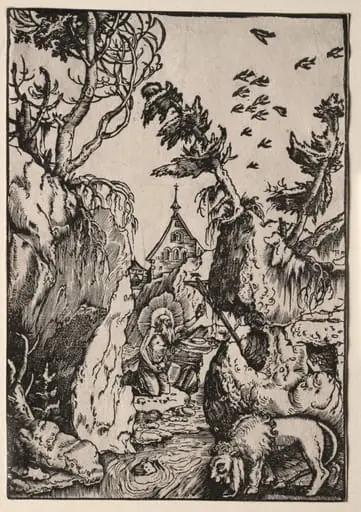 St. Jerome in the Wilderness
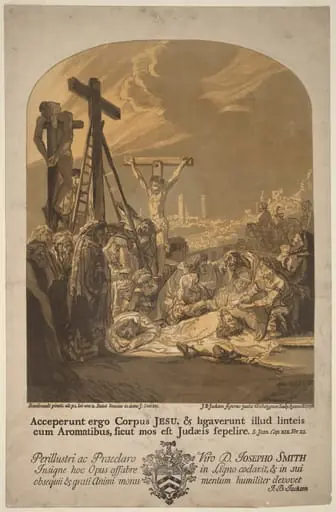
![The Crucifixion [center plate], by John Baptist Jackson](https://artifactworldgallery.com/img/john-baptist-jackson--the-crucifixion-center-plate--f8880f1dfff50dc3-w320.webp) The Crucifixion [center plate]
The Crucifixion [center plate]