Artwork
The Presentation in the Temple (The Circumcision)
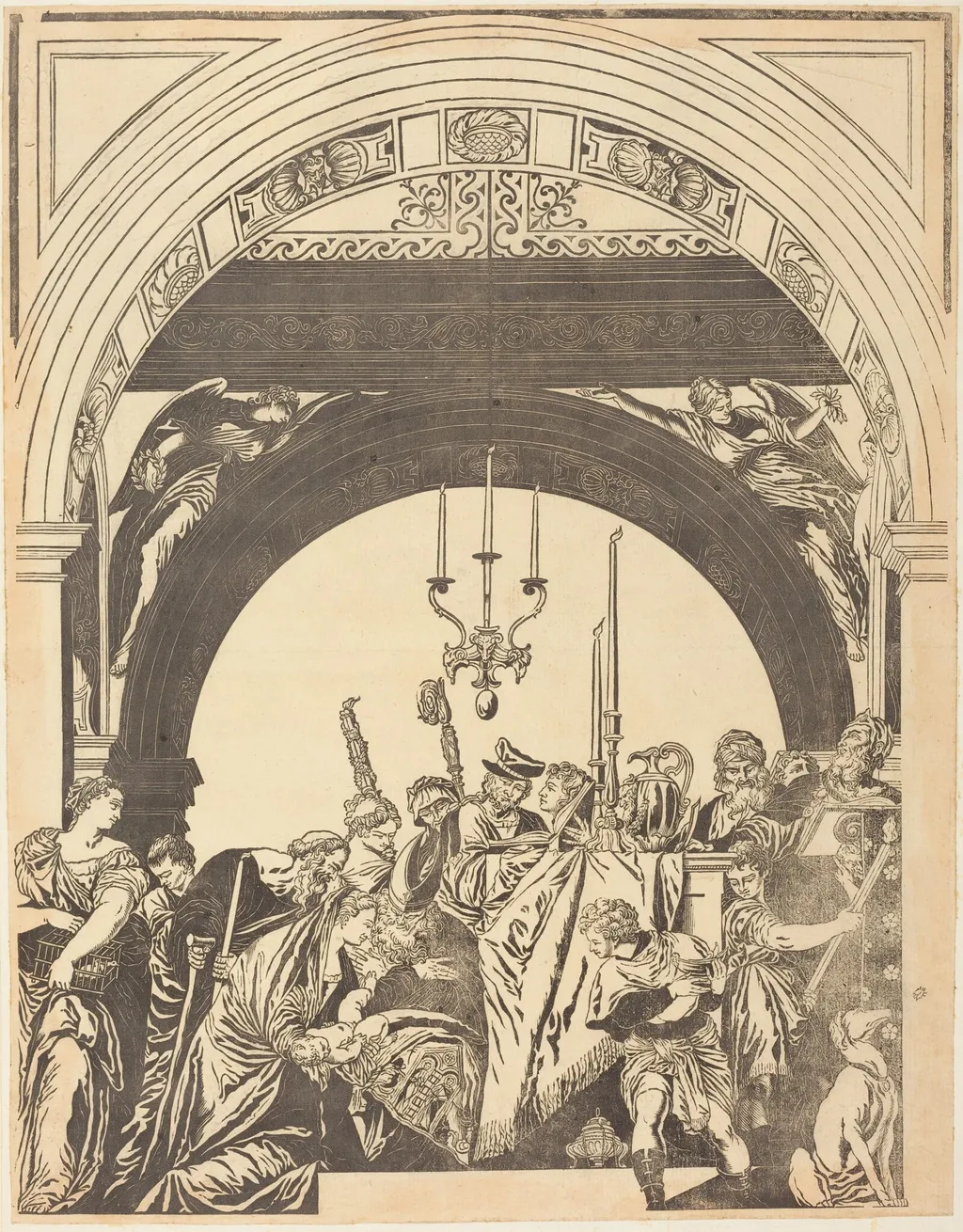
The Presentation in the Temple (The Circumcision) is an ink print by the Baroque artist John Baptist Jackson. It dates from 1739 and is held in the collection of the National Gallery of Art.
About this work
Overview
Unlike typical prints of the period, Jackson based his composition on an oil painting rather than a drawing, using the woodcut medium to simulate tonal depth.
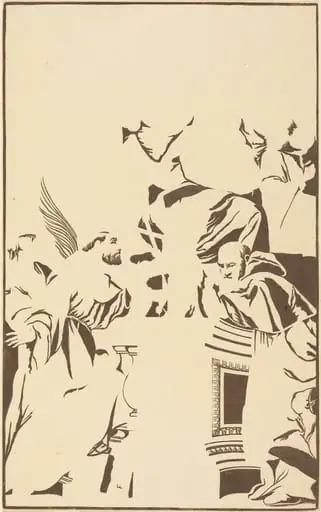
Created in 1739 by British printmaker John Baptist Jackson, this trial proof is a black chiaroscuro woodcut depicting the Presentation in the Temple. Unlike typical prints of the period, Jackson based his composition on an oil painting rather than a drawing, using the woodcut medium to simulate tonal depth. This early impression, struck from the key block alone, reveals his method before color layers were added, emphasizing structure and shadow over hue.
Subject & Meaning
The scene illustrates the ritual presentation of the infant Jesus at the Temple, as described in the Gospel of Luke. The central figures—a woman holding the child and a robed man with a candle—represent Mary and Simeon, the devout elder who recognizes the child as the Messiah. Surrounding figures, including angelic forms and temple attendants, convey reverence and anticipation. The crowded composition reflects the sacred significance of the moment within a ritual setting.
Technique & Style
Jackson employed a chiaroscuro woodcut technique, carving distinct blocks to layer tone and shadow. This trial proof uses only the key block in black, establishing form through contrast and line. He avoided the delicate wash-like effects common in contemporary prints, instead favoring bold, carved surfaces. Subtle embossing may have been used to lift highlights, enhancing the three-dimensionality of figures and drapery within the dense, architectural setting.
History & Provenance
Jackson worked primarily in Paris and Venice during the 1730s and 1740s, adapting Italian compositional models for Northern European audiences. This trial proof likely served as a working stage before the full-color version was printed. Few of his prints survive in early states, making this impression a rare witness to his process. Its origin remains tied to his workshop in Venice, where he collaborated with publishers seeking to replicate the grandeur of painted altarpieces in print.
Context
In early 18th-century Europe, religious imagery remained central to print culture, especially in Catholic regions. Jackson’s choice of subject aligned with devotional traditions, while his technique responded to demand for affordable, high-quality reproductions of major paintings. His use of oil-based inks and layered blocks distinguished his work from traditional woodcuts, positioning him between the traditions of Renaissance printmaking and emerging commercial print industries.
Legacy
Jackson’s prints, though not widely known today, represent a transitional phase in printmaking—bridging hand-carved woodblocks with painterly effects. His approach influenced later attempts to merge tonal realism with relief printing. This trial proof, preserved as a technical artifact, illustrates his commitment to structural clarity over decorative flourish, offering insight into the experimental spirit of 18th-century print workshops.
Artist & collection

Artist
John Baptist Jackson (1701–1780) was a British artist, a woodcut printmaker of the eighteenth century.

![The Marriage at Cana [left plate], by John Baptist Jackson](https://artifactworldgallery.com/img/john-baptist-jackson--the-marriage-at-cana-left-plate--22bae83d46cc40b5-w320.webp)
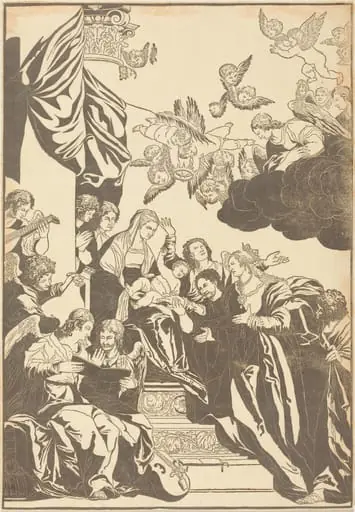 The Mystic Marriage of Saint Catherine
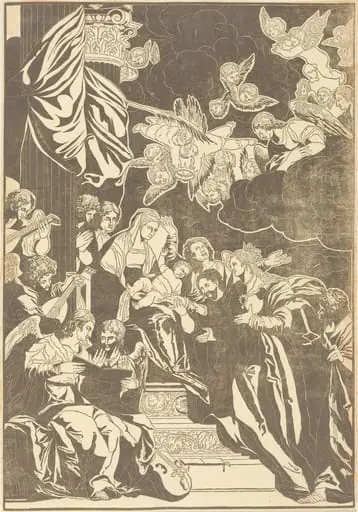 The Mystic Marriage of Saint Catherine
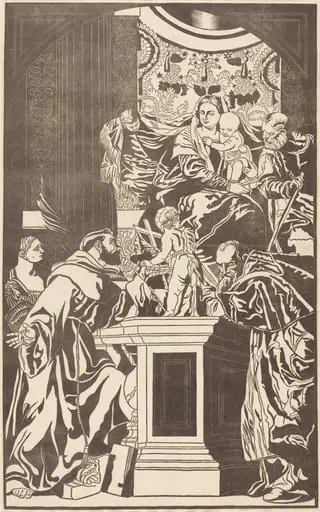 Holy Family and Four Saints
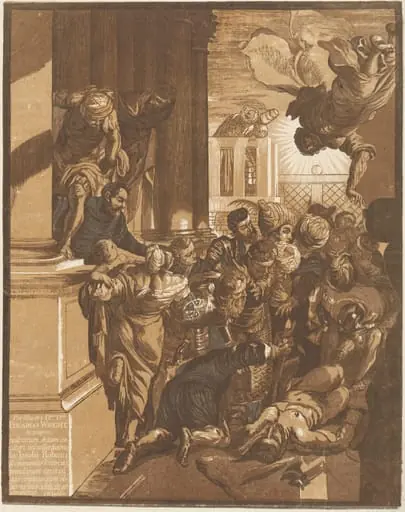 The Miracle of Saint Mark (left side)
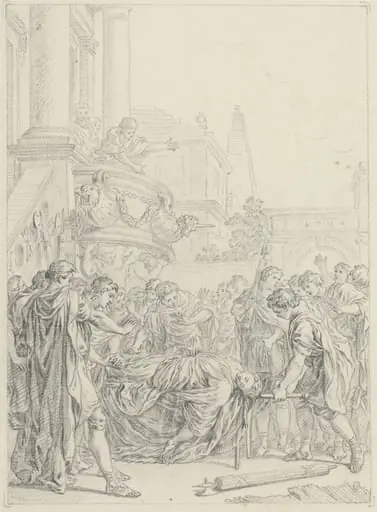 Du plus grand des Romains voilà ce qui vous reste
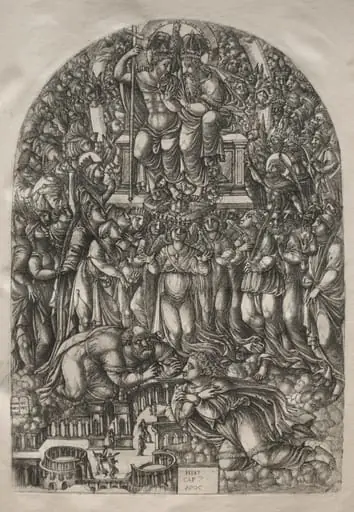 The Apocalypse: An Innumerable Multitude Which Stand before the Throne
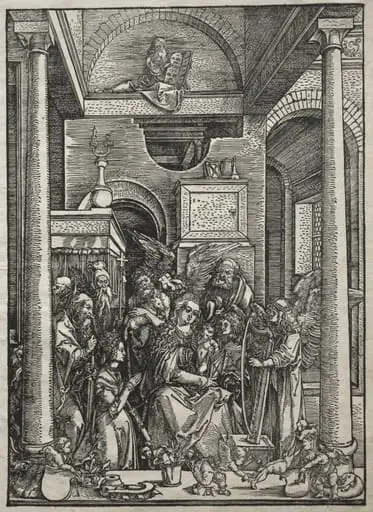 Life of the Virgin: Adoration of the Virgin and Child by Saints and Angels
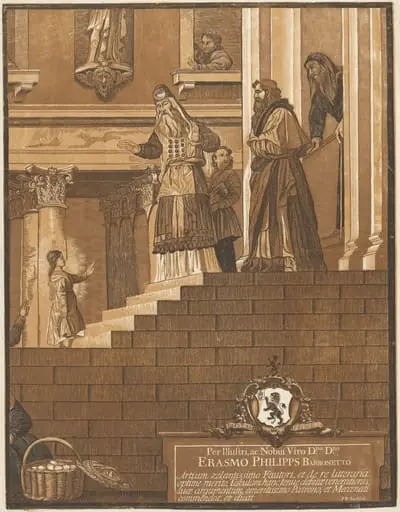
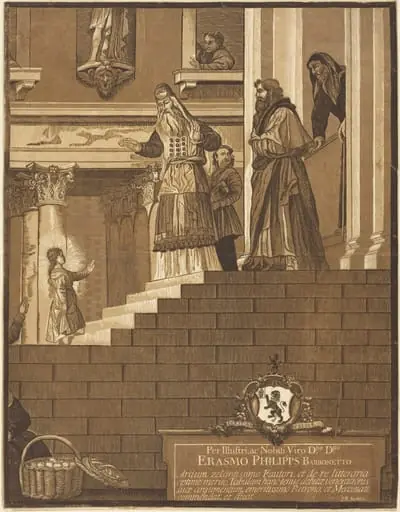
![Presentation of the Virgin in the Temple [center plate], by John Baptist Jackson](https://artifactworldgallery.com/img/john-baptist-jackson--presentation-of-the-virgin-in-the-temple-center-plate--ef15e741baf4b279-w320.webp) Presentation of the Virgin in the Temple [center plate]
Presentation of the Virgin in the Temple [center plate]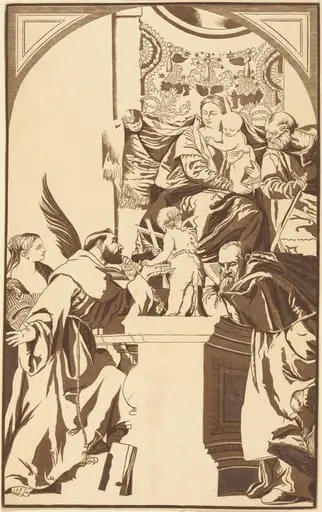 Holy Family and Four Saints