Artwork
Saint Jude Thaddeus
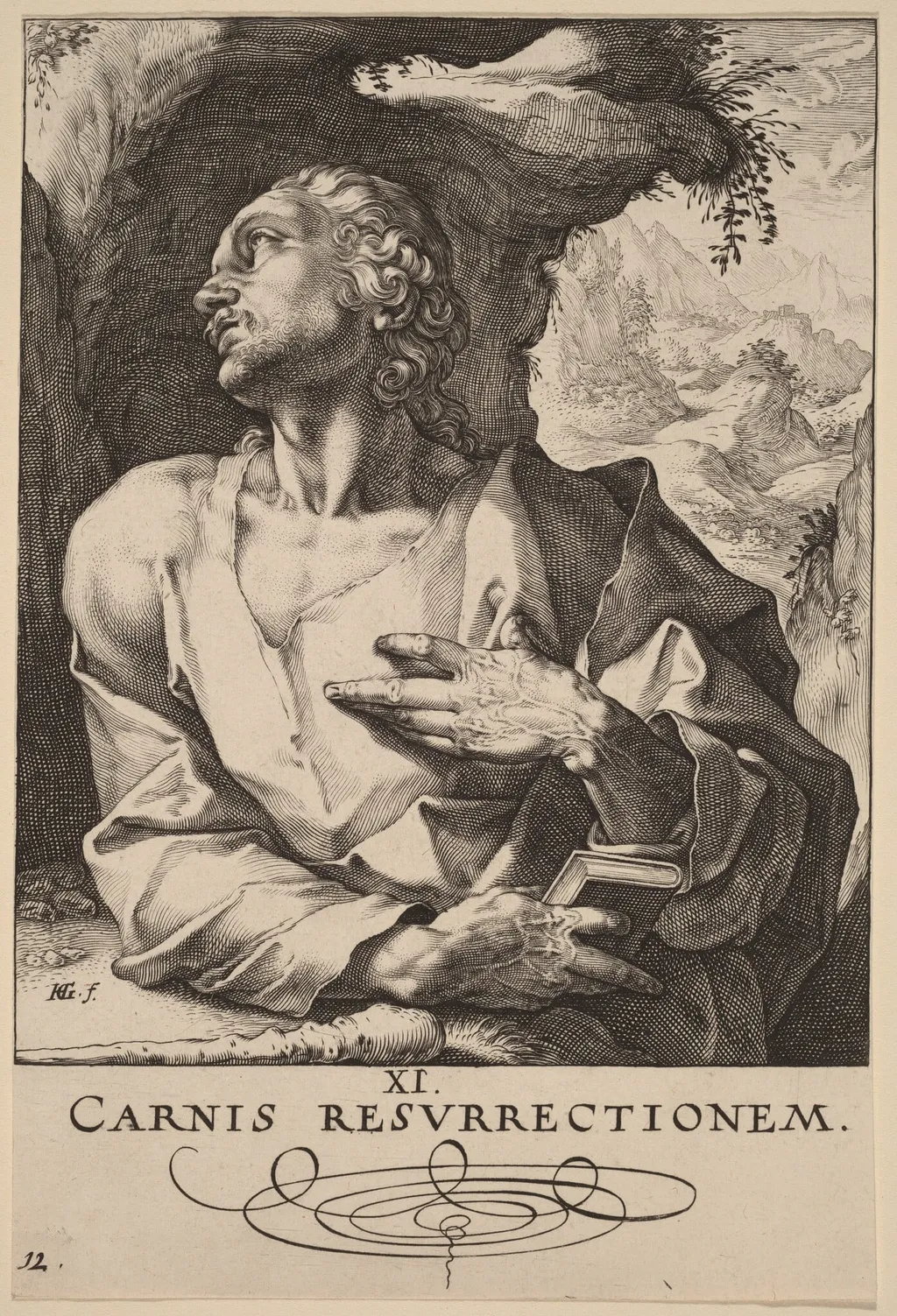
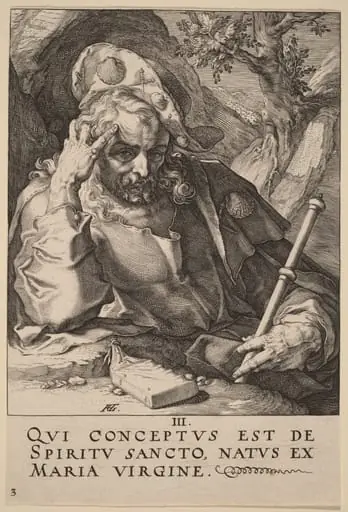
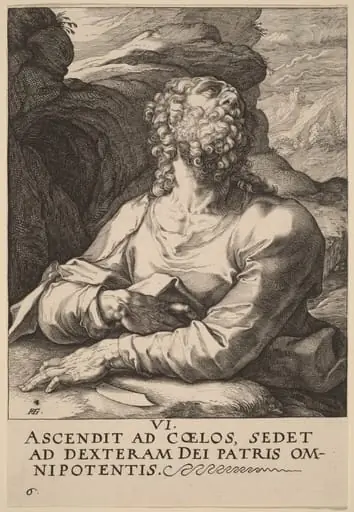
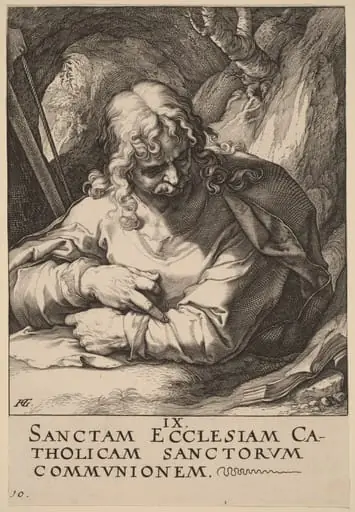
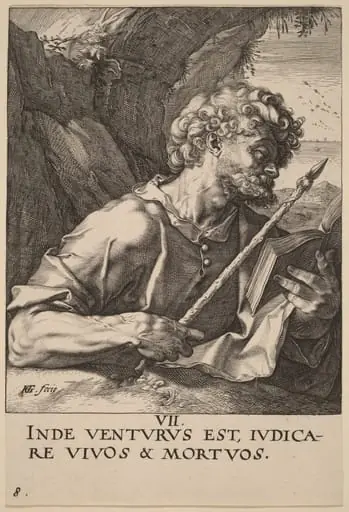
Saint Jude Thaddeus is an ink print by the Renaissance artist Hendrik Goltzius. It dates from 1589 and is held in the collection of the National Gallery of Art.
About this work
Overview
Hendrick Goltzius, a Dutch artist of German origin, produced this engraving of Saint Jude Thaddeus circa 1589. It belongs to a series of religious figures he rendered in print during a period when he was actively working across multiple media. The piece exemplifies his technical precision and is representative of the Northern Mannerist style, characterized by elaborate detail and expressive form.
Subject & Meaning
He is shown with a contemplative gaze, eyes lowered, holding a book—likely the Gospel—and raising his right hand in a gesture of blessing or solemn address.
The figure depicts Saint Jude Thaddeus, one of the twelve apostles and traditionally invoked in desperate situations. He is shown with a contemplative gaze, eyes lowered, holding a book—likely the Gospel—and raising his right hand in a gesture of blessing or solemn address. The quiet intensity of his expression underscores his role as a spiritual intercessor, rendered without overt drama to emphasize inner conviction.
Technique & Style
Goltzius employed fine, controlled lines to model the saint’s beard, robe, and hair, creating texture through varying densities of engraving. The dark, unmodeled background isolates the figure, heightening focus on his form. The foliage behind his head is rendered with delicate, sparse strokes, contrasting with the dense patterning of fabric and hair. His mastery of line allows for both volume and emotional nuance without color or tone.
History & Provenance
Created during Goltzius’s most prolific printmaking phase, the engraving emerged from his Haarlem workshop, where he trained apprentices and produced prints for an international market. While its early ownership is undocumented, it aligns with other religious engravings circulated among collectors and clergy in the late 16th century, reflecting the demand for devotional imagery in Protestant regions.
Context
In the decades after the Reformation, religious imagery in the Netherlands shifted from altarpieces to portable prints. Goltzius’s engravings filled this void, offering devotional subjects that balanced theological gravity with artistic innovation. His work bridged the lingering influence of Italian Mannerism and emerging Northern realism, making sacred figures accessible through refined graphic technique.
Legacy
This engraving contributed to Goltzius’s reputation as the preeminent printmaker of his generation in the Low Countries. His ability to convey psychological depth through line alone influenced later generations of engravers and draftsmen. Though no longer central to public worship, the work remains a key example of how religious iconography was reimagined in the print culture of early modern Europe.
Artist & collection
Artist
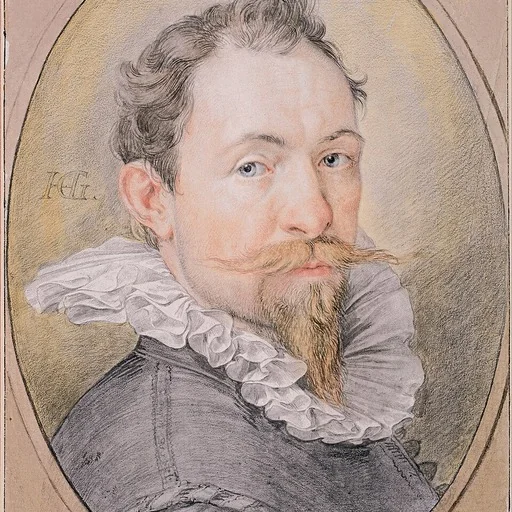
Hendrick Goltzius (German: , Dutch: ; né Goltz; January or February 1558 – 1 January 1617) was a German-born Dutch printmaker, draftsman, and painter.