Artwork
Amor and Psyche
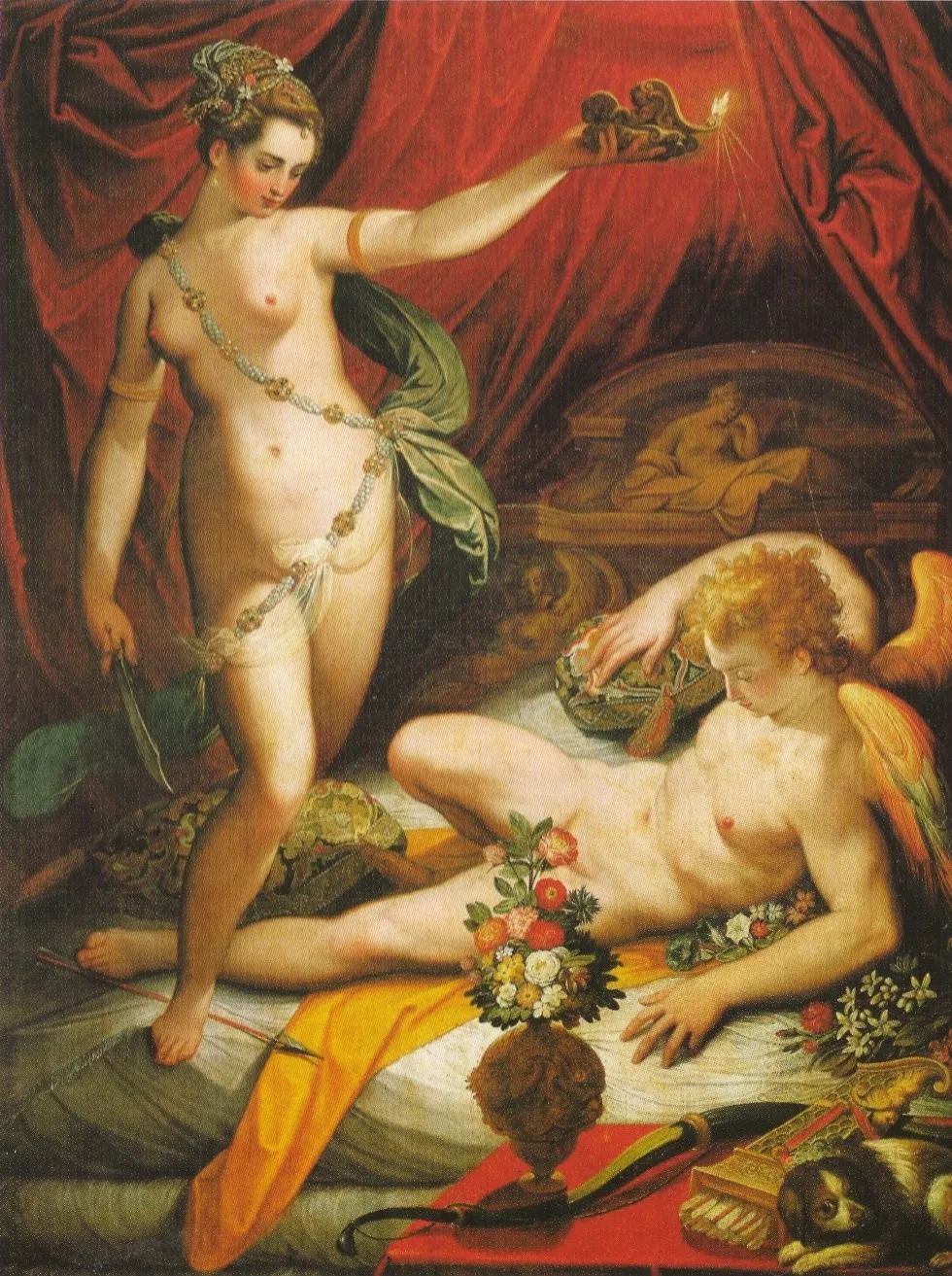
Amor and Psyche is an oil painting by the Mannerist artist Jacopo Zucchi. It dates from 1595 and is held in the collection of the Galleria Borghese.
About this work
Overview
The painting is part of the Galleria Borghese collection, where it remains as an example of late 16th-century mythological painting.
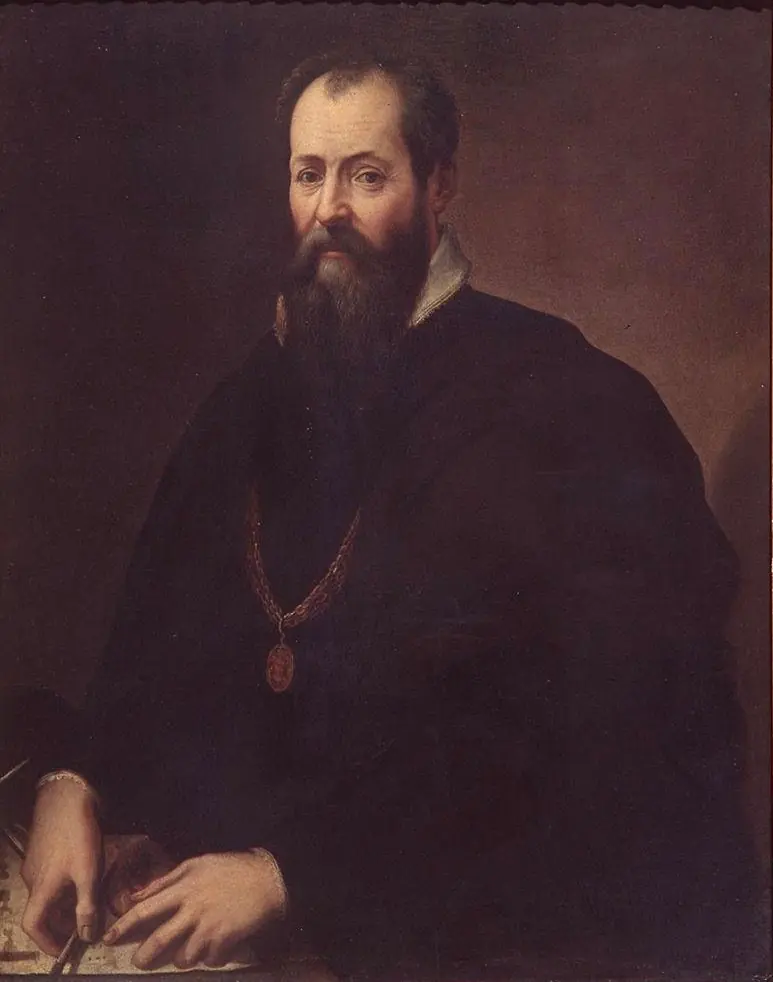
Painted in 1595 by Jacopo Zucchi, this oil on canvas portrays a moment from the myth of Amor and Psyche. Zucchi, a Florentine painter trained in Giorgio Vasari’s studio, created the work during a period when Mannerist aesthetics dominated elite Roman and Florentine circles. The painting is part of the Galleria Borghese collection, where it remains as an example of late 16th-century mythological painting.
Subject & Meaning
The scene captures Psyche, armed with a dagger and torch, confronting the sleeping Amor. Her stance suggests resolve, while his reclining form evokes passivity. The imagery alludes to the myth’s turning point: Psyche’s attempt to uncover her divine lover’s identity, a moment fraught with tension between curiosity and trust. The surrounding objects and flowers imply a private, intimate space, reinforcing the emotional weight of the encounter.
Technique & Style
Zucchi employs elongated proportions and a controlled, elegant composition typical of Mannerism. The figures are rendered with smooth modeling and subtle chiaroscuro, enhancing their sculptural presence. Impasto is used selectively in the drapery and floral elements, adding texture without disrupting the overall refinement. The red curtain behind them frames the scene, directing focus to the central figures and heightening the theatrical mood.
History & Provenance
Commissioned during Zucchi’s time in Rome, the painting entered the Borghese collection in the early 17th century, likely through Cardinal Scipione Borghese’s patronage. It was documented among the cardinal’s acquisitions and has remained in the Galleria Borghese since, preserving its original context within a collection devoted to classical themes and refined artistic expression.
Context
Zucchi’s work reflects the intellectual climate of late Renaissance Rome, where mythological subjects were favored by humanist patrons. His training under Vasari connected him to a tradition of decorative fresco cycles, yet this small-scale painting reveals a shift toward intimate, psychologically nuanced narratives. The emphasis on emotional contrast aligns with broader trends in Mannerist painting seeking to convey inner states through form and gesture.
Legacy
Though less widely known than contemporaries like Caravaggio, Zucchi’s Amor and Psyche exemplifies the transition from Mannerist elegance toward more naturalistic expression. Its preservation in the Borghese collection ensured its continued study by later artists and scholars. The painting remains a quiet testament to the period’s fascination with myth as a vehicle for exploring vulnerability, desire, and consequence.
Artist & collection
Artist
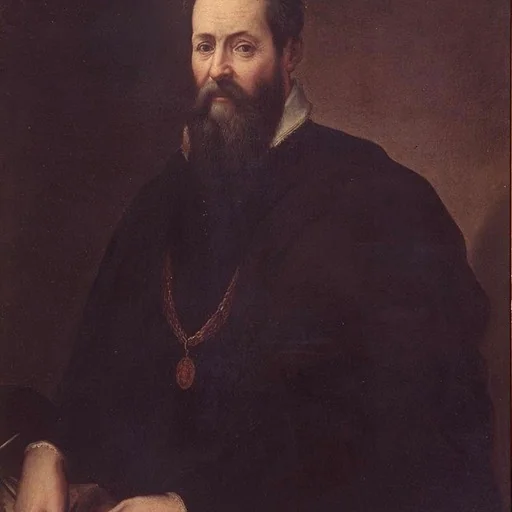
Jacopo Zucchi (c. 1541– c. 1590) was a Florentine painter of the Mannerist style, active in Florence and Rome. His training began in the studio of Giorgio Vasari, and he participated in the decoration of the Studiolo…