Artwork
Les deux grandes vues de Paris: Vue du Pont Neuf
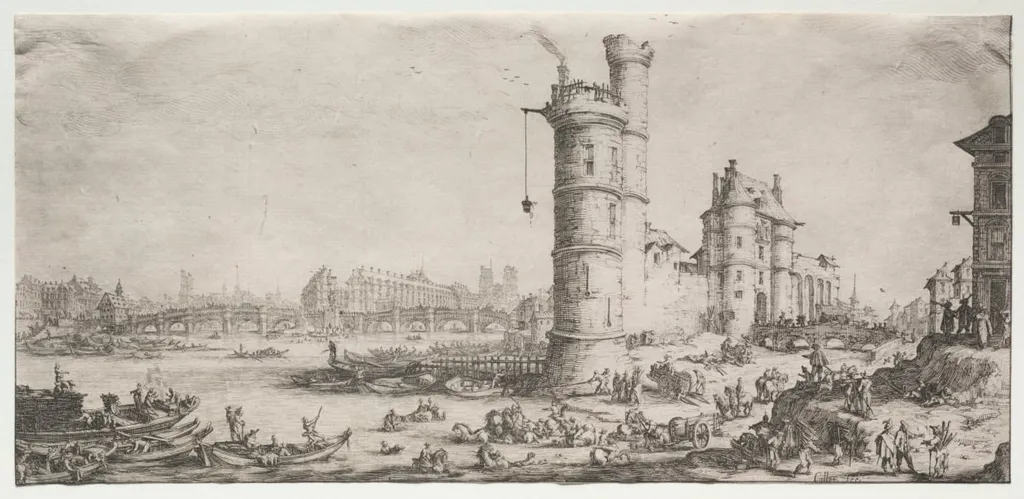
Les deux grandes vues de Paris: Vue du Pont Neuf is a print by the Baroque artist Jacques Callot. It dates from 1629 and is held in the collection of the Cleveland Museum of Art.
About this work
One shows the Pont Neuf bridge from above with tiny figures and boats on the Seine.
You see two small, detailed prints of Paris from the 1600s. One shows the Pont Neuf bridge from above with tiny figures and boats on the Seine. The lines are sharp and precise, like an early photograph.
Callot used a printmaking method called etching. He scratched designs into metal plates with acid, which let him make many copies. This was new in his day.
Try looking up Jacques Callot (French, 1592–1635).
Overview
Les deux grandes vues de Paris: Vue du Pont Neuf is a 1629 print by Jacques Callot, housed at The Cleveland Museum of Art. This work presents two detailed, small-scale views of 17th-century Paris.
Subject & Meaning
One view depicts the Pont Neuf bridge from an aerial perspective, populated with diminutive figures and boats on the Seine, capturing everyday life in Paris during the early 17th century.
Technique & Style
Characterized by sharp, precise lines reminiscent of early photography, the print showcases Callot's mastery of etching. This involved scratching designs into metal plates treated with acid, enabling mass production—a novel technique for its time.
History & Provenance
Created in 1629 by French artist Jacques Callot (1592–1635), the print's current location is The Cleveland Museum of Art.
Artist & collection
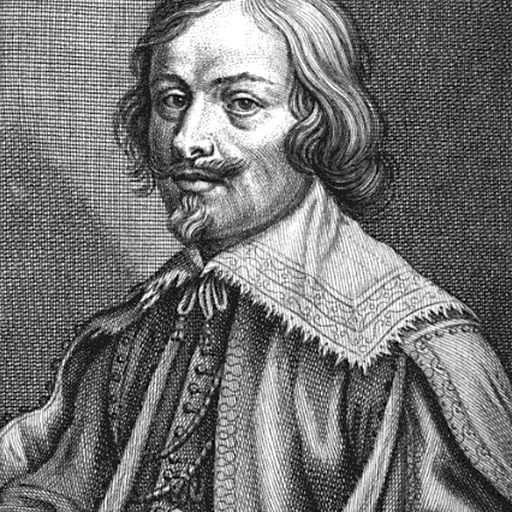
Artist
Jacques Callot was a baroque printmaker and draftsman from the Duchy of Lorraine.

 Holy Family at supper
 Restoration of the Aqueduct at Pisa
 Restoration of the Aqueduct at Pisa
 Square in Paris with Many Figures
 Square in Paris with Many Figures
 Horsemen Attacked by Robbers
 HOW WILL A COVERED PART BE CORRECTED?HOW WIKA A COVERED HEART DEED CORRECTED?
![Christ Walking on the Water [second plate], by Jacques Callot](https://artifactworldgallery.com/img/jacques-callot--christ-walking-on-the-water-second-plate--2069f3bfe4cb2126-w320.webp) Christ Walking on the Water [second plate]
Christ Walking on the Water [second plate]
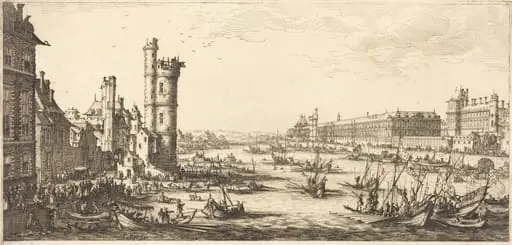 View of the Louvre
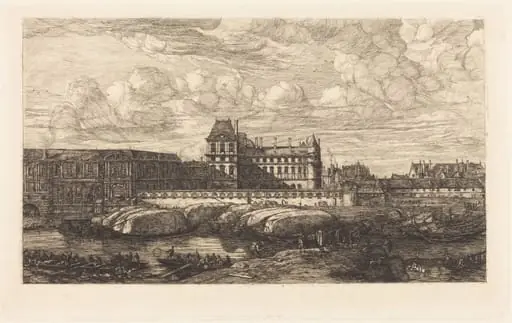 L'ancien Louvre d'après une peinture de Zeeman, 1651 (The Old Louvre, from a Painting by Zeeman, 1651)
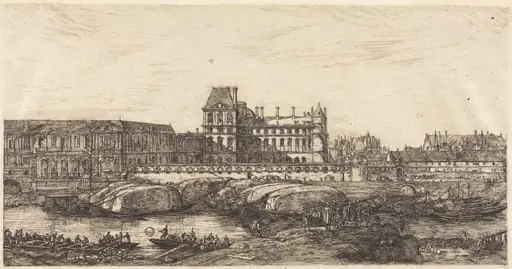 L'ancien Louvre d'après une peinture de Zeeman, 1651 (The Old Louvre, from a Painting by Zeeman, 1651)
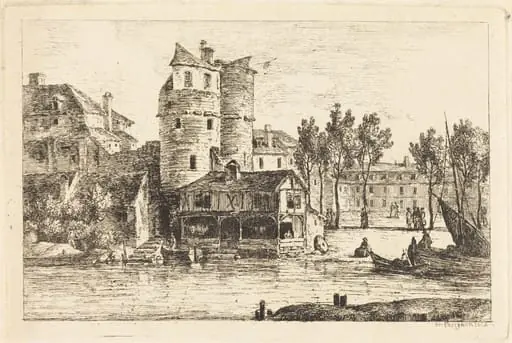 Town on a River Bank with Two Round Towers
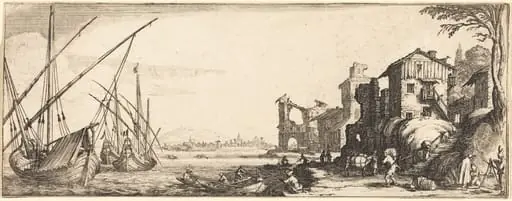 The Small Port
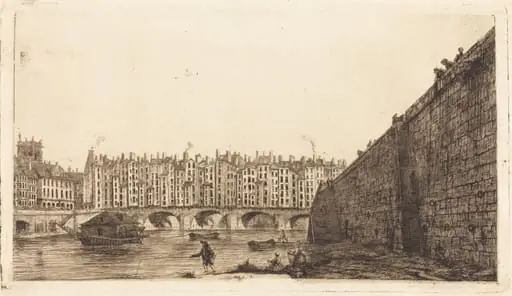 Le Pont-au-Change, Paris, vers 1784
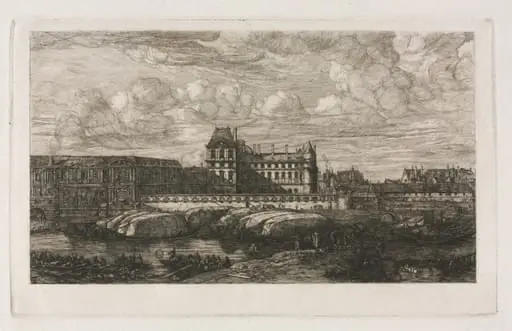 The Old Louvre from a Painting by Zeeman, 1651
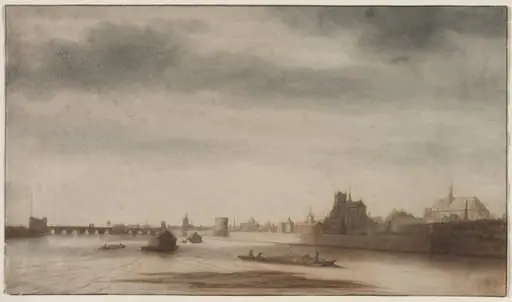 View of Orléans from the Loire
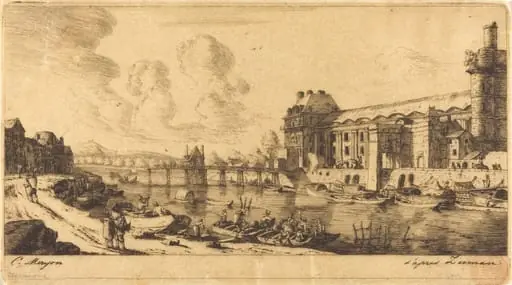 Le Pavillion de Mlle. et une partie du Louvre
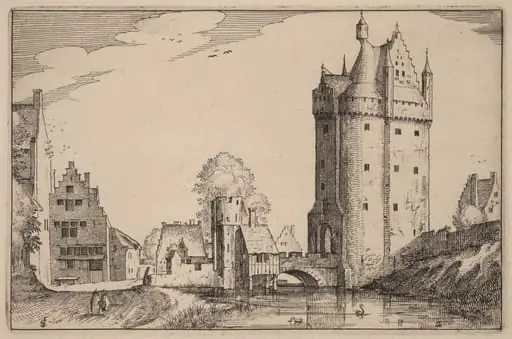 Town Gate