Artwork
A Series of Subjects from the Works of the Late R. P. Bonington: A Study from Nature - Portrait of a Girl
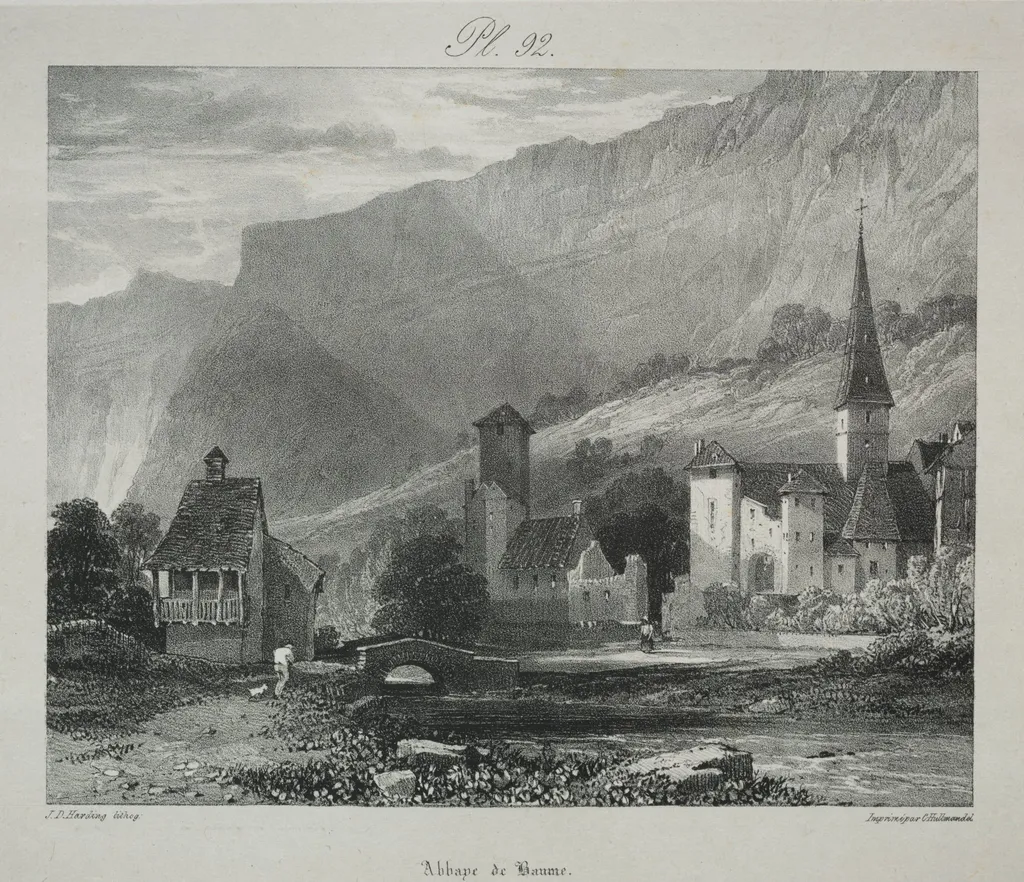
A Series of Subjects from the Works of the Late R. P. Bonington: A Study from Nature - Portrait of a Girl is a print by the Romanticist artist James Duffield Harding. It dates from 1829 and is held in the collection of the Cleveland Museum of Art.
About this work
Overview
Harding used tinted paper and opaque watercolor to achieve subtle tonal variations, translating Bonington’s atmospheric approach into a lithographic medium.
Created in 1829 by British artist James Duffield Harding, this print is part of a series inspired by the work of Richard Parkes Bonington. Harding used tinted paper and opaque watercolor to achieve subtle tonal variations, translating Bonington’s atmospheric approach into a lithographic medium. The work is held in the collection of The Cleveland Museum of Art and reflects Harding’s interest in landscape and topographical detail.
Subject & Meaning
The image depicts a tranquil riverside village with stone buildings, a narrow bridge, and a prominent church steeple. A distant hilltop structure suggests a castle, framed by mist and wooded slopes. Rather than dramatizing the scene, Harding emphasizes quietude and harmony between human settlement and natural surroundings, reflecting a preference for unidealized, everyday environments over grand narratives.
Technique & Style
Harding employed lithography on tinted paper, layering opaque watercolor to modulate light and shadow. The soft gradations in tone suggest atmospheric depth without sharp outlines, aligning with the Romantic emphasis on mood over precision. His method prioritized texture and spatial recession, using minimal detail to evoke a sense of place rather than document it literally.
History & Provenance
The print was produced as part of a posthumous tribute to Bonington, who died in 1828. Harding, known for his instructional drawing manuals, sought to disseminate Bonington’s landscape sensibility through accessible prints. The work entered The Cleveland Museum of Art’s collection as part of its 19th-century British graphic arts holdings, preserved for its technical and historical significance.
Context
Emerging during the height of Romanticism, the work aligns with a broader European interest in nature’s emotional resonance and the picturesque. Unlike grand historical scenes, Harding’s focus on modest architecture and subdued lighting reflects a shift toward intimate, observational art. His approach resonated with contemporary audiences seeking authenticity in landscape representation.
Legacy
Harding’s prints helped popularize Bonington’s aesthetic among amateur artists and the middle class. His use of tinted paper and layered watercolor influenced later British printmakers seeking tonal richness without color printing. Though less celebrated than his contemporaries, his work remains a quiet example of how Romantic ideals were translated into accessible graphic forms.
Artist & collection
Artist
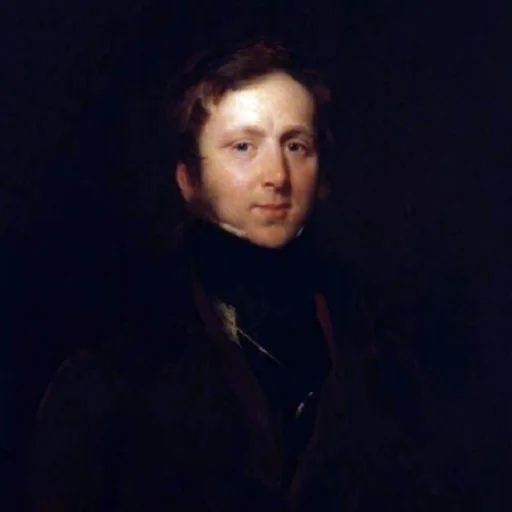
James Duffield Harding (1798 – 4 December 1863) was a British landscape painter, lithographer and author of drawing manuals. His use of tinted papers and opaque paints in watercolour proved influential.

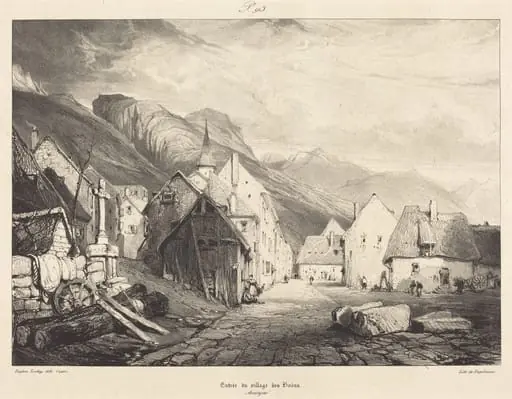 Entrée du village des Bains
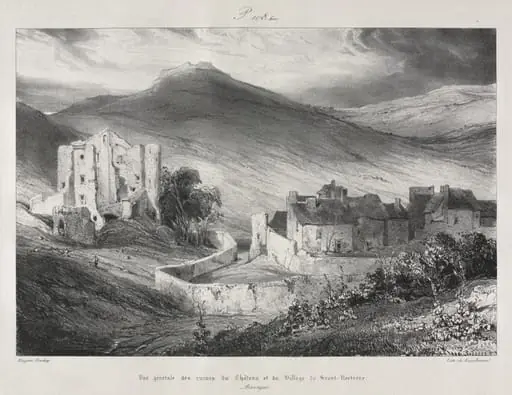 Voyages pittoresques et romantiques dans l'ancienne France, Auvergne: Ruines du château et du village de Saint Nectaire
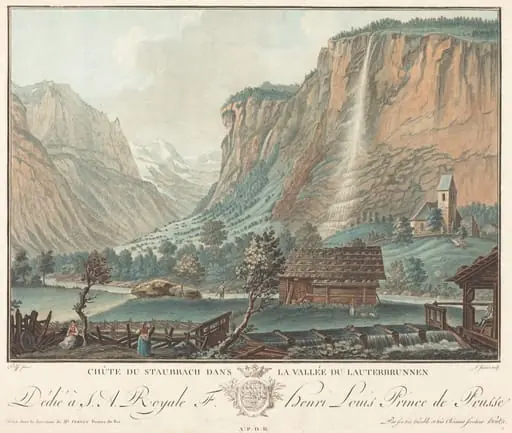 Chute de Staubbach, dans la Vallée de Lauterbrunnen (Falls at Staubbach in the Lauterbrunnen Valley)
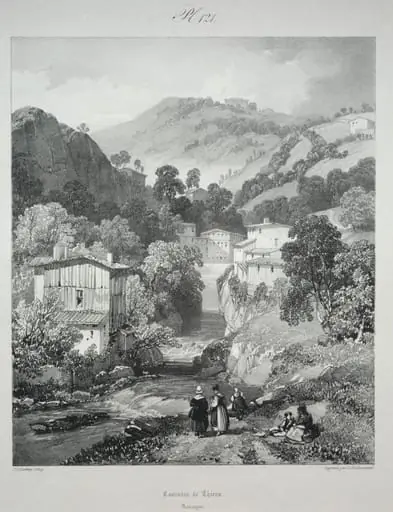 Voyages pittoresques et romantiques dans l'ancienne France. Auvergne: Cascades de Thiers
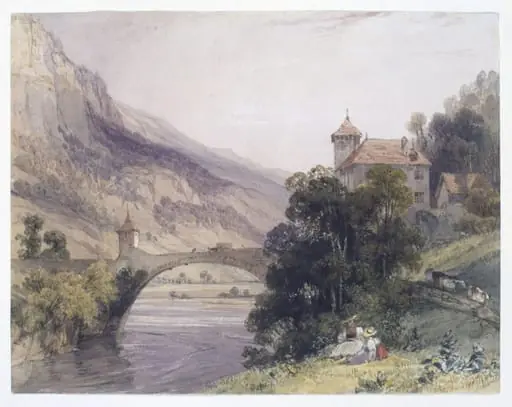 The Bridge of St. Maurice, Valais, Switzerland
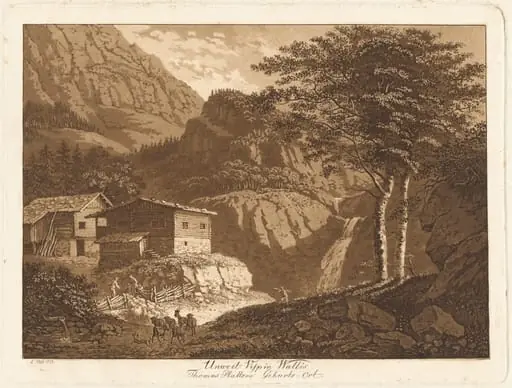 Unweit Visp in Wallis
 Sketches at Home and Abroad: General View of Trento
 Das Schloss Prediama in Crein XII Stund: von Triest (Predjama Castle in Carniola, Twelve Hours from Trieste)
 Stone Bridge over A Mountain Brook
 River landscape