Artwork
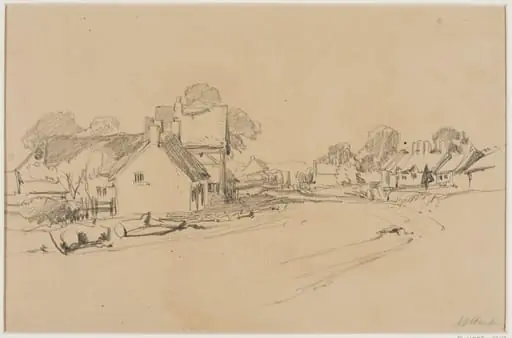
Sketches at Home and Abroad: Trento
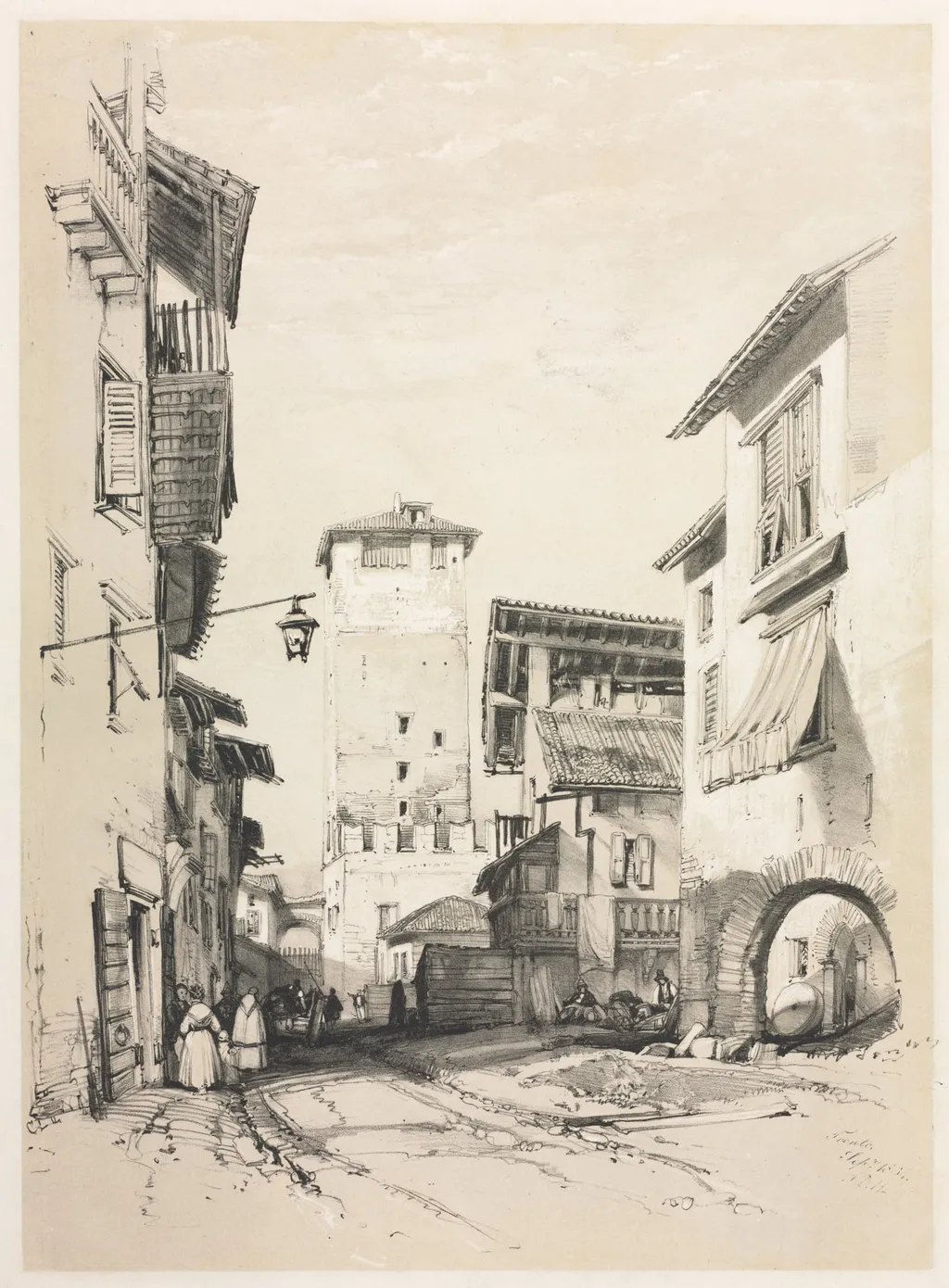
Sketches at Home and Abroad: Trento is a print by the Romanticist artist James Duffield Harding. It dates from 1834 and is held in the collection of the Cleveland Museum of Art.
About this work
Overview
James Duffield Harding’s 1834 watercolor, *Sketches at Home and Abroad: Trento*, is part of a series documenting his travels across Europe.
James Duffield Harding’s 1834 watercolor, *Sketches at Home and Abroad: Trento*, is part of a series documenting his travels across Europe. Created using tinted paper and opaque watercolor, the work exemplifies his experimental approach to landscape drawing. Harding, known for his instructional manuals and lithographic work, used this technique to achieve subtle tonal variations. The piece is held in The Cleveland Museum of Art’s collection as a representative example of 19th-century British topographical art.
Subject & Meaning
The scene captures a quiet street in Trento, Italy, with modest architecture lining the pathway. Buildings of varying ages stand side by side, suggesting the town’s layered history. A few distant figures move along the road, their small scale emphasizing solitude over activity. The absence of dramatic events or human focus invites contemplation of ordinary urban life, reflecting Harding’s interest in documenting everyday environments rather than grand vistas.
Technique & Style
Harding employed tinted paper as a mid-tone base, layering opaque watercolors to build form and shadow. This method allowed him to suggest texture and depth without heavy brushwork. Details like window frames and rooflines are rendered in fine black lines, contrasting with muted grays. The composition uses receding planes to create spatial depth, while the restrained palette enhances the scene’s stillness and atmospheric coherence.
History & Provenance
The work originated as part of Harding’s 1830s travel sketches, later compiled into published volumes. It entered The Cleveland Museum of Art’s collection through documented acquisitions of 19th-century British drawings. Its preservation reflects institutional interest in the evolution of watercolor as a medium for both artistic expression and documentary record. No significant alterations or restorations are recorded in its provenance history.
Context
During the 1830s, British artists increasingly traveled continental Europe, drawn by Romantic ideals and the popularity of topographical art. Harding’s work aligned with this trend, offering detailed, unembellished views of foreign towns. Unlike grand historical landscapes, his focus on modest streets reflected a growing appreciation for the ordinary. His publications helped standardize techniques for amateur artists, influencing public engagement with sketching as a practice.
Legacy
Harding’s use of tinted paper and layered watercolor contributed to broader shifts in British watercolor practice, moving it toward greater tonal nuance. While not widely celebrated today, his method influenced instructional approaches and the aesthetic of topographical drawing. *Trento* remains a quiet testament to his commitment to observational accuracy and the quiet dignity of everyday scenes, preserving a moment in a European town’s daily rhythm.
Artist & collection
Artist
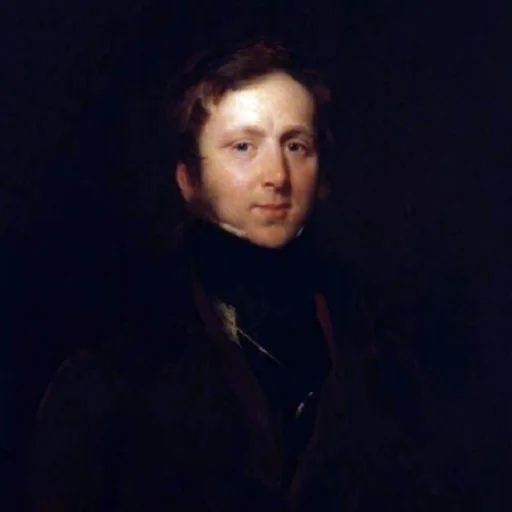
James Duffield Harding (1798 – 4 December 1863) was a British landscape painter, lithographer and author of drawing manuals. His use of tinted papers and opaque paints in watercolour proved influential.

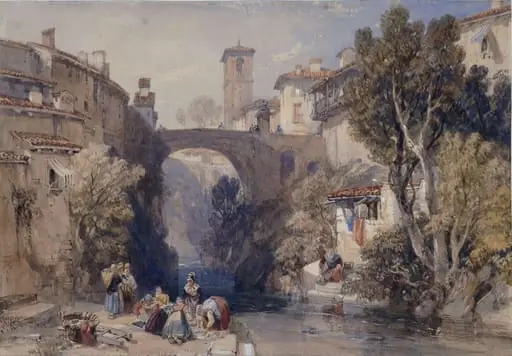
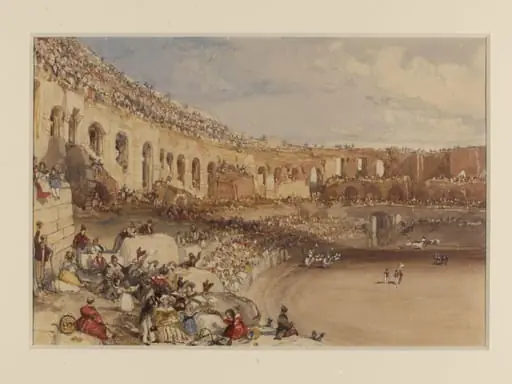
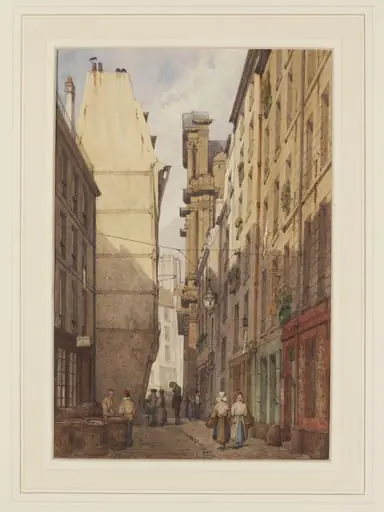 The Church of St Gervais, Paris
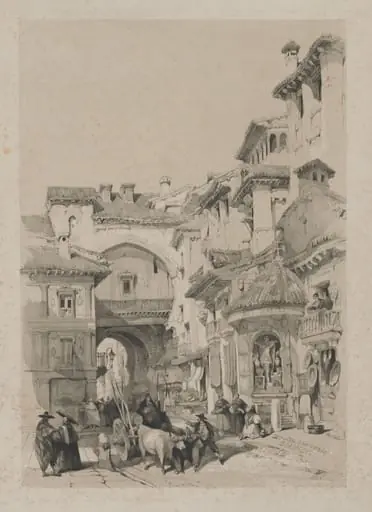 Picturesque Sketches in Spain: Gate of the Vivarrambla, Granada
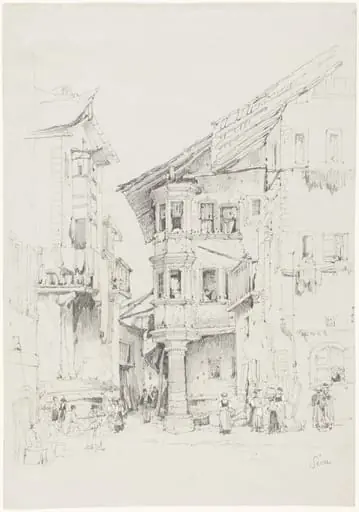 Sion
Sion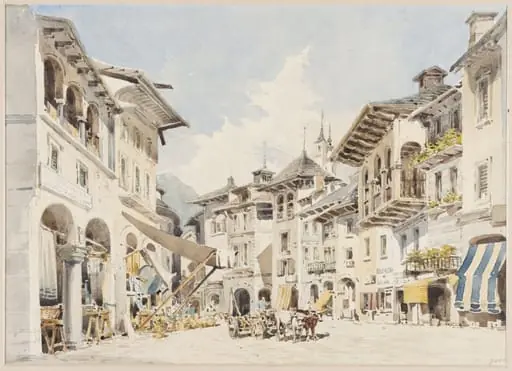 Duomo D'Ossola, Piedmont
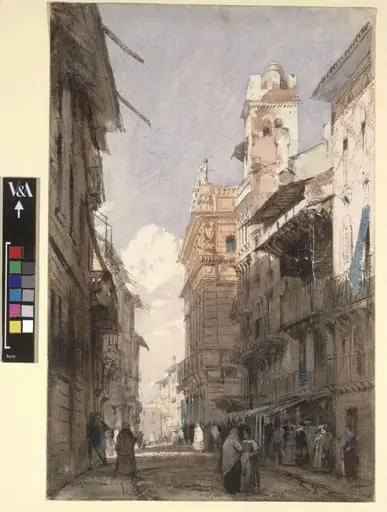 Corso Sant'Anastasia, Verona, with the Palace of Prince Maffei
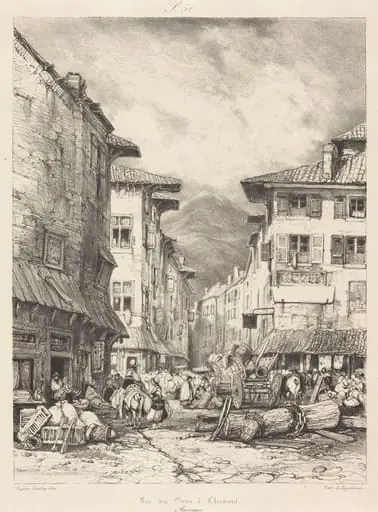 Rue des Gras à Clermont
 Via Porta Pinciana, Rome
 The Municipio, Florence
 A Priest Processing through a Medieval Street in Viterbo