Artwork
Noah's Ark
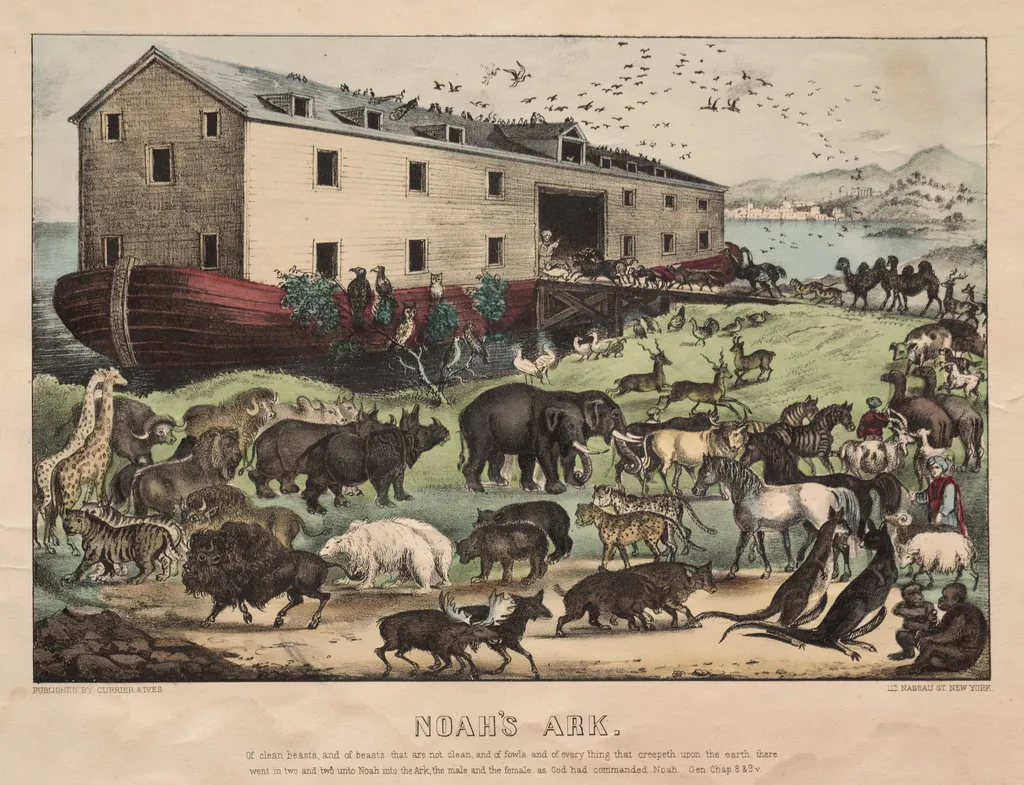
Noah's Ark is a print by the Impressionist artist James Merritt Ives. It dates from 1864 and is held in the collection of the Cleveland Museum of Art.
About this work
Overview
Created around 1864 by James Merritt Ives, this print depicts the biblical story of Noah’s Ark. Produced during a period of growing interest in illustrated religious narratives, it was intended for domestic display. The work is part of the collection at The Cleveland Museum of Art, where it represents 19th-century American printmaking aimed at a broad, middle-class audience.
Subject & Meaning
The composition emphasizes order amid chaos, with pairs of animals ascending ramps and figures in period dress coordinating their movements.
The scene illustrates the moment when animals and Noah’s family board the ark before the flood, drawing from the Book of Genesis. The composition emphasizes order amid chaos, with pairs of animals ascending ramps and figures in period dress coordinating their movements. Its detailed storytelling reflects a Victorian-era desire to visualize moral and religious narratives with clarity and emotional resonance.
Technique & Style
Executed as a chromolithograph, the print uses multiple stone plates to achieve vibrant, layered colors. The style blends realism with decorative detail, featuring precise linework and carefully rendered textures in fabric, fur, and wood. Figures are arranged in orderly rows, creating a sense of narrative progression while maintaining a decorative, almost theatrical composition.
History & Provenance
The print was produced by the firm Currier & Ives, known for mass-producing affordable images for American homes. It circulated widely in the mid-19th century, often sold as a single sheet or bound in illustrated Bibles. The Cleveland Museum of Art acquired it as part of its broader collection of 19th-century American prints, preserving its role in popular visual culture.
Context
During the 1860s, religious imagery in print form was a staple of American domestic life, especially amid rising evangelical sentiment. Currier & Ives capitalized on this demand, offering accessible versions of biblical stories that reinforced moral values. This print reflects both the technological advances in color printing and the cultural appetite for visually rich religious content.
Legacy
Though not created by a fine artist in the traditional sense, the print endures as a document of how religious narratives were interpreted for everyday audiences. It exemplifies the intersection of commerce, technology, and faith in 19th-century America, offering insight into how visual culture shaped public understanding of scripture outside church settings.
Artist & collection

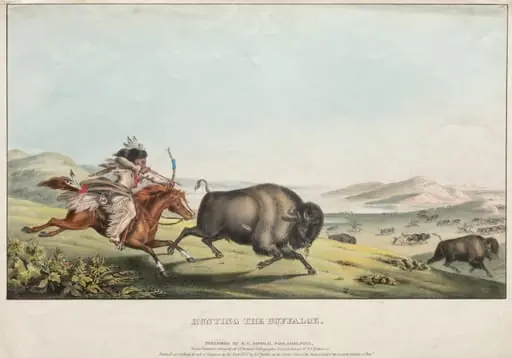 Hunting the Buffalo
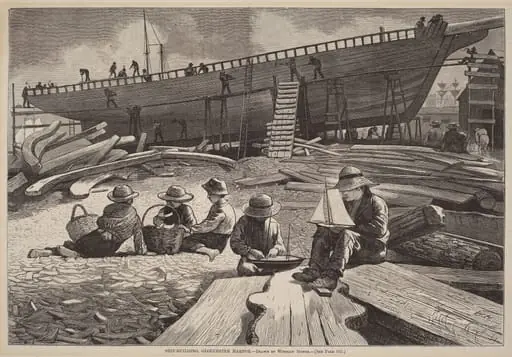 Ship-Building, Gloucester Harbor
 The Valley of Ajalon
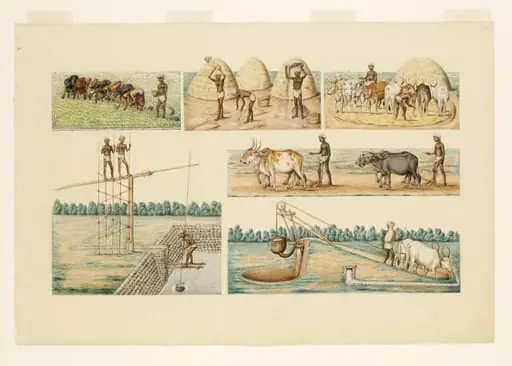 Six scenes of cultivation and irrigation
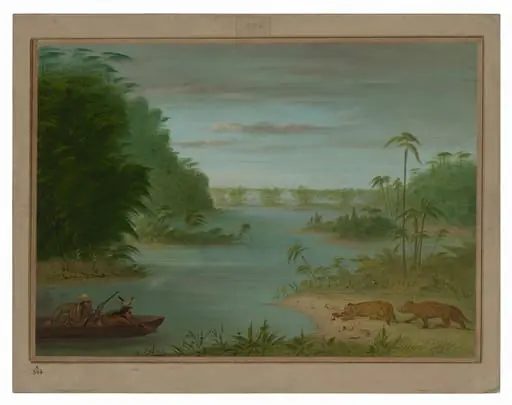 Pont de Palmiers and Tiger Shooting
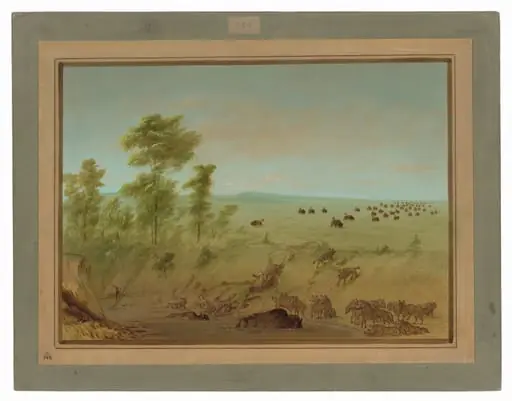 Mired Buffalo and Wolves
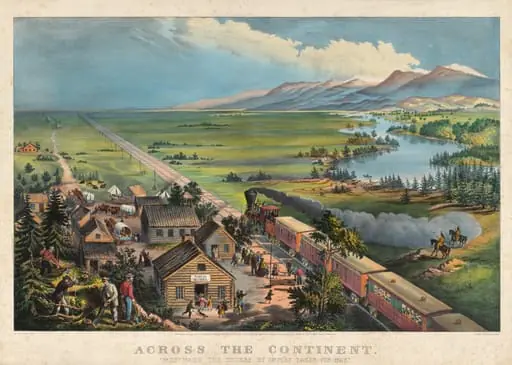 Across the Continent: "Westward the Course of Empire Takes Its Way"
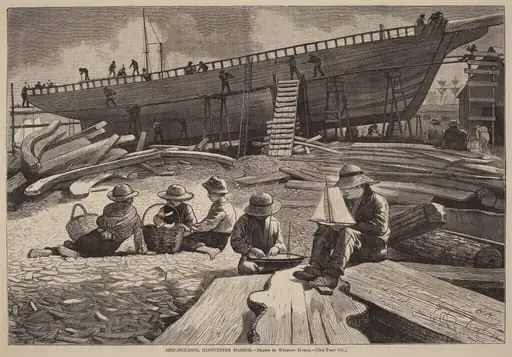 Ship-Building, Gloucester Harbor
![Animals from an Ancient Wall Painting [Table II], by Italian 16th Century](https://artifactworldgallery.com/img/italian-16th-century--animals-from-an-ancient-wall-painting-table-ii--fdc669e7ba8752d4-w320.webp) Animals from an Ancient Wall Painting [Table II]
Animals from an Ancient Wall Painting [Table II]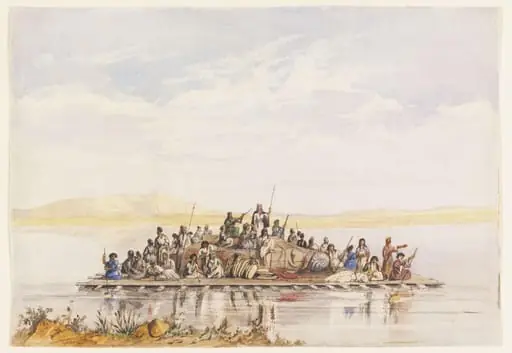 Raft Conveying Winged Bull to Baghdad
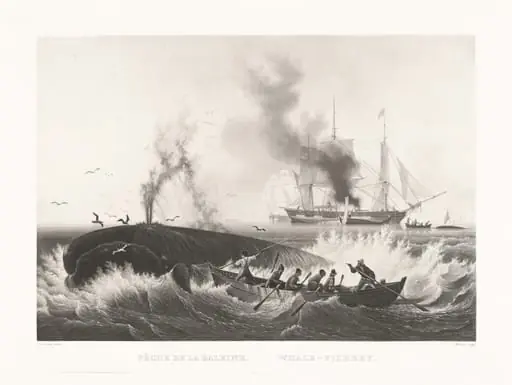 Pêche de la Baleine, Whale-Fishery
 Print Collection