Artwork
Cain Killing Abel
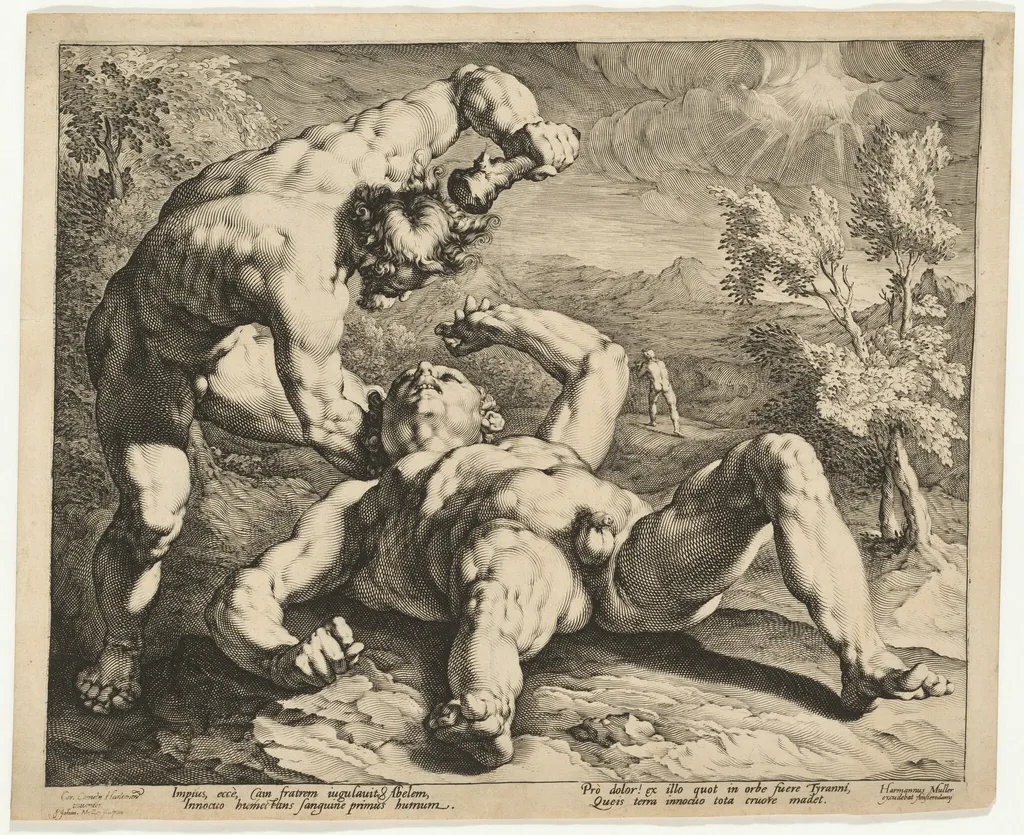
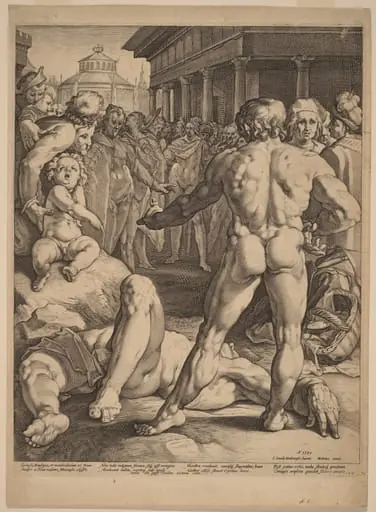
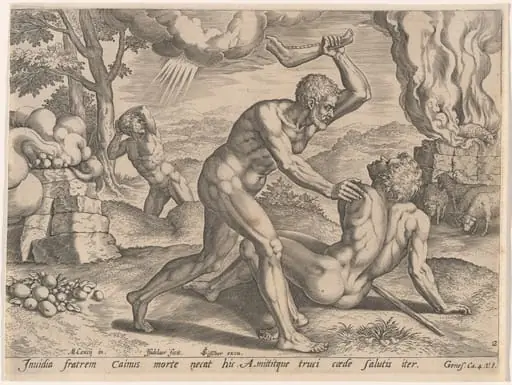
Cain Killing Abel is an ink print by the Renaissance artist Jan Muller. It dates from 1589 and is held in the collection of the National Gallery of Art. Jan Harmensz.
About this work
Overview
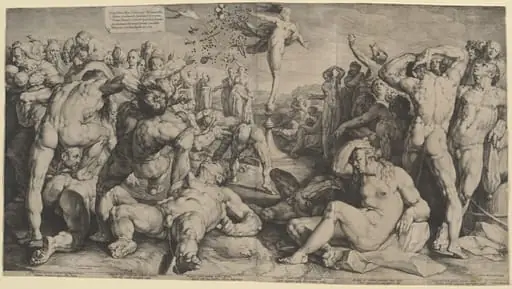
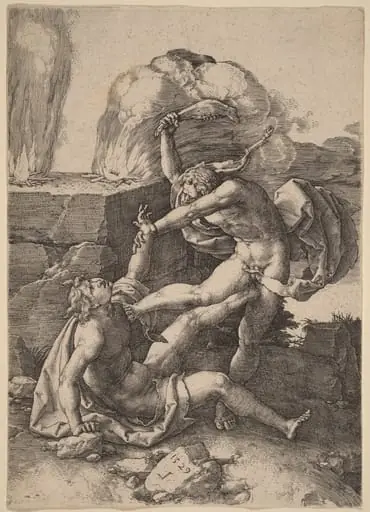
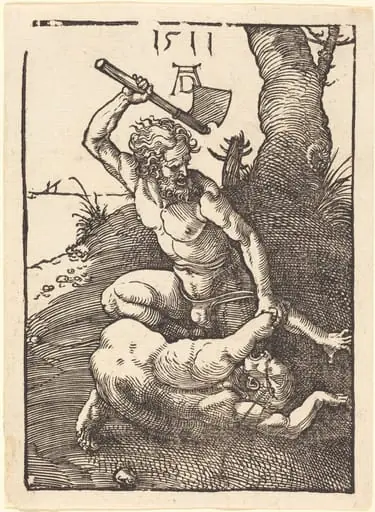
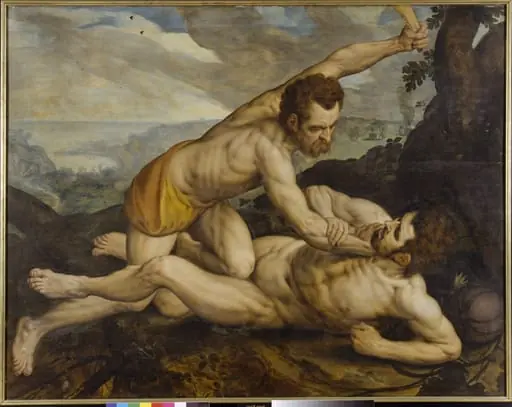
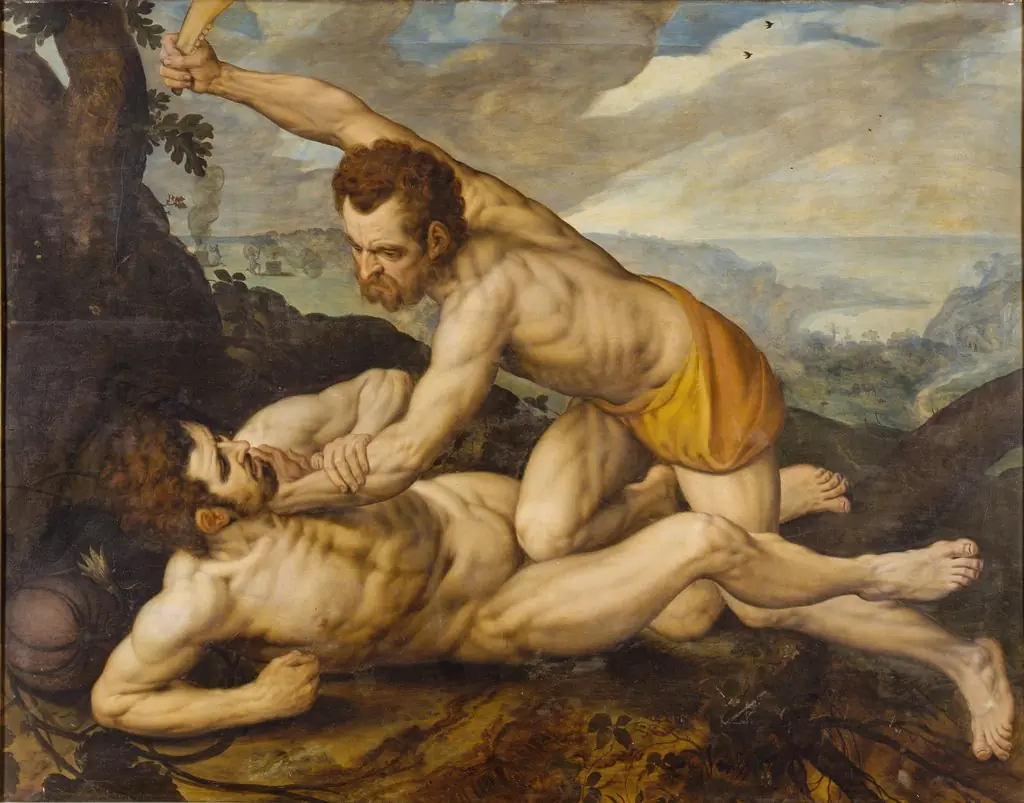
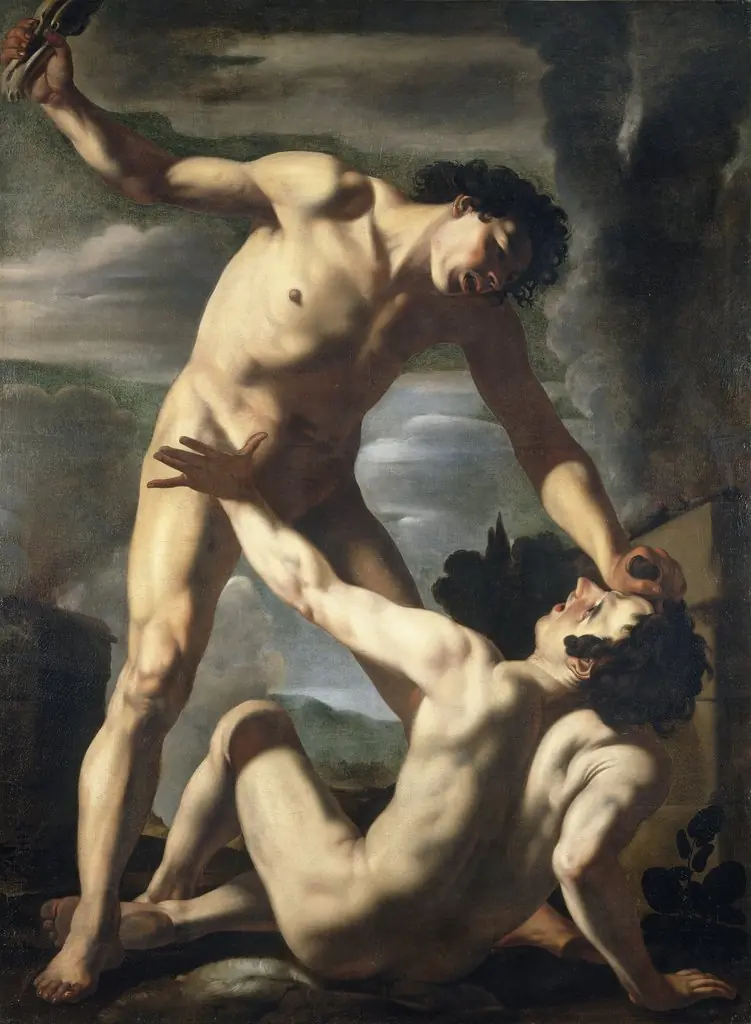
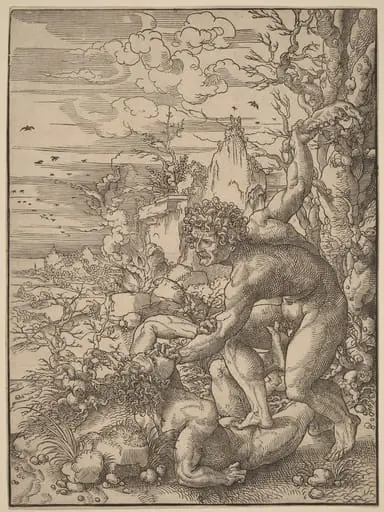
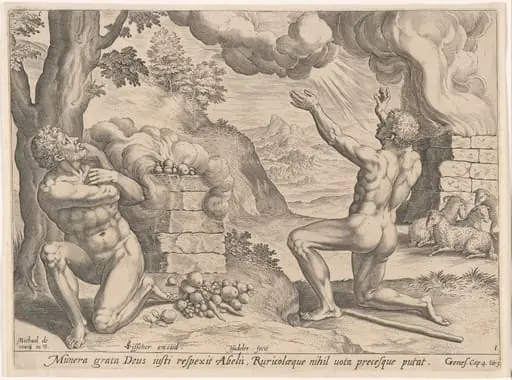
Jan Harmensz. Muller’s engraving *Cain Killing Abel*, dated circa 1589, presents the biblical murder of Abel by his brother Cain. Executed on laid paper, the print captures the dramatic climax of the Genesis narrative, focusing on the two figures in a stark, uncluttered composition.
Subject & Meaning
The scene shows Cain standing over Abel’s lifeless body, a stone clenched in his fist, while blood pools beneath Abel’s head. Both brothers display twisted expressions of anger and terror, emphasizing the gravity of fratricide and the moral weight of the first recorded murder.
Technique & Style
Muller employs deep, dark lines to carve pronounced shadows across the figures, while fine cross‑hatching creates tonal variation and texture. The meticulous use of line work reflects the precision typical of Northern European printmaking, and the empty background directs the viewer’s attention entirely to the violent encounter.
History & Provenance
Born in Amsterdam in 1571 into a family of printers and engravers, Muller trained within the family workshop before traveling to Italy, where he refined his artistic abilities. After returning to the Netherlands, he assumed control of his father’s business, working as both engraver and painter until his death in 1628.
Context
The engraving exemplifies the narrative clarity and technical exactness characteristic of late‑16th‑century Northern prints. Its focus on a biblical episode aligns with the period’s interest in moralizing subjects drawn from scripture, serving both devotional and instructional purposes.
Artist & collection

Artist
Jan Harmensz. Muller (1571–1628) was a Dutch engraver and painter. Muller was born in Amsterdam. His father was a book printer, engraver and publisher. He learned the engraving trade while working in the family…