Artwork
Fortune Distributing her Gifts
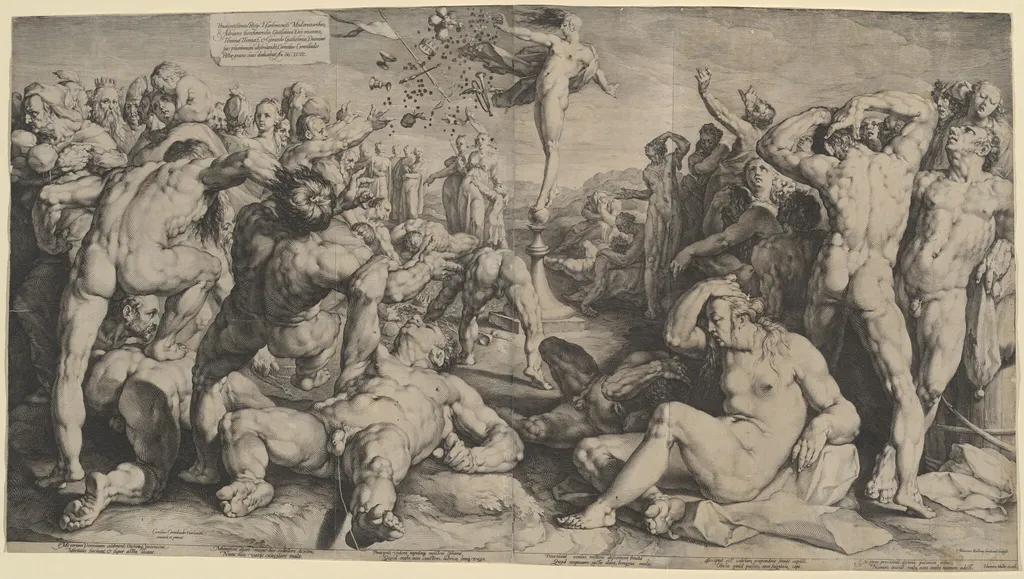
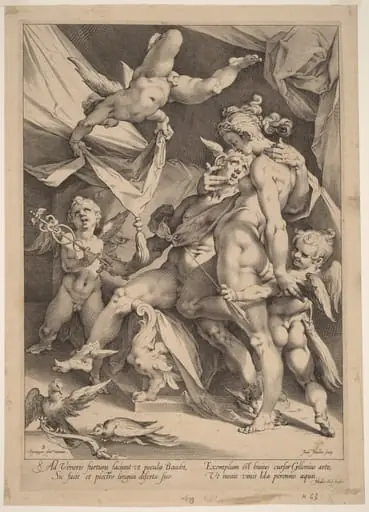
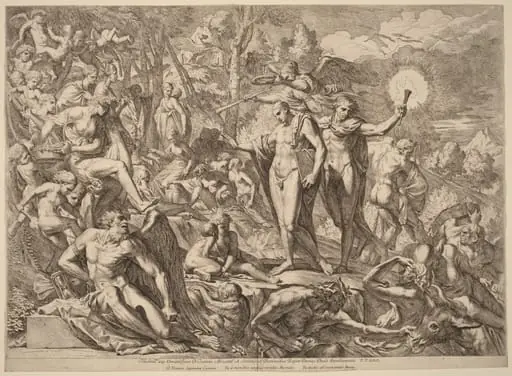
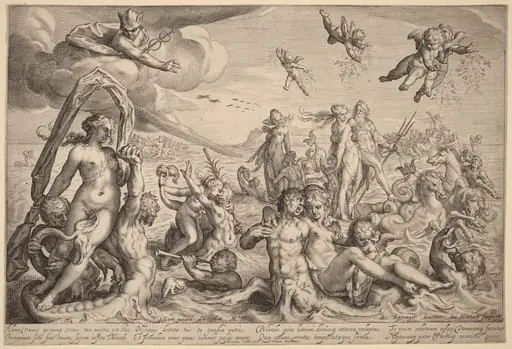
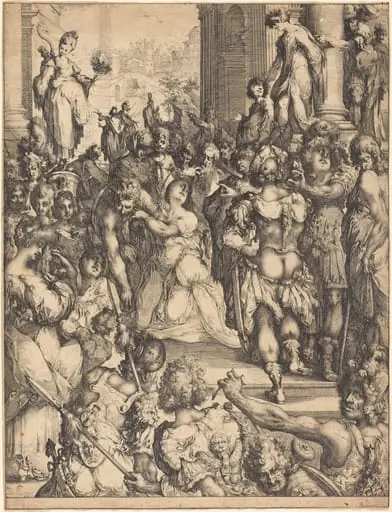
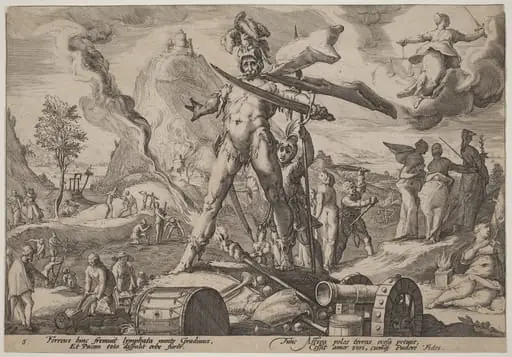
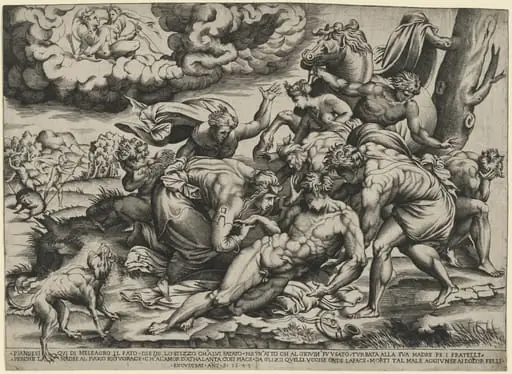
Fortune Distributing her Gifts is an ink print by the Renaissance artist Jan Muller. It dates from 1590 and is held in the collection of the National Gallery of Art. Jan Harmensz.
About this work
Overview
Muller’s 1590 engraving portrays Fortune as a celestial figure bestowing favors and misfortunes upon a disordered crowd.
Jan Harmensz. Muller’s 1590 engraving portrays Fortune as a celestial figure bestowing favors and misfortunes upon a disordered crowd. Executed in fine lines on laid paper, the work exemplifies Northern European printmaking traditions. Muller, trained in his father’s Amsterdam publishing house and later influenced by Italian art, combined classical allegory with meticulous engraving techniques to convey moral and social themes prevalent in late 16th-century Europe.
Subject & Meaning
The allegorical figure of Fortune, depicted pouring gifts from a vessel above, distributes wealth, power, and ruin indiscriminately among a tangle of human figures. Some reach upward in aspiration, others collapse in defeat, while a solitary woman sits apart, perhaps symbolizing resignation or detachment. The composition reflects Renaissance humanist concerns with fate, merit, and the capricious nature of social fortune, critiquing the illusion of control over one’s destiny.
Technique & Style
Muller employed fine cross-hatching to model form and depth, creating a sense of volume and texture across the crowded scene. The intricate network of lines defines folds of clothing, facial expressions, and the contours of the figures, enhancing the three-dimensionality of the composition. The starry background and sparse distant figures suggest a cosmic scale, contrasting the earthly chaos below with an indifferent heavens.
History & Provenance
Muller, born in Amsterdam in 1571, learned engraving within his family’s print business and later studied in Italy, absorbing classical motifs and compositional strategies. Upon returning, he managed the family workshop and produced both prints and paintings until his death in 1628. This engraving likely circulated among educated patrons interested in moral allegories, reflecting the commercial print culture of the Dutch Republic during its cultural ascendancy.
Context
Created during a period of rising merchant wealth and social mobility in the Netherlands, the print responds to anxieties about fortune’s unpredictability. Classical allegories were widely used in Northern art to comment on contemporary life, blending humanist ideals with Protestant moral caution. Muller’s work aligns with broader European trends that used print to disseminate philosophical and ethical ideas to a literate, urban audience.
Legacy
Muller’s engraving contributed to the tradition of moral allegory in Northern printmaking, influencing later artists who explored themes of fate and human vulnerability. His technical precision in cross-hatching set a standard for detail in reproductive prints. Though not widely reproduced today, the work remains a significant example of how print media conveyed complex philosophical ideas to a broad public in early modern Europe.
Artist & collection

Artist
Jan Harmensz. Muller (1571–1628) was a Dutch engraver and painter. Muller was born in Amsterdam. His father was a book printer, engraver and publisher. He learned the engraving trade while working in the family…