Artwork
Raising of the Kościuszko Mound
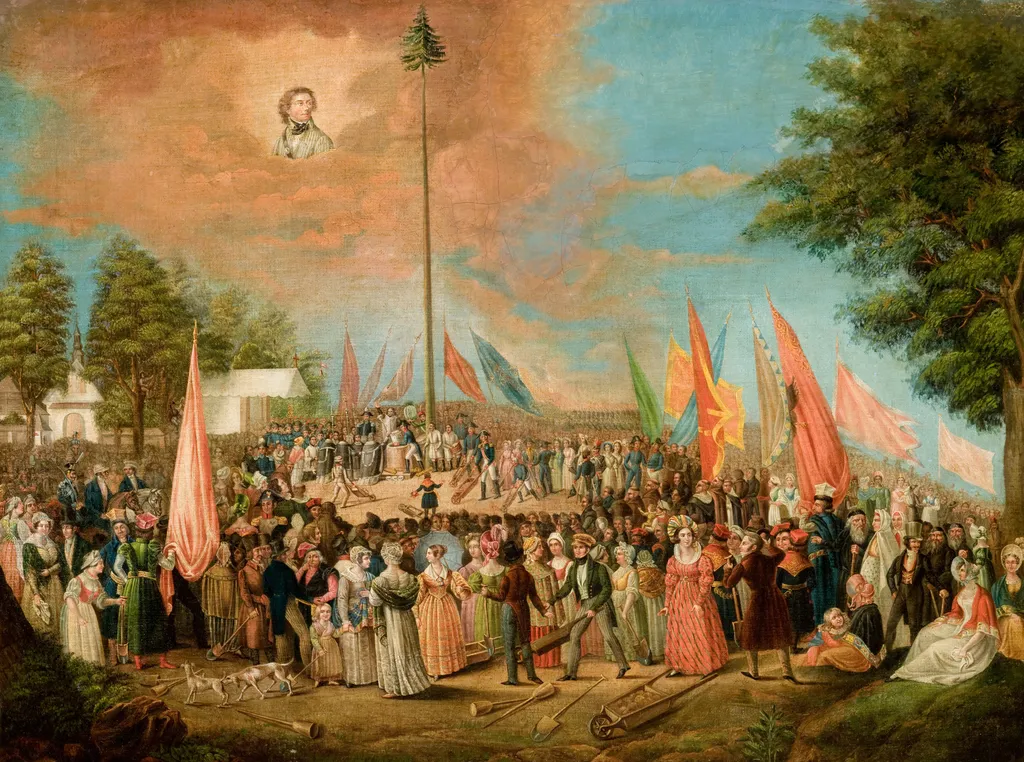
Raising of the Kościuszko Mound is an oil painting by Jan Nepomucen Bizański. It dates from 1851 and is held in the collection of the National Museum in Kraków.
About this work
Overview
Painted around 1851 by Jan Nepomucen Bizański, this oil work captures the ceremonial raising of a monument dedicated to Tadeusz Kościuszko. The painting is part of the National Museum in Kraków’s collection and reflects a moment of public commemoration in 19th-century Poland, blending historical record with civic ritual.
Subject & Meaning
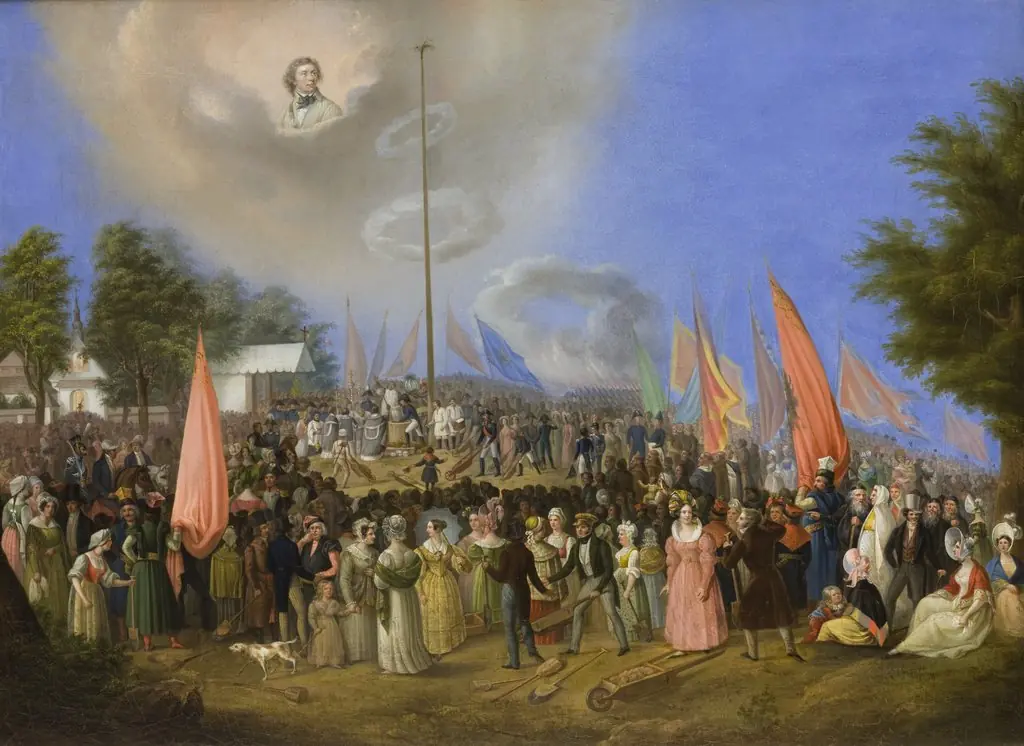
The scene portrays a communal act of national remembrance, as crowds gather to erect a symbolic pole topped with flags. A portrait of Kościuszko appears in the sky, suggesting his enduring presence in the collective memory. The event, though not a literal historical moment, serves as an allegory for resilience and shared identity during a time when Poland was partitioned and lacked sovereignty.
Technique & Style
Delicate brushwork suggests texture in fabric and foliage, while the central pole draws the eye through linear composition and upward momentum.
Bizański employs a vivid palette of earth tones and bright accents to animate the crowd, with figures dressed in browns, greens, and reds creating rhythmic visual movement. The sky, rendered in soft blues and pinks, contrasts with the grounded activity below. Delicate brushwork suggests texture in fabric and foliage, while the central pole draws the eye through linear composition and upward momentum.
History & Provenance
Commissioned to honor Kościuszko’s legacy, the painting was completed shortly after the initial construction of the Kościuszko Mound in Kraków. It remained in Polish hands throughout the 19th century and entered the National Museum’s collection in the early 20th century, where it continues to serve as a visual document of patriotic sentiment during the partitions.
Context
Created during a period of suppressed Polish statehood, the painting reflects a cultural strategy of preserving national identity through symbolic acts. The mound itself, begun in 1820, was a grassroots effort to commemorate a national hero without overt political defiance. Bizański’s work translates this quiet resistance into visual form, aligning art with collective memory.
Legacy
The painting endures as a record of how Poles sustained historical consciousness under foreign rule. It influenced later depictions of public monuments and civic rituals in Polish art, offering a model for merging real events with symbolic imagery. Today, it remains a touchstone for understanding the role of visual culture in national identity formation.
Own this work as a print
Artist & collection

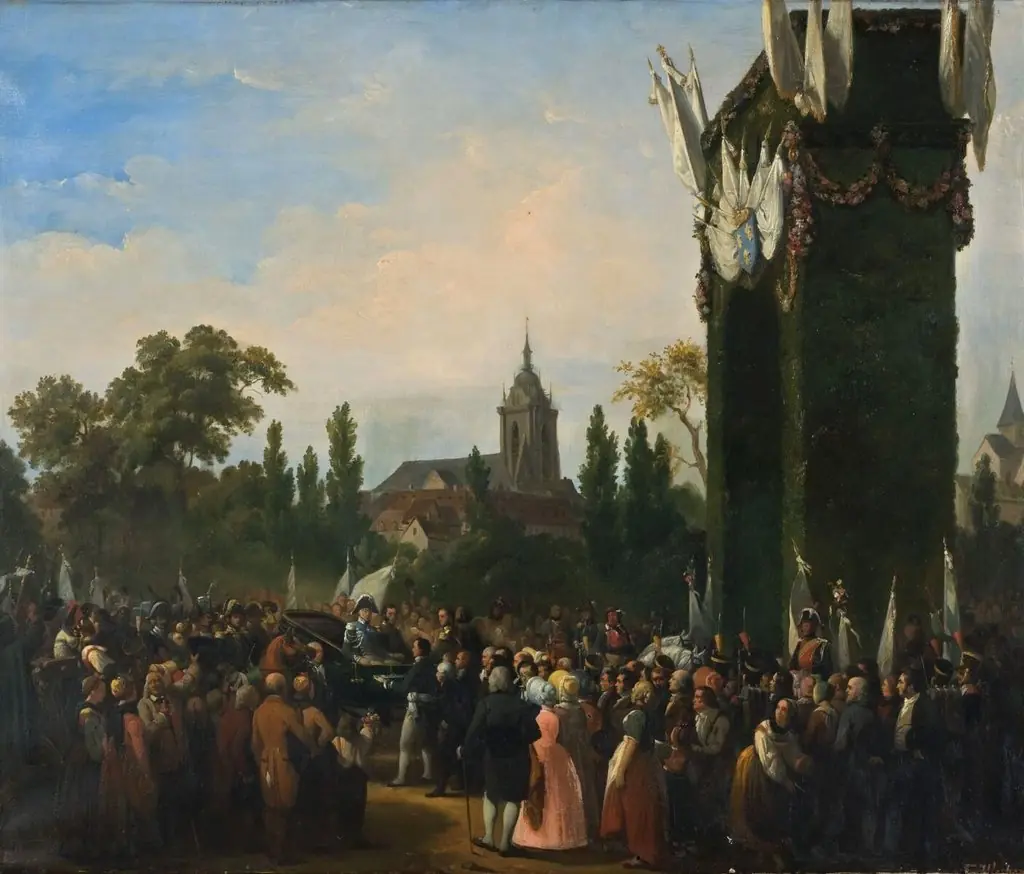 Entry of King Charles X in Colmar on 10 September 1828
 The Sermon on the Mount
 Ascent of a Montgolfier Balloon at Aranjuez
 Country Fair
 Flemish Fair
 Rural Festival
 Wedding Banquet with the Archduke Albert and the Archduchess Isabel Clara Eugenia
 Funeral of the Victims of the Year 1848
 La feria de Santiponce
 The Wedding Banquet
 Die Grundsteinlegung des Concordiatempels in Laxenburg