Artwork
Interior with men returning from hunting and women inspecting the game
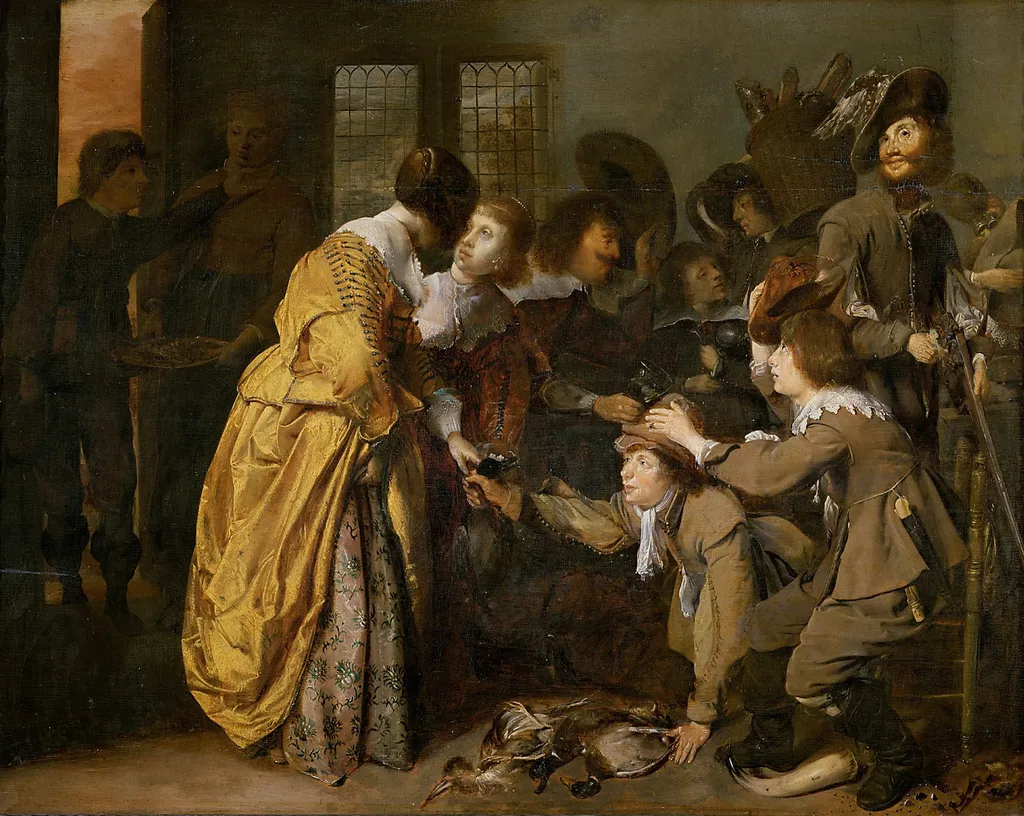
Interior with men returning from hunting and women inspecting the game is an oil painting by the Dutch Golden Age artist Jan Olis. It dates from 1632 and is held in the collection of the Kunsthistorisches Museum.
About this work
Overview
Jan Olis’s 1632 oil on canvas presents a bustling interior where a group of men and a woman gather around a freshly killed bird.
Jan Olis’s 1632 oil on canvas presents a bustling interior where a group of men and a woman gather around a freshly killed bird. The composition is dominated by a darkened room illuminated by a narrow, barred window, casting muted light across the figures. A woman in a vivid yellow dress examines the game, while several men in period attire and a child occupy the surrounding space, creating a lively domestic tableau.
Subject & Meaning
The scene captures a moment of post‑hunt activity, emphasizing the social ritual of game inspection and distribution within a household. The woman’s focused attention on the bird suggests a role in assessing its quality, while the men’s varied gestures—leaning, holding hats, reaching—convey a mixture of curiosity and communal participation. The work reflects everyday life rather than heroic or mythological narrative.
Technique & Style
Olis employs a restrained palette of browns, grays, and a striking yellow, using chiaroscuro to model forms against the dim interior. The brushwork delineates textures of fabric and feather, while the limited light source creates deep shadows that enhance the three‑dimensionality of the figures. The composition balances crowded figures with a clear focal point, characteristic of Dutch genre painting of the early 17th century.
History & Provenance
Born in Gorinchem, Olis was active in Dordrecht and joined the Guild of St. Luke in the same year the painting was completed. Though primarily known for farm and genre scenes, he also held civic positions in Heusden, serving as mayor and tax collector. The painting’s later ownership records are sparse, but it remains attributed to Olis based on stylistic and documentary evidence from his active period.
Context
The work belongs to the Dutch Golden Age, a period when genre scenes depicting ordinary domestic activities were in high demand. Such paintings often served both decorative and moral purposes, illustrating the virtues of diligence and community. Olis’s depiction aligns with contemporary interests in realism, attention to detail, and the subtle interplay of light and shadow that defined the era’s visual culture.
Artist & collection
Artist
Jan Olis (1610–1676) was a Dutch Golden Age painter. Olis was born in Gorinchem, Netherlands. According to the RKD in 1632, he became a member of the Dordrecht Guild of St. Luke. In 1637, he got married, and during the…

 An Elegant Company
 An Elegant Company
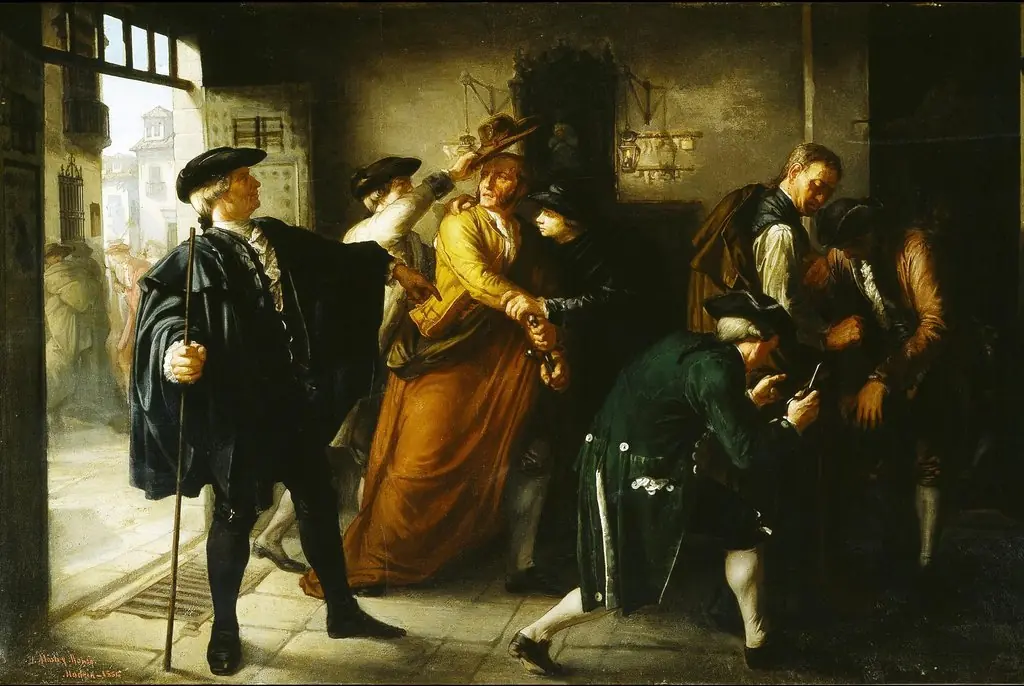 El Motín de Esquilache. Episodio...
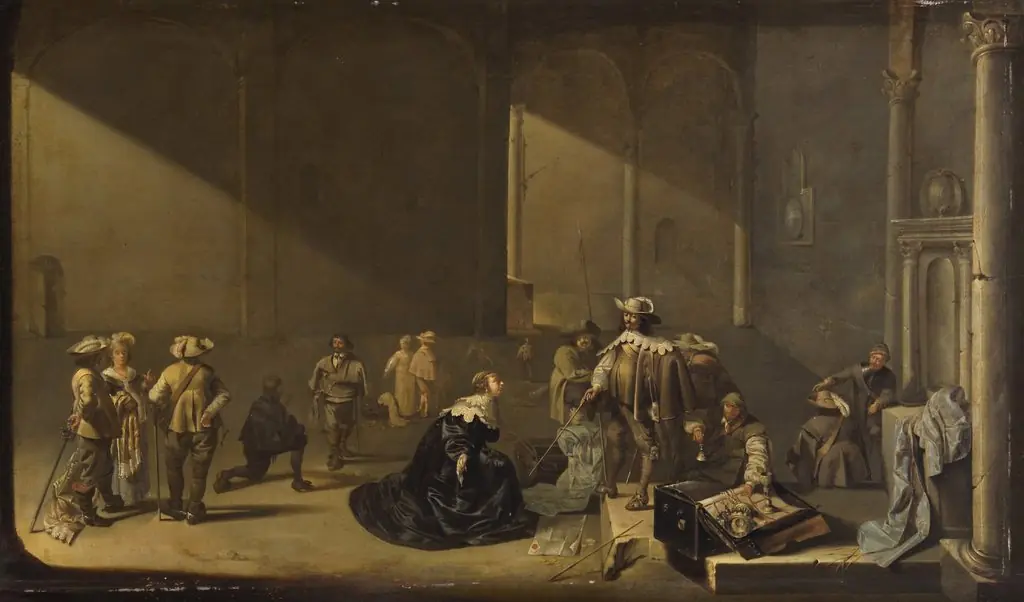 Interior with soldiers inspecting the booty and with a pleading woman
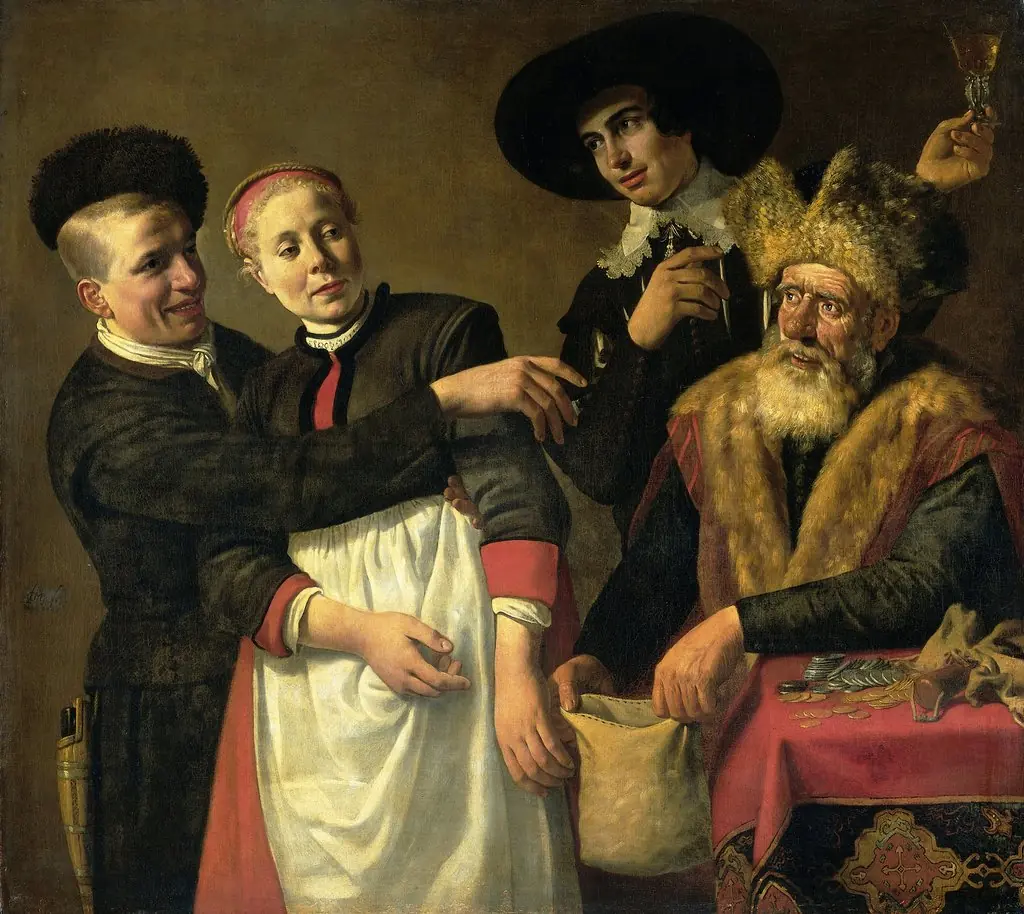 Mooy-Aal and her suitors
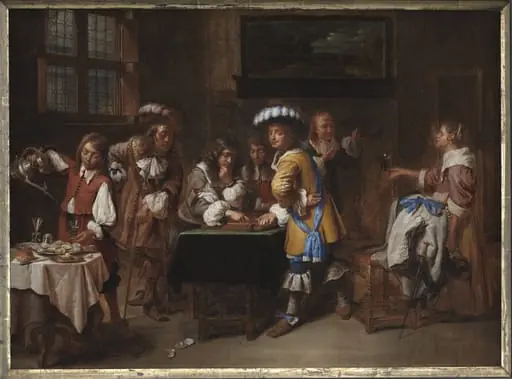 Trictrac Players
 Distinguished Company in a Room
 Distinguished company in a room
 Event at a Military Camp (Wedding at a Military Camp)
 Card-Playing
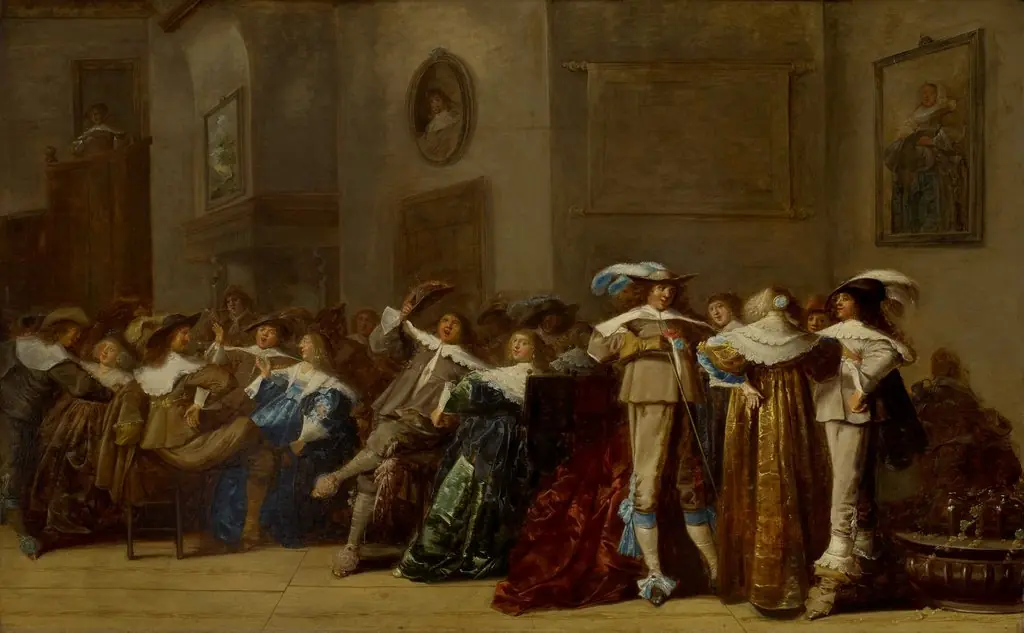 The Merry Company
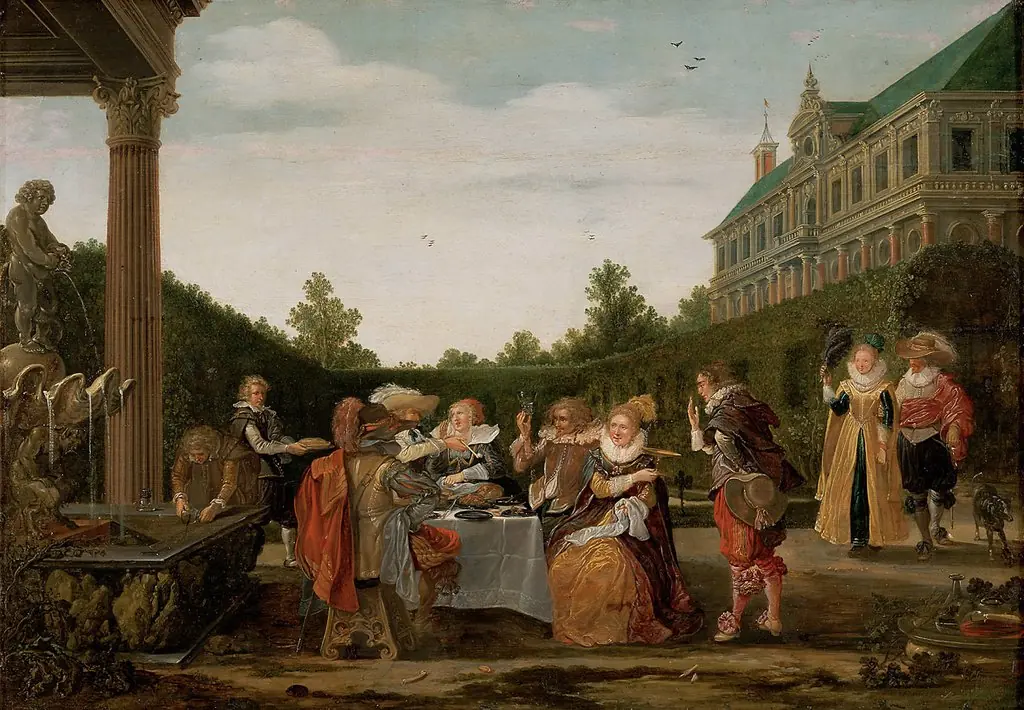 Banquet in a palatial garden, with an elegant company drinking and in conversation