Artwork
St Jerome
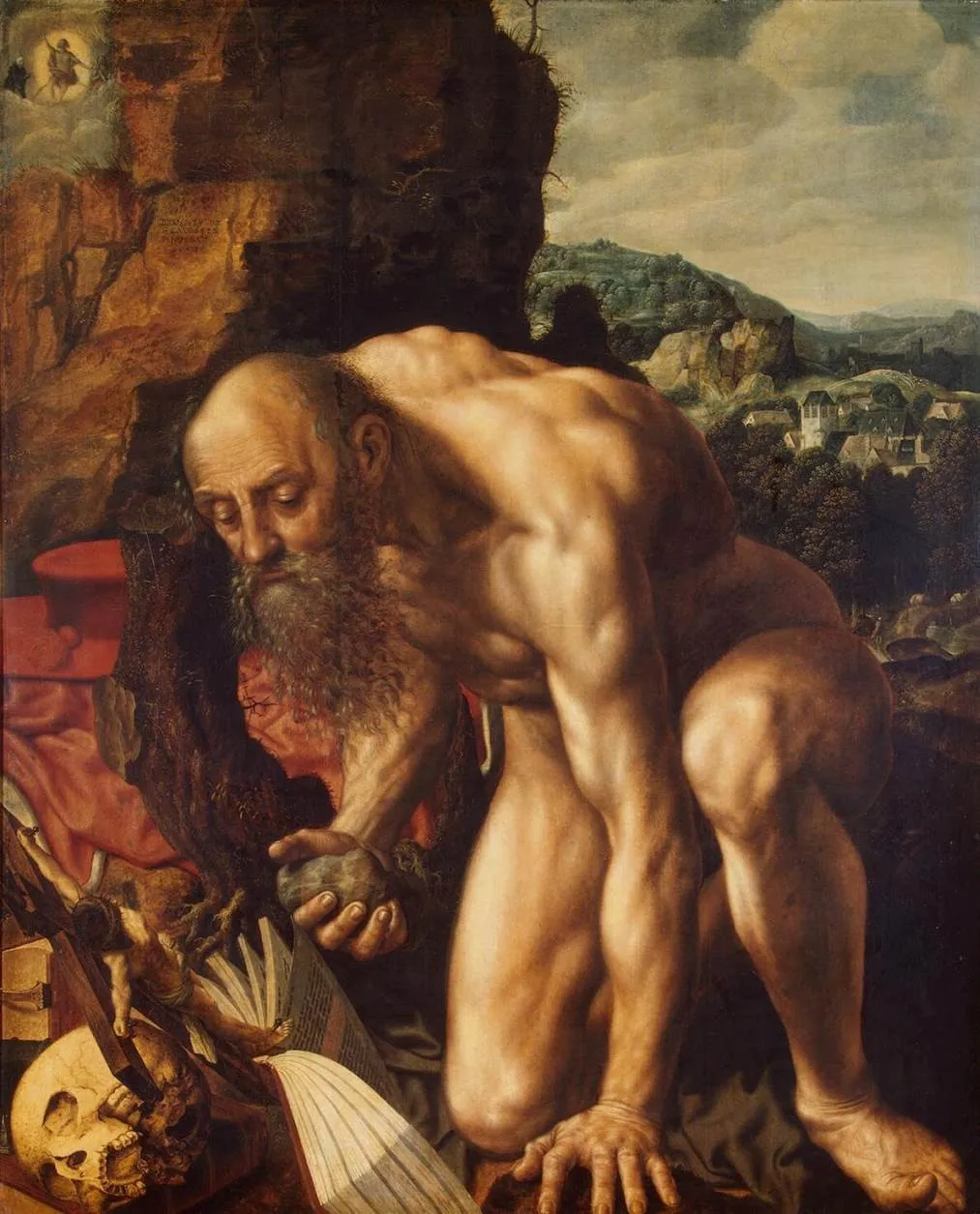
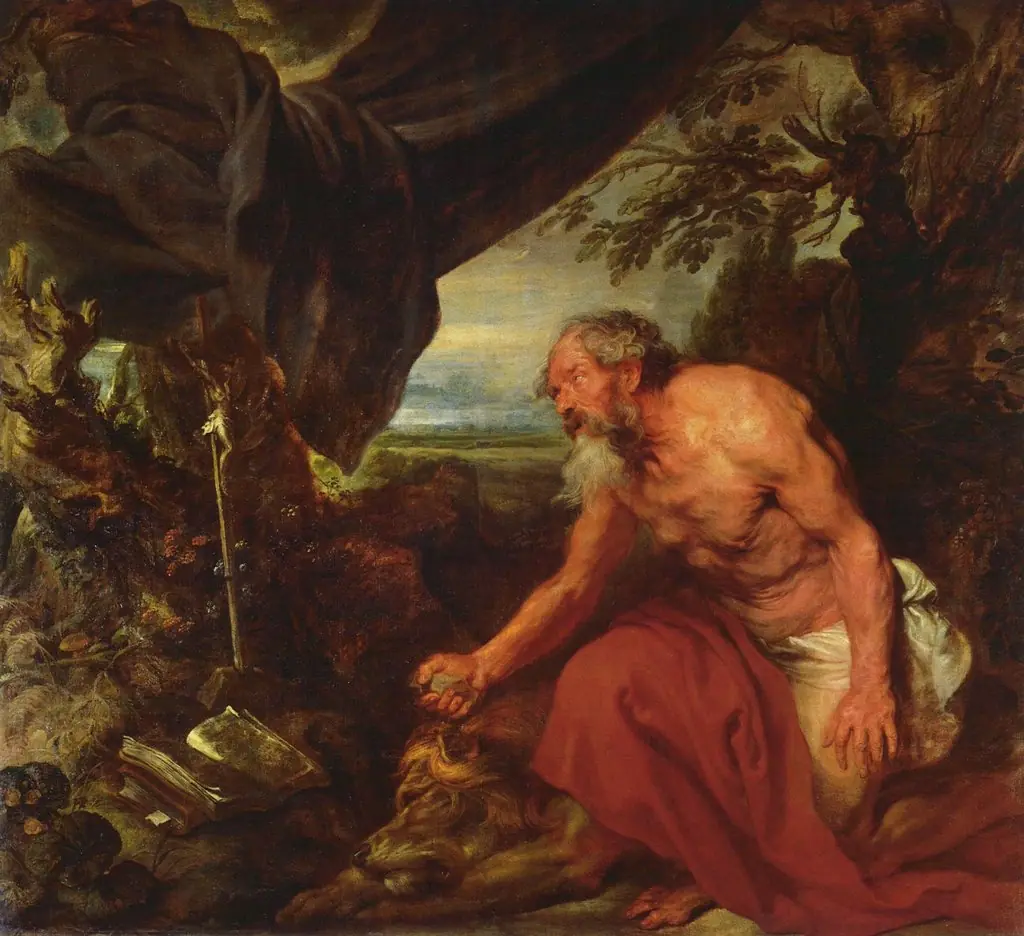
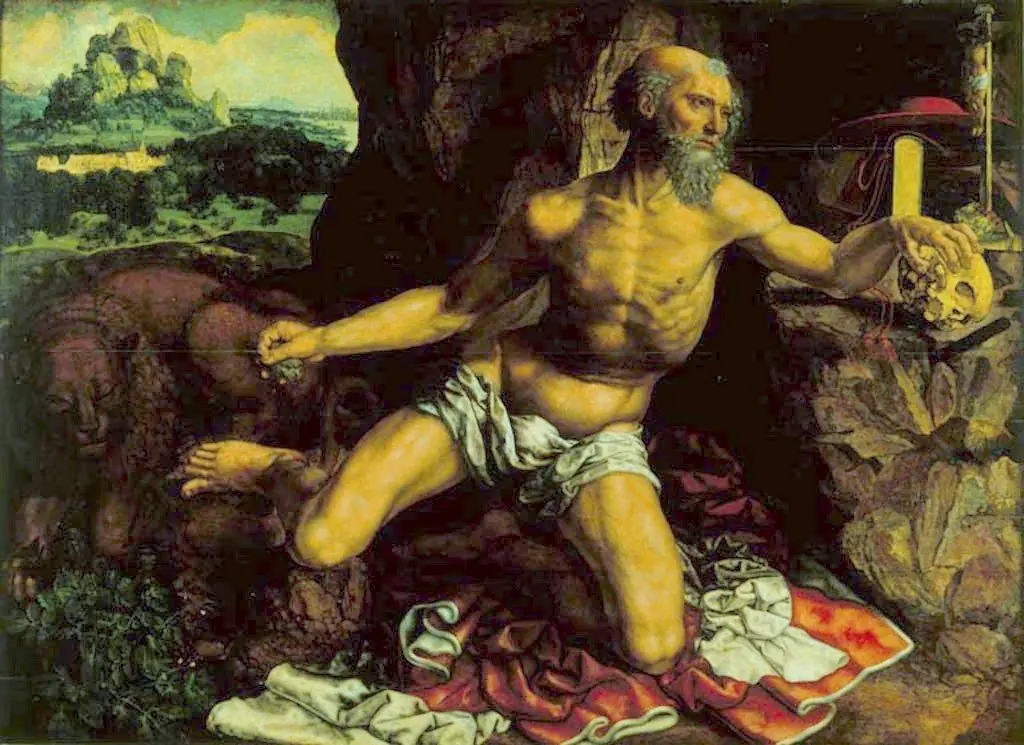
St Jerome is an oil painting by the Early Baroque Italian artist Jan Sanders van Hemessen. It dates from 1543 and is held in the collection of the Hermitage Museum.
About this work
Overview
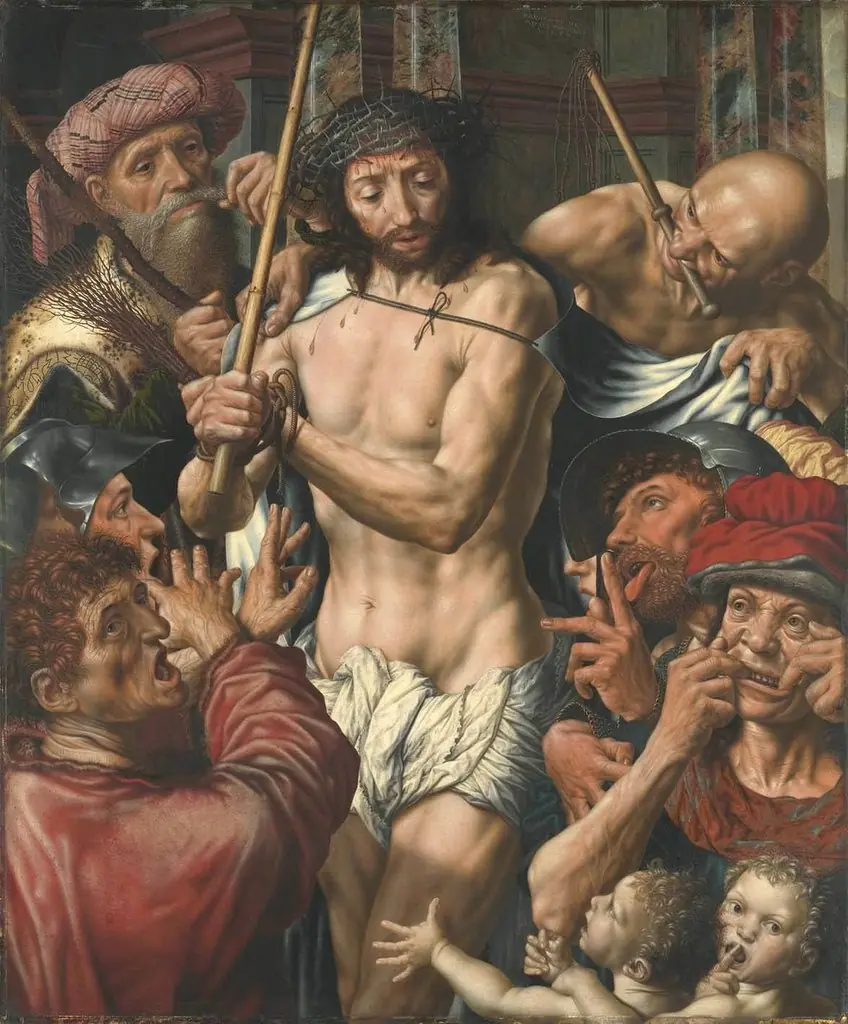
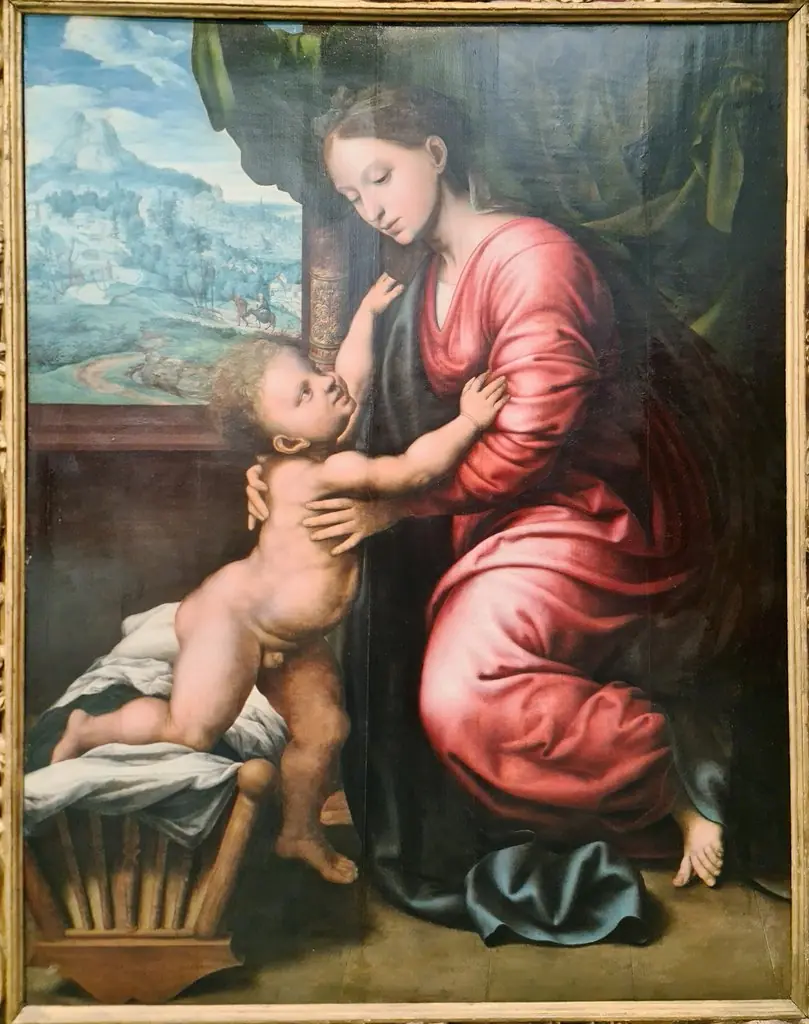
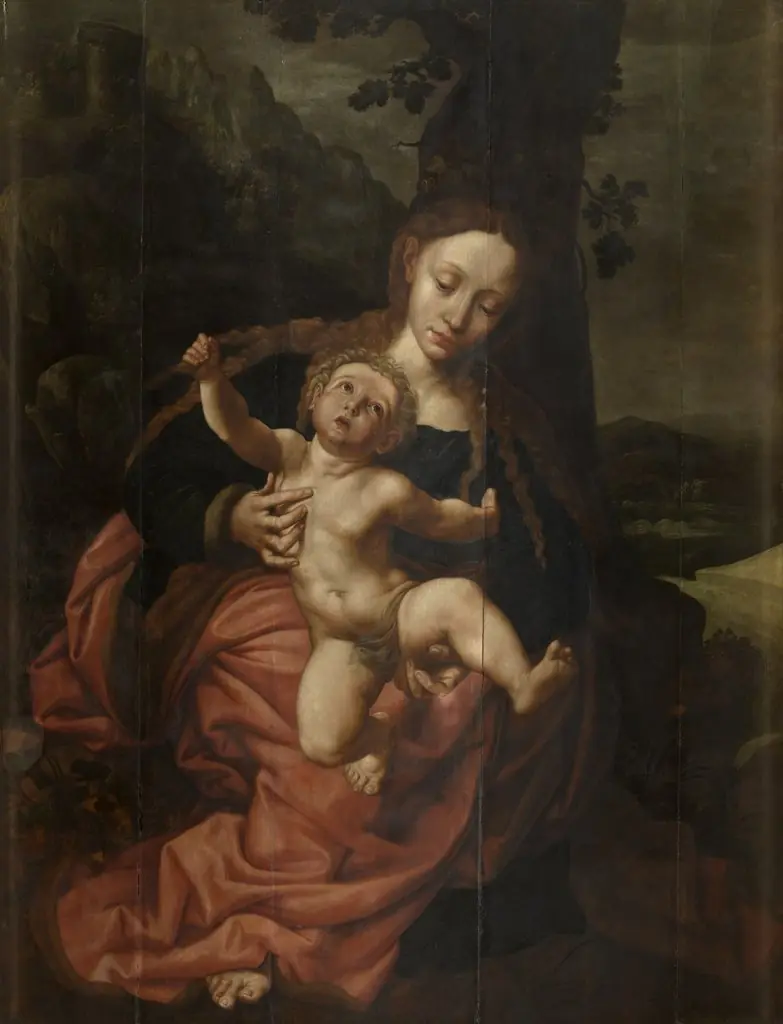
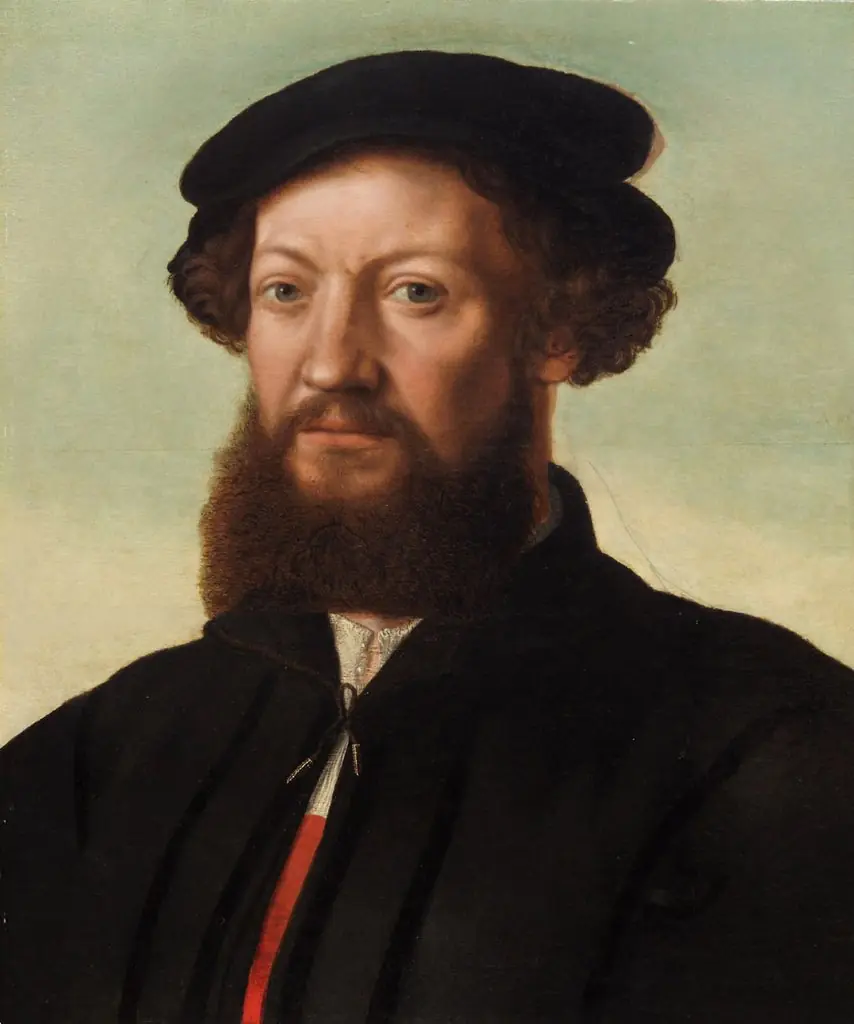
Jan Sanders van Hemessen executed *St Jerome* in 1543, a work that reflects his synthesis of Flemish realism with Italianate compositional devices. Active in Antwerp during the early sixteenth century, the artist absorbed influences from both the Italian Renaissance and the School of Fontainebleau, producing a painting marked by volumetric modeling and dramatic contrasts.
Subject & Meaning
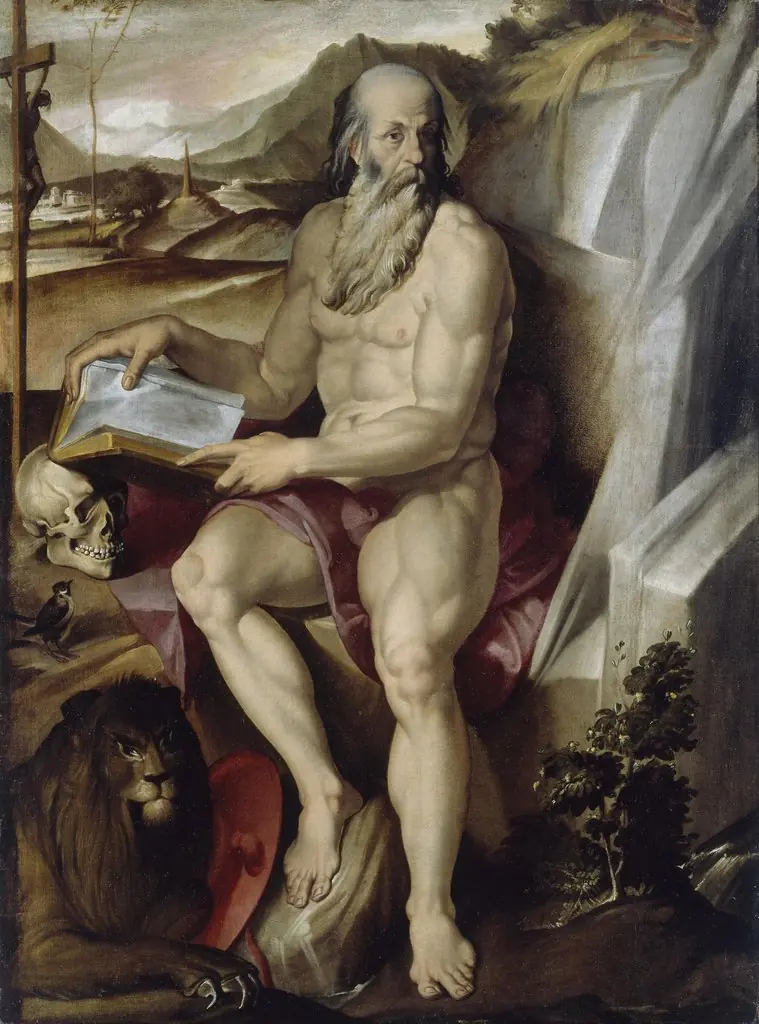
The canvas portrays Jerome, the fourth-century theologian and translator of the Vulgate Bible, in a moment of penitential contemplation.
The canvas portrays Jerome, the fourth-century theologian and translator of the Vulgate Bible, in a moment of penitential contemplation. A skull at his feet and a stone clutched in his hand underscore themes of mortality and ascetic discipline. Beside him, a youthful attendant—modeled with anatomical precision—serves as a visual counterpoint, heightening the tension between fleshly vigor and spiritual renunciation.
Technique & Style
Van Hemessen employed a controlled chiaroscuro to articulate the figures’ musculature and drapery folds, lending them a sculptural presence. The landscape recedes through atmospheric perspective, while the finely rendered textures—from wrinkled skin to polished stone—demonstrate the artist’s command of oil paint. The composition balances Flemish detail with the spatial clarity and idealized proportions characteristic of Italian art.
History & Provenance
Completed in 1543, the painting entered the collection of the State Hermitage Museum, where it remains. Little is documented about its early ownership, though its survival suggests it passed through private or ecclesiastical collections before being acquired by the museum. The work’s condition has preserved van Hemessen’s original handling, including subtle glazes and brushwork.
Context
The painting emerged during a period of cross-cultural exchange, as Netherlandish artists increasingly incorporated Italianate motifs into their work. Van Hemessen’s depiction of Jerome aligns with contemporary devotional practices, which emphasized personal penance and meditation on human frailty. The inclusion of a robust, classical attendant also reflects the era’s revived interest in antique forms.
Legacy
While van Hemessen’s reputation waned in subsequent centuries, *St Jerome* exemplifies the transitional phase between Northern Renaissance and Baroque idioms. The work’s fusion of naturalism and idealism influenced later Flemish painters, and its presence in a major public collection ensures its continued study as a document of sixteenth-century artistic dialogue between Italy and the Low Countries.
Artist & collection
Artist
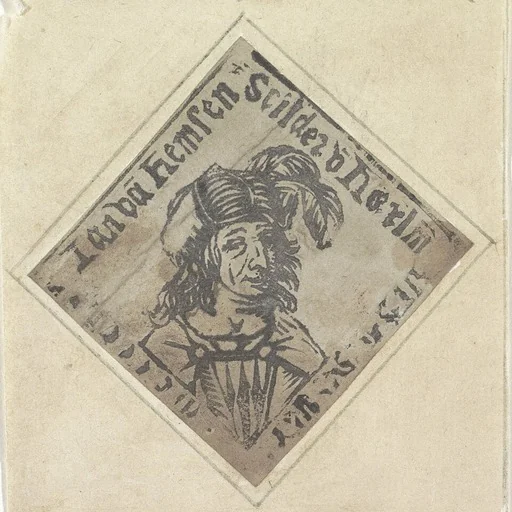
Jan Sanders van Hemessen (c. 1500 – c. 1566) was a leading Flemish Renaissance painter, belonging to the group of Italianizing Flemish painters called the Romanists, who were influenced by Italian Renaissance painting.…