Artwork
Johannes Crucius
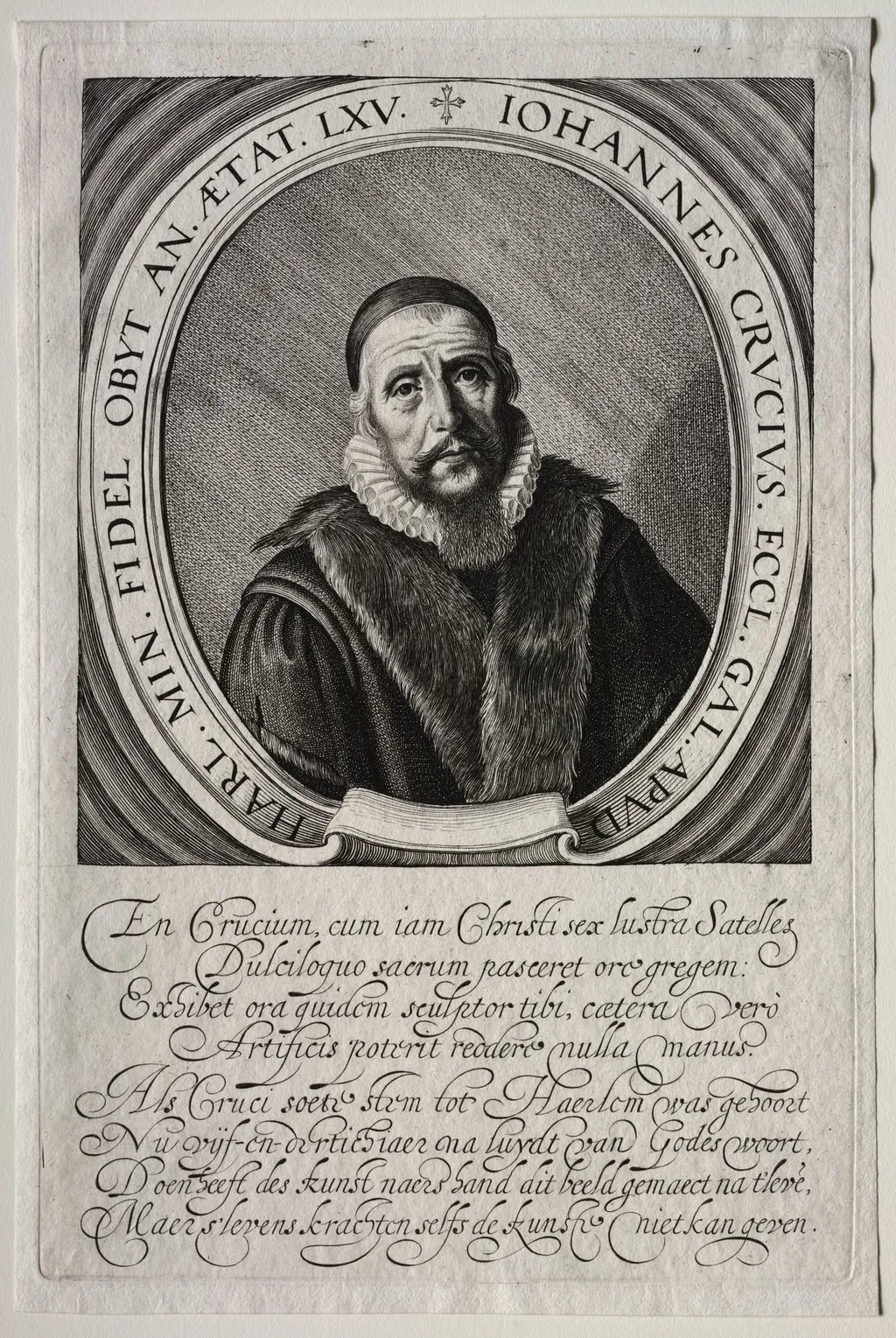
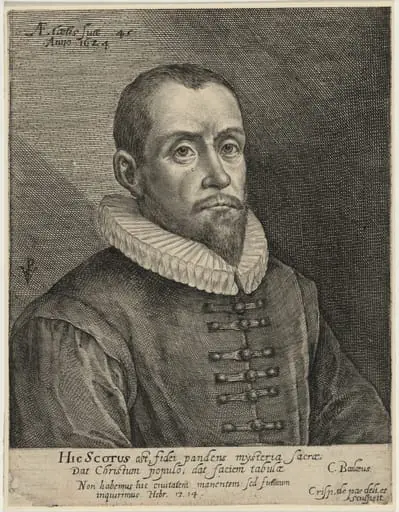
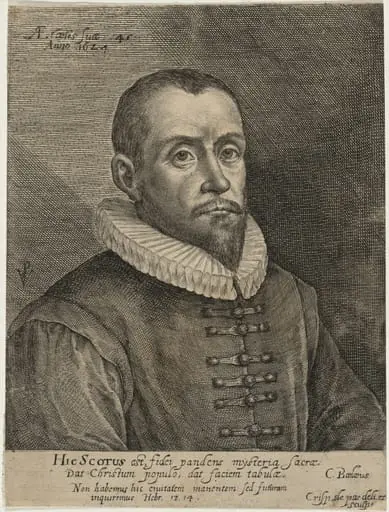
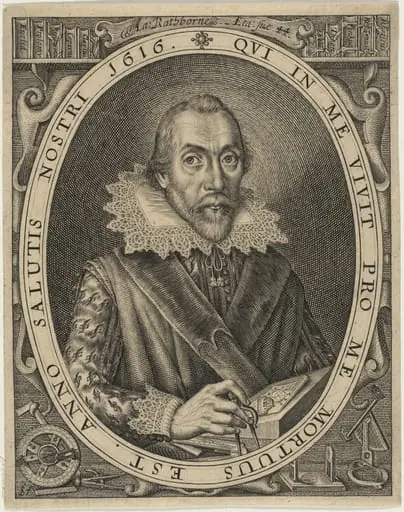
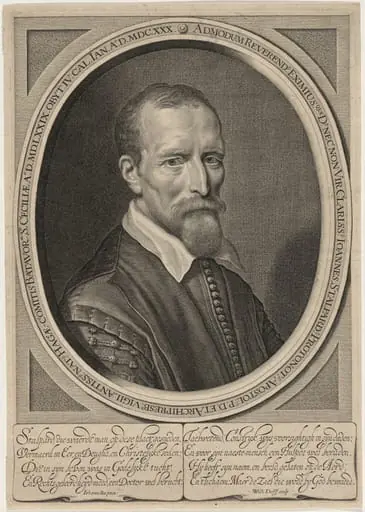
Johannes Crucius is a print by the Baroque artist Jan van de Velde. It dates from 1628 and is held in the collection of the Cleveland Museum of Art.
About this work
Overview
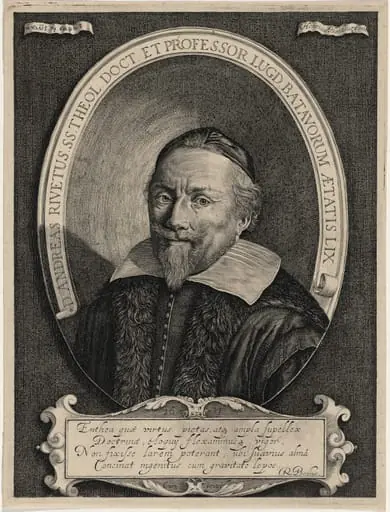
Created around 1628, this black-and-white etching depicts Johannes Crucius, a Dutch scholar and clergyman. The work is attributed to Jan van de Velde II, a printmaker active during the Dutch Golden Age. It resides in the collection of the Cleveland Museum of Art. The portrait is rendered with fine linear detail and tonal contrast, characteristic of etching techniques of the period.
Subject & Meaning
The Latin and Dutch inscriptions surrounding the oval frame likely record his name, titles, or virtues, reinforcing his public identity.
Johannes Crucius was a respected theologian and professor at Leiden University. The portrait presents him with dignified stillness, emphasizing his intellectual and spiritual authority. The Latin and Dutch inscriptions surrounding the oval frame likely record his name, titles, or virtues, reinforcing his public identity. The absence of decorative elements focuses attention on his character and presence.
Technique & Style
Van de Velde employed etching to achieve subtle gradations of light and shadow, using fine lines to model the contours of Crucius’s face and fur-lined robe. The strong side lighting creates chiaroscuro effects, enhancing the three-dimensionality of the features. The plain background isolates the figure, directing focus to the texture of skin, beard, and fabric, all rendered with meticulous precision.
History & Provenance
The print was made during Jan van de Velde II’s mature period, when he specialized in portraiture and genre scenes. It entered the Cleveland Museum of Art’s collection in the 20th century, likely through a broader acquisition of Dutch prints. The work’s survival in good condition reflects its historical value as a record of scholarly portraiture in early 17th-century Holland.
Context
In early 17th-century the Netherlands, printed portraits of scholars and clergy were common, serving both commemorative and propagandistic functions. These images affirmed the status of educated elites within a society that valued learning and religious authority. Van de Velde’s technique aligned with broader trends in Dutch printmaking, where realism and psychological depth were increasingly prioritized.
Legacy
Jan van de Velde II’s portraits, including this one, contributed to the development of the Dutch engraved portrait tradition. His ability to convey individuality through line and tone influenced later printmakers. While not widely known today, works like this remain important for understanding how intellectual identity was visually constructed in the Dutch Republic.
Artist & collection
Artist
Jan van de Velde the younger (1593 – c. 1 November 1641) was a Dutch Golden Age painter and printmaker, mostly of animal, landscape and still-life subjects. He was the son of Jan van de Velde the Elder and the father of…