Artwork
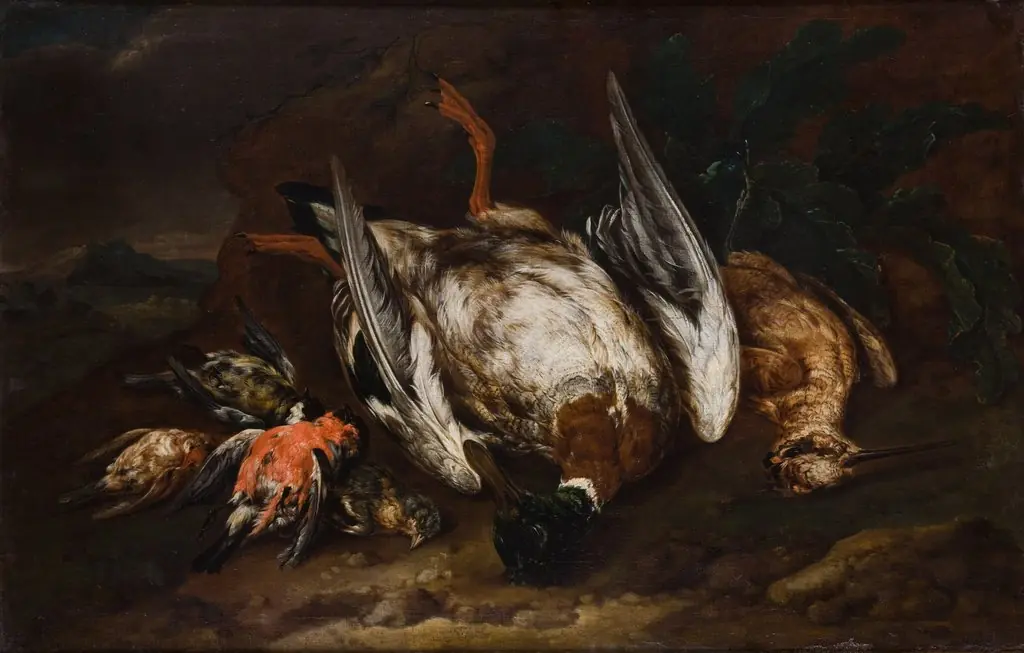
Dead Birds and Hunting Equipment in a Landscape
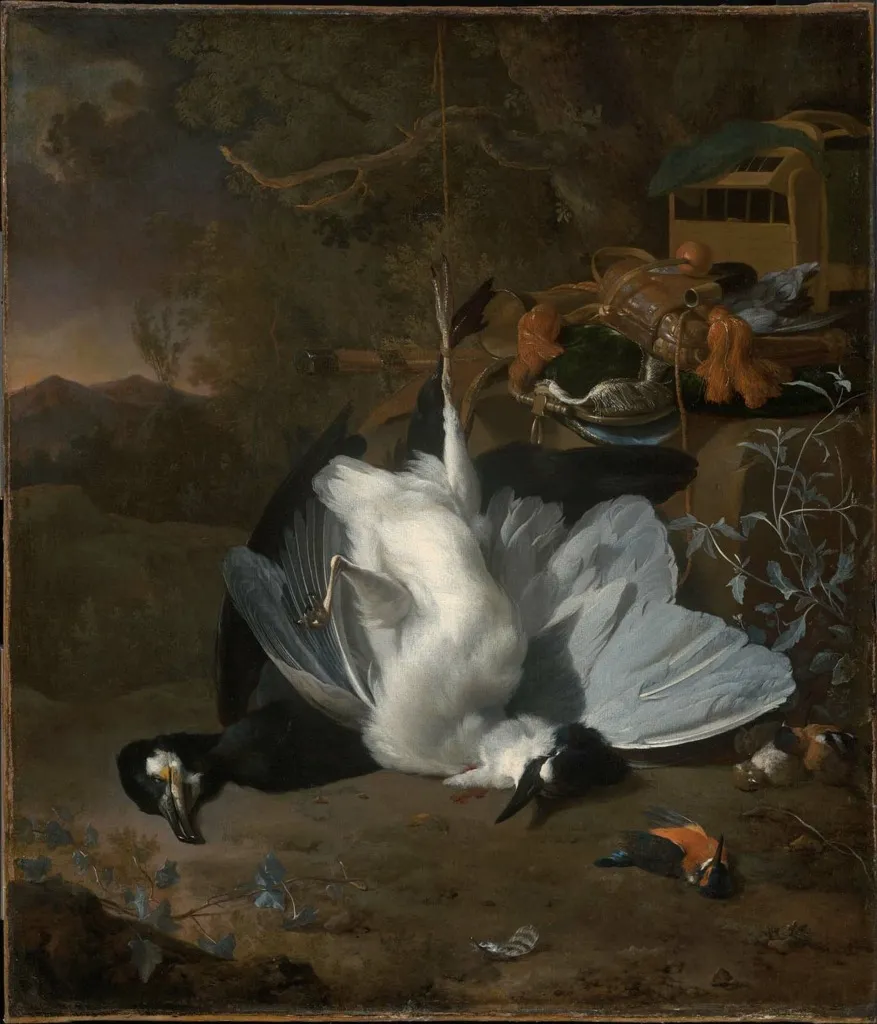
Dead Birds and Hunting Equipment in a Landscape is an oil painting by the Dutch Golden Age artist Jan Weenix. It is held in the collection of the Museum of Fine Arts Boston.
About this work
Overview
Jan Weenix painted this oil-on-canvas work in the late 17th century, aligning with the Dutch Golden Age’s fascination with naturalism and domesticated nature.
Jan Weenix painted this oil-on-canvas work in the late 17th century, aligning with the Dutch Golden Age’s fascination with naturalism and domesticated nature. The composition centers on a still life of hunted game arranged within a quiet outdoor setting. Unlike pure still lifes, it integrates landscape elements, blurring boundaries between genres. The painting reflects a cultural interest in hunting as both sport and sustenance, rendered with careful attention to texture and spatial depth.
Subject & Meaning
The painting displays a collection of dead birds—primarily white and dark-feathered—scattered across damp earth, alongside hunting tools such as nets or snares, though not always clearly defined. The arrangement suggests the aftermath of a hunt, emphasizing the quiet stillness of death rather than its violence. The birds’ placement, some partially obscured by foliage, implies a natural, unposed scene, possibly evoking themes of transience and the cycle of life and death in rural life.
Technique & Style
Weenix employed fine brushwork to render the varied textures of feathers, skin, and weathered wood with precision. Light falls selectively across the birds’ plumage, enhancing the illusion of volume and surface detail. The palette is muted—earthy browns, grays, and muted greens—except for the stark white bird, which draws the eye. Shadows are softly modeled, avoiding dramatic contrasts, creating a subdued realism that prioritizes observation over theatricality.
History & Provenance
The painting entered the Museum of Fine Arts, Boston’s collection in the early 20th century, acquired as part of a broader effort to expand its holdings of Dutch Golden Age works. It was likely created in Amsterdam or Utrecht, where Weenix was active after training under his father, Jan Baptist Weenix, and cousin Melchior d’Hondecoeter. Its survival in good condition reflects its continued appreciation among collectors since the 18th century.
Context
During the Dutch Golden Age, depictions of game and hunting paraphernalia were popular among urban elites who admired rural life as an idealized escape. These paintings often served as symbols of wealth, control over nature, and connoisseurship. Weenix’s work fits within a tradition that elevated the mundane into subjects worthy of artistic attention, reflecting a society increasingly detached from agrarian labor yet fascinated by its imagery.
Legacy
Weenix’s approach influenced later still-life painters who sought to blend naturalism with narrative subtlety. His focus on the quiet aftermath of the hunt, rather than the action itself, distinguished his work from more dramatic contemporaries. While not widely celebrated today, his paintings remain important examples of how Dutch artists transformed everyday subjects into meditations on observation, mortality, and the aesthetics of the ordinary.
Artist & collection
Artist
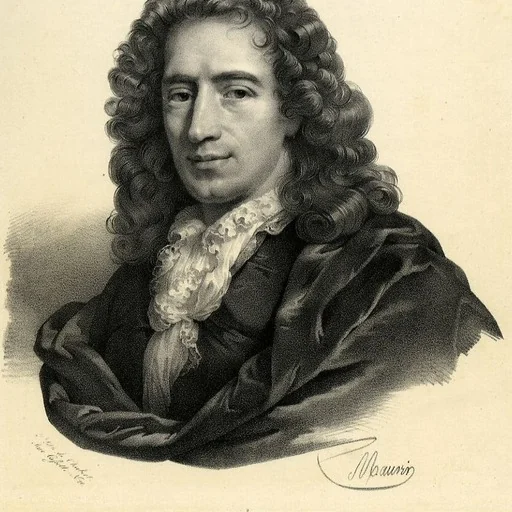
Jan Weenix or Joannis Wenix (between 1641/1649 – 19 September 1719 (buried)) was a Dutch painter.

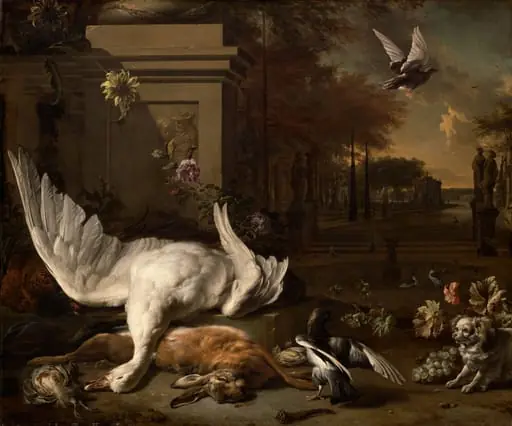 Still Life with Goose and Game before a Country Estate
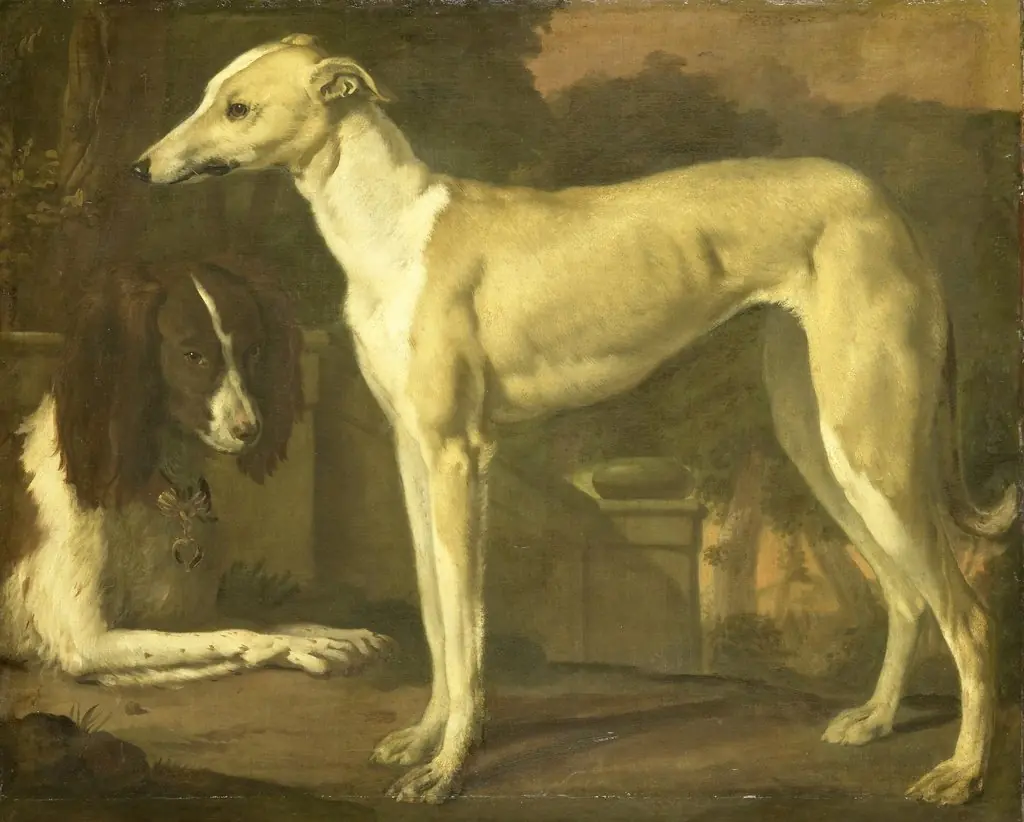 Portrait of a greyhound and a spaniel
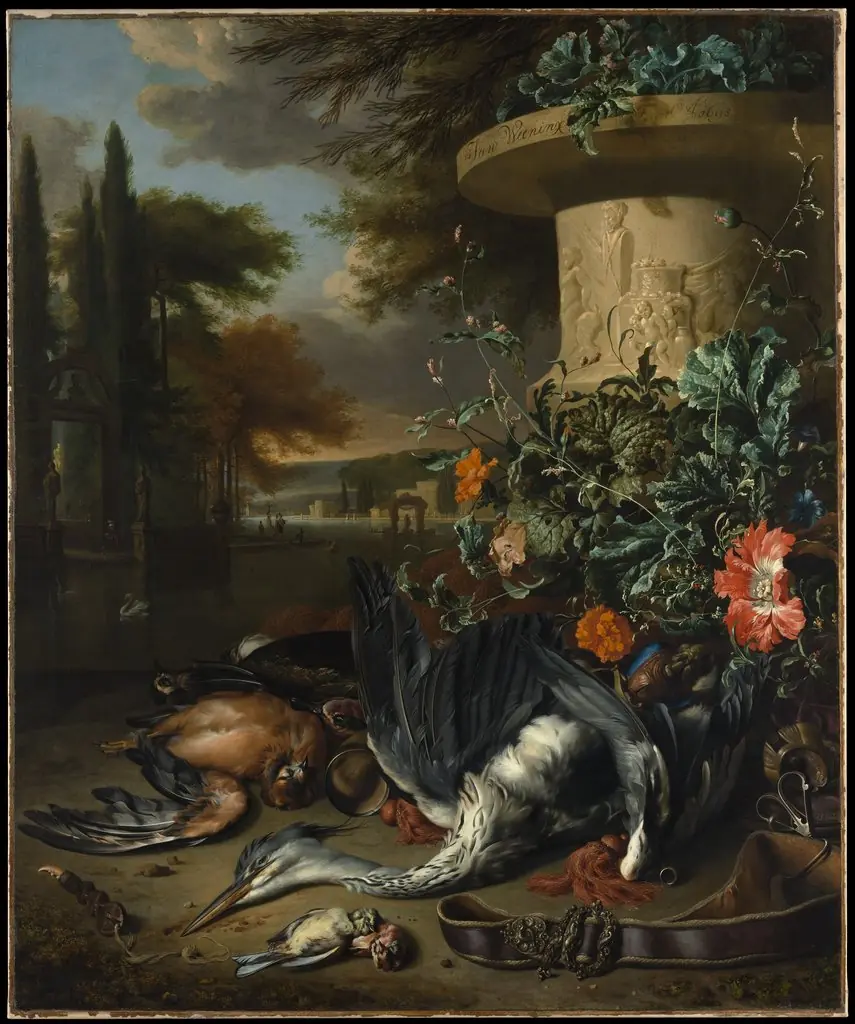 Gamepiece with a Dead Heron ("Falconer's Bag")
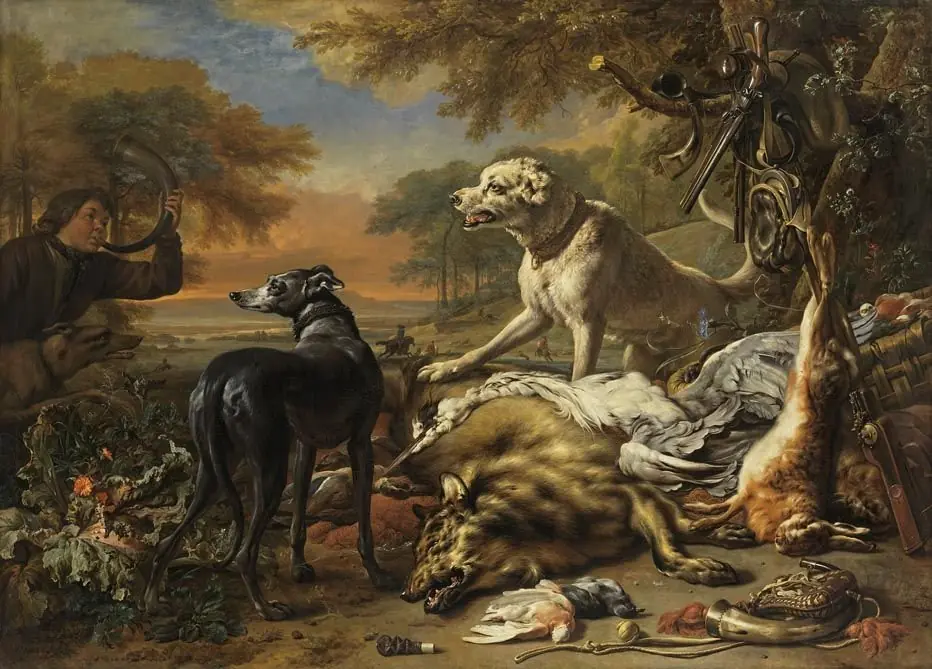 Hunting still life with wolf
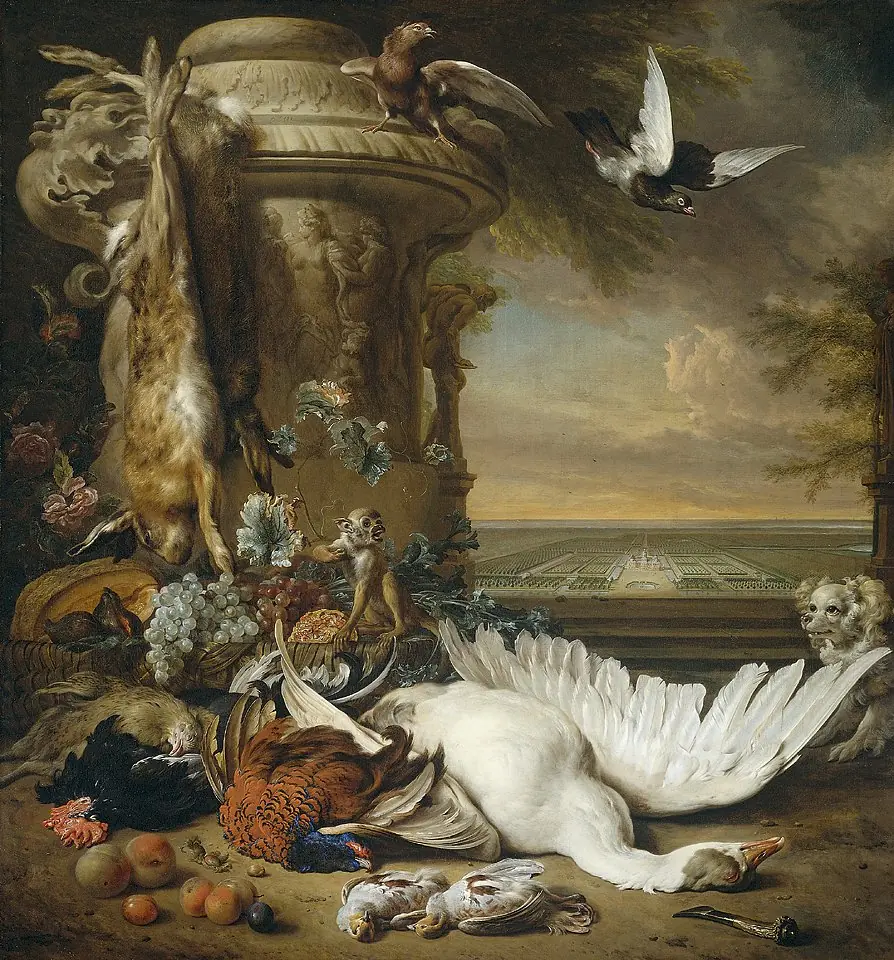 Still Life with Dead Game and Fruit beside a Garden Vase, with a Monkey, a Dog and Two Pigeons; in the Background Rijksdorp near Wassenaar, the Estate of Jonkheer Jacob Emmery, Baron of Wassenaar
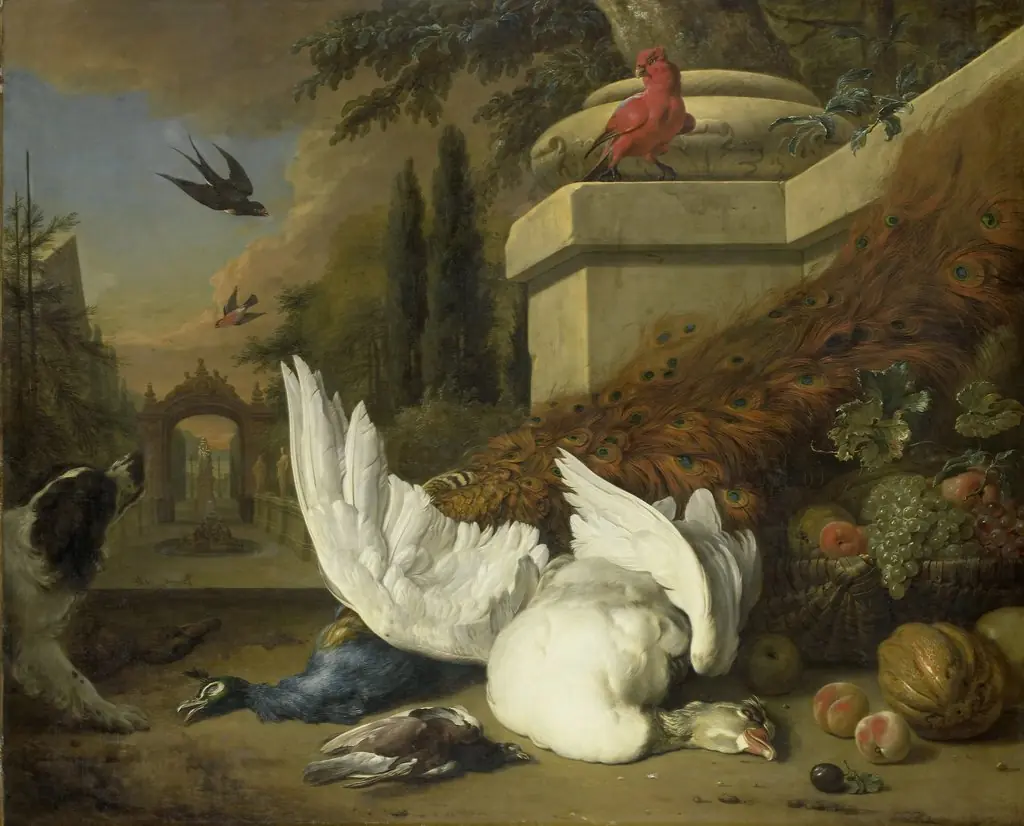 A monkey and a dog beside dead game and fruits, with the estate of Rijxdorp near Wassenaar in the background
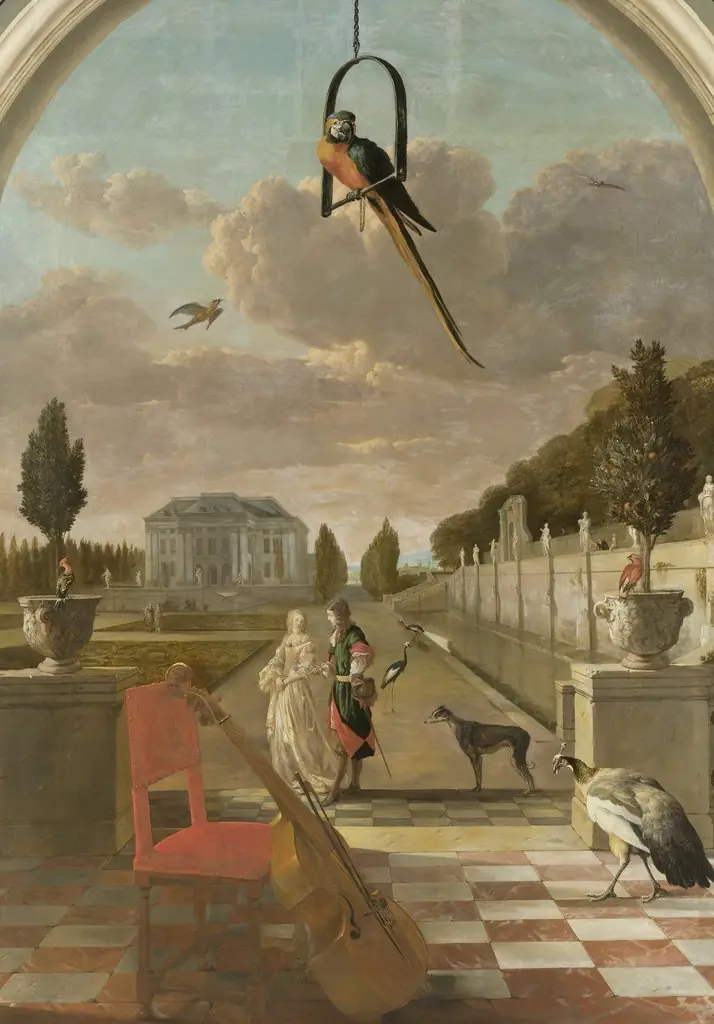 Park with country home
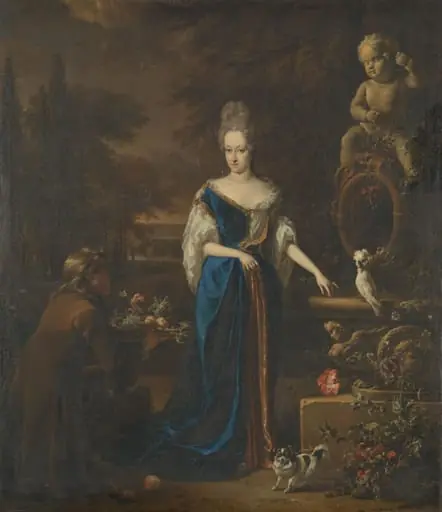 Portrait of Maria Cornelisz, Wife of Silvester van Tongeren
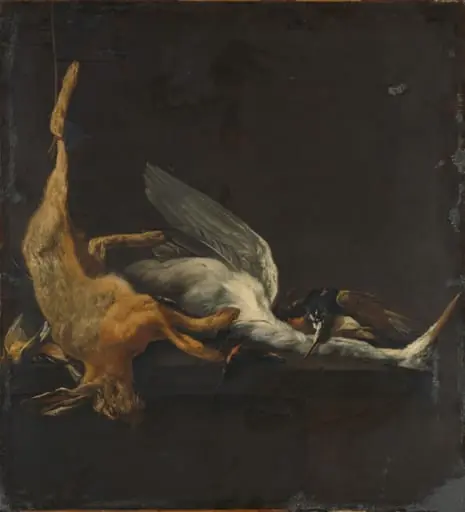 Still Life with a Hare, a Heron and Other Birds
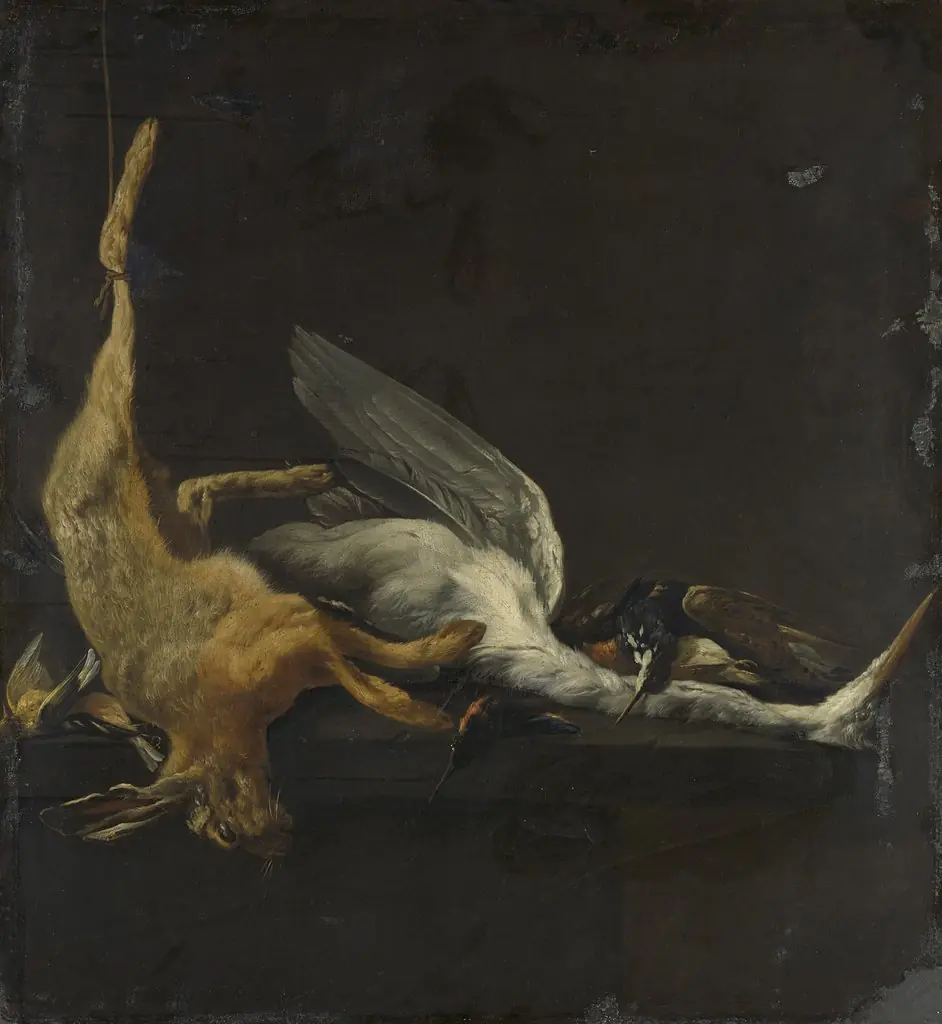 Still life with a hare, a heron and other birds
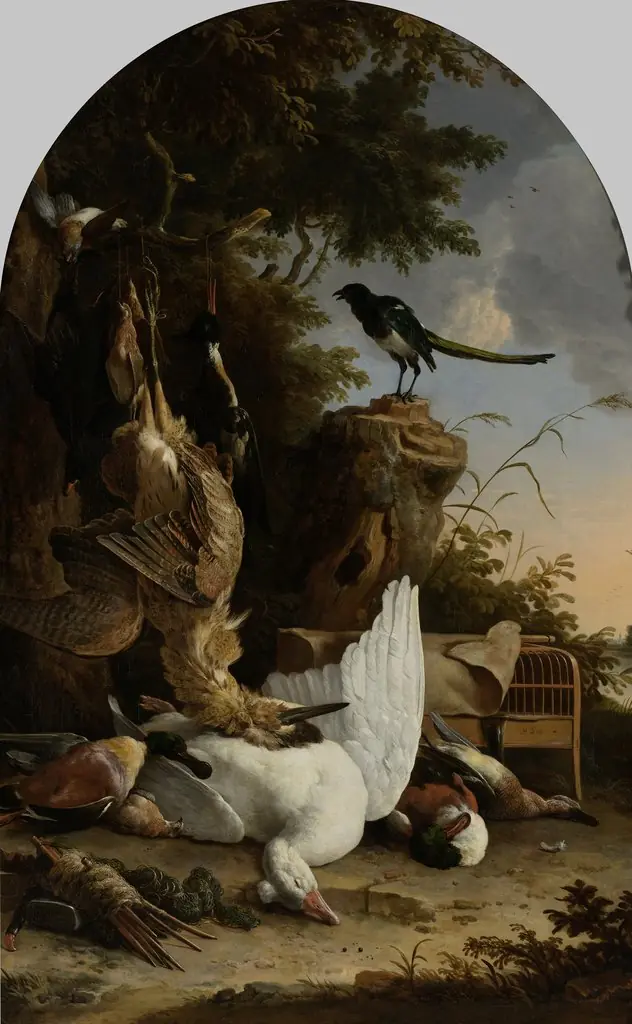 A Hunter’s Bag near a Tree Stump with a Magpie, Known as ‘The Contemplative Magpie’
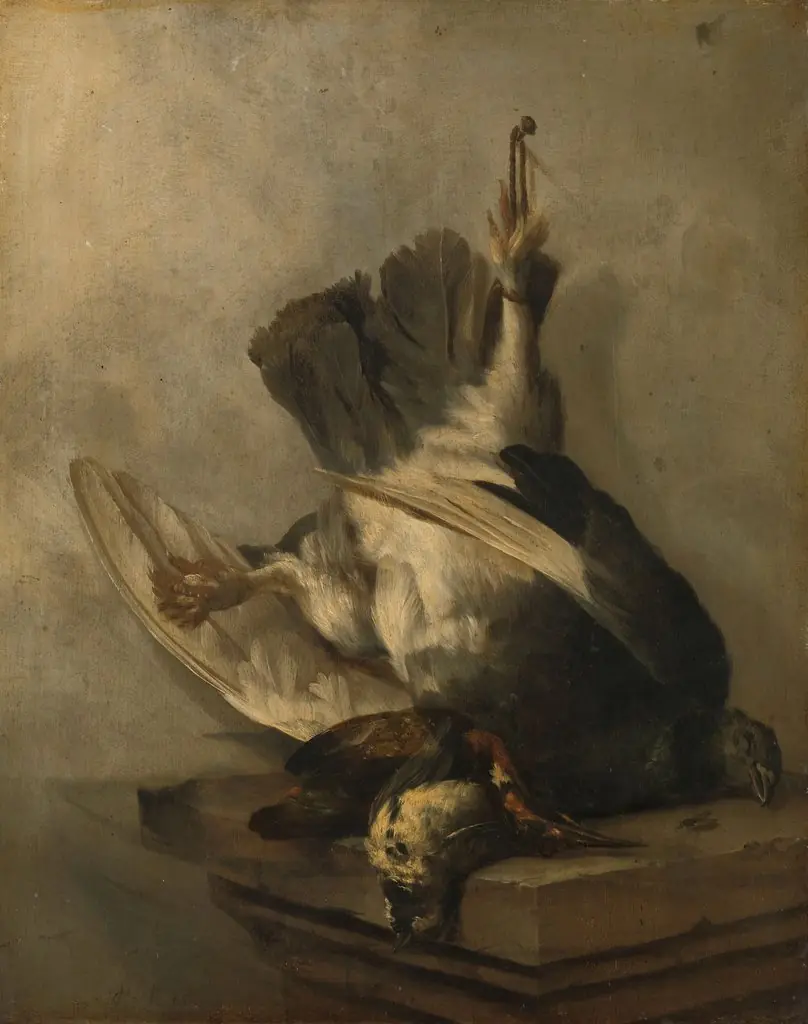 Still life with woodpecker and snipes
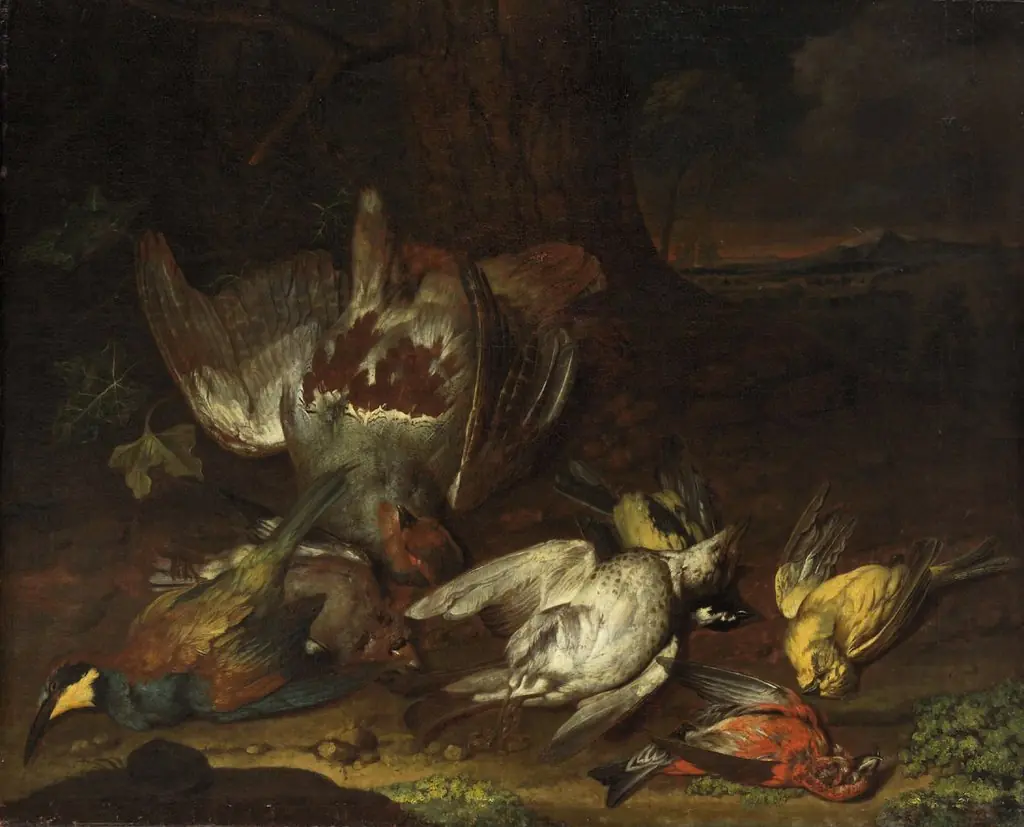 Totes Geflügel
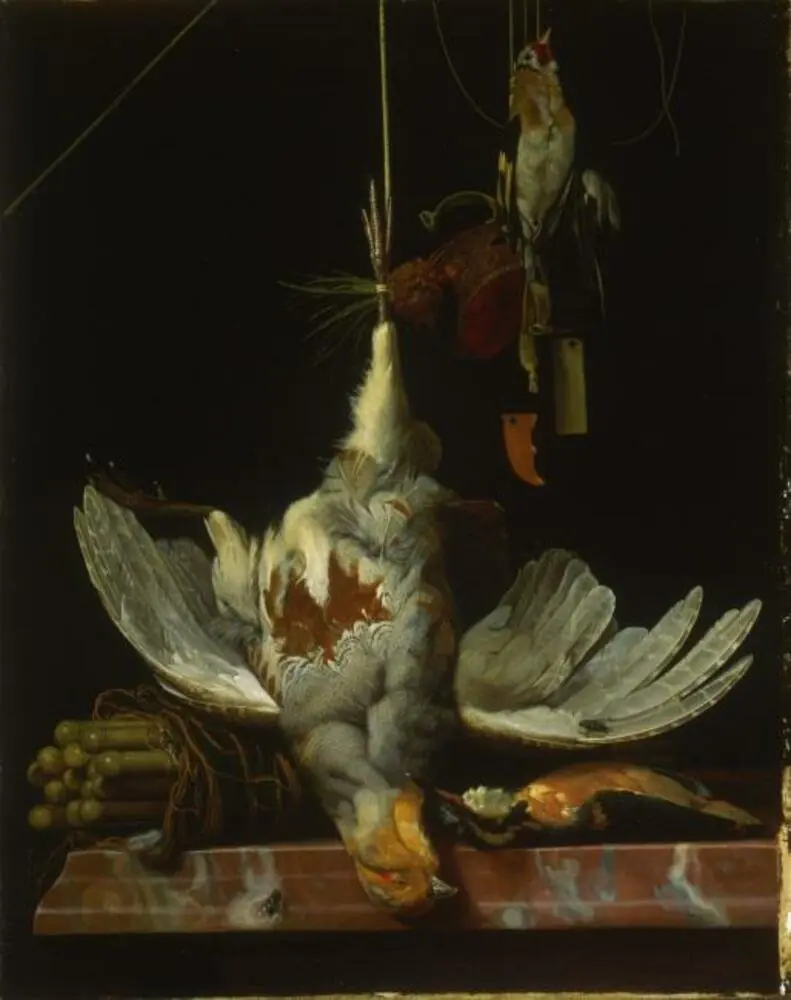 Still Life with Birds
 Slaughtered Birds
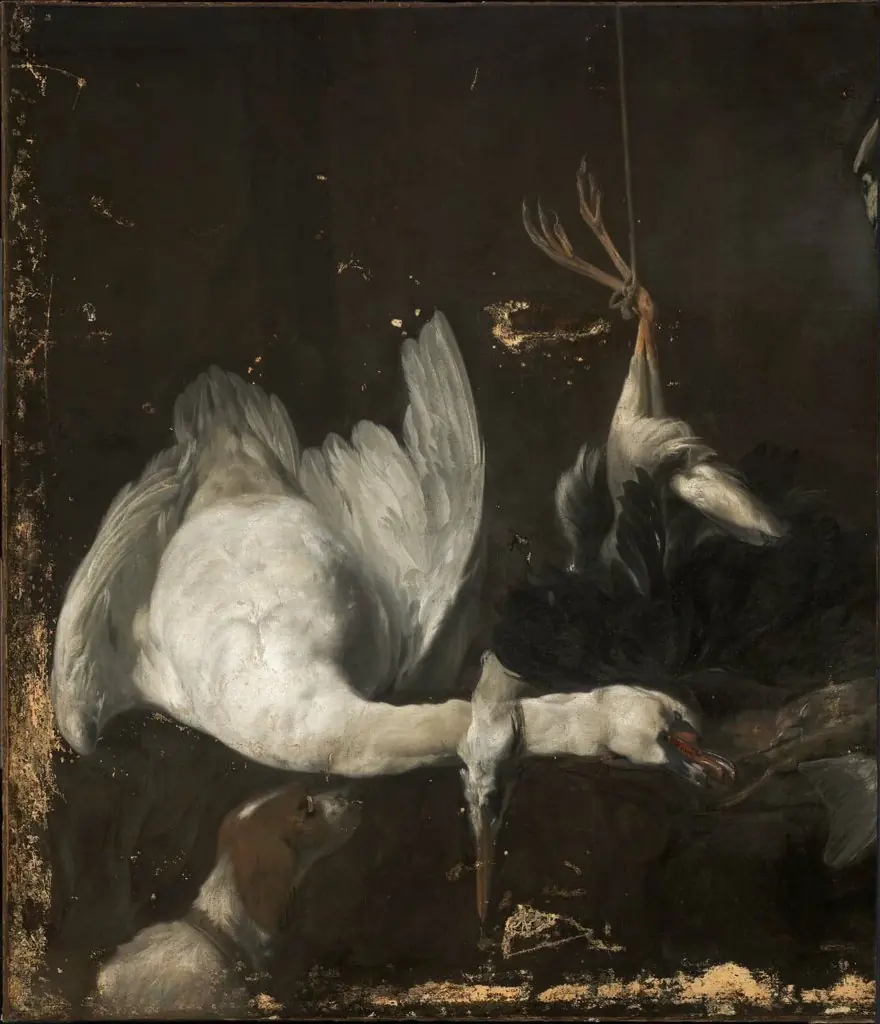 Still Life with Dead Heron and Swan
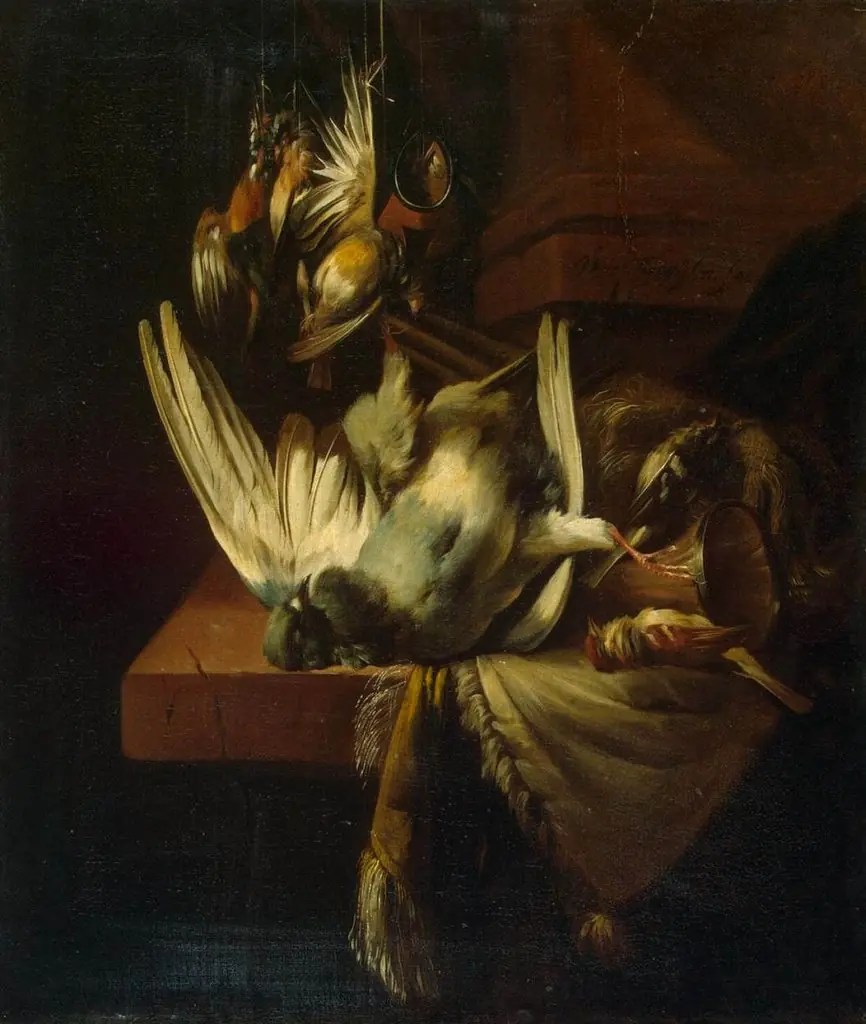 Still Life with Dead Game