Artwork
La Balançoire
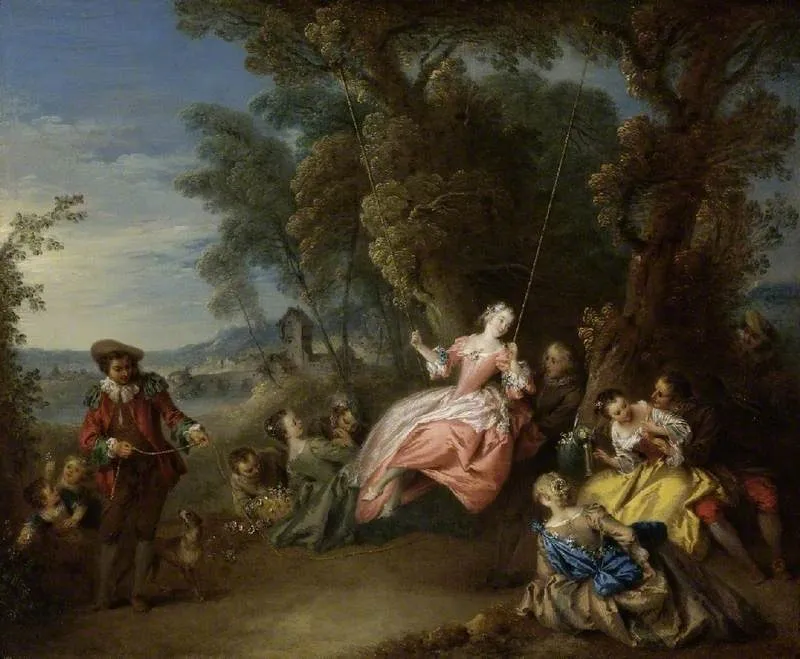
La Balançoire is an oil painting by Jean-Baptiste Pater. It dates from 1725 and is held in the collection of the Fitzwilliam Museum.
About this work
Overview
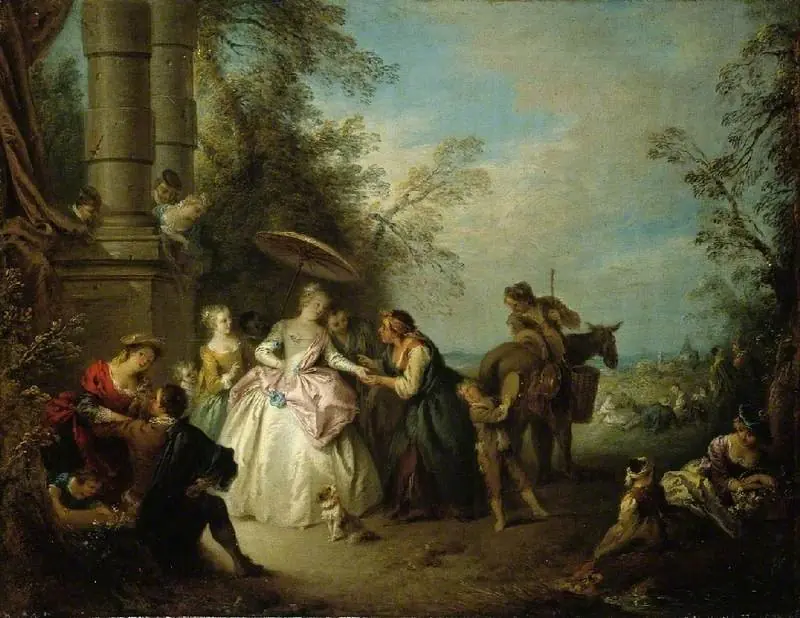
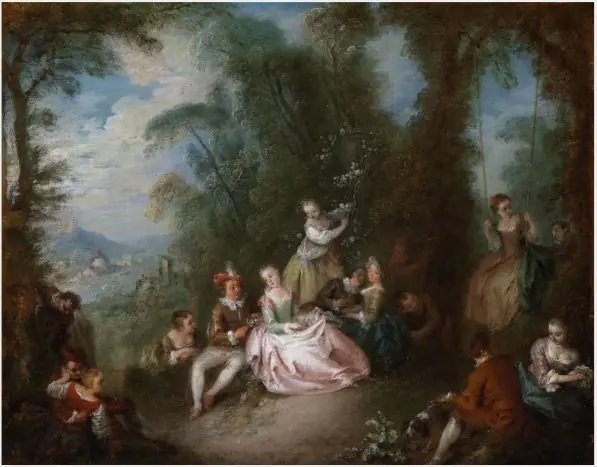
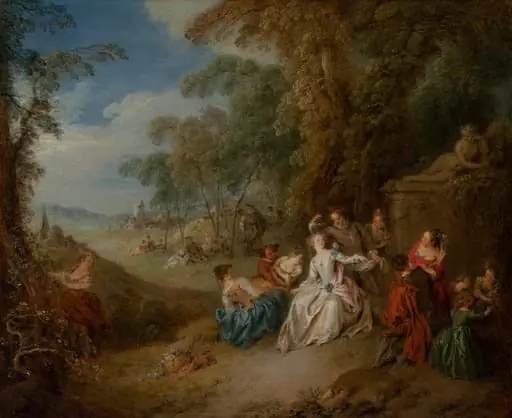
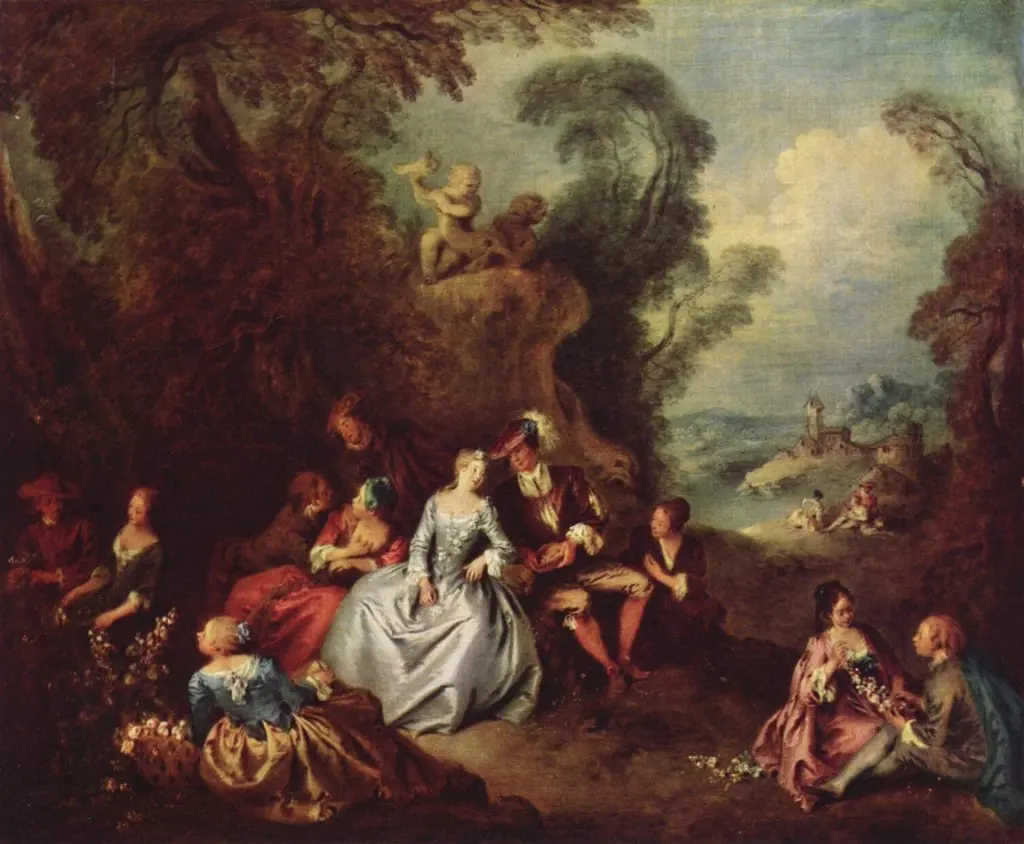
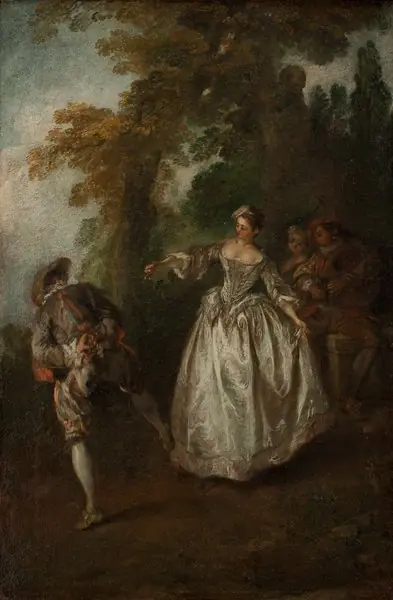
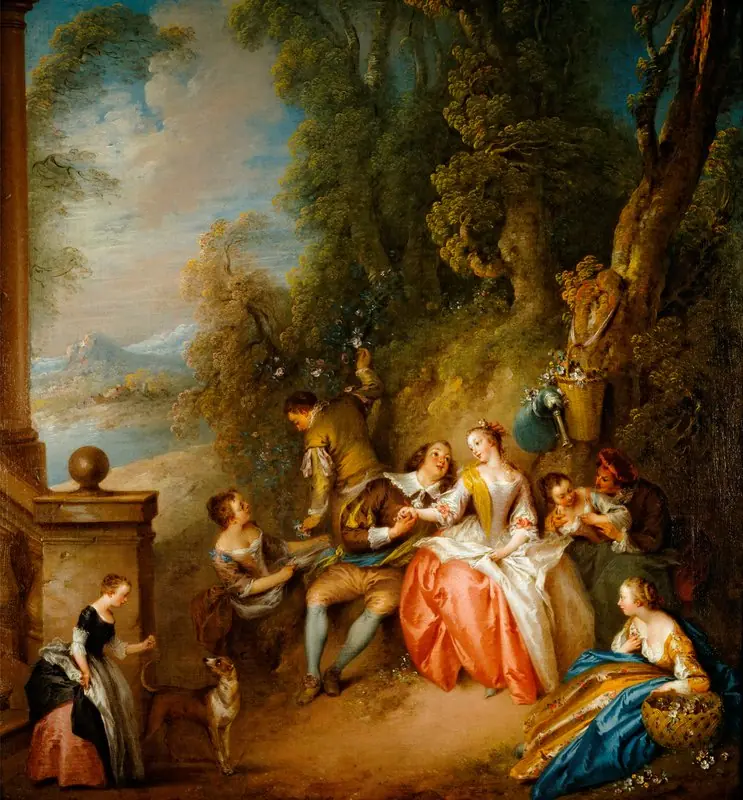
Created circa 1725 by French artist Jean‑Baptiste Pater, *La Balançoire* is an oil painting that captures a leisurely outdoor gathering. The composition centers on a woman in a pink gown swinging from a rope attached to a tree, surrounded by elegantly dressed figures and a dog. The setting is an open park with distant trees, gentle hills and a clear sky, conveying a calm yet animated atmosphere.
Subject & Meaning
The work portrays a social scene typical of early‑18th‑century aristocratic leisure. The swinging woman, highlighted by her vivid dress, becomes the focal point, suggesting themes of flirtation and the fleeting pleasures of summer recreation. The surrounding figures, including a gentleman holding a leash, reinforce the notion of genteel amusement within a cultivated natural environment.
Technique & Style
Pater employs the light, pastel palette and fluid brushwork associated with the Rococo movement, emphasizing softness and movement. The delicate handling of the pink dress against the verdant foliage demonstrates his skill in rendering texture and atmospheric light, while the loose rendering of background trees creates depth without disrupting the scene’s intimate focus.
History & Provenance
After its execution, the painting entered private collections before being acquired by the Fitzwilliam Museum in Cambridge, where it remains on display. Its provenance traces back to early 18th‑century French patronage, reflecting the period’s taste for idyllic genre scenes that celebrated aristocratic pastimes.
Artist & collection
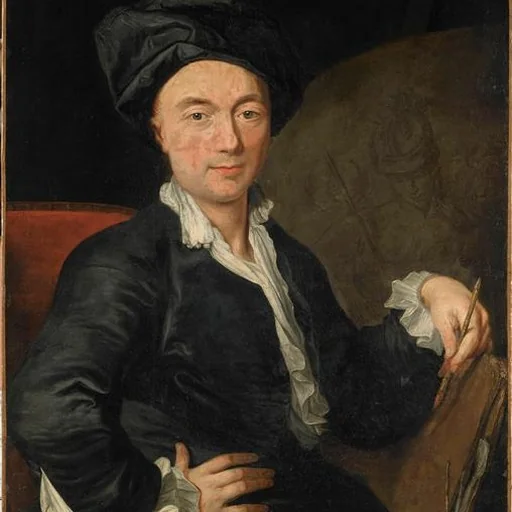
Artist
Jean-Baptiste Pater (December 29, 1695 – July 25, 1736) was a French rococo painter.