Artwork
Portrait of Prince Platon Zubov
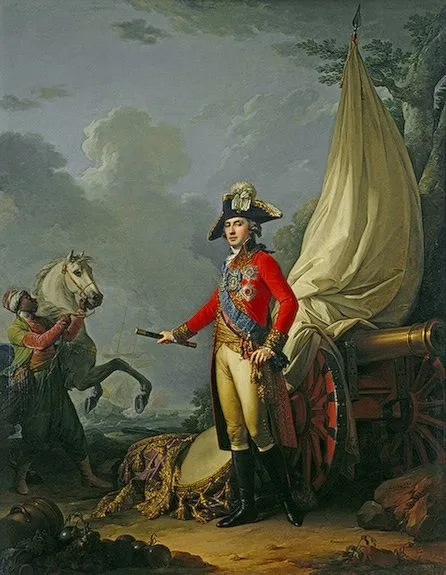
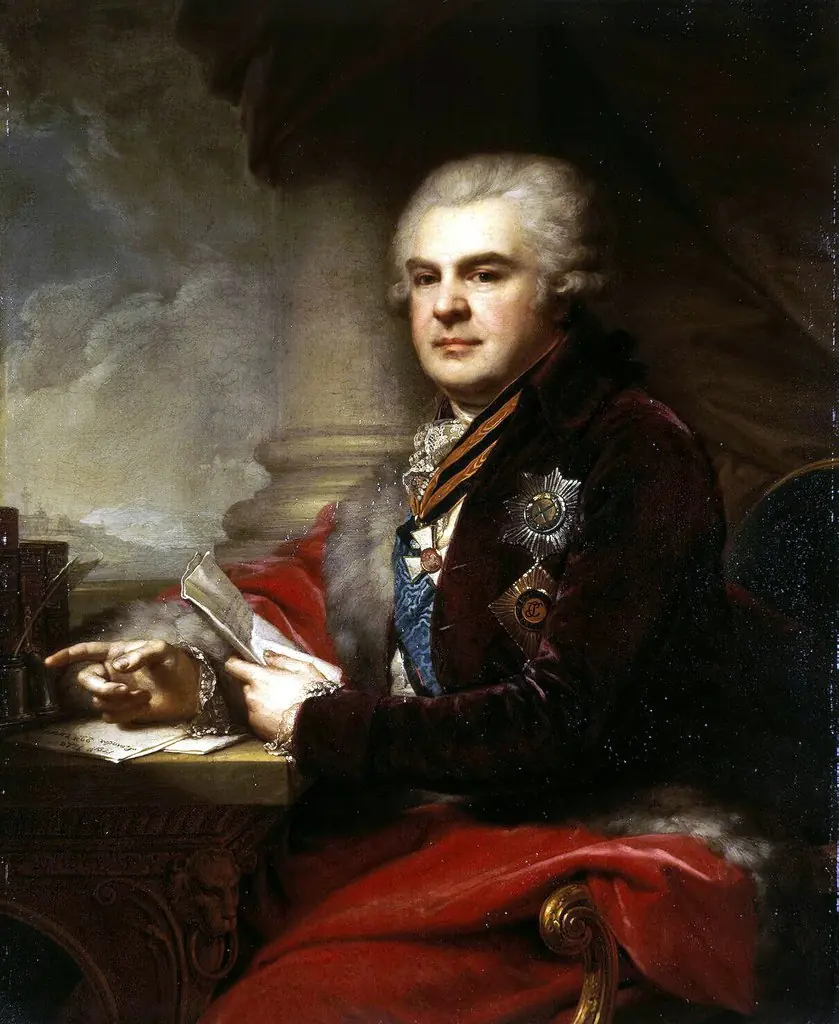
Portrait of Prince Platon Zubov is an oil painting by the Rococo painting artist Johann Baptist von Lampi the Elder. It dates from 1802 and is held in the collection of the Hermitage Museum.
About this work
Overview
Portrait of Prince Platon Zubov is an oil painting created in 1802 by Johann Baptist von Lampi the Elder, depicting the Russian prince in a formal, outdoor setting.
Subject & Meaning
The painting portrays Prince Platon Zubov in elaborate attire, conveying his high status through symbols of wealth and military honor. The outdoor scene with a ship and saddled horse may allude to his travels or naval associations.
Technique & Style
Executed in the Rococo style, the work features characteristic attention to detail in textiles and accessories, with Lampi's use of oil paint capturing the vibrancy of the prince's red coat and the contrast of the dark, cloudy sky.
History & Provenance
Following the third partition of Poland, Lampi relocated to the Russian Empire at the invitation of Tsar Paul I. The painting is now part of the State Hermitage Museum's collection.
Context
Created during Lampi's time in the Russian Empire, the portrait reflects the cultural exchange and artistic preferences of the early 19th-century Russian nobility, with the subject's attire and pose emblematic of the era's aristocratic portraiture.
Legacy
As part of the State Hermitage Museum's holdings, the portrait contributes to the institution's collection of early 19th-century European portraiture, offering insight into the artistic and social dynamics of the time.
Artist & collection
Artist
Johann Baptist von Lampi the Elder
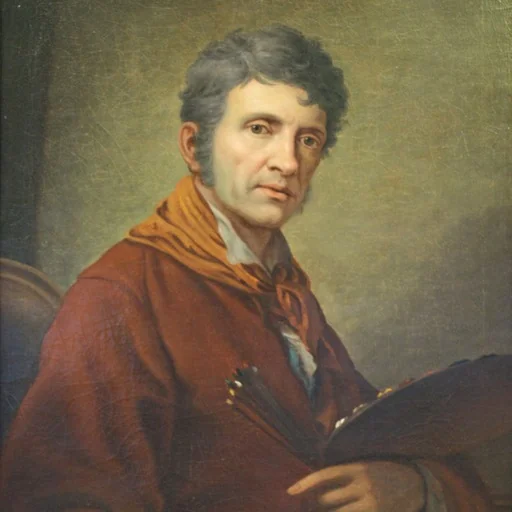
Johann Baptist von Lampi the Elder (German: Johann Baptist von Lampi der Ältere, Polish: Jan Chrzciciel Lampi; 31 December 1751 – 11 February 1830) was an Austrian-Italian historical and portrait painter.

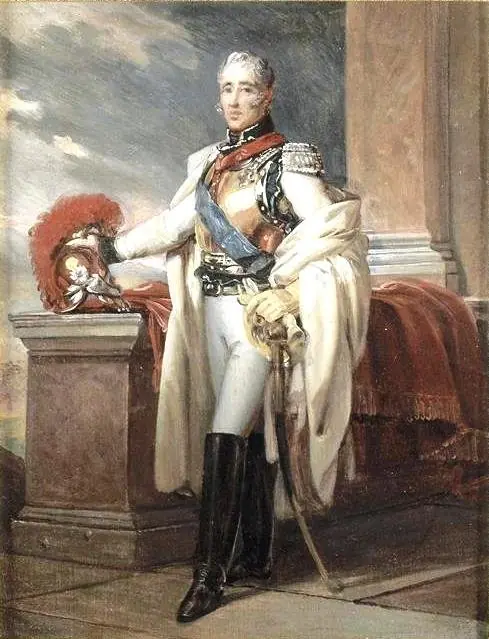 Charles-Philippe de France (1757-1836), comte d'Artois, en uniforme de colonel général des Carabiniers, vers 1815 (esquisse)
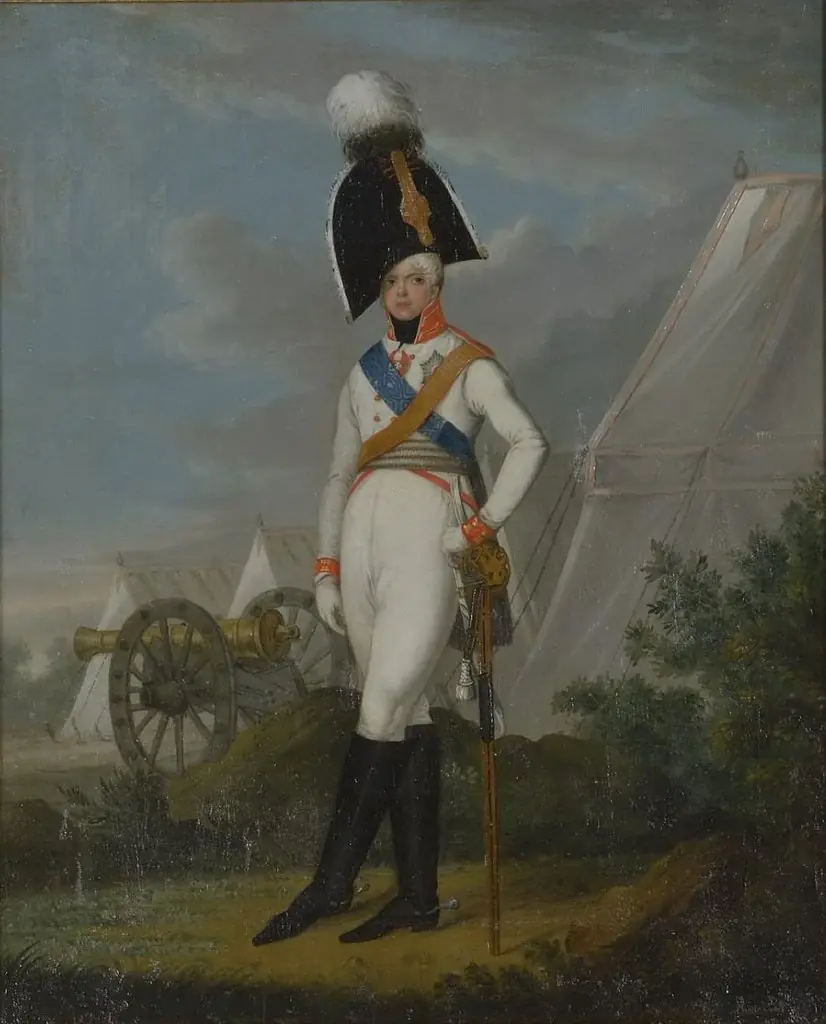 Portrait of Grand Duke Konstantin Pavlovich
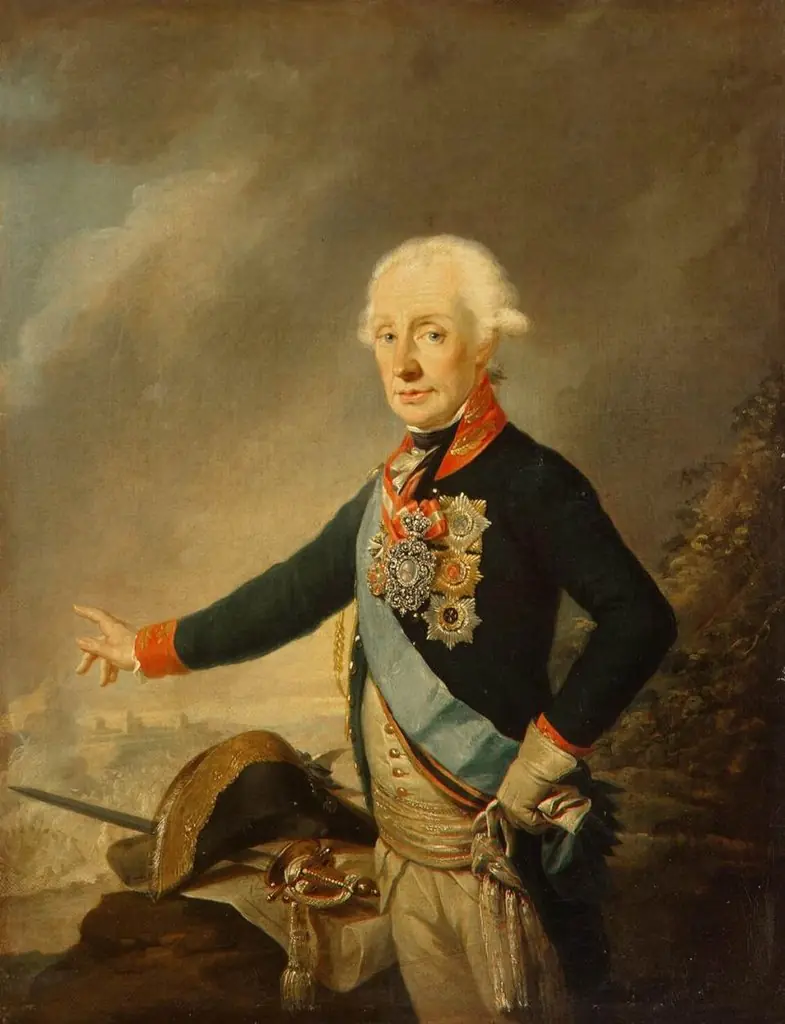 Portrait of Count Alexander Suvorov
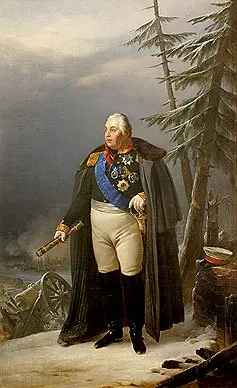 Portrait of Field Marshal Prince Mikhail Illarionovich Kutuzov
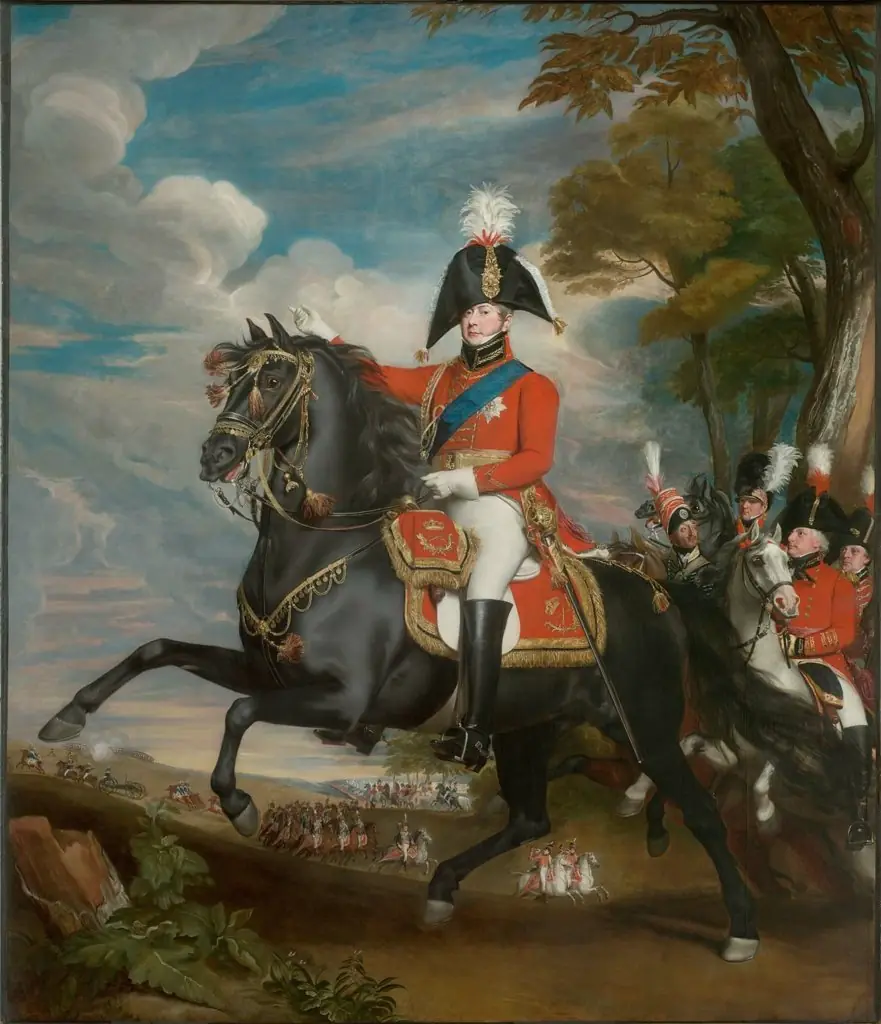 Portrait of H. R. H. the Prince of Wales at a Review, Attended by Lord Heathfield, General Turner, Col. Bloomfield, and Baron Eben; Col. Quinton in the Distance
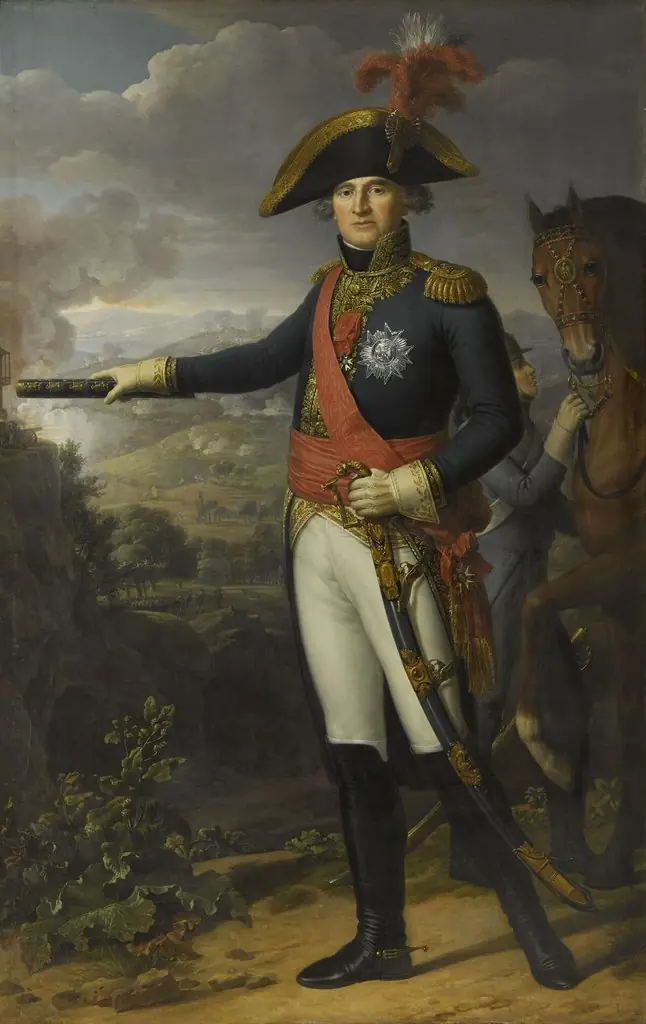 Jean Mathieu Philibert Serurier (1742-1819)
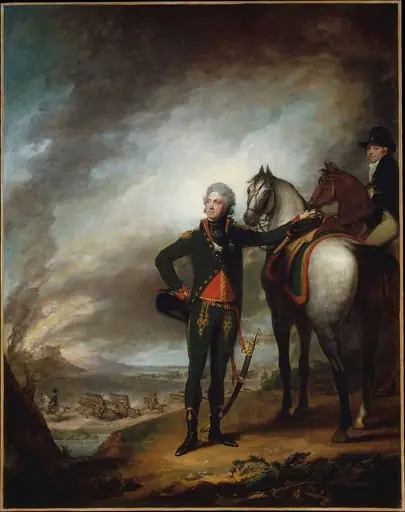 Louis-Marie, Vicomte de Noailles
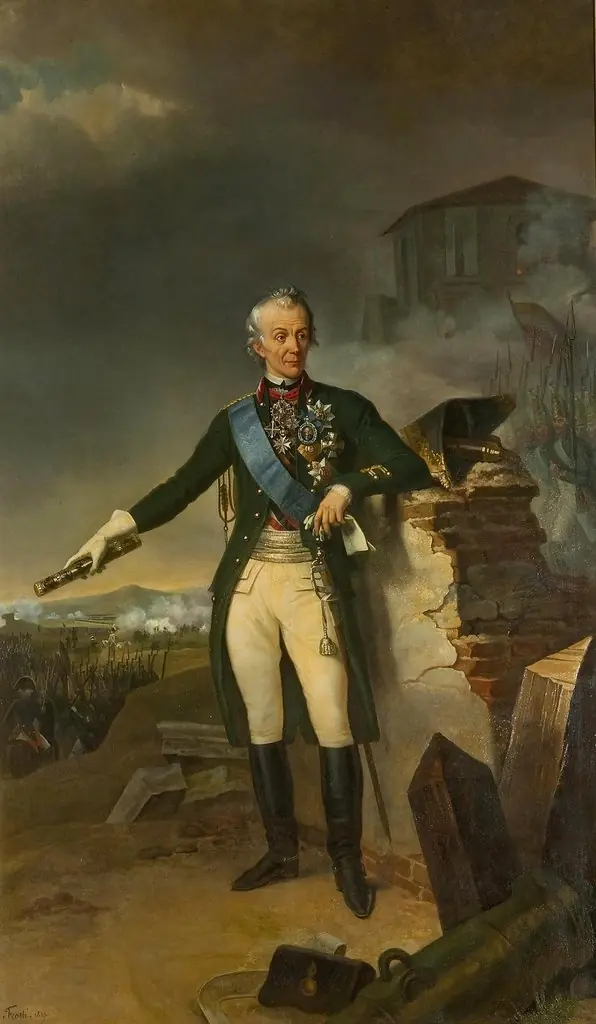 Portrait of Field Marshal, Prince Alexander V. Suvorov (1730-1800)
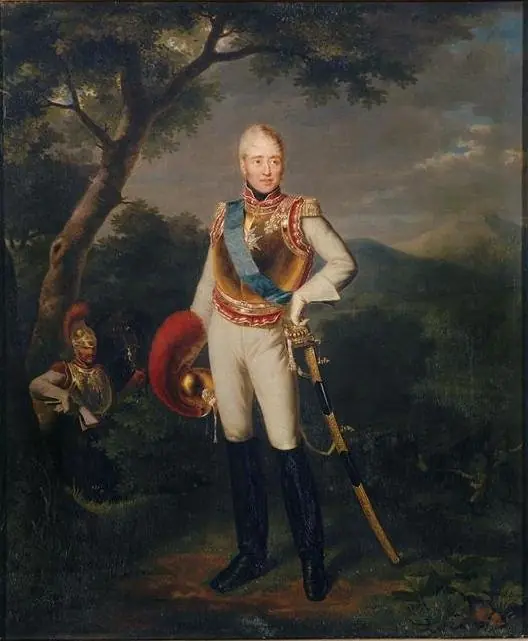 Charles X, roi de France (1757-1836), alors comte d'Artois, en uniforme de colonel-général des Carabiniers en 1818
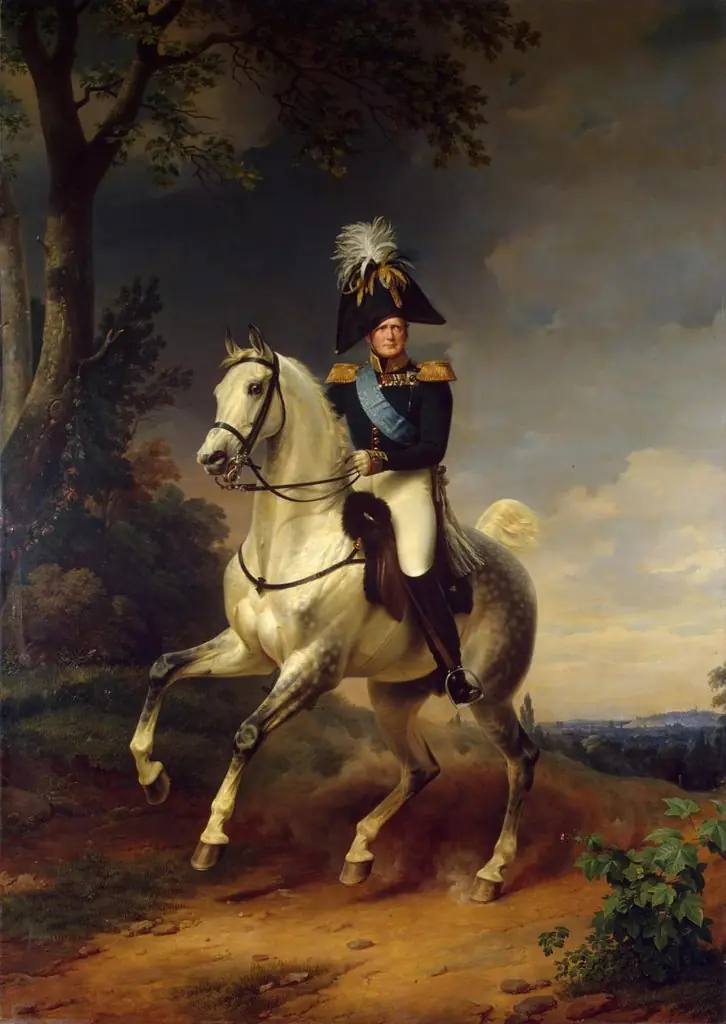 Equestrian Portrait of Alexander I (1777–1825)
 Kaiser Joseph II. reitend
 Nicolas, baron de Luckner, maréchal de France (1722-1794)