Artwork
The Sacrificial Death of Marcus Curtius
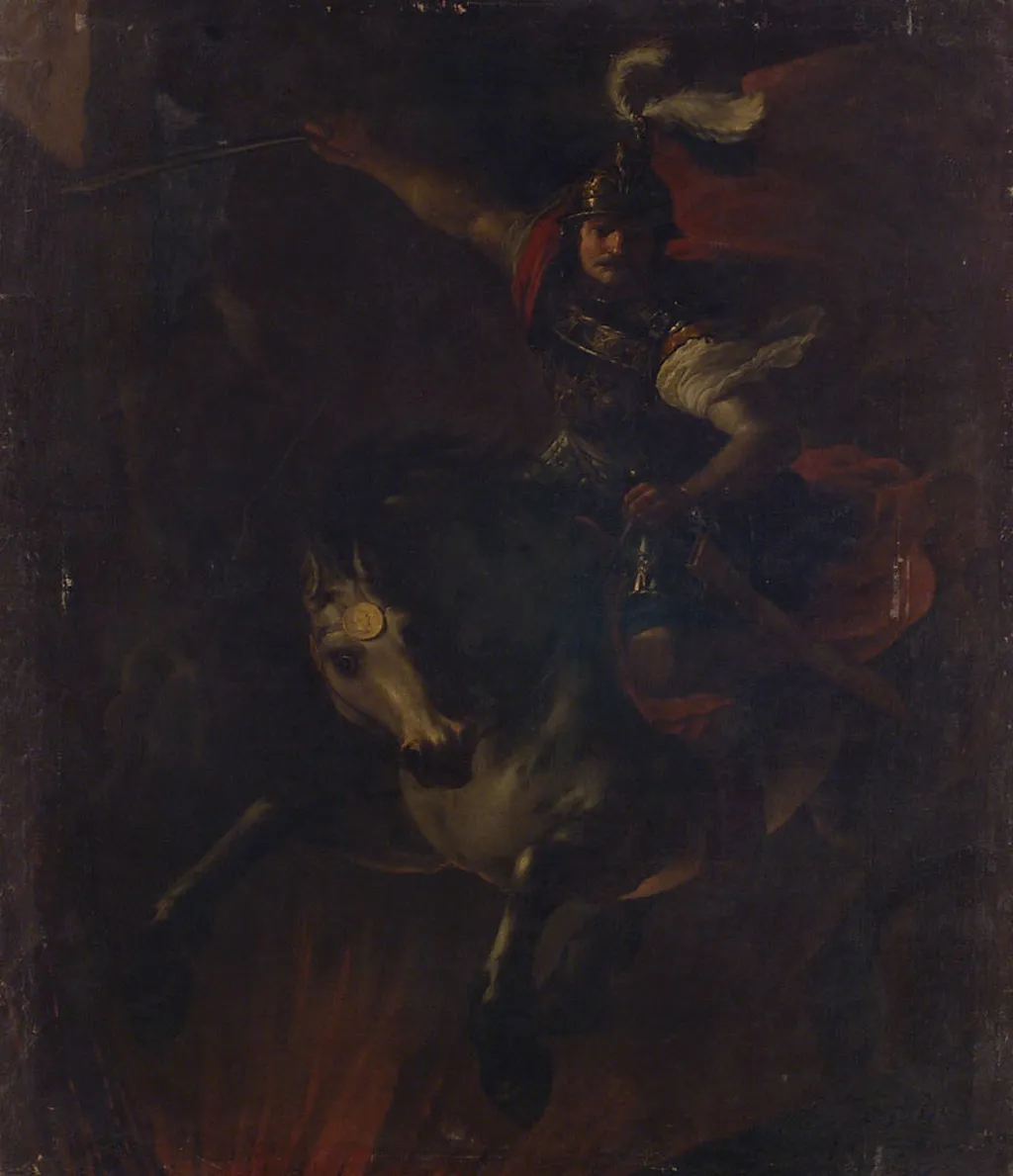
The Sacrificial Death of Marcus Curtius is an oil painting by the Flemish Baroque painting artist Johann Heinrich Schönfeld. It dates from 1655 and is held in the collection of the Kunsthistorisches Museum.
About this work
Overview
Johann Heinrich Schönfeld’s oil on canvas, dated 1655, portrays the legendary Roman hero Marcus Curtius in the moment of his self‑sacrifice. The work is part of the collection of the Kunsthistorisches Museum in Vienna and measures the dramatic climax of the ancient tale, rendered with vivid coloration against a nearly black backdrop.
Subject & Meaning
The composition captures Curtius on a rearing horse, his right arm thrust forward as he prepares to plunge into the chasm that threatens Rome. The gesture, the flowing red cape, and the white‑plumed helmet emphasize his heroic resolve, embodying themes of patriotism, self‑offering, and the triumph of civic virtue over disaster.
Technique & Style
Schönfeld employs a stark chiaroscuro, letting the dark background absorb light while the rider’s bright garments and the horse’s contrasting white face stand out. The brushwork is vigorous, especially in the horse’s muscular tension and the billowing drapery, reflecting the Baroque penchant for movement, drama, and emotional intensity.
History & Provenance
Completed in the mid‑seventeenth century, the painting entered the imperial collections that later formed the core of the Kunsthistorisches Museum. Documentation traces its ownership through the Habsburg court, where it was displayed among works illustrating classical virtue, before being transferred to the public museum in the late nineteenth century.
Context
Schönfeld, a German‑born artist active in southern Germany and Austria, often turned to classical subjects to satisfy the tastes of aristocratic patrons. The story of Marcus Curtius, popular in Renaissance and Baroque art, offered an opportunity to showcase dynamic composition and moral exemplarity, aligning with contemporary ideals of noble sacrifice.
Artist & collection
Artist
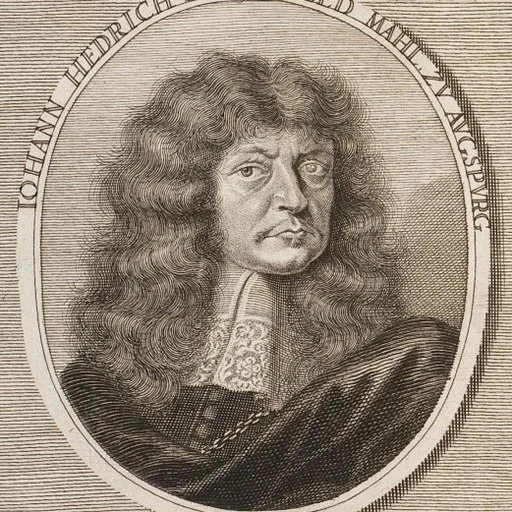
Johann Heinrich Schönfeld (1609–1684) was an artist, born in Biberach an der Riß.

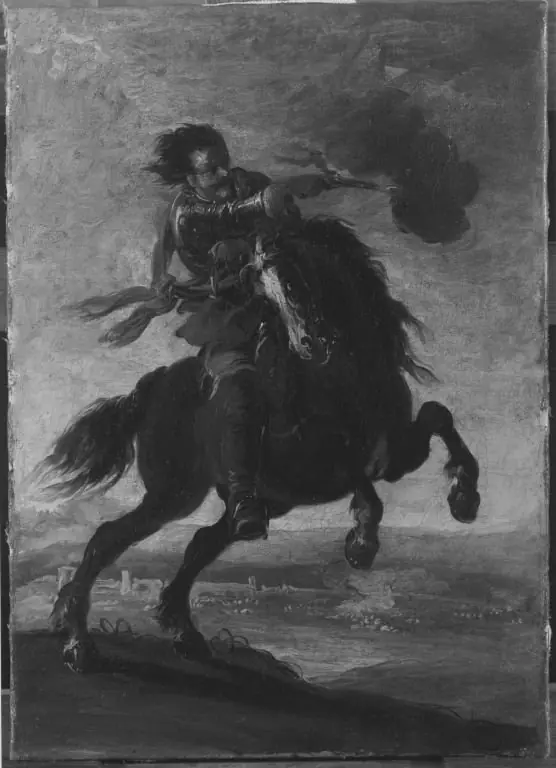 Reiter im Angriff
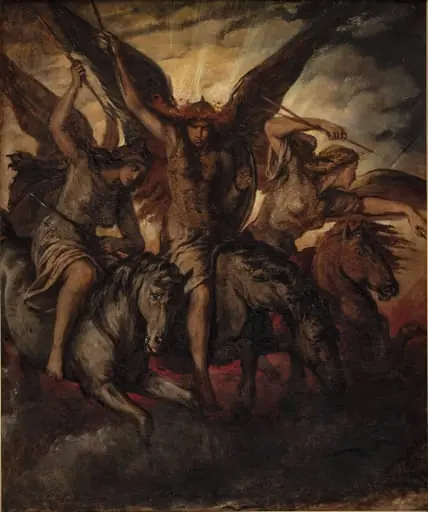 Valkyries
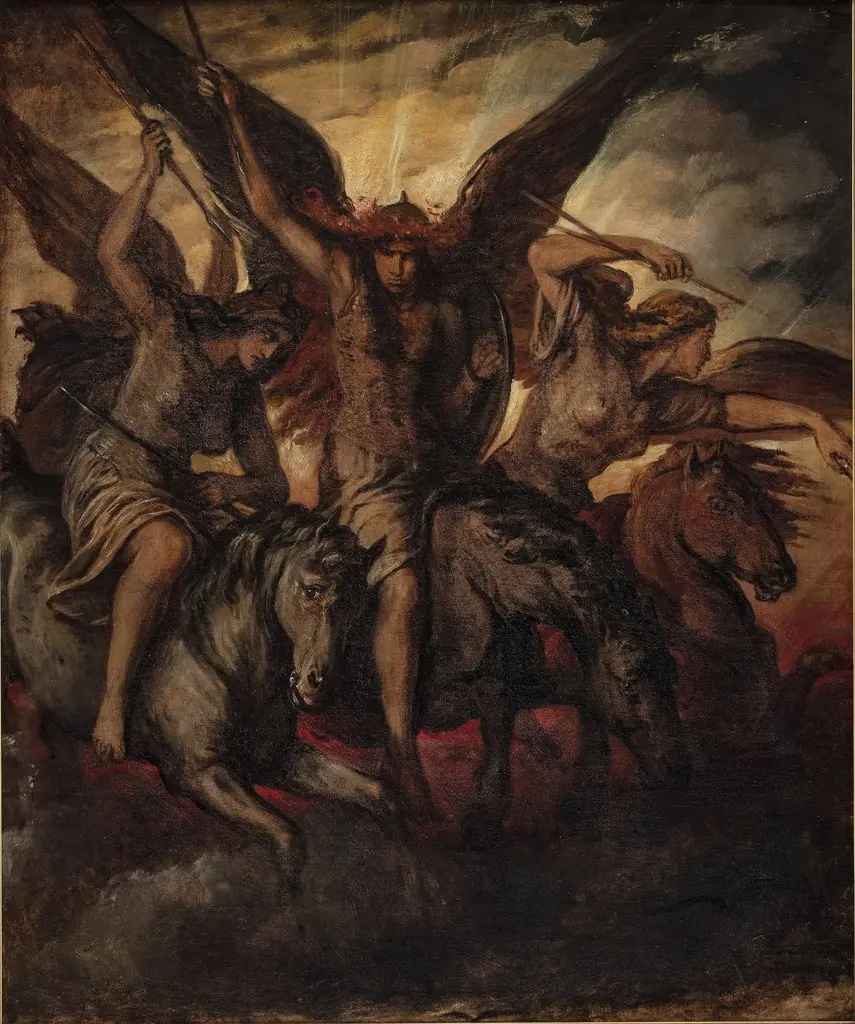 Valkyries
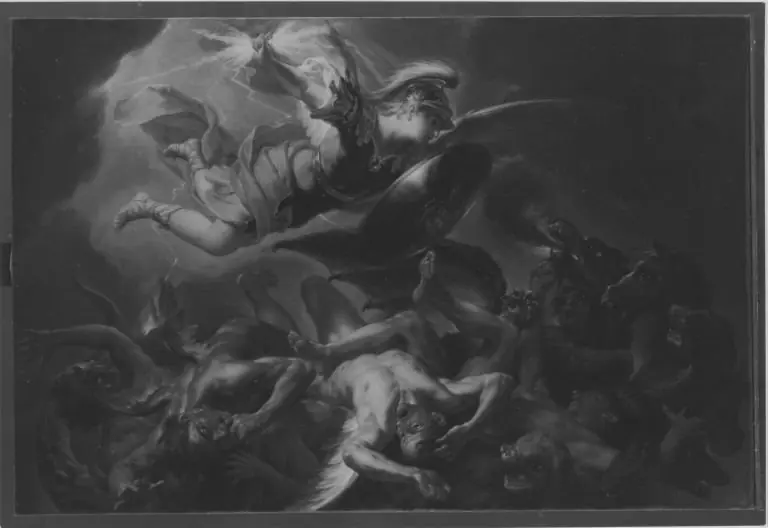 Erzengel Michael
 Vestirea nașterii lui Christos
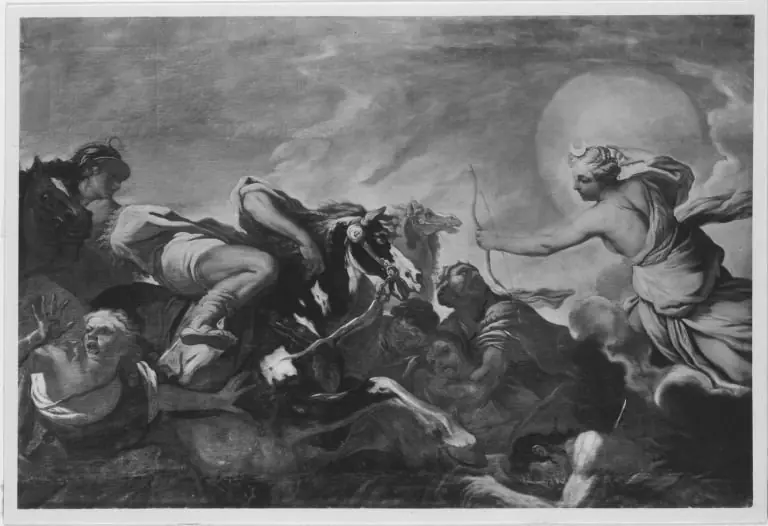 Diana tötet die Kinder der Niobe
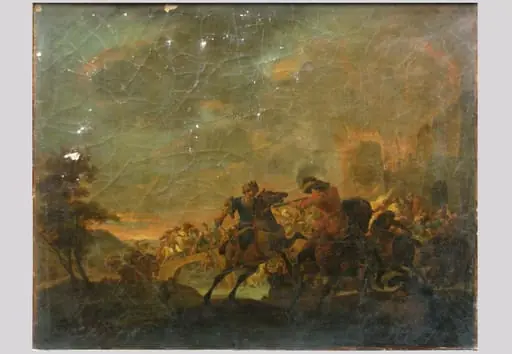 Luptă lângă o cetate (în Reg. Inv.: Atac dintr-o cetate) (pandant: Luptă de cavalerie lângă pietre antice, în Reg. Inv.: Luptă de cavalerie între pietre antice)
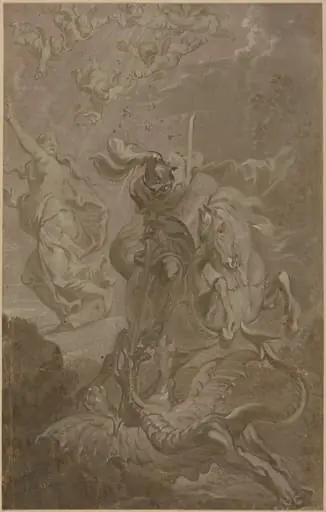 Saint George and the Dragon
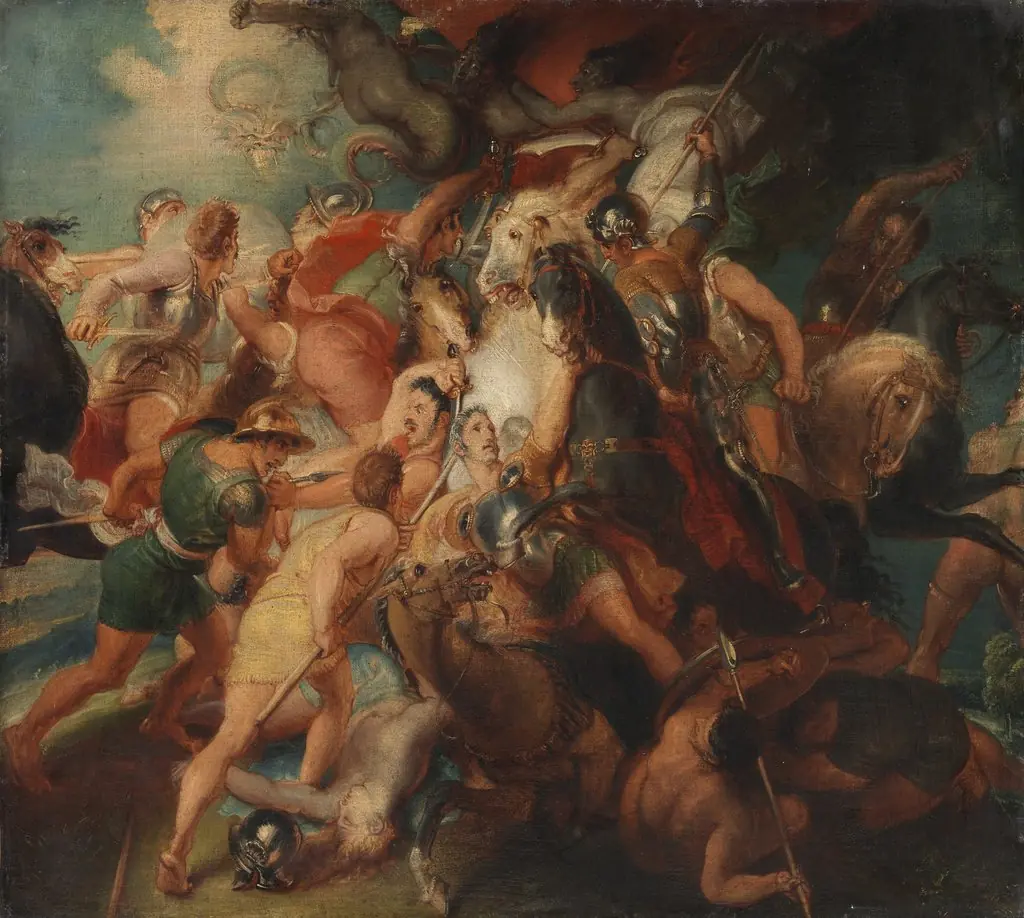 The Horrors of War, Sketch for Burghley House Mural
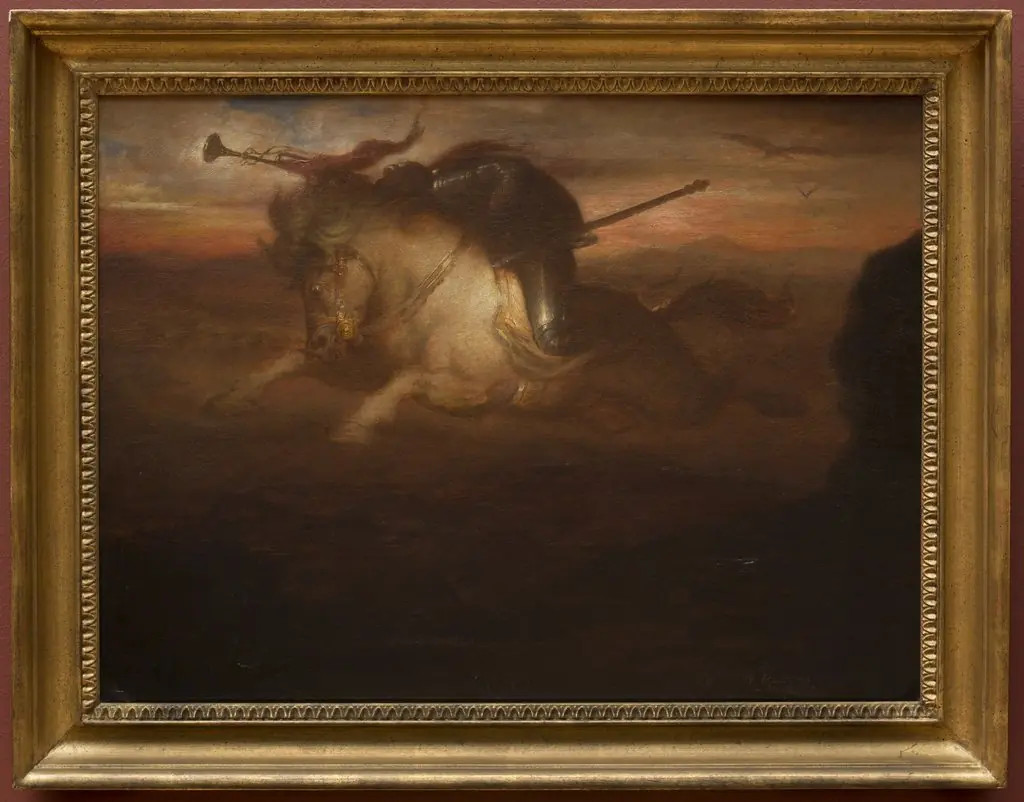 Victory
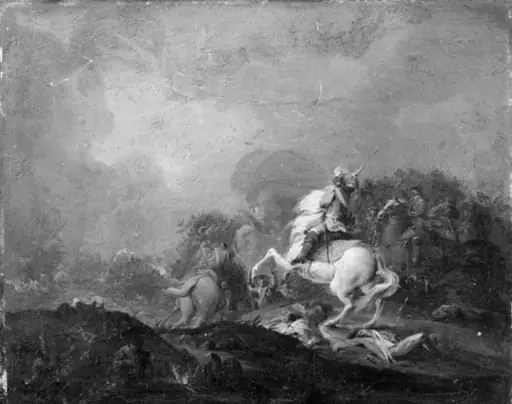 Rytterfægtning
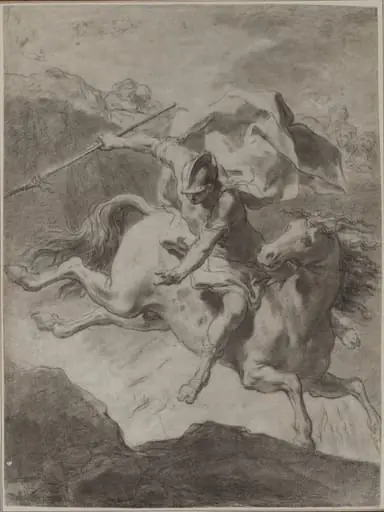 Death of Marcus Curtius