Artwork
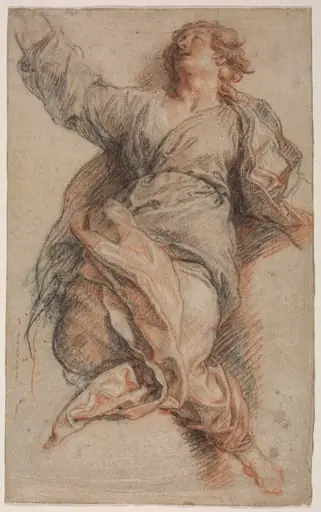
Allegory of Christian Belief
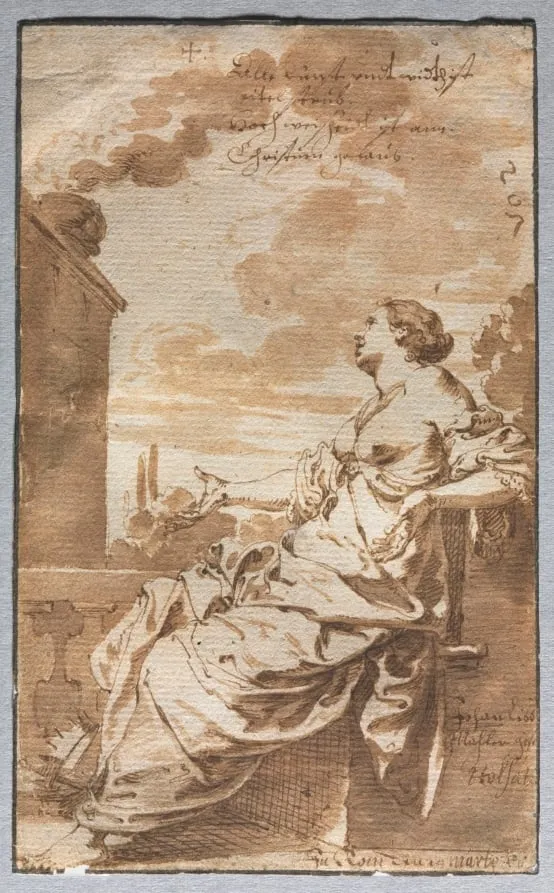
Allegory of Christian Belief is a drawing by the Baroque artist Johann Liss. It dates from 1622 and is held in the collection of the Cleveland Museum of Art.
About this work
Overview
This drawing is one of only two known signed works by Johann Liss, a German painter whose brief career left a significant mark on 17th-century art.
This drawing is one of only two known signed works by Johann Liss, a German painter whose brief career left a significant mark on 17th-century art. Executed in a highly personal style, it was likely created for inclusion in an album amicorum—a collection of autographs and images exchanged among intellectuals and artists. Its rarity and intimate scale suggest it was intended as a gift to a discerning patron, reflecting both technical skill and theological depth.
Subject & Meaning
The figure represents Christian faith as a woman stripped of worldly symbols: crown, scepter, and book lie discarded at her feet. Barefoot and bare-chested, she embodies purity and humility, rejecting material power in favor of spiritual devotion. Her gaze upward and the rising smoke from an urn evoke prayer and transcendence. The cross she holds anchors the composition in Christian iconography, reinforcing the theme of faith unmediated by earthly trappings.
Technique & Style
Liss employs subtle chiaroscuro to model the figure’s form, using soft gradations of tone to suggest volume without heavy outlines. The drawing’s delicate linework and controlled shading reveal a mastery of ink and wash, characteristic of Northern Mannerist draftsmanship. The contrast between the smooth, luminous skin and the textured, shadowed ground enhances the symbolic separation between the sacred and the profane.
History & Provenance
The inscription along the lower margin confirms the sheet’s origin in an album amicorum, a common practice among educated Europeans to preserve personal and intellectual connections. While the original compiler is unknown, the text’s ecclesiastical references suggest the recipient may have been a cleric or theologian. The drawing’s survival as a standalone piece underscores its perceived value beyond its original context.
Context
In early 17th-century Germany, religious imagery often balanced Counter-Reformation ideals with humanist scholarship. Liss, trained in Italy, brought Italianate naturalism to Northern themes. This drawing reflects a trend among artists to reinterpret traditional allegories with psychological nuance and visual restraint, appealing to patrons seeking intellectual and spiritual resonance over overt spectacle.
Legacy
Though Liss’s oeuvre is small, this drawing stands as a testament to his ability to fuse theological symbolism with refined draftsmanship. Its rarity and expressive clarity have made it a key reference for understanding how Northern artists adapted Italian stylistic innovations to convey Protestant and Catholic spiritual ideals with quiet authority.
Artist & collection
Artist
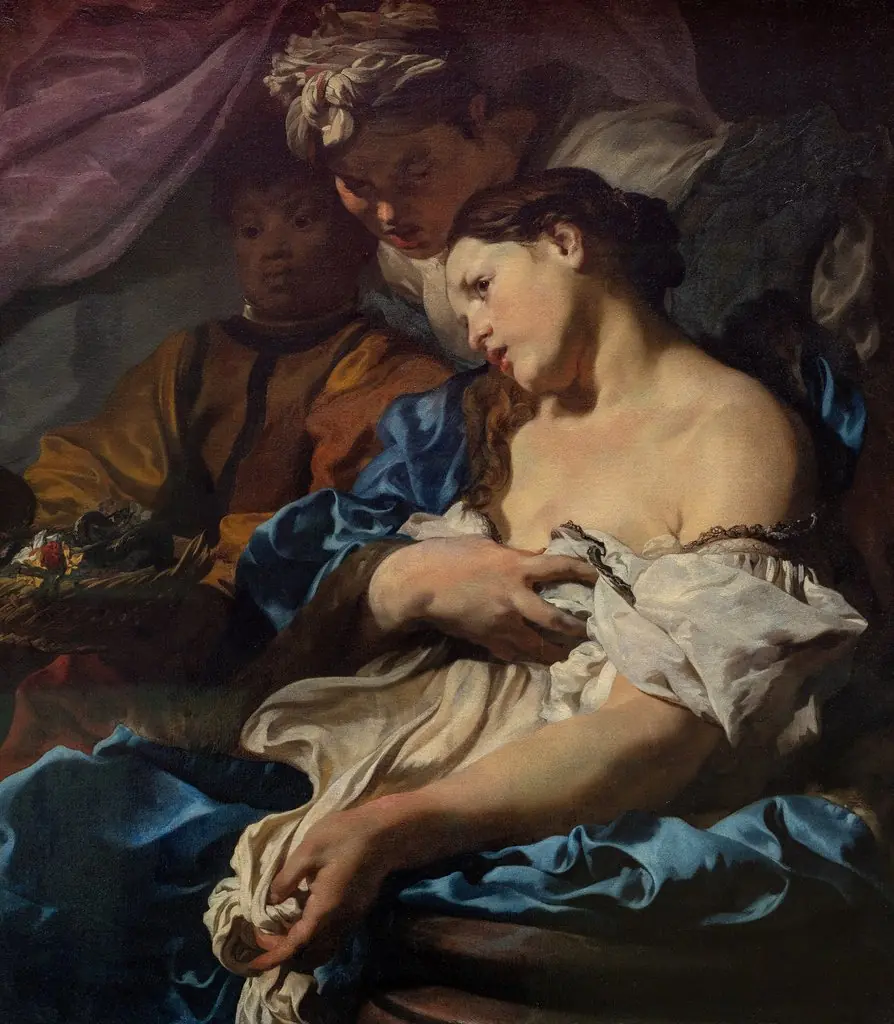
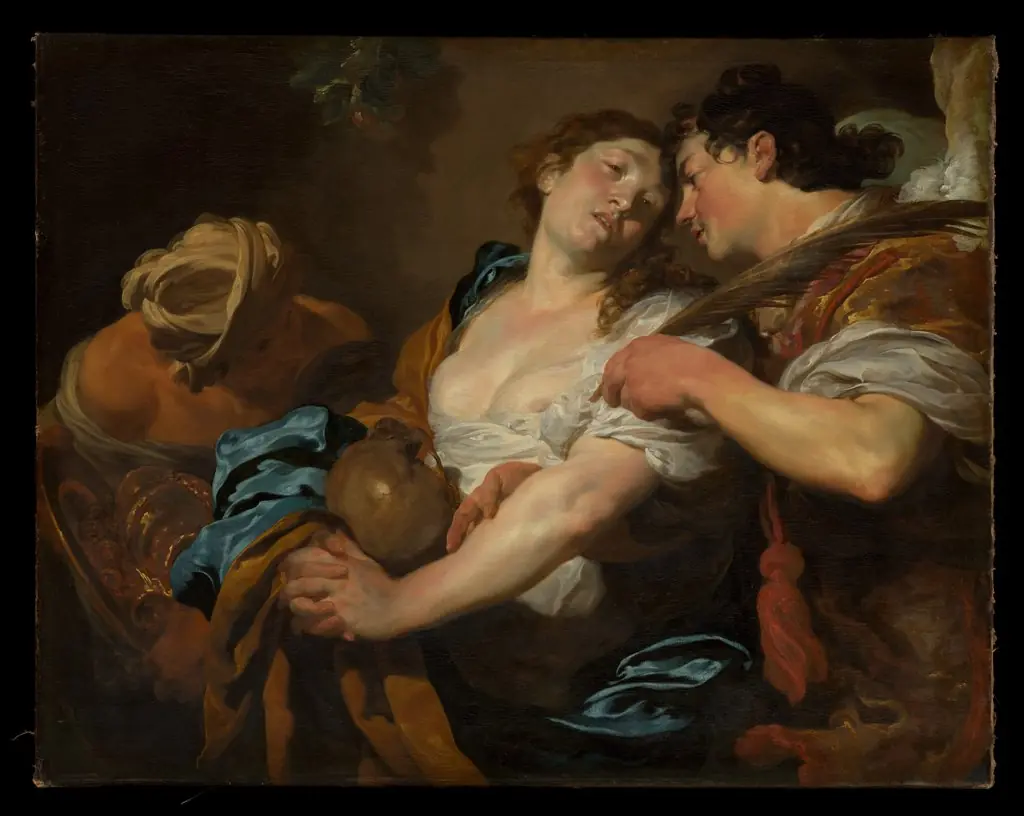
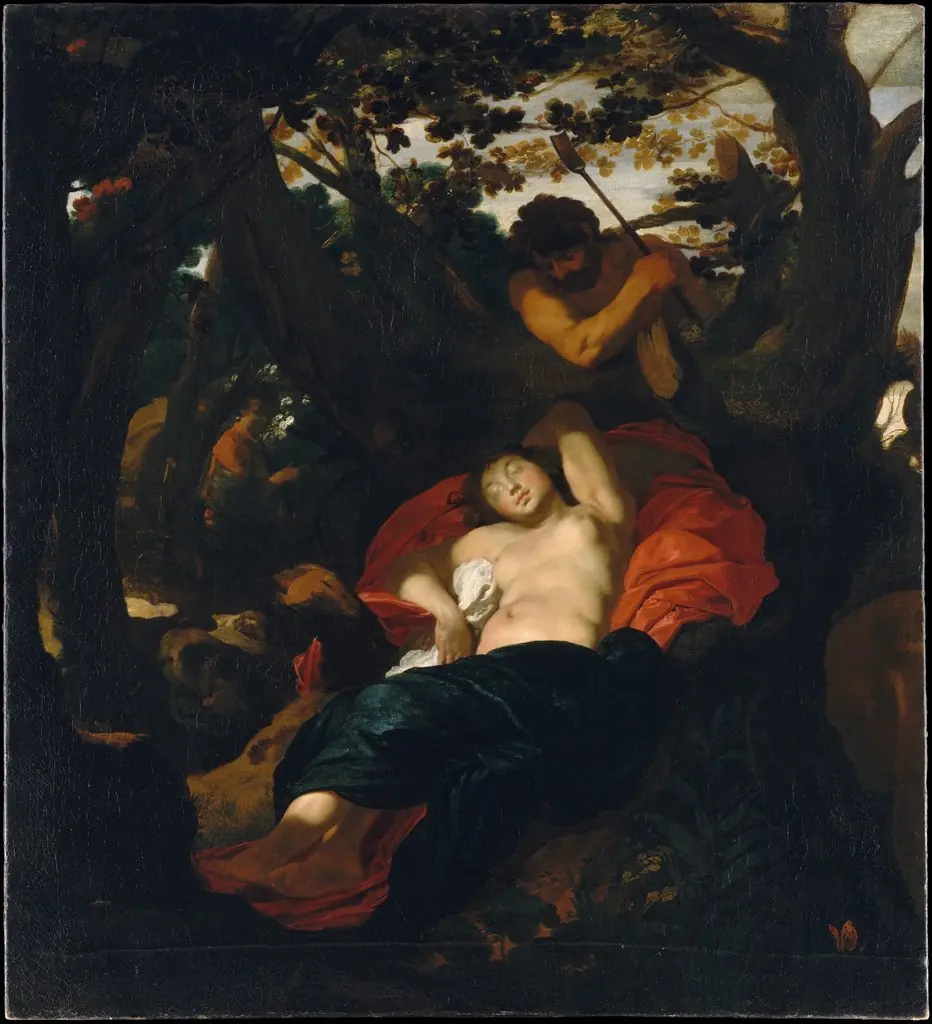
Johann Liss or Jan Lys (c. 1590 or 1597 – 1629 or 1630) was a leading German Baroque painter of the 17th century, active mainly in Venice.

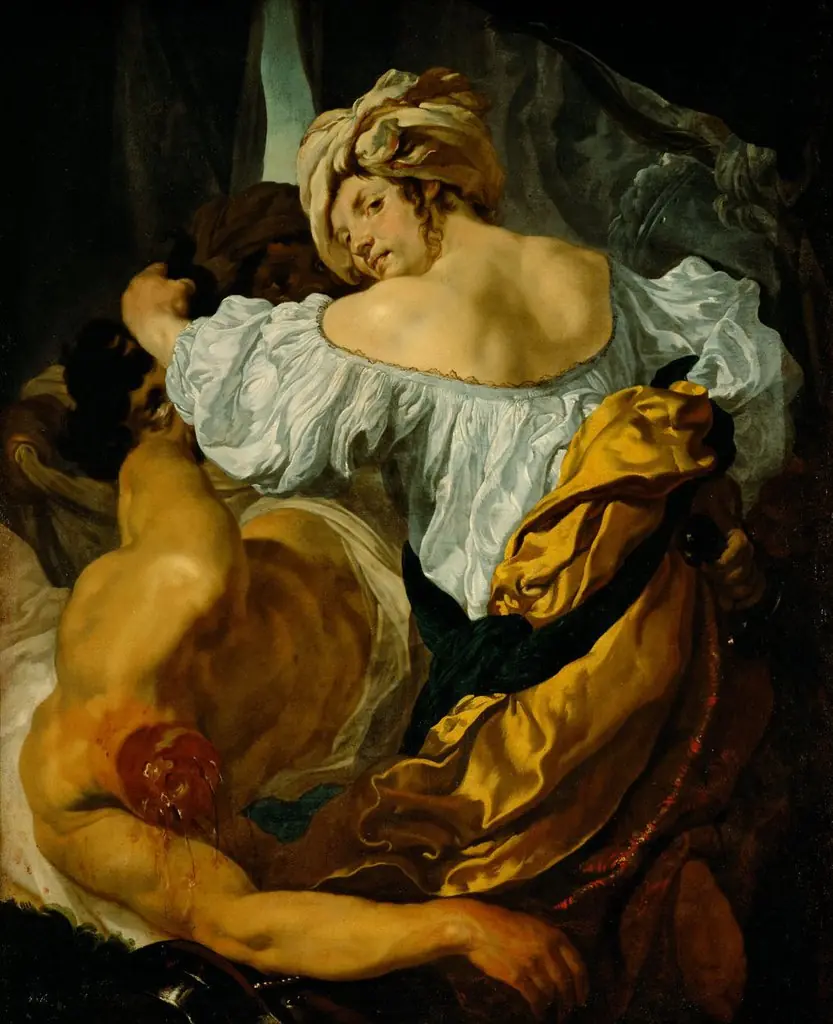
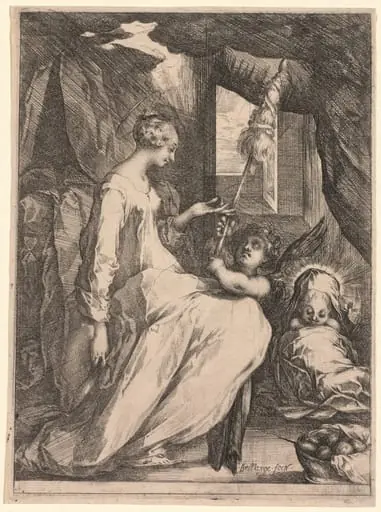 The Virgin and Child with Distaff and an Angel
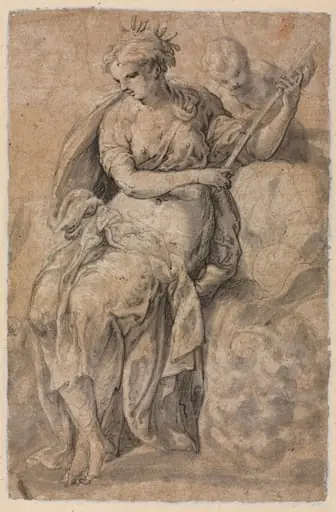 Allegorical Figure (verso)
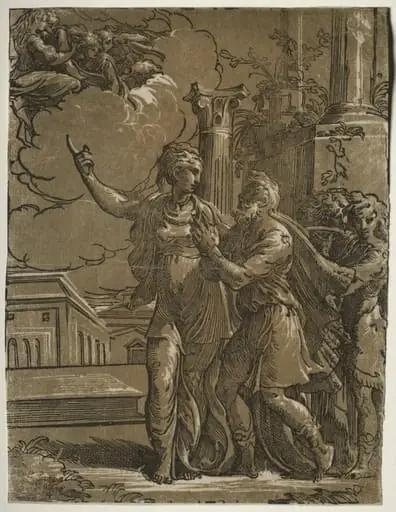 Tiburtine Sibyl and the Emperor Augustus
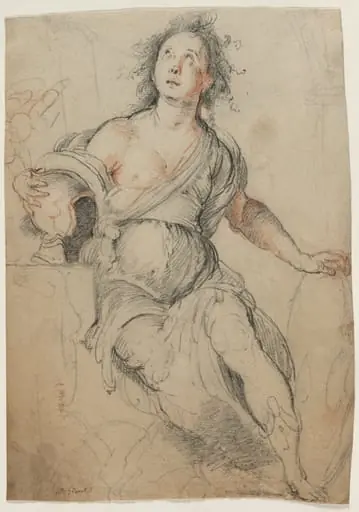 Allegorical Figure
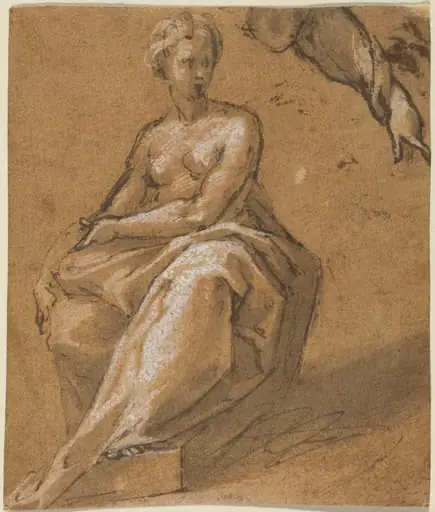 Seated Nude with Drapery
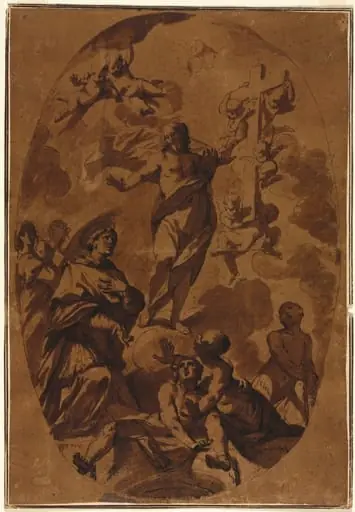 Christ Triumphant Appearing to an Interceding Saint
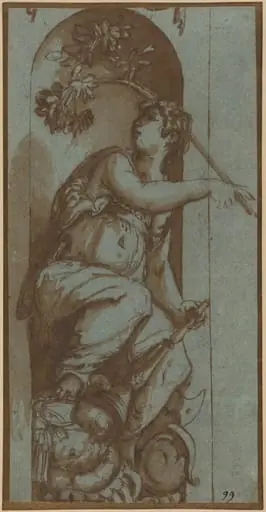 Allegory of Peace
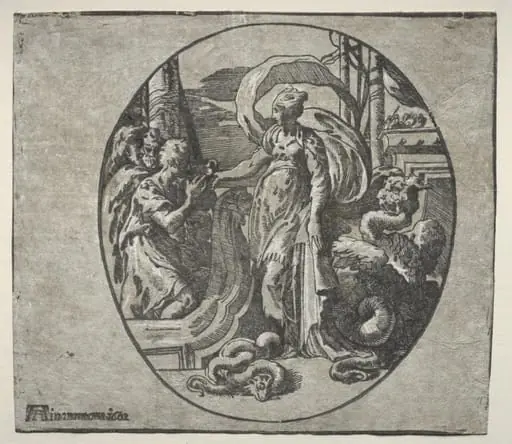 Circe Giving Drink to the Companions of Ulysses
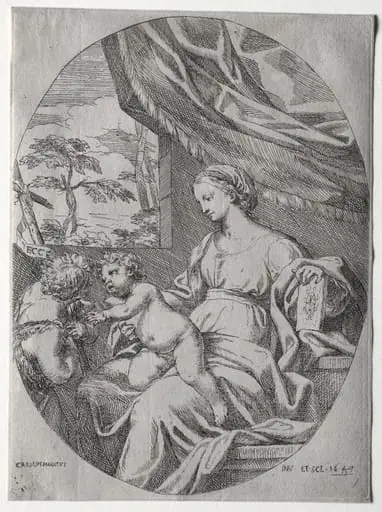 Virgin and Child with the Infant St. John
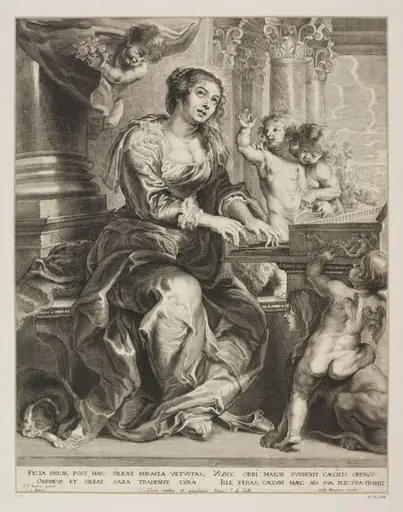 St. Cecilia
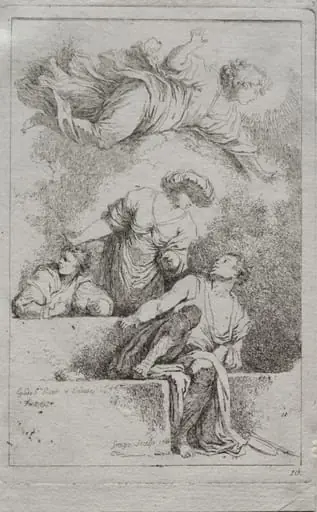 The Disciples at the Tomb
 St. John the Evangelist