Artwork
Die Rückkehr Esaus
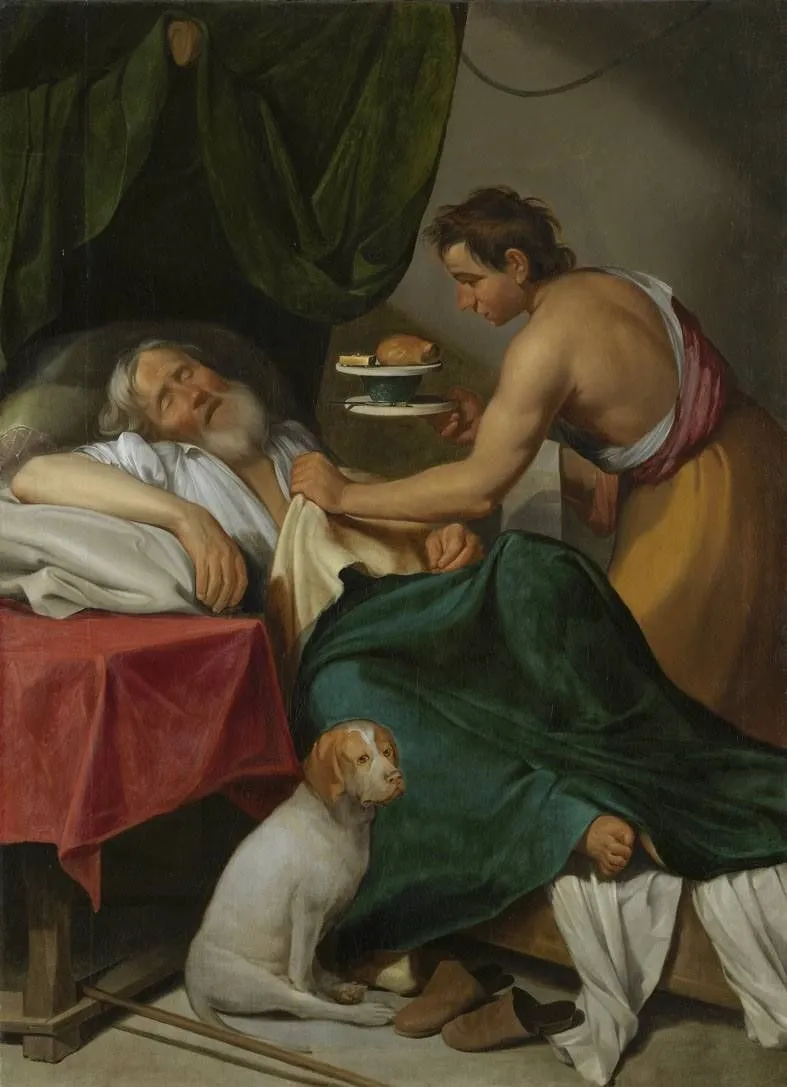
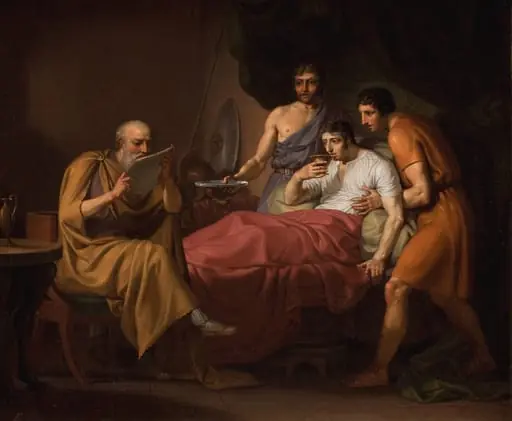
Die Rückkehr Esaus is an unspecified painting by Johann Ulrich Loth. It dates from 1640 and is held in the collection of the Bavarian State Painting Collections.
About this work
Overview
The composition centers on a reclining figure and a woman offering food, framed by modest interior elements that ground the narrative in everyday reality.
Painted around 1640 by Johann Ulrich Loth, this work depicts a moment from the biblical story of Esau and Jacob. It is part of the collection at the Alte Pinakothek in Munich. The scene captures a quiet, domestic interlude, rendered with careful attention to light and texture. The composition centers on a reclining figure and a woman offering food, framed by modest interior elements that ground the narrative in everyday reality.
Subject & Meaning
The painting illustrates the moment when Esau, weakened and blind, is fed by his wife while Jacob, his brother, has already secured their father’s blessing. The act of feeding carries symbolic weight—nourishment as both physical care and spiritual deception. The dog at the bedside may allude to loyalty or vigilance, reinforcing the tension between familial duty and betrayal hidden beneath the calm surface.
Technique & Style
Loth employs chiaroscuro to model forms with subtle gradations of light and shadow, enhancing the three-dimensionality of the figures and furnishings. The palette is restrained, dominated by muted tones with accents of red and white that draw attention to key gestures. Brushwork is precise yet unobtrusive, favoring naturalism over theatricality, and the spatial depth is achieved through careful placement of the curtain and bed.
History & Provenance
The painting entered the Alte Pinakothek’s collection in the early 19th century, likely as part of the Bavarian royal acquisitions of German and Flemish works. Its attribution to Johann Ulrich Loth, a lesser-known artist active in southern Germany, reflects scholarly consensus based on stylistic comparison with his documented works. No significant alterations or restorations are recorded in its modern history.
Context
Created during the mid-17th century, the work aligns with regional trends in German painting that favored intimate biblical narratives over grand altarpieces. Artists like Loth responded to devotional needs in post-Reformation households, where personal piety and moral lessons were conveyed through domestic scenes. The emphasis on quiet emotion reflects broader cultural shifts toward introspection in religious art.
Legacy
Though not widely exhibited outside Germany, the painting remains a representative example of provincial Baroque religious art. It contributes to understanding how biblical stories were localized in everyday settings, making them accessible to private viewers. Its preservation in a major public collection ensures continued study of how narrative and emotion were balanced in smaller-scale devotional works of the period.
Artist & collection

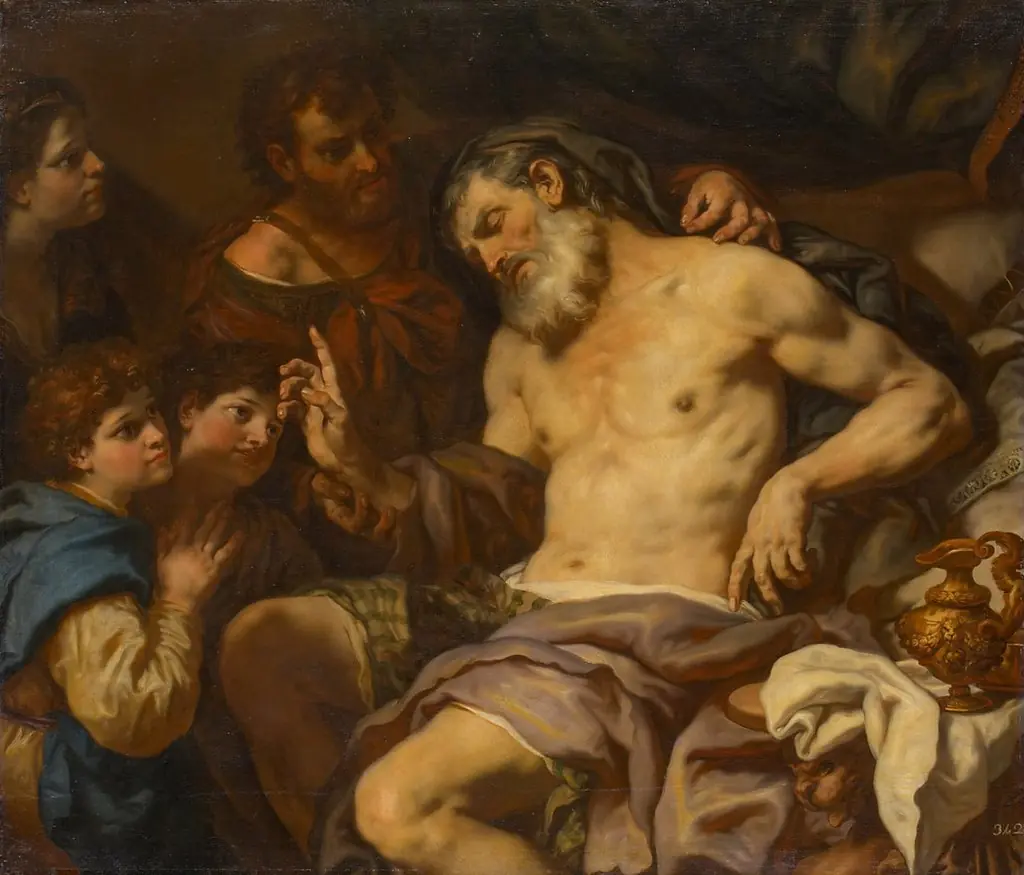 Jacob Blesses Ephraim and Manasseh
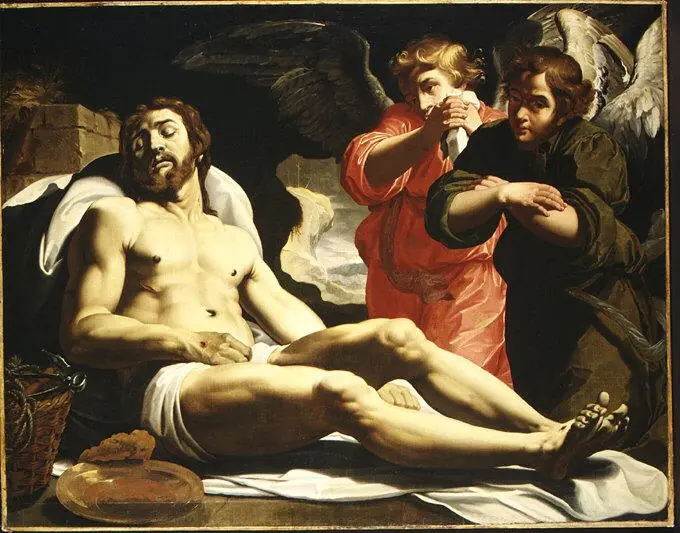 The Dead Christ in the Tomb with Two Angels
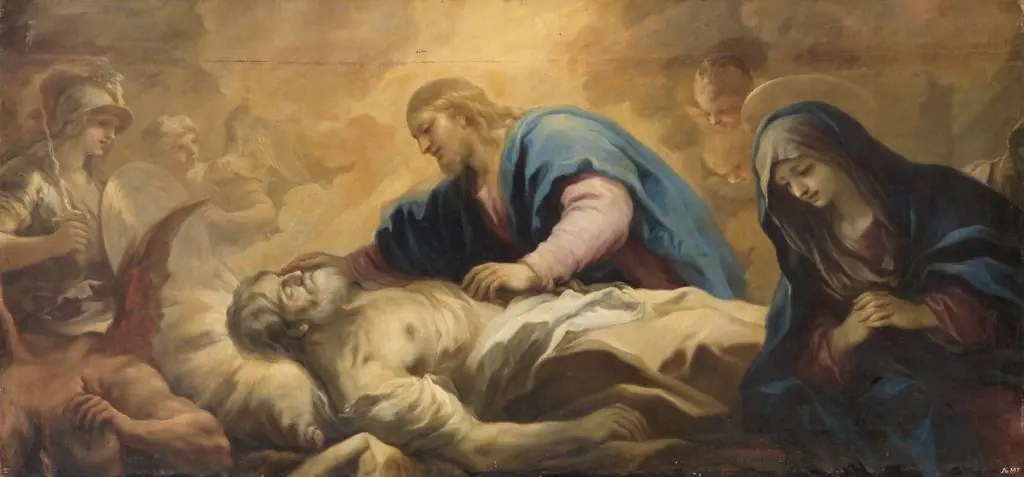 Death of Saint Joseph
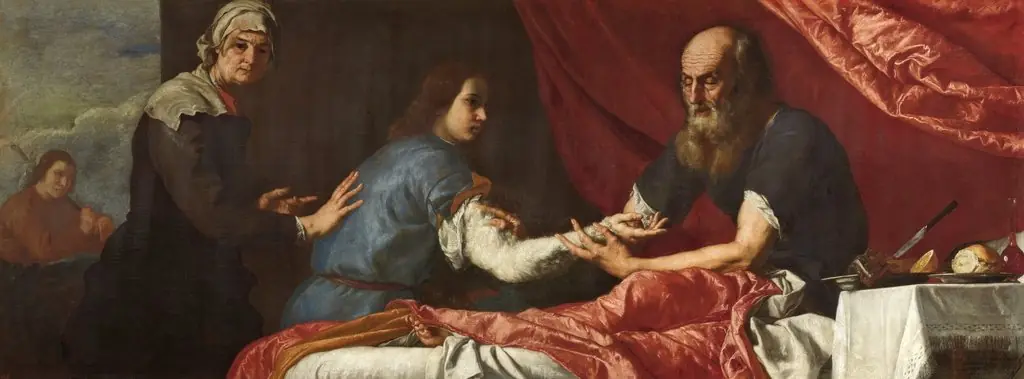 Isaac and Jacob
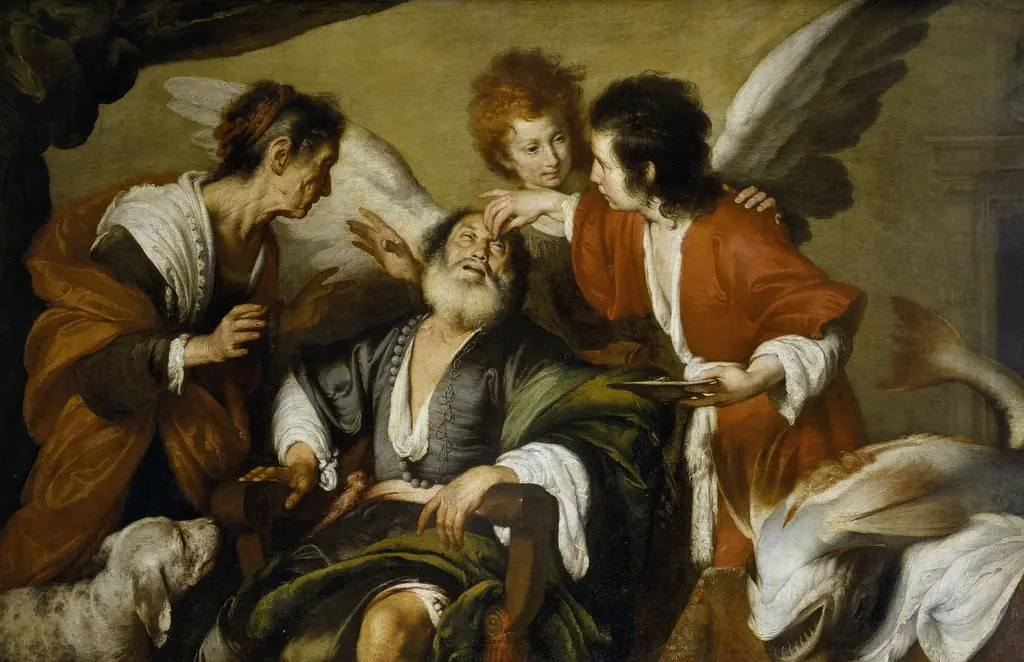 Tobias heals his Father
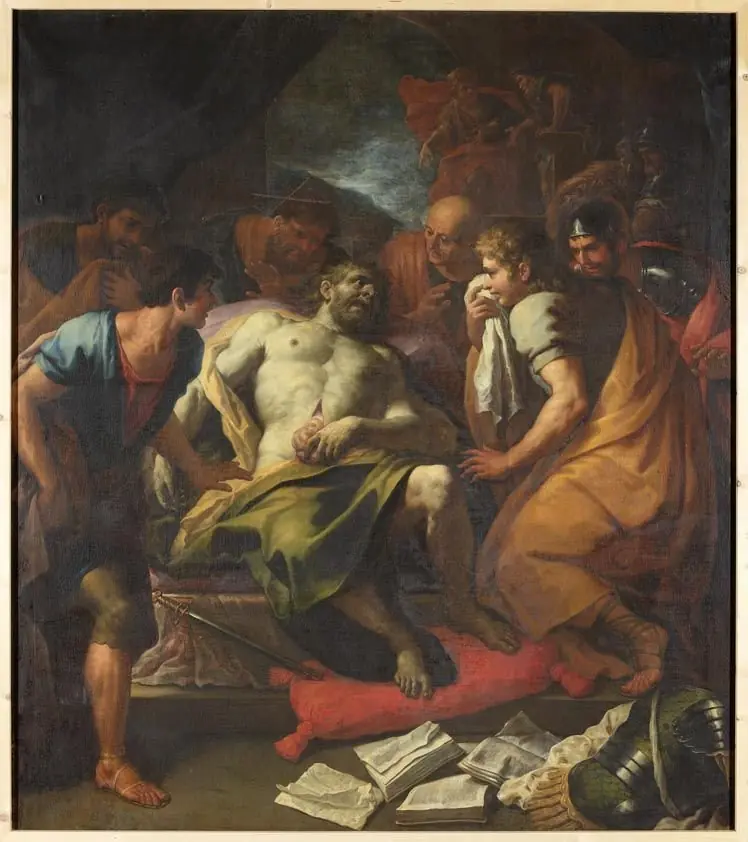 Tod des Cato von Uttica
 The Healing of Tobit
 Jobin kärsimykset
 Christ’s Descent into Limbo
 Isaac Blessing Jacob
 Introduction of Jacob to Isaac
 Alexander the Great on his Sickbed