Artwork
Saturn
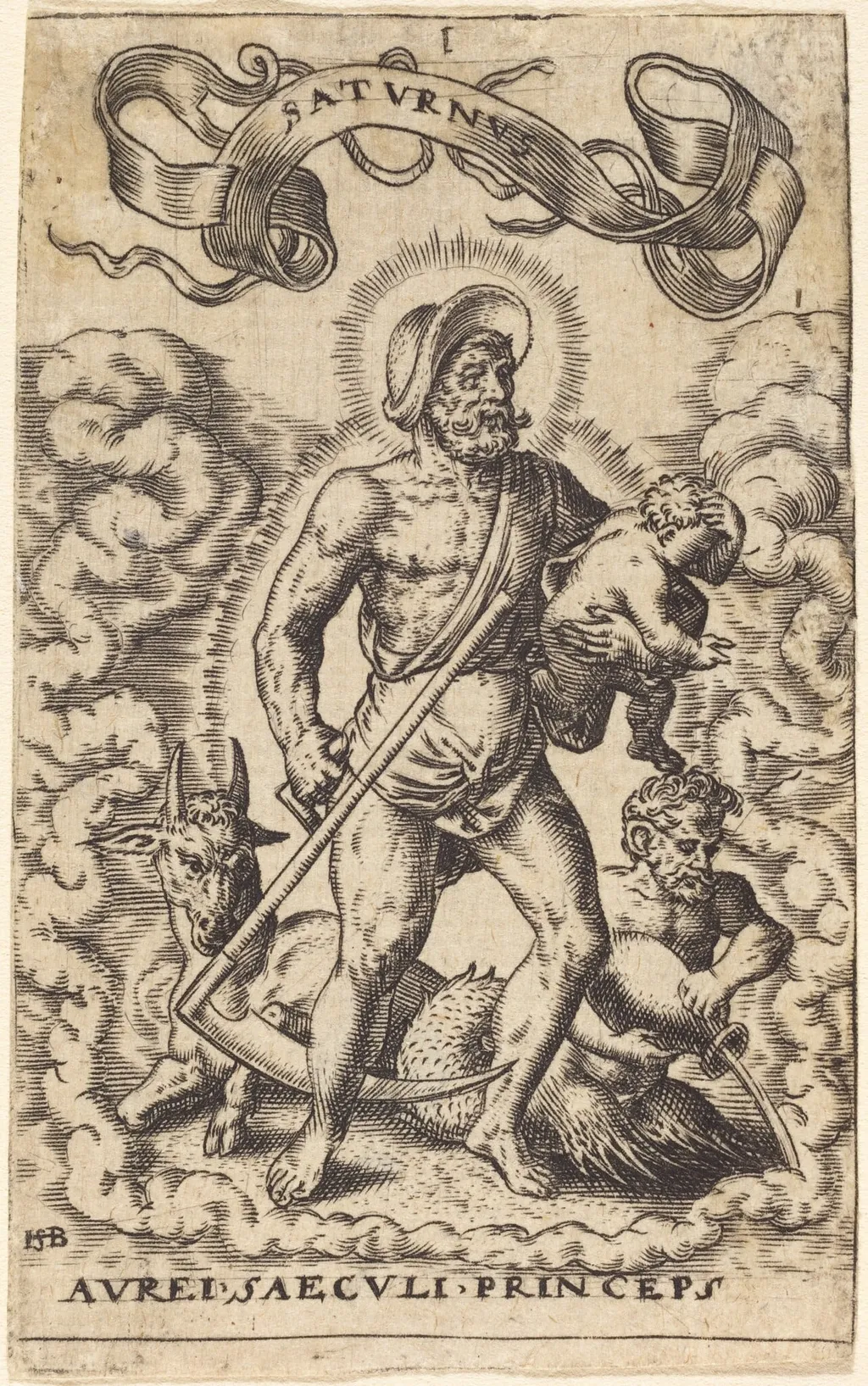
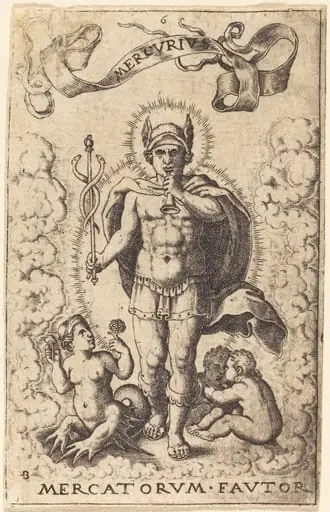
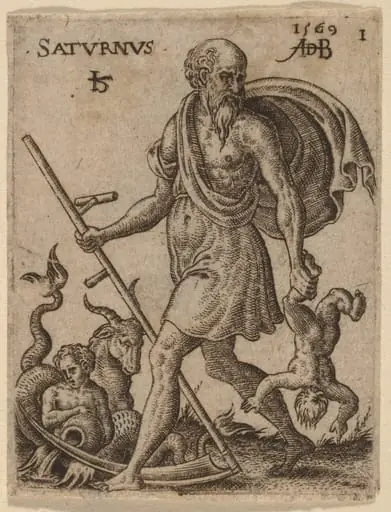
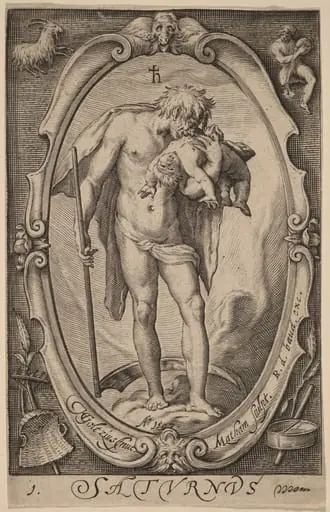
Saturn is an ink print by the Renaissance artist Theodor de Bry. It dates from 1584 and is held in the collection of the National Gallery of Art.
About this work
Overview
A Protestant exile, de Bry was known for his meticulous printmaking, often illustrating voyages and cultural encounters.
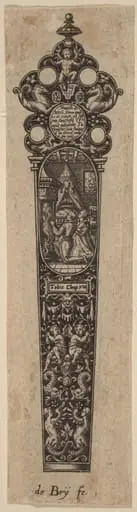
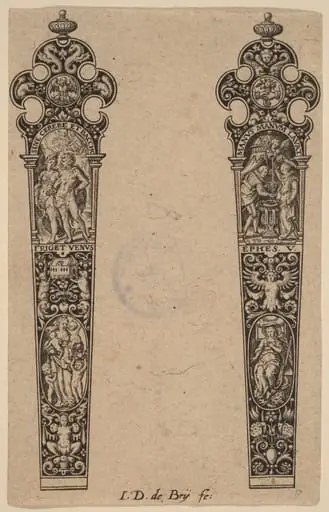
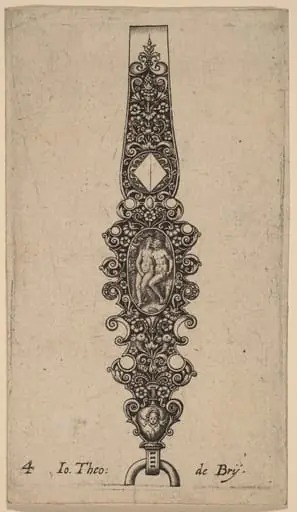
Created in 1584 by Theodor de Bry, *Saturn* is an engraving produced during his time in Frankfurt, where he established a publishing workshop after leaving the Spanish Netherlands. A Protestant exile, de Bry was known for his meticulous printmaking, often illustrating voyages and cultural encounters. This work stands apart from his more famous American expeditions, instead drawing on classical mythology to convey symbolic themes through fine-line detail and dramatic composition.
Subject & Meaning
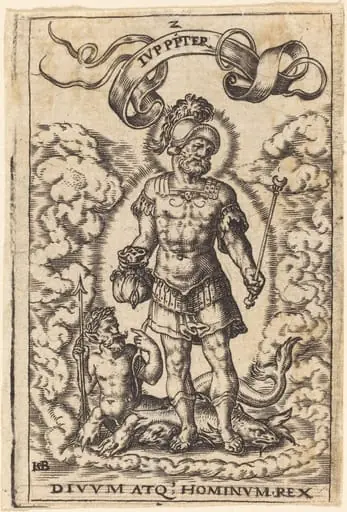
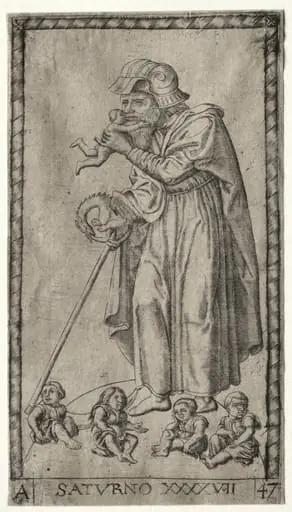
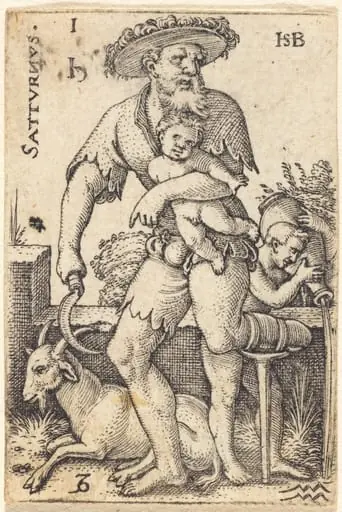
The image portrays Saturn, the Roman god of time and agriculture, in the act of consuming one of his children, a reference to mythological tales of his fear of being overthrown. Clad in a turban and draped fabric, he holds a scythe and a writhing infant, evoking dread and inevitability. At his feet, a hybrid creature—part goat, part fish—suggests chthonic or astrological associations. The Latin inscription 'SATVRNVS' anchors the scene in classical tradition, reinforcing its allegorical weight.
Technique & Style
De Bry employed fine, controlled engraving lines to render texture and motion, from the folds of fabric to the musculature of Saturn’s arm. The composition is tightly focused, with dramatic contrasts between shadow and light enhancing the tension. Clouds frame the scene, directing attention to the central figures, while the ornate banner adds a typographic element typical of Renaissance print culture. The precision reflects the technical rigor of Northern European engraving traditions of the period.
History & Provenance
De Bry produced this engraving during his years in Frankfurt, a hub for Protestant publishing after his exile from the Spanish Netherlands. It was likely part of a series or standalone plate intended for scholarly or elite audiences familiar with classical myths. No definitive record of its original publication context survives, but its style aligns with his broader output of mythological and ethnographic prints circulated across Europe in the late 16th century.
Context
In the late 1500s, classical mythology remained a vital visual language in European art, used to explore moral, political, and cosmic themes. De Bry’s depiction of Saturn reflects contemporary interest in ancient symbolism, particularly among humanist circles. While he was best known for documenting New World encounters, this work reveals his engagement with older intellectual traditions, blending myth with the precision of printmaking to appeal to educated viewers.
Legacy
Though less widely recognized than his American expedition illustrations, *Saturn* exemplifies de Bry’s versatility and command of engraving as a medium for complex narratives. It contributes to the broader Renaissance revival of mythological imagery in print, influencing later artists who used classical themes to convey psychological or philosophical ideas. The work remains a testament to the intellectual currents shaping Northern European print culture in the late 16th century.
Artist & collection
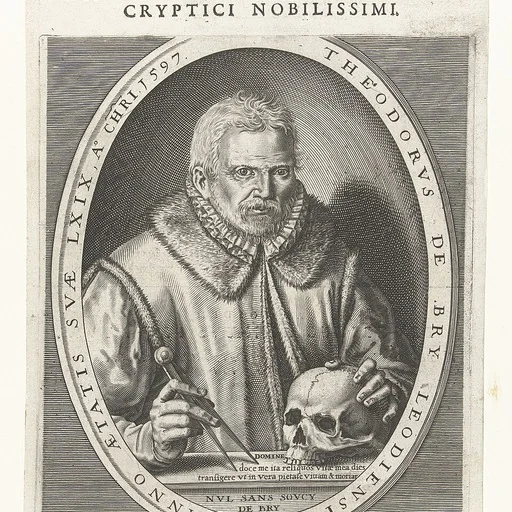
Artist
Theodor de Bry (also Theodorus de Bry; 1528 – 27 March 1598) was a Walloon engraver, goldsmith, editor and publisher, famous for his depictions of early European expeditions to the Americas.