Artwork
Saturn
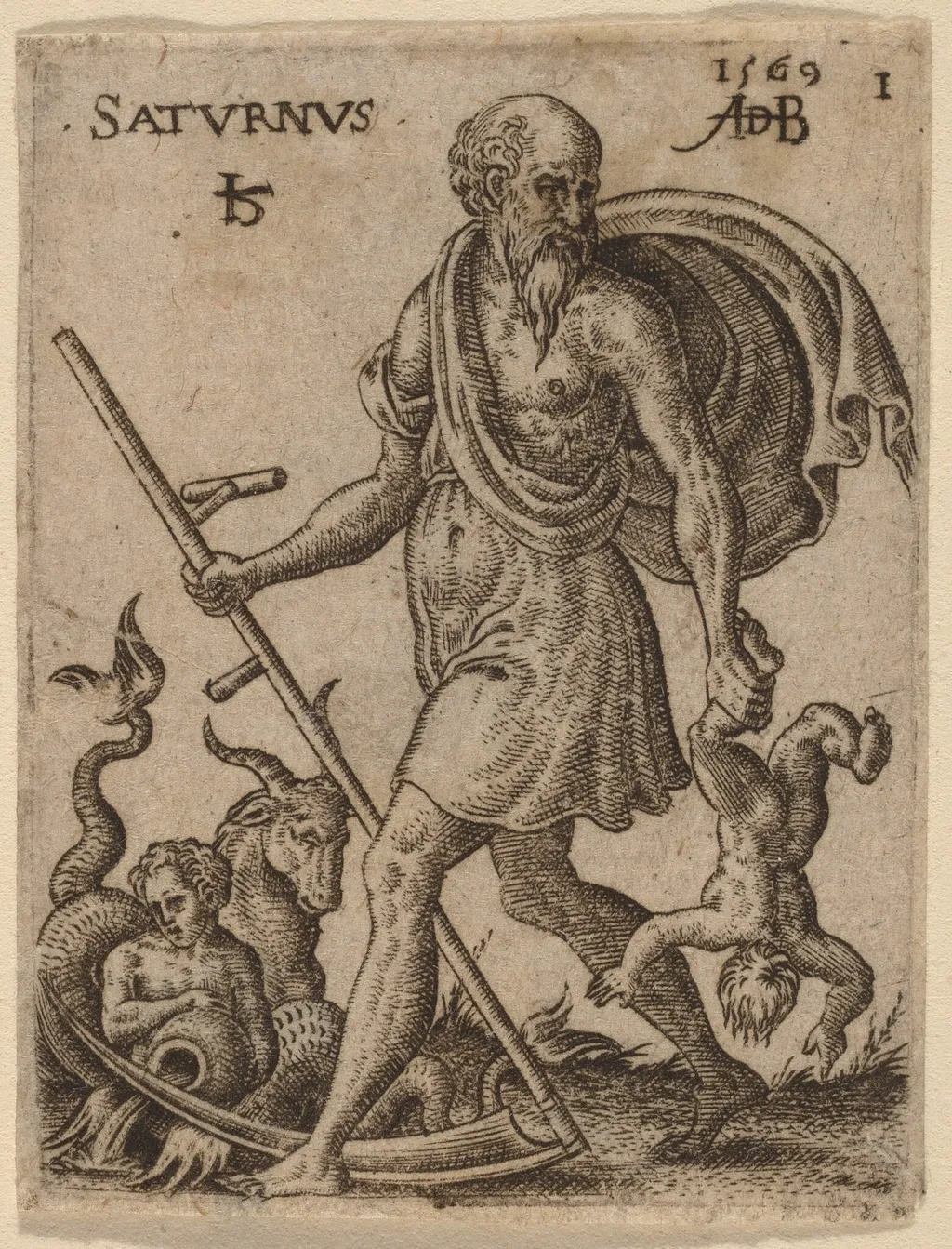
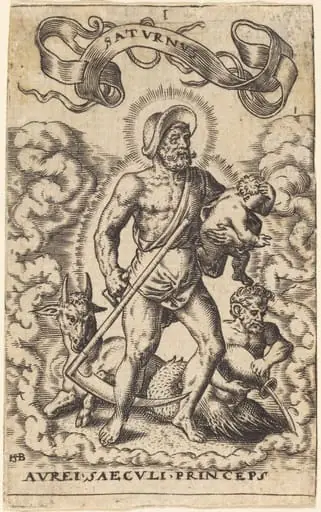
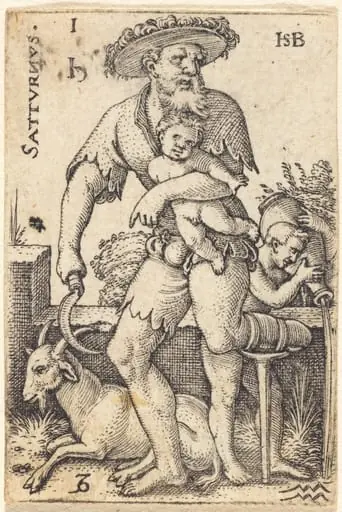
Saturn is an ink print by the Renaissance artist Abraham de Bruyn. It dates from 1569 and is held in the collection of the National Gallery of Art.
About this work
The needle leaves rough edges that catch light, making shadows look scratchy and raw.
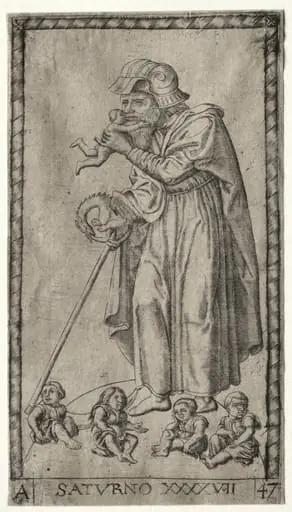
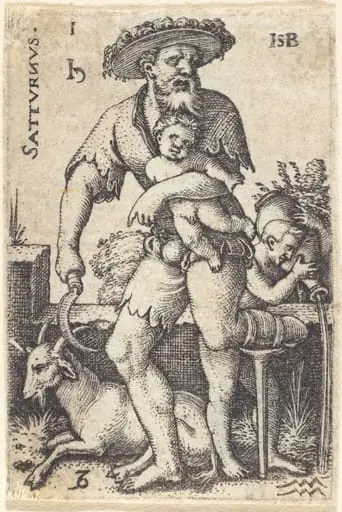
This etching shows Saturn, the Roman god of time, eating his child. His wild eyes bulge. Blood drips down a small body he clutches. The scene looks brutal and messy.
De Bruyn made it in 1569. Drypoint was his trick. He scratched lines directly into a metal plate with a needle, then inked it. The needle leaves rough edges that catch light, making shadows look scratchy and raw.
Try another drypoint by De Bruyn.
Overview
Abraham de Bruyn’s print titled *Saturn* is a drypoint engraving on laid paper, executed in 1569. The work presents a stark, graphic tableau of the Roman deity Saturn in the act of devouring one of his offspring, rendered with a raw, unrefined quality that emphasizes the violence of the myth.
Subject & Meaning
The image depicts Saturn, the god of time, clutching a small, lifeless figure while blood trickles from the child’s wound. His eyes are exaggeratedly bulging, conveying a frantic, almost animalistic hunger. The composition underscores the ancient myth’s themes of fear, power, and the cyclical destruction inherent in the passage of time.
Technique & Style
De Bruyn employed drypoint, incising lines directly into a copper plate with a sharp needle. This method produces burr‑laden edges that retain ink, creating a distinctive, scratchy texture and deep, uneven shadows. The resulting tonal richness gives the scene a gritty, immediate presence that differs from the smoother lines of traditional engraving.
History & Provenance
Created in 1569, the print belongs to de Bruyn’s early period, when he was establishing his reputation in the Low Countries. While specific ownership records are limited, the work has appeared in several 17th‑century collections of prints, indicating its circulation among connoisseurs of mythological imagery.
Context
The depiction of Saturn consuming his child aligns with a broader Renaissance fascination with classical mythology and its moral implications. De Bruyn’s choice of a violent, emotionally charged moment reflects contemporary interests in humanist interpretations of ancient stories, as well as the era’s growing exploration of graphic techniques to heighten dramatic effect.
Artist & collection