Artwork
Bassaule, the Hill of Caves
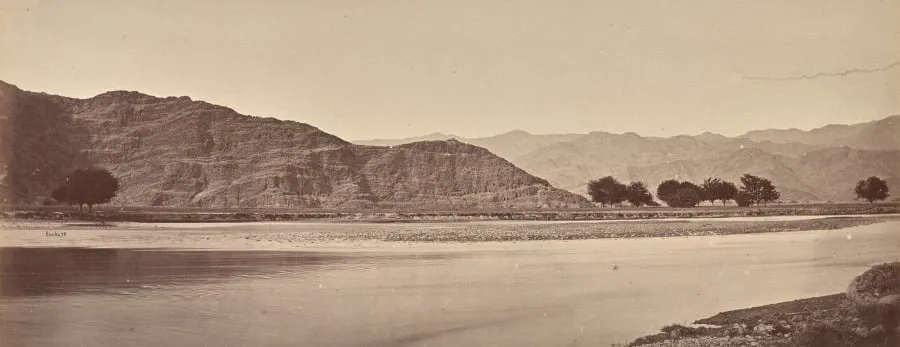
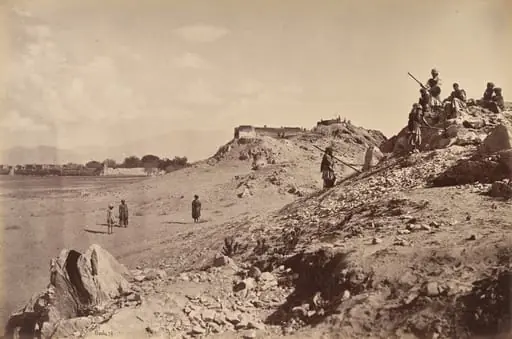
Bassaule, the Hill of Caves is a photography by the Impressionist artist John Burke. It dates from 1879 and is held in the collection of the Cleveland Museum of Art.
About this work
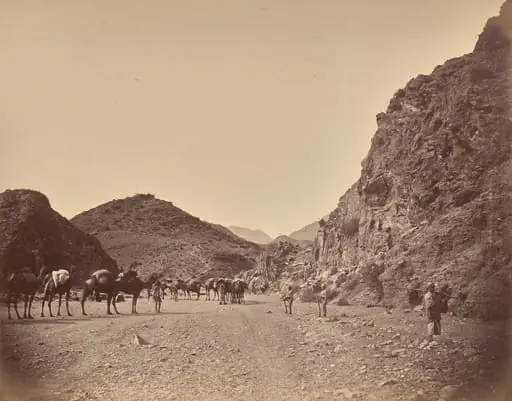
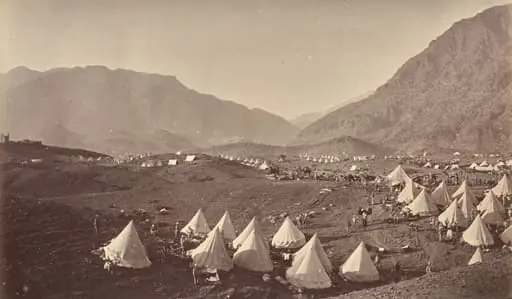
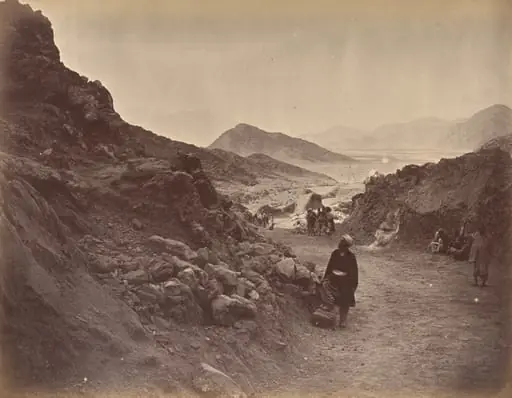
John Burke traveled with British troops, taking some of the first photos ever made in the country.
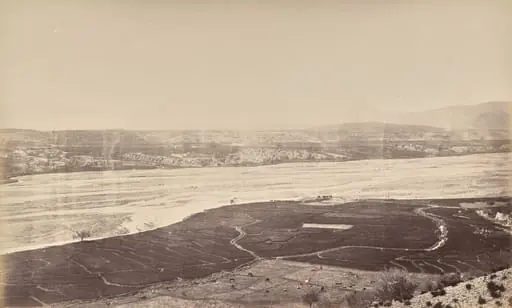
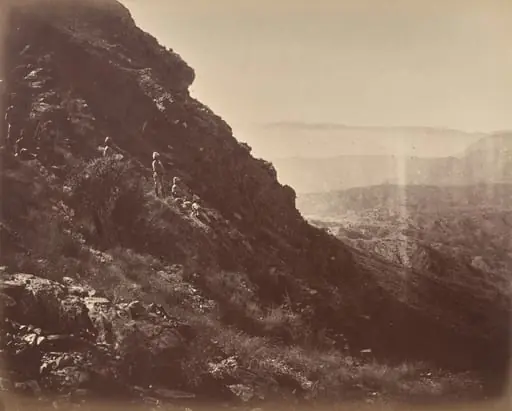
You see a rocky hillside dotted with dark cave openings under a pale sky.
This photo isn’t from Ireland—it’s Afghanistan during the Second Anglo-Afghan War. John Burke traveled with British troops, taking some of the first photos ever made in the country. Since cameras then were too slow for battle, he shot quiet moments like this instead.
To see more of Burke’s war photography, look up John Burke (Irish, 1845–1915).
Overview
This photograph, titled 'Bassaule, the Hill of Caves,' is part of a larger photographic record of the Second Anglo-Afghan War (1878–1880). Taken by Irish photographer John Burke, it captures a desolate hillside in Afghanistan marked by natural cave openings. Burke accompanied British military forces, documenting terrain and infrastructure rather than combat, due to the technical limitations of mid-19th-century photography.
Subject & Meaning
The image depicts a barren, rocky slope pierced by dark cave entrances beneath a muted sky. These caves, likely used by local populations or as temporary shelters, reflect the landscape’s strategic and lived-in character. The absence of human figures emphasizes isolation and the quiet aftermath of military movement, inviting contemplation of place over action.
Technique & Style
Burke used large-format glass plate negatives and portable darkrooms, requiring long exposures and careful preparation. The composition is static and panoramic, favoring tonal contrast between the pale sky and shadowed caves. The image’s clarity and detail reveal the constraints and strengths of early photographic technology, prioritizing stillness over motion.
History & Provenance
John Burke, one of the first photographers to systematically document Afghanistan, produced this image during his 1878–1880 campaign with British troops. The photograph was likely included in albums compiled for military and colonial audiences. Many of his works were later acquired by institutions and private collectors, preserving a rare visual record of the region during wartime.
Context
During the Second Anglo-Afghan War, British forces sought to establish influence in Afghanistan amid geopolitical rivalry with Russia. Photography served as both intelligence and propaganda. Burke’s images, though non-combative, mapped territory and recorded encounters, offering a visual archive that shaped Western perceptions of a distant and contested land.
Legacy
Burke’s photographs remain among the earliest visual documents of Afghanistan’s terrain and people during colonial conflict. His work laid groundwork for later ethnographic and war photography, influencing how military campaigns were visually recorded. Today, these images are valued for their historical specificity rather than aesthetic novelty.
Artist & collection