Artwork
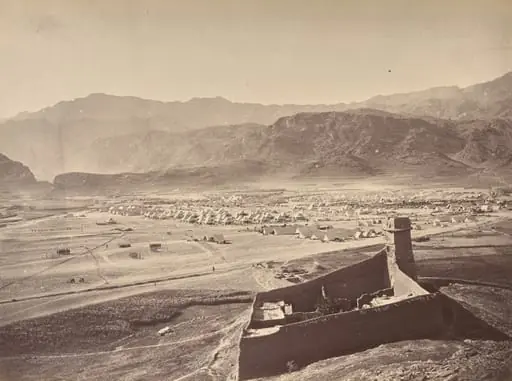
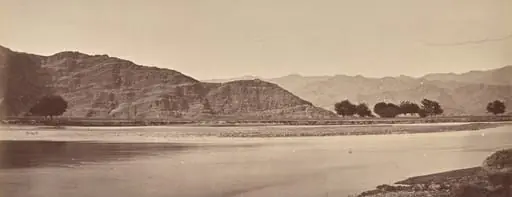
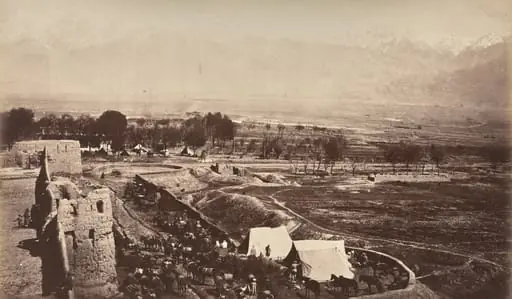
Shergai Heights, Looking Towards Ali Musjid
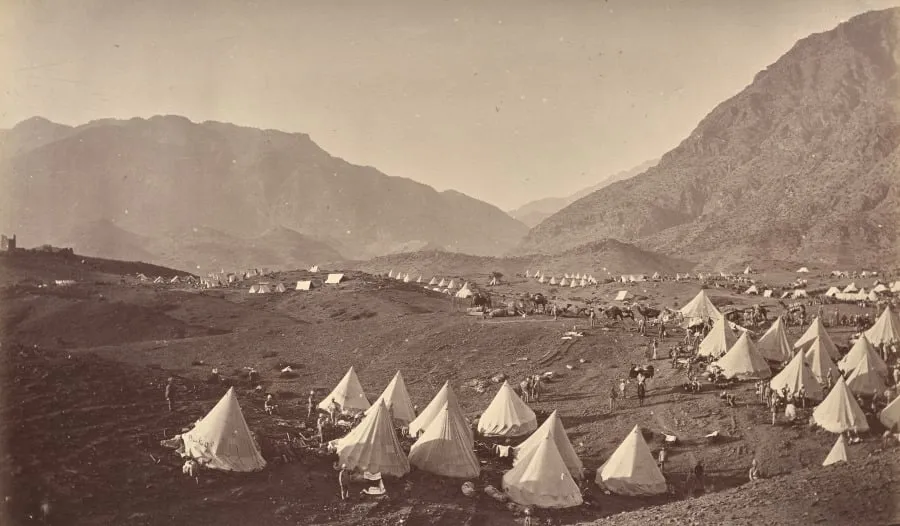
Shergai Heights, Looking Towards Ali Musjid is a photography by the Impressionist artist John Burke. It dates from 1879 and is held in the collection of the Cleveland Museum of Art.
About this work
John Burke lugged heavy cameras and glass plates across rough terrain to document the conflict.
You see a dry, rocky hillside with a few tents and soldiers standing near a stone wall. The sky is hazy, and the light looks flat, like an old photograph.
This isn’t a painting—it’s one of the first photos taken during the Second Anglo-Afghan War. John Burke lugged heavy cameras and glass plates across rough terrain to document the conflict. Because the tech was slow, he couldn’t shoot battles, so he framed quiet moments instead.
If you want to see more early war photography, look up John Burke (Irish, 1845–1915).
Overview
This photograph, 'Shergai Heights, Looking Towards Ali Musjid', is a documentation of the Second Anglo-Afghan War. It is one of the earliest photographic records of the conflict, captured by John Burke, a pioneering photographer.
Subject & Meaning
The image depicts a rocky hillside with tents, soldiers, and a stone wall, conveying a sense of the war's setting. The scene is tranquil, as the technology of the time did not allow for the capture of action shots.
Technique & Style
The photograph is characterized by a hazy sky and flat light, typical of early photographic techniques. Burke's work was constrained by the limitations of his equipment, resulting in static compositions.
History & Provenance
John Burke, an Irish photographer, traveled extensively in Afghanistan during the Second Anglo-Afghan War, producing a significant body of work. His photographs provide valuable insights into the conflict and its environment.
Artist & collection

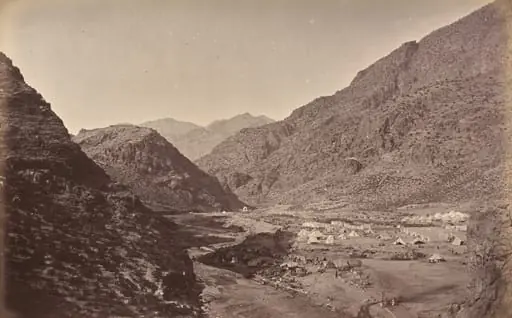 Ali Musjid and Camp
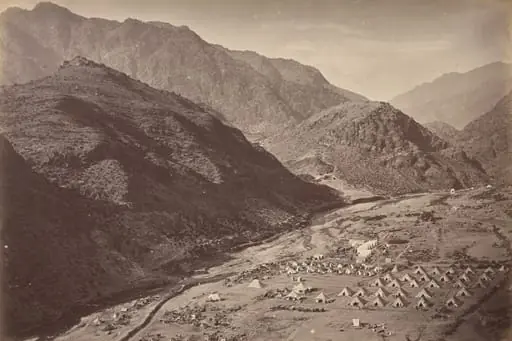 Ali Musjid and Camp from Sultan Tarra
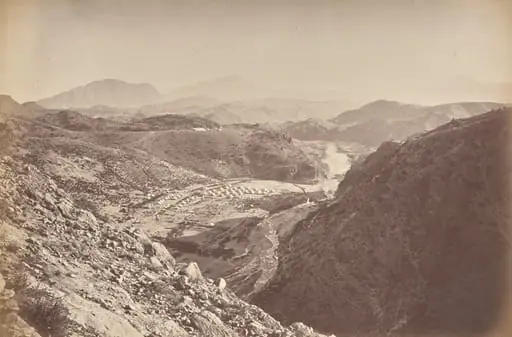 General View from Ali Musjid
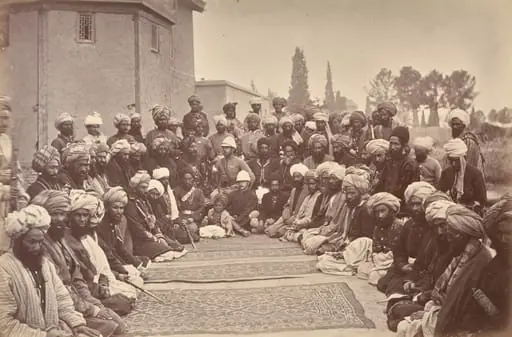
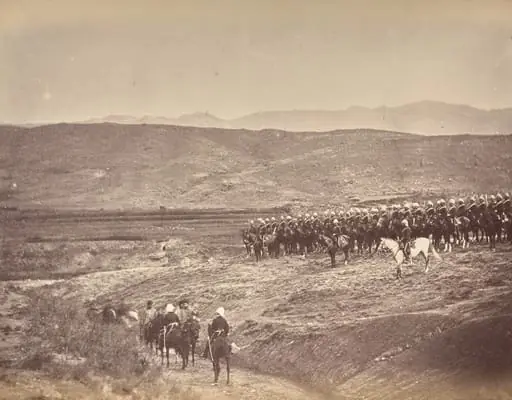 The Amir Yakub Khan. The First Meeting with Major Cavagnari and Mr. Jenkins, 7 Miles from Safed Sang
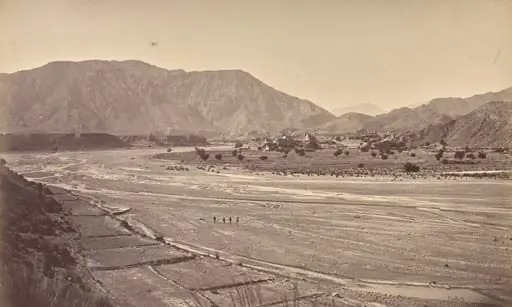 Kadm Villages and Pass, Left of Jumrood
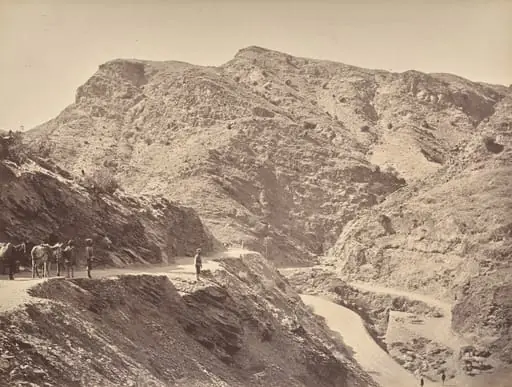 Landi Kotal Pass
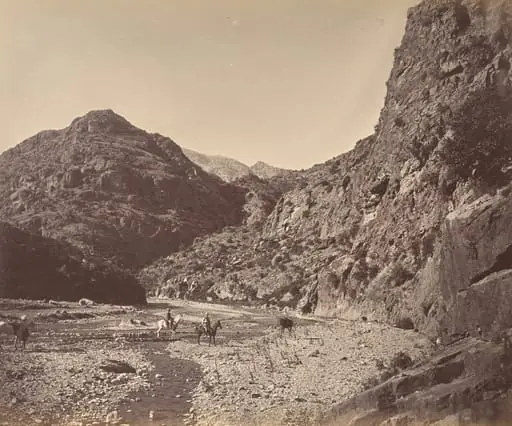 Pass Near Ali Musjid, Showing Tortang
 Landi Kotal, The Camp, Looking South