Artwork
Major Cavagnari C.S.I. and Sirdars
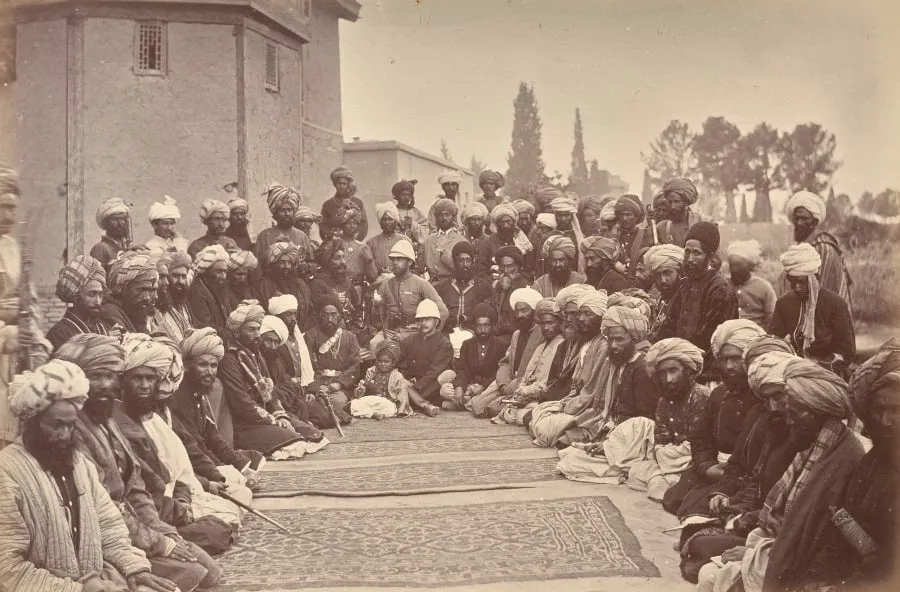
Major Cavagnari C.S.I. and Sirdars is a photography by the Impressionist artist John Burke. It dates from 1879 and is held in the collection of the Cleveland Museum of Art.
About this work
John Burke lugged heavy glass-plate cameras across Afghanistan to document the Second Anglo-Afghan War.
You see a group of men in military uniforms standing stiffly in front of a tent. Some wear turbans, others have medals on their chests.
This isn’t a painting—it’s one of the earliest war photographs. John Burke lugged heavy glass-plate cameras across Afghanistan to document the Second Anglo-Afghan War. He couldn’t shoot battles, so he posed soldiers and leaders instead. The stiff poses feel strange to us now, but they were the only way to show who was there.
If you want to see more of Burke’s work, look up John Burke (Irish, 1845–1915).
Overview
This photograph is part of a larger collection documenting the Second Anglo-Afghan War (1878–1880), taken by Irish photographer John Burke. As one of the earliest photographic records of the conflict, it captures military personnel and local leaders in posed arrangements rather than active combat. The limitations of 19th-century photographic technology meant that dynamic scenes were impossible; instead, Burke focused on static compositions that conveyed presence and authority.
Subject & Meaning
The image depicts a group of British officers and Afghan sirdars, or military leaders, standing formally before a tent. Their uniforms, turbans, and medals signal rank and alliance. The arrangement reflects colonial efforts to visually affirm cooperation between British forces and local elites. These portraits served as both official records and instruments of political messaging, emphasizing order and control amid an unstable conflict zone.
Technique & Style
Burke used heavy glass-plate cameras requiring long exposure times, making movement impossible to capture. Subjects were carefully arranged and held still for extended periods, resulting in rigid, formal poses. The compositions prioritize clarity and dignity over spontaneity. The use of natural light and plain backdrops directs attention to the figures, their attire, and insignia, reflecting the conventions of studio portraiture adapted to field conditions.
History & Provenance
John Burke traveled extensively across Afghanistan during the war, carrying delicate photographic equipment over rugged terrain. His album of images was compiled as a visual record for British military and administrative use. Many of these photographs were later distributed as commercial stereographs and prints, circulating in Britain as both documentation and curiosity. The original album remains a key archival source for the period.
Context
Photography during the Second Anglo-Afghan War was constrained by technological limits and imperial priorities. Unlike later war photography, it did not depict violence but instead emphasized control, hierarchy, and the physical presence of authority. Burke’s images were part of a broader colonial project to map, classify, and legitimize British influence through visual means, aligning with contemporary ethnographic and military surveys.
Legacy
Burke’s photographs are among the earliest visual records of Afghanistan’s landscape and people during wartime. They provide valuable insight into colonial visual culture and the representation of power. While not cinematic or dramatic by modern standards, they remain critical historical artifacts, offering a window into how war was documented, perceived, and remembered in the late 19th century.
Artist & collection

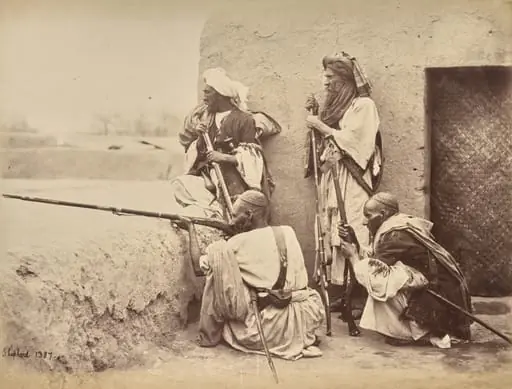
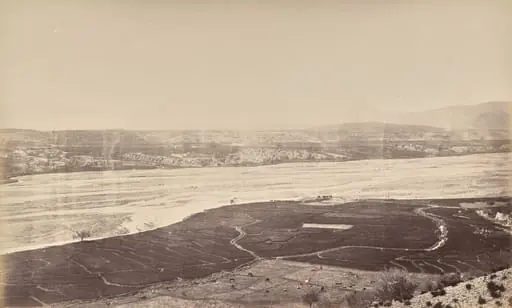
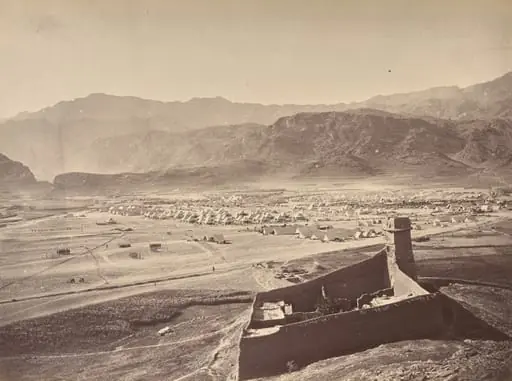
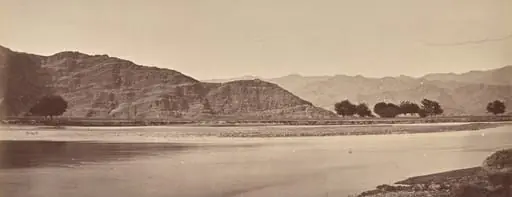
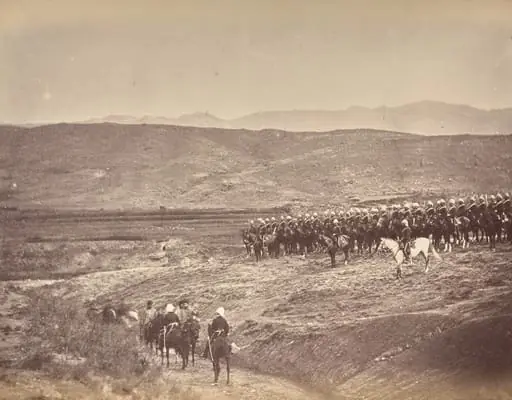 The Amir Yakub Khan. The First Meeting with Major Cavagnari and Mr. Jenkins, 7 Miles from Safed Sang
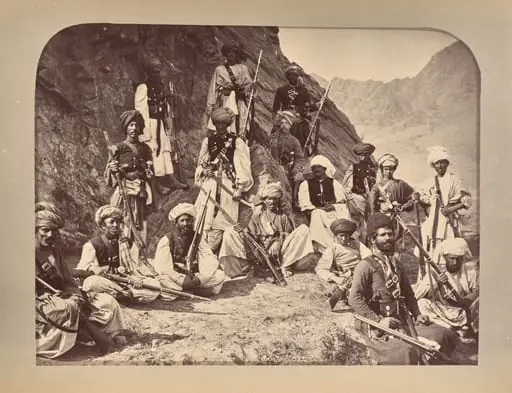 The Khan of Lalpura and Officers
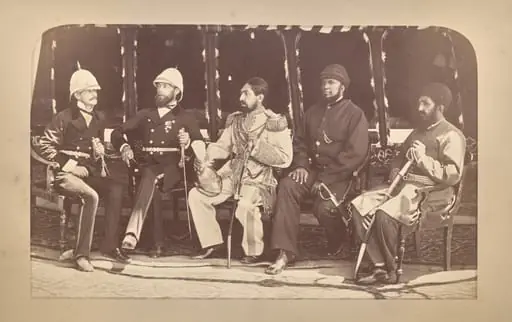 The Amir Yakub Khan, General Daod Shah, Habeebula Moustafi, Major Cavagnari, Mr. Jenkyns
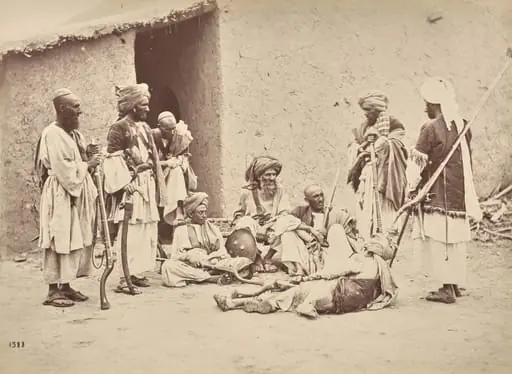 Group of Natives from Near Khyber Pass
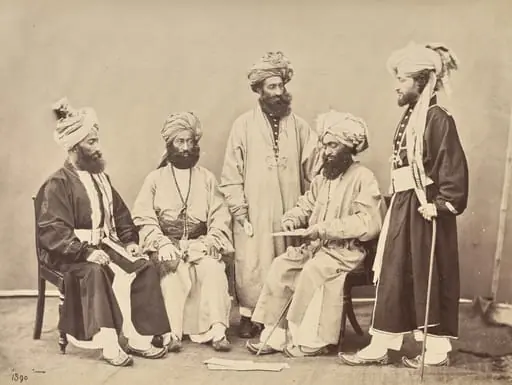 Cabulese
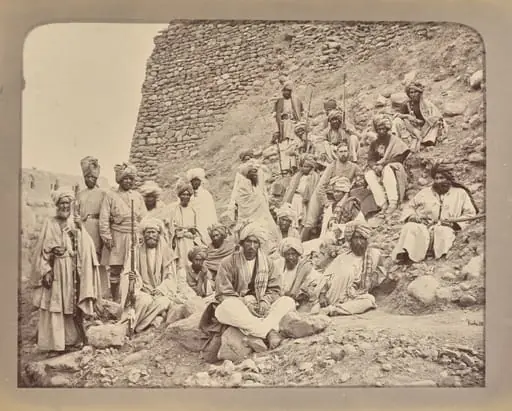 Khyber Chiefs with Captain Tucker
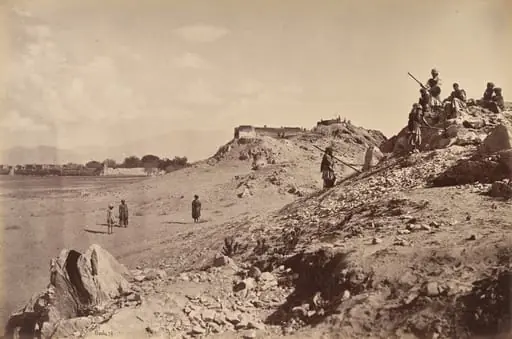 Jellalabad, Pipers Hill
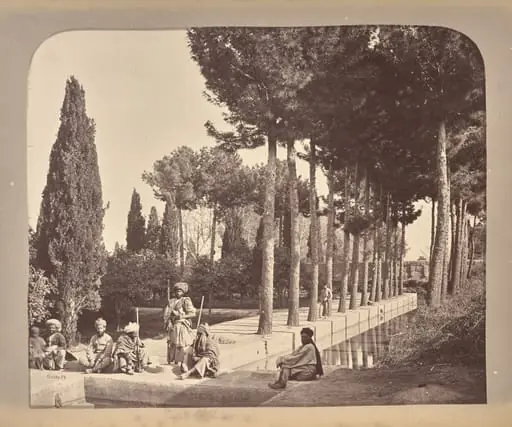 View in the Large Garden, Jellalabad