Artwork
The Recording of Precedents: Confucius and His Pupils Collate and Transcribe Documents in Their Favorite Grove; Color Study for Mural, Supreme Court Room, Minnesota State Capitol, Saint Paul
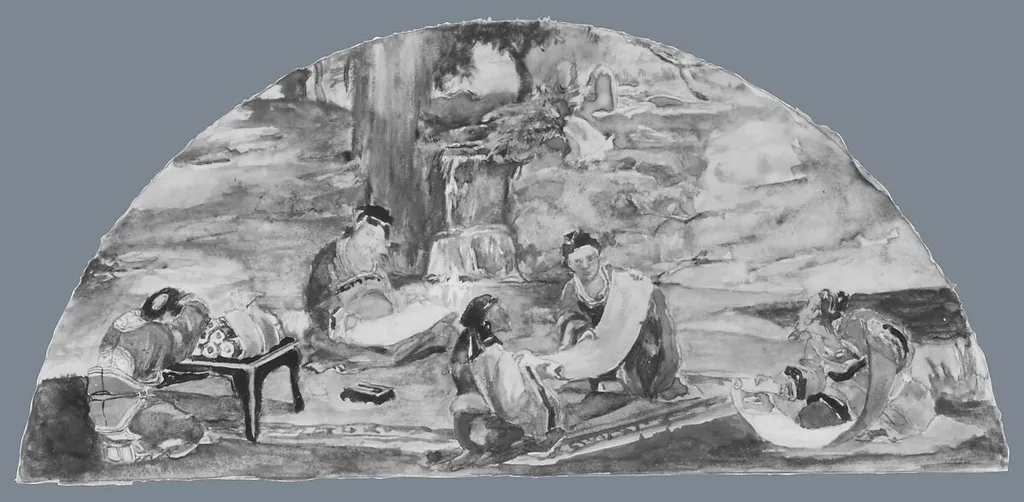
The Recording of Precedents: Confucius and His Pupils Collate and Transcribe Documents in Their Favorite Grove; Color Study for Mural, Supreme Court Room, Minnesota State Capitol, Saint Paul is a watercolor work on paper by the Post-Impressionist artist John La Farge. It dates from 1903 and is held in the collection of the Metropolitan Museum of Art.
About this work
Overview
John La Farge’s 1903 preparatory work, executed in gouache, watercolor, gum arabic and graphite on tan wove paper, serves as a color study for a proposed mural in the Supreme Court chamber of the Minnesota State Capitol. The study captures a tranquil gathering of scholars in a wooded setting, illustrating La Farge’s careful planning of composition and palette before the full‑scale wall painting was realized.
Subject & Meaning
The composition portrays Confucius surrounded by his disciples as they collect, read and transcribe documents beneath the shade of a favorite grove. By presenting the ancient philosopher in a serene, scholarly activity, La Farge links the ideals of moral instruction and legal deliberation, echoing the civic function of the Capitol’s courtroom space.
Technique & Style
La Farge combines opaque gouache with transparent watercolor, reinforced by gum arabic and graphite outlines, achieving a nuanced balance of color intensity and delicate line work. The handling of light and atmospheric perspective reflects post‑impressionist influences, while the careful modulation of tones anticipates the larger mural’s visual impact.
History & Provenance
Created as a preparatory study for the Supreme Court Room mural, the paper work remained within the American Wing collection of the Minnesota State Capitol. Though the full mural was never executed, the study has been retained as documentation of La Farge’s design process and as an example of early twentieth‑century American mural planning.
Context
At the turn of the twentieth century, American public buildings often incorporated allegorical murals to convey civic virtues. La Farge, already noted for his stained‑glass and mural commissions, employed an Eastern philosophical figure to underscore themes of wisdom and justice, aligning the Capitol’s judicial space with broader cultural aspirations of the era.
Artist & collection

Artist
John La Farge (March 31, 1835 – November 14, 1910) was an American artist whose career spanned illustration, murals, interior design, painting, and popular books on his Asian travels and other art-related topics.

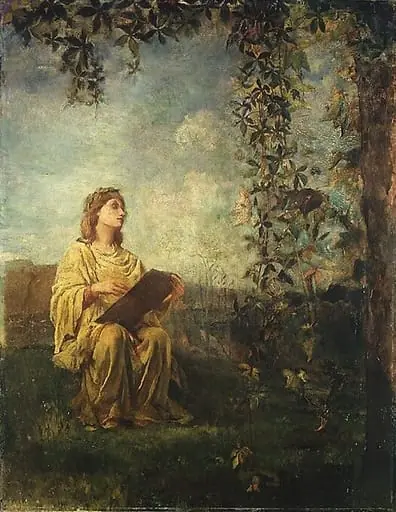 The Muse of Painting
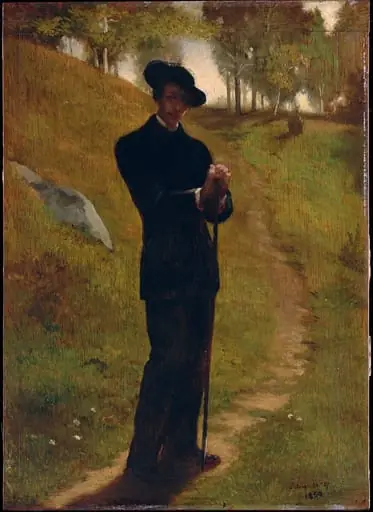 Portrait of the Painter
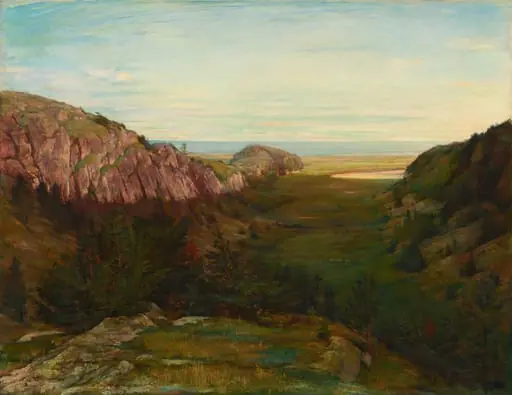 The Last Valley - Paradise Rocks
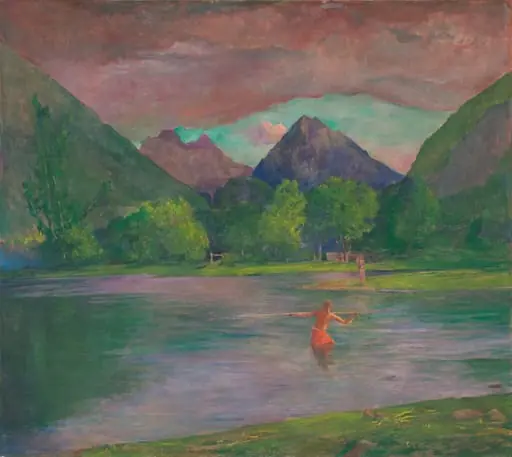 The Entrance to the Tautira River, Tahiti. Fisherman Spearing a Fish
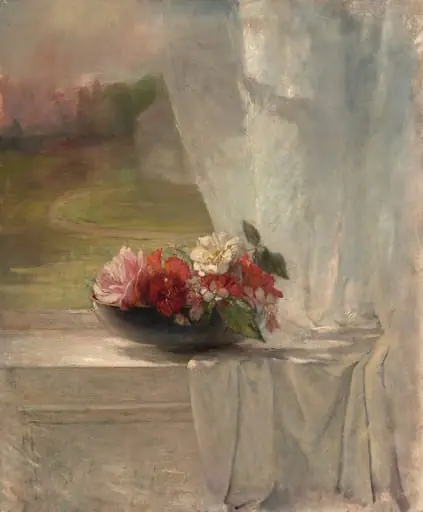 Flowers on a Window Ledge
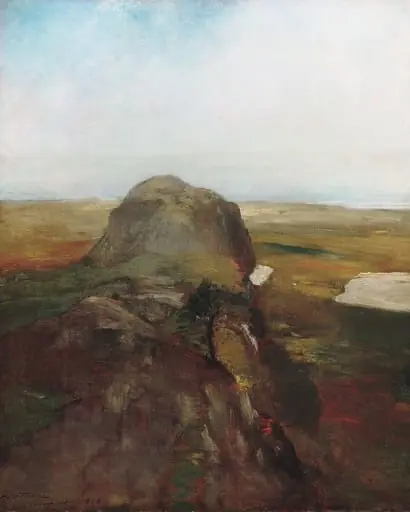 Autumn Study, View over Hanging Rock, Newport, R.I.
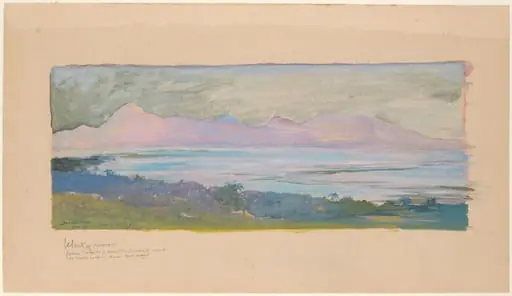 The Island of Moorea Looking across the Strait from Tahiti, January 1891
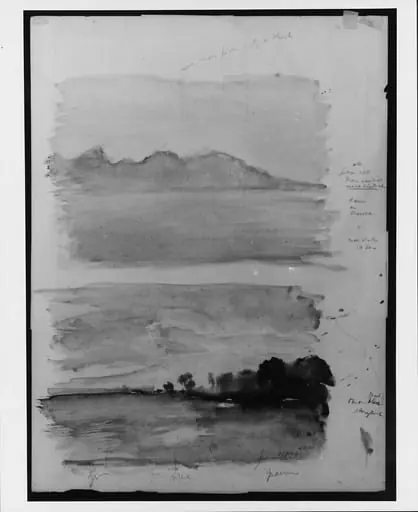 Double Study of Dawn, Moorea Seen across the Water, Tahiti