Artwork
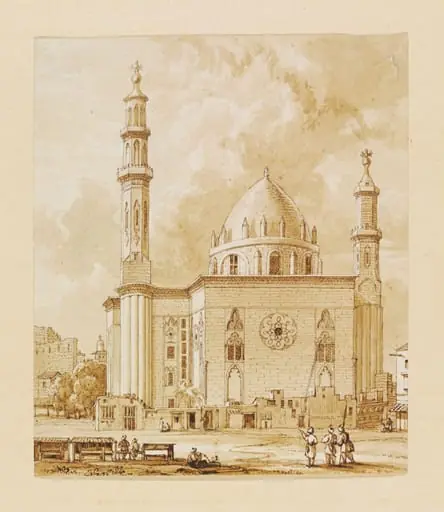
Exterior of the Mosque Sultan Hassan, Cairo
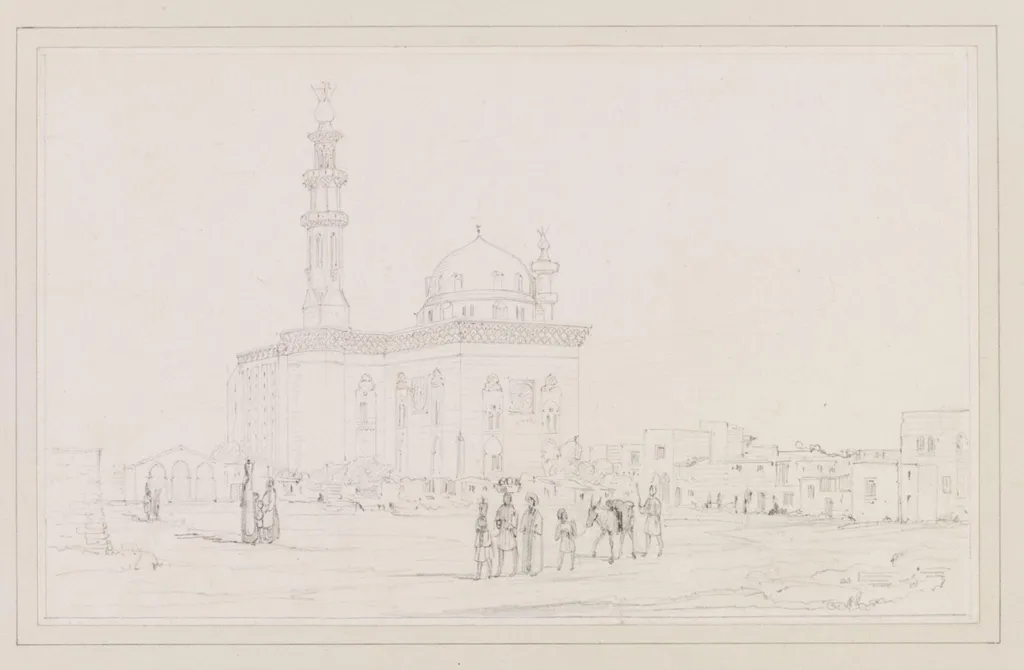
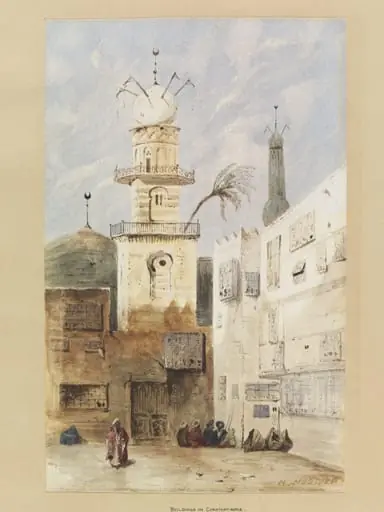
Exterior of the Mosque Sultan Hassan, Cairo is a drawing by the Romanticist artist Owen Jones. It dates from 1832 and is held in the collection of the Victoria and Albert Museum.
About this work
Overview
Created during Jones’s travels with the Searight Collection, it contributes to a broader 19th-century effort to record Egypt’s built heritage.
This 1832 drawing by Owen Jones captures the exterior of the Mosque of Sultan Hassan in Cairo, executed as part of a series documenting architectural sites along the Nile. Created during Jones’s travels with the Searight Collection, it contributes to a broader 19th-century effort to record Egypt’s built heritage. The work is one of eleven in the series, reflecting a scholarly interest in documenting regional monuments through precise visual observation.
Subject & Meaning
The drawing centers on the mosque’s imposing facade, emphasizing its monumental scale and ornamental detail. Figures scattered before the structure suggest everyday activity, grounding the architecture in lived experience rather than treating it as a detached monument. The inclusion of surrounding buildings and distant horizon reinforces the mosque’s place within the urban fabric of Cairo, avoiding idealization in favor of contextual realism.
Technique & Style
Jones employed fine-line pen and ink with subtle washes to render the mosque’s stonework, minarets, and domes with clarity. The precision of architectural elements contrasts with looser, sketch-like treatment of figures and background structures, suggesting a focus on structural accuracy over atmospheric effect. The composition balances symmetry with observational spontaneity, aligning with topographical drawing conventions of the period.
History & Provenance
The drawing originated in Owen Jones’s 1832 journey along the Nile, commissioned as part of a documented expedition. It entered the Searight Collection and later became part of institutional holdings, including the Victoria and Albert Museum and the British Museum. Its preservation reflects 19th-century European institutional interest in collecting Egyptian architectural records as cultural artifacts.
Context
Produced during a period of heightened European interest in Egypt’s Islamic architecture, the drawing aligns with broader archaeological and ethnographic surveys of the time. While Romanticism influenced aesthetic sensibilities, Jones’s approach prioritized documentation over emotional interpretation. His work contributed to scholarly understanding of Mamluk architecture, distinct from contemporary Orientalist fantasies.
Legacy
Jones’s drawings, including this one, informed later architectural studies and publications on Islamic design. Their methodical detail provided reference material for scholars and designers in Europe, influencing the study of non-Western architecture. Though not widely exhibited, they remain important primary sources for understanding how 19th-century observers recorded and interpreted Egyptian monuments.
Artist & collection
Artist
English architect and designer Owen Jones spent the 1830s in Egypt and later sketched its temples in crisp watercolours.

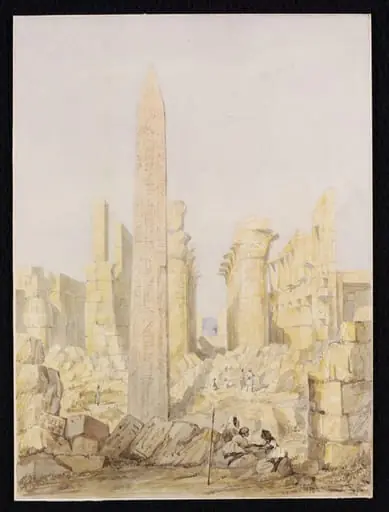 Great Temple. Karnac. Thebes
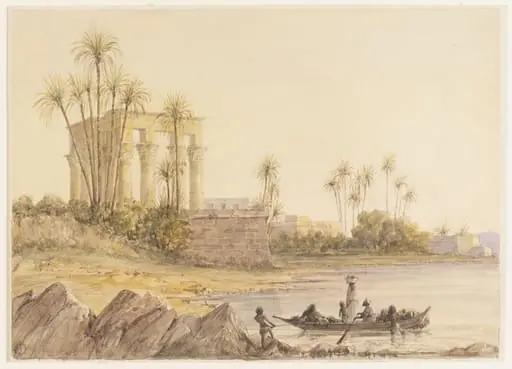 Landing Place. Philoe
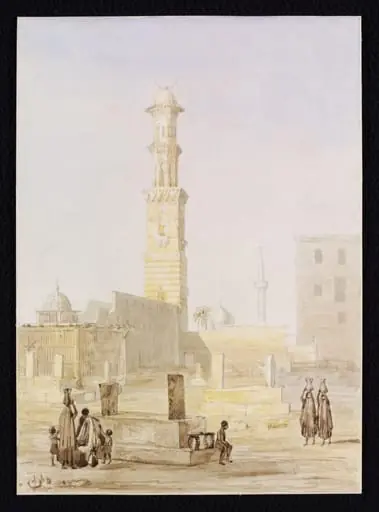 Tombs near Cairo
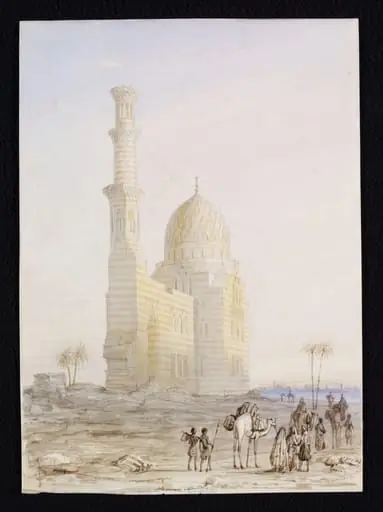 Tomb near Cairo
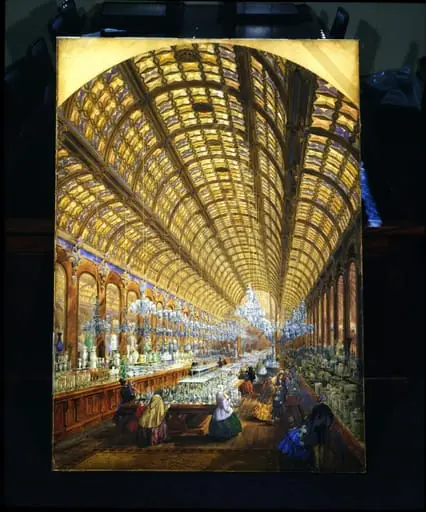 Osler's Gallery, Oxford Street, London
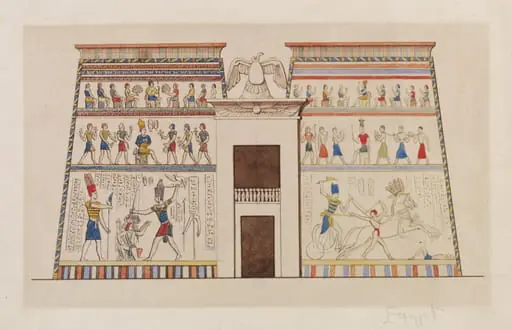 Architectural drawing of an entrance pylon to an Egyptian temple
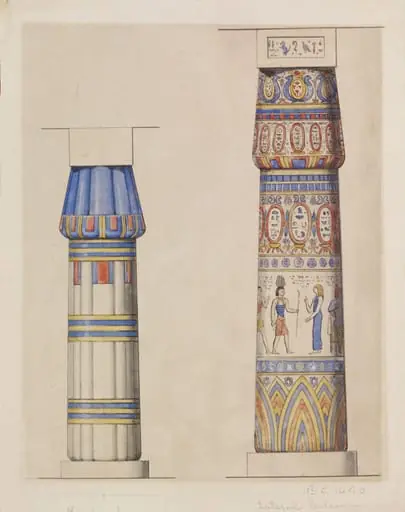 Temple of Luqsor B.C.1490 Lateral Column Temple of Karnak B.C.1490
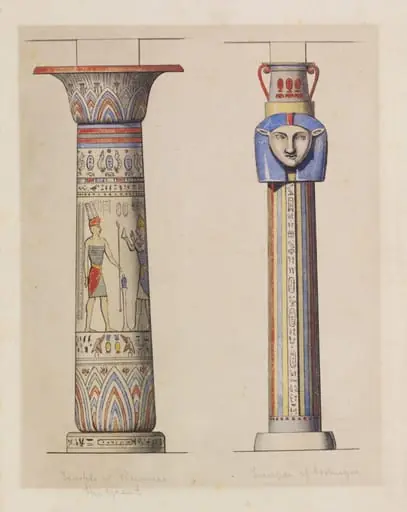 Temple of Ramses the Great B.C.1420. Temple of Sedingar B.C.1490
![Egypt and Nubia, Volume III: Tombs of the Caliphs-Cairo. Mosque of Ayed Be[y], by Louis Haghe](https://artifactworldgallery.com/img/louis-haghe--egypt-and-nubia-volume-iii-tombs-of-the-caliphs-cairo-mosque--9062e89e981f8684-w320.webp)