Artwork
Burgemeester De Croeser ontvangt Napoleon Bonaparte op het Brugse stadhuis in 1803
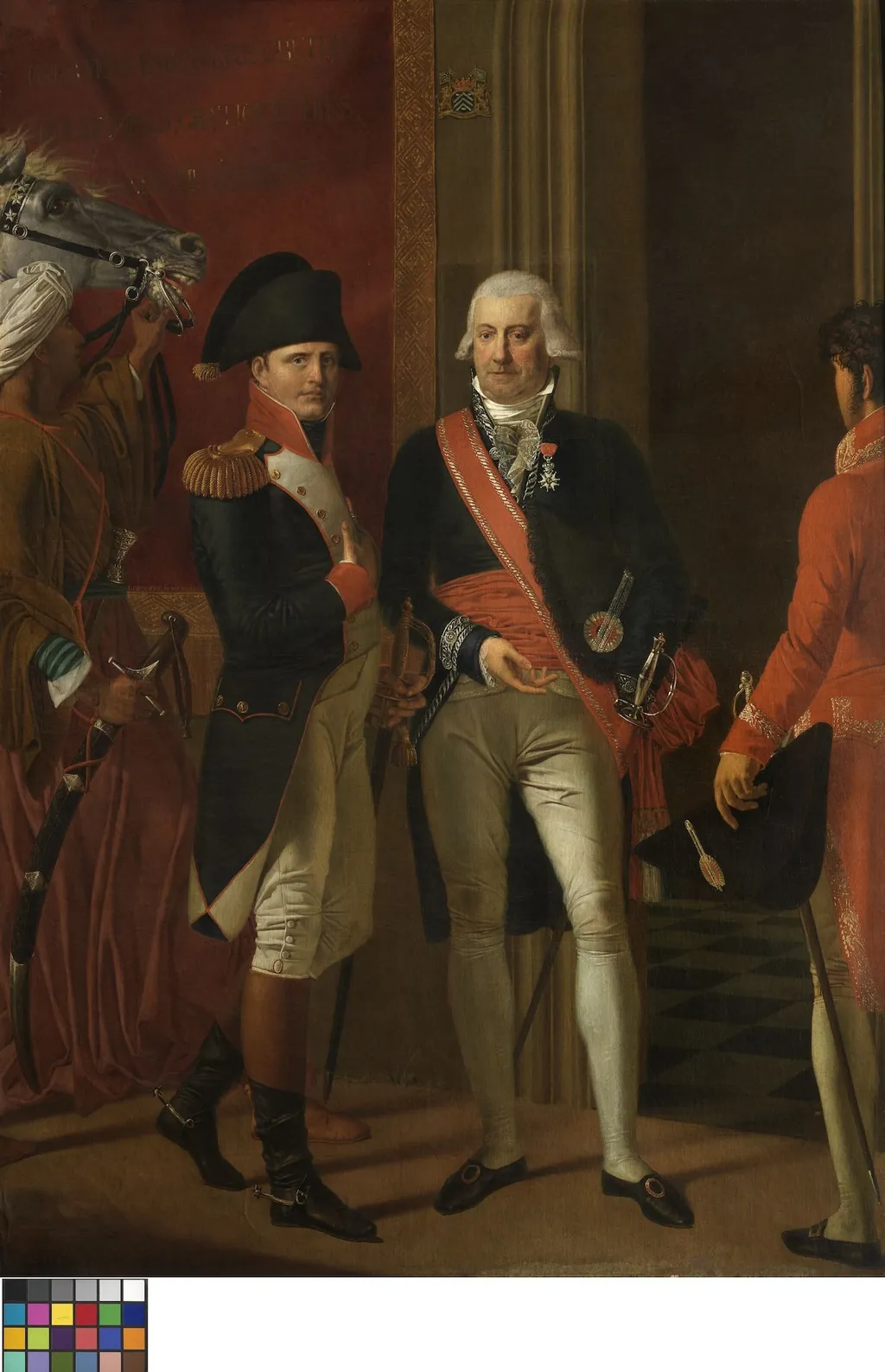
Burgemeester De Croeser ontvangt Napoleon Bonaparte op het Brugse stadhuis in 1803 is an oil painting by the Neoclassicist artist Joseph-Denis Odevaere. It dates from 1807 and is held in the collection of the Groeningemuseum.
About this work
Overview
The scene is not a literal record but a staged representation of political alignment, rendered with the clarity and order characteristic of Neoclassical ideals.
Painted in 1807 by Joseph-Denis Odevaere, this oil on canvas captures a formal encounter in Bruges between the city’s mayor and Napoleon Bonaparte during the French administration of the Southern Netherlands. The scene is not a literal record but a staged representation of political alignment, rendered with the clarity and order characteristic of Neoclassical ideals. Odevaere, a Bruges native, was trained in the academic tradition and later served as court painter to the Dutch monarchy.
Subject & Meaning
The painting illustrates the moment when Burgemeester De Croeser, in civic dress, receives Napoleon, identifiable by his dark coat and red sash. The gathering of officials in uniform underscores the integration of local governance into the French imperial structure. The composition avoids overt celebration, instead emphasizing protocol and restraint, reflecting the tension between civic autonomy and foreign authority during a period of political reorganization.
Technique & Style
Odevaere employs precise draftsmanship and controlled lighting to define each figure and textile. The background’s dark red wall with gilded moldings creates a theatrical setting, enhancing the formality of the occasion. Figures are arranged in a shallow, stage-like space, with careful attention to posture and gesture. The style adheres to Neoclassical principles: clarity of line, restrained emotion, and an emphasis on historical narrative over dramatic flair.
History & Provenance
Commissioned after the event it depicts, the painting was likely intended to affirm civic loyalty under French rule. It entered the Groeningemuseum’s collection in the 19th century, where it remains part of its core holdings of Flemish historical painting. Its preservation reflects the museum’s interest in documenting regional responses to broader European political transformations during the Napoleonic era.
Context
In 1803, Bruges was under French control following the annexation of the Southern Netherlands. Local officials were expected to cooperate with imperial authorities, and such ceremonial encounters served to legitimize French governance. Odevaere’s depiction aligns with state-sponsored imagery that promoted order and continuity, even as traditional structures were being reshaped by external power.
Legacy
The painting stands as a quiet testament to the complex relationship between local identity and imperial authority in early 19th-century Flanders. While not widely known outside Belgium, it offers insight into how regional artists navigated political change through visual diplomacy. Odevaere’s work remains a reference point for understanding how Neoclassicism was adapted to serve civic and state narratives in the Low Countries.
Artist & collection
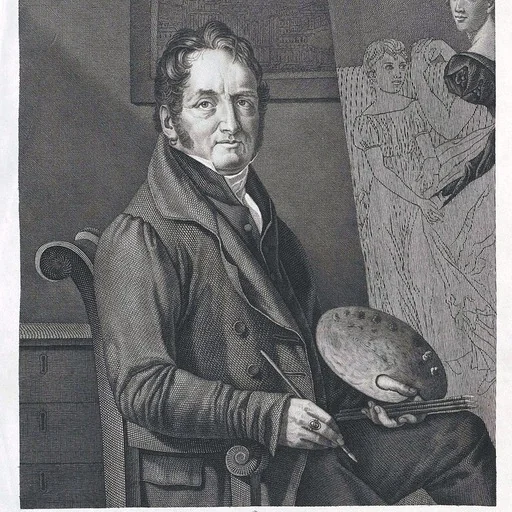
Artist
Joseph Denis Odevaere, or Joseph-Désiré Odevaere (2 December 1775, in Bruges – 26 February 1830, in Brussels), was a Neo-Classical painter from the Southern Netherlands (now Belgium). He served as court painter to King William I.

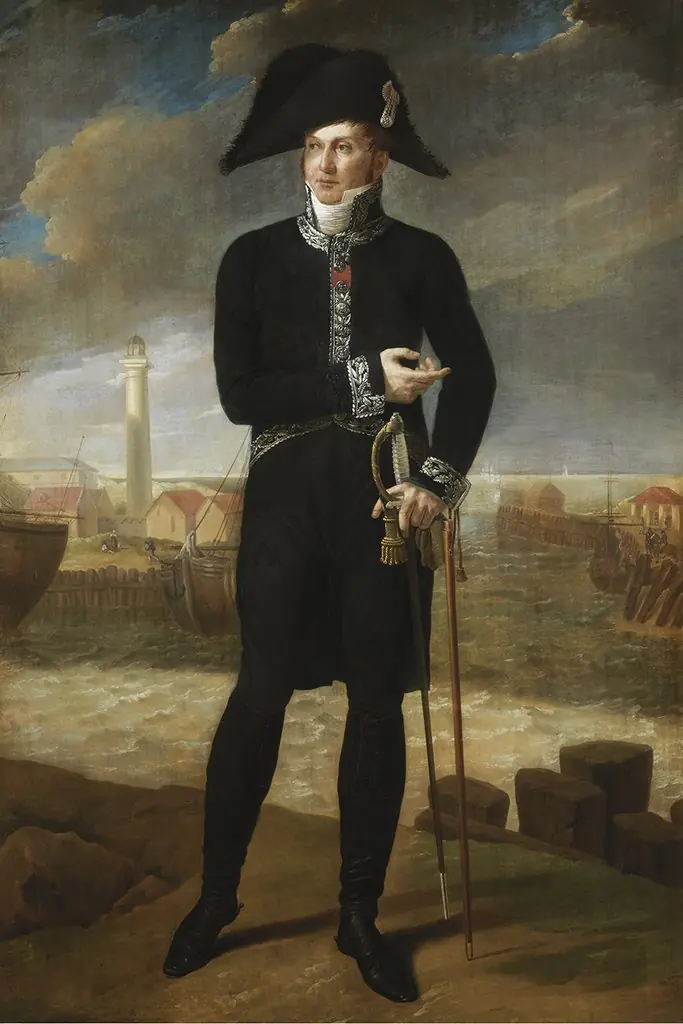 Portrait of Marquis Bernard-François de Chauvelin
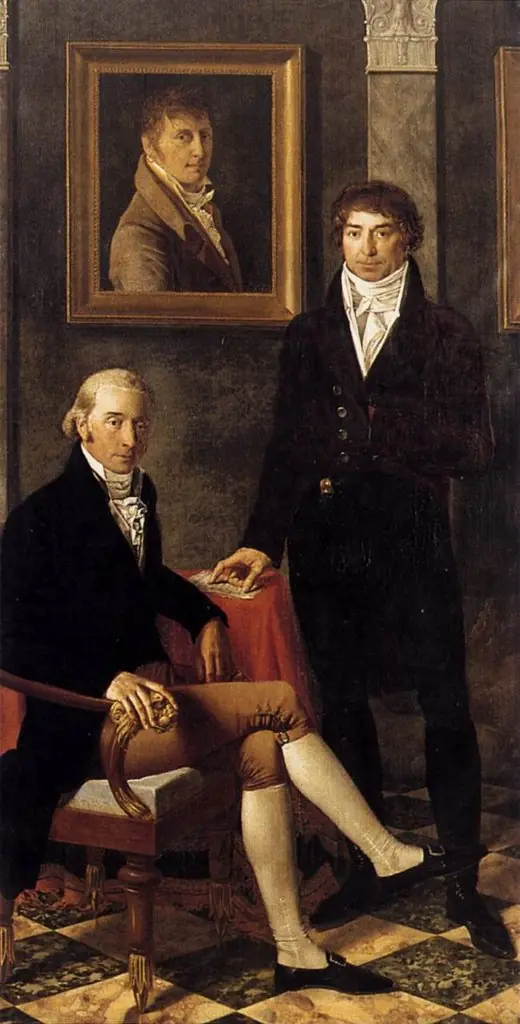 Friendship portrait of the artists François Wynckelman, François van der Donckt and Joseph Odevaere
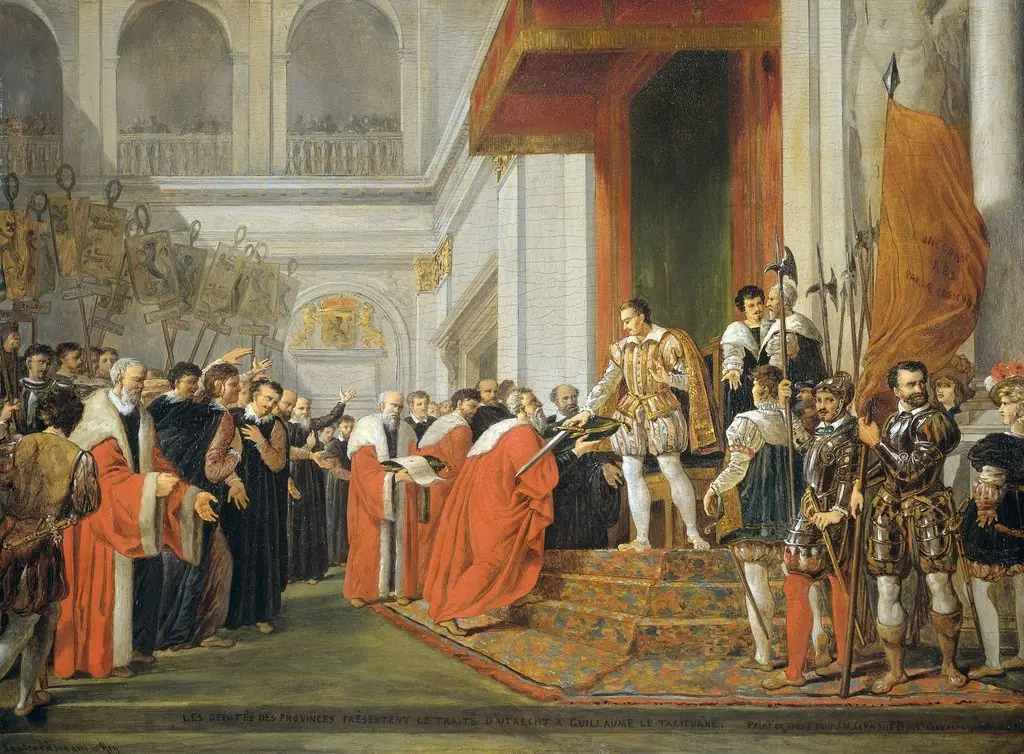 The Union of Utrecht
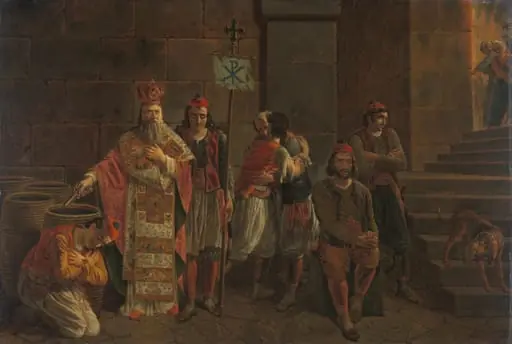 The Last Defenders of Missolonghi, 22 April 1826: an episode from the Greek War of Independence
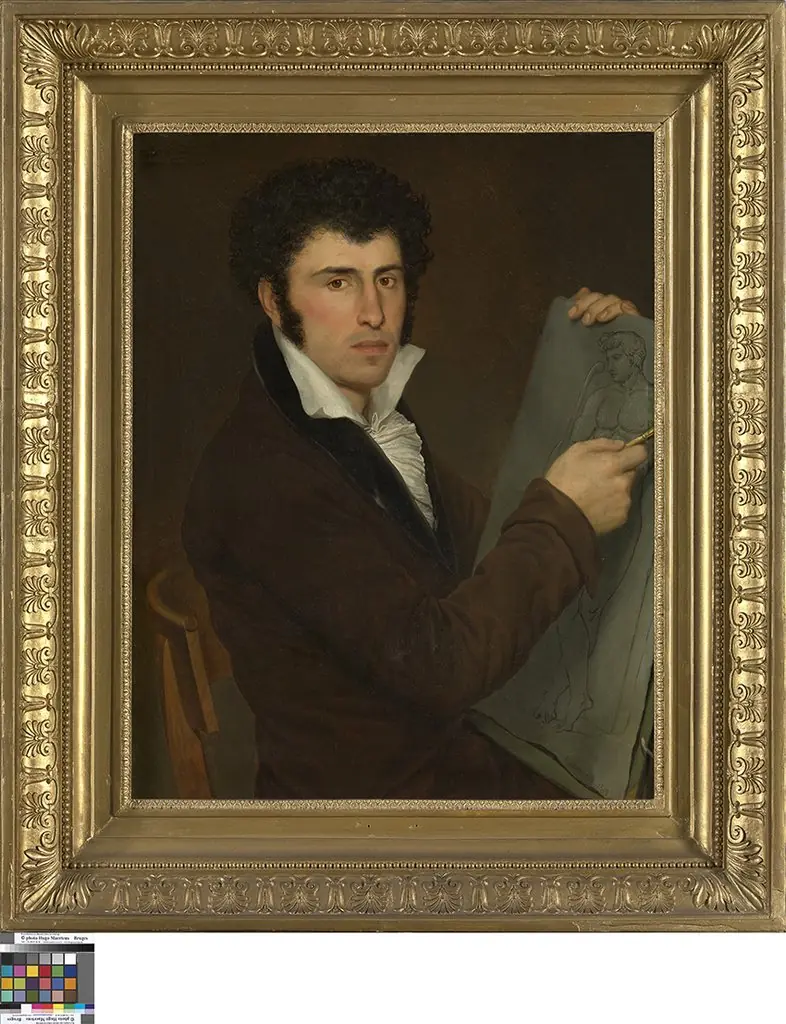 Portret van Filips Jacob Van Houtte
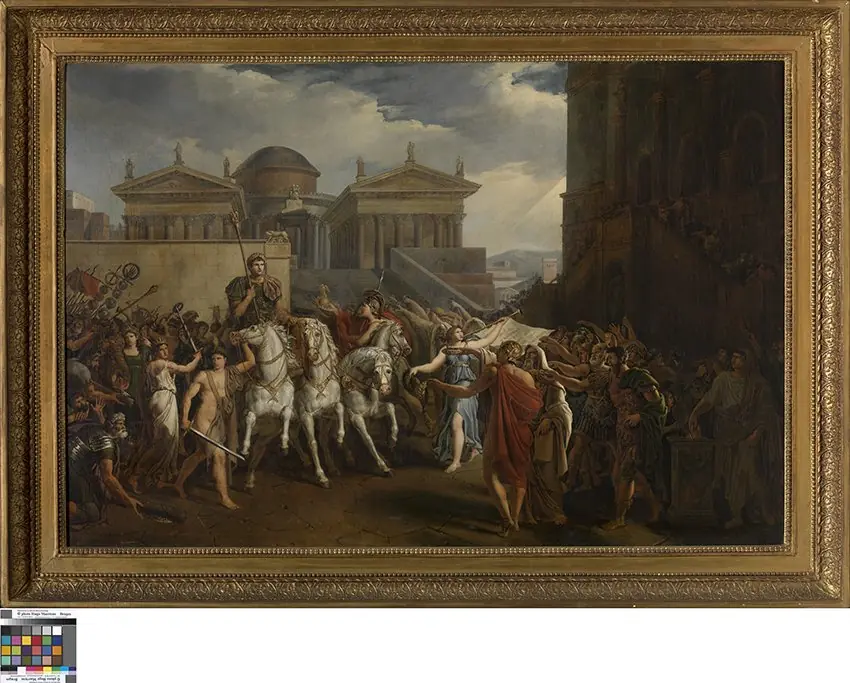 Triomftocht van keizer Trajanus
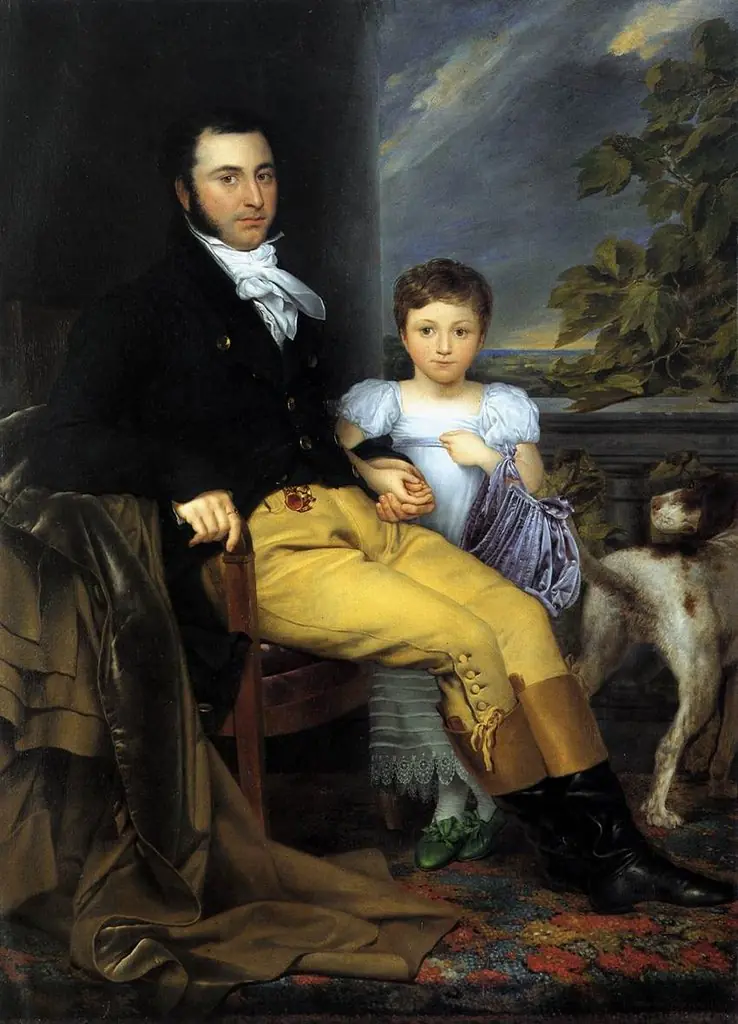 Portret van een voornaam man met zijn dochter en een jachthond
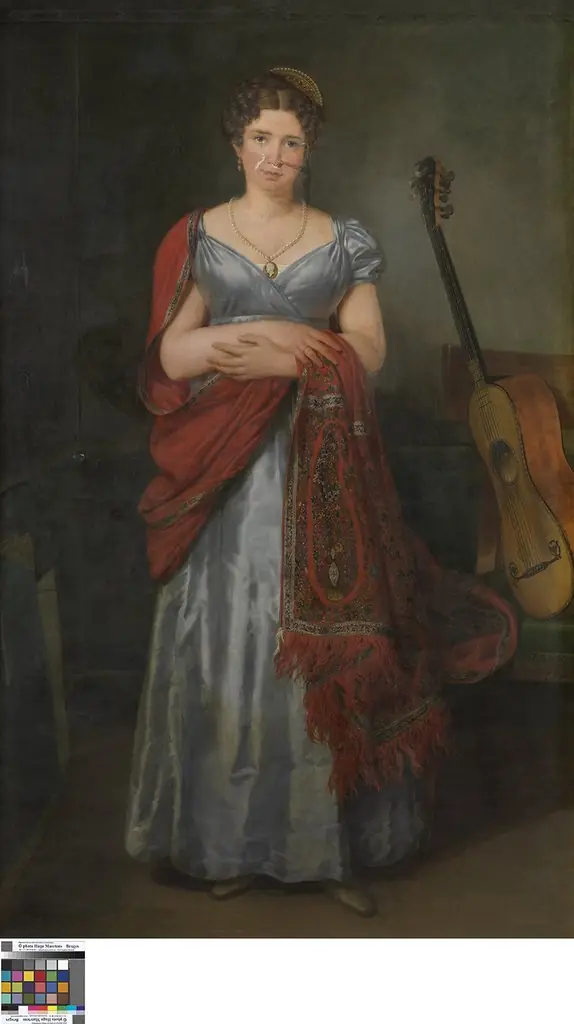 Portret van Sylvie de la Rue
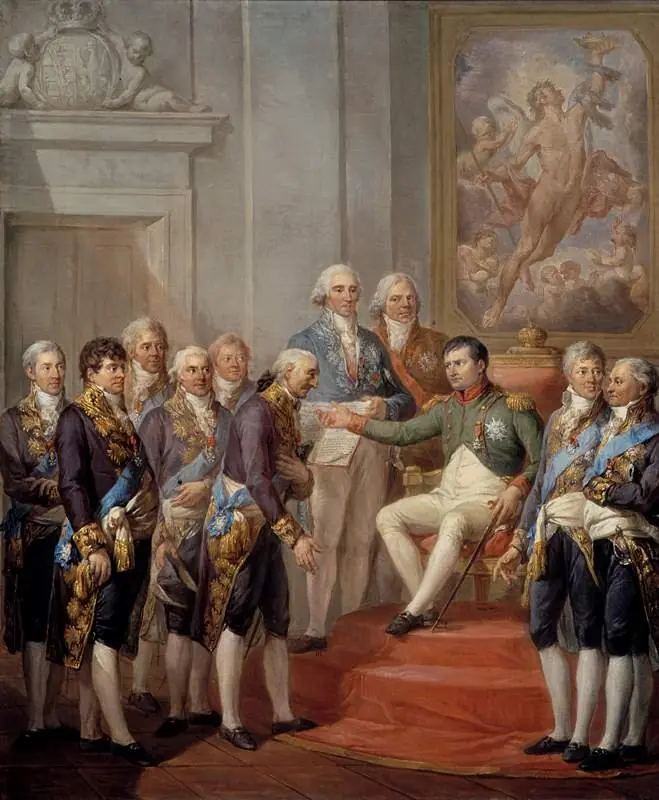 Granting of the Constitution of the Duchy of Warsaw by Napoleon
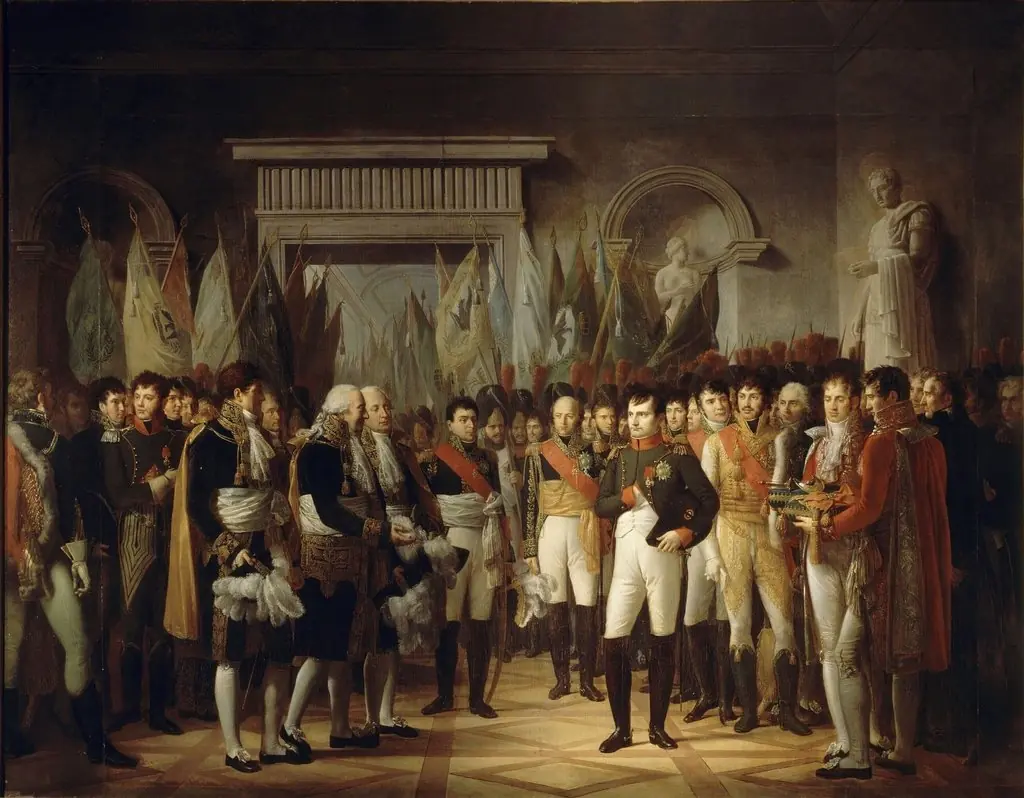 The Emperor receiving the deputies of the Conservative Senate in Berlin at the royal palace, 19 November 1806
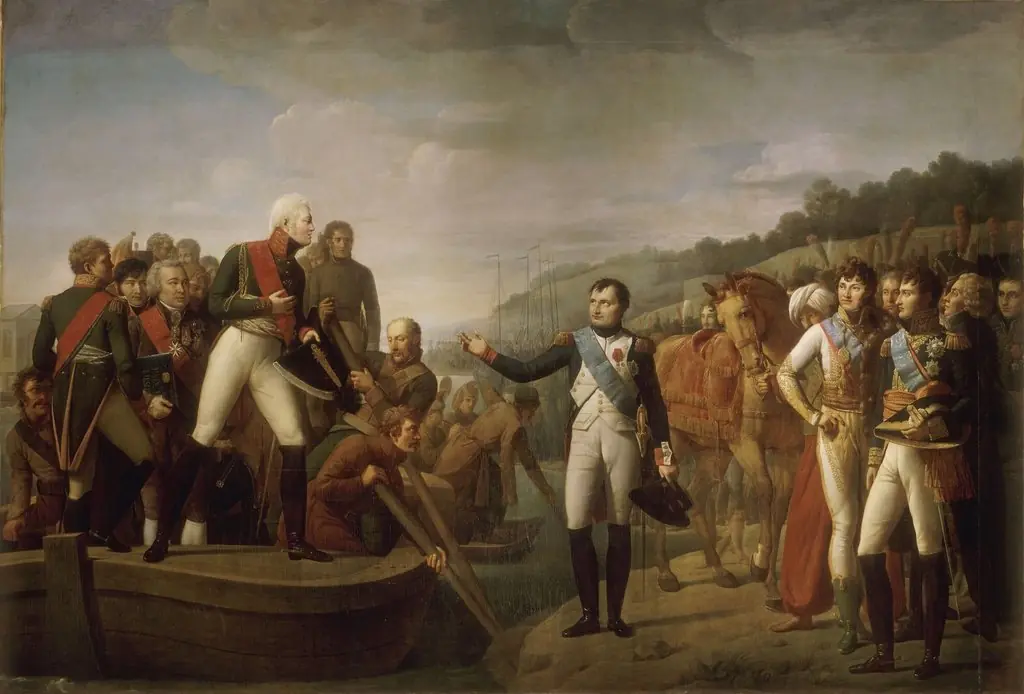 Farewell of Napoleon I and Alexander after the peace of Tilsitt, July 9, 1807
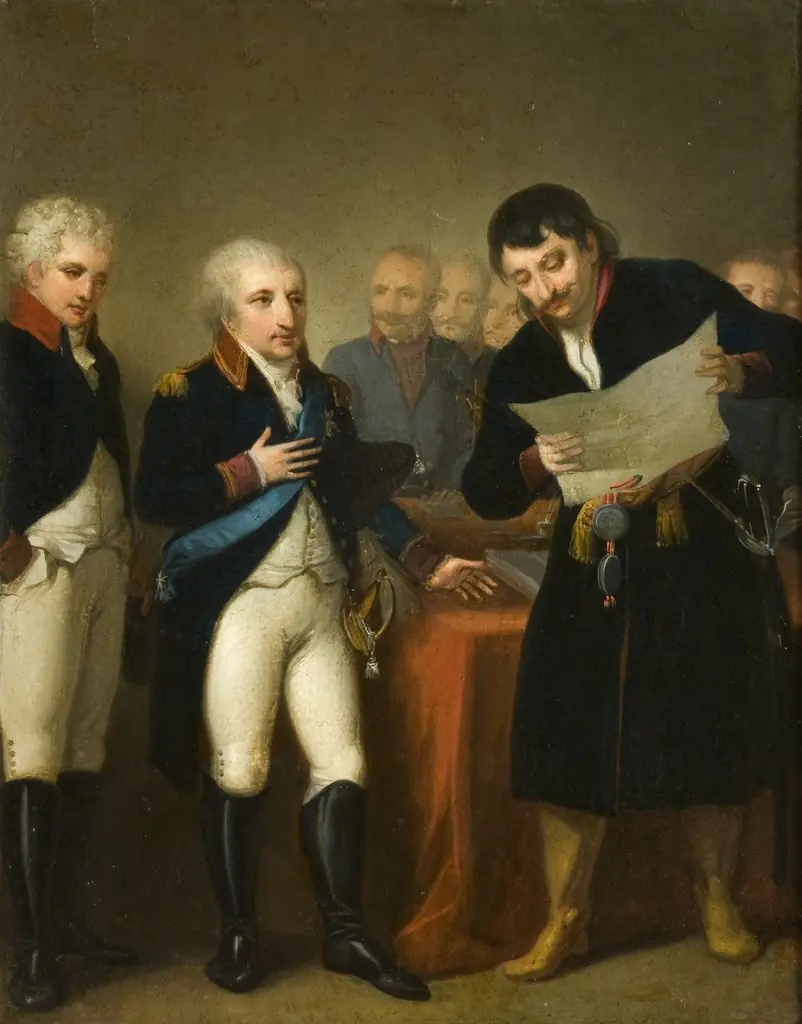 Krakow Surrendered to the Prussians
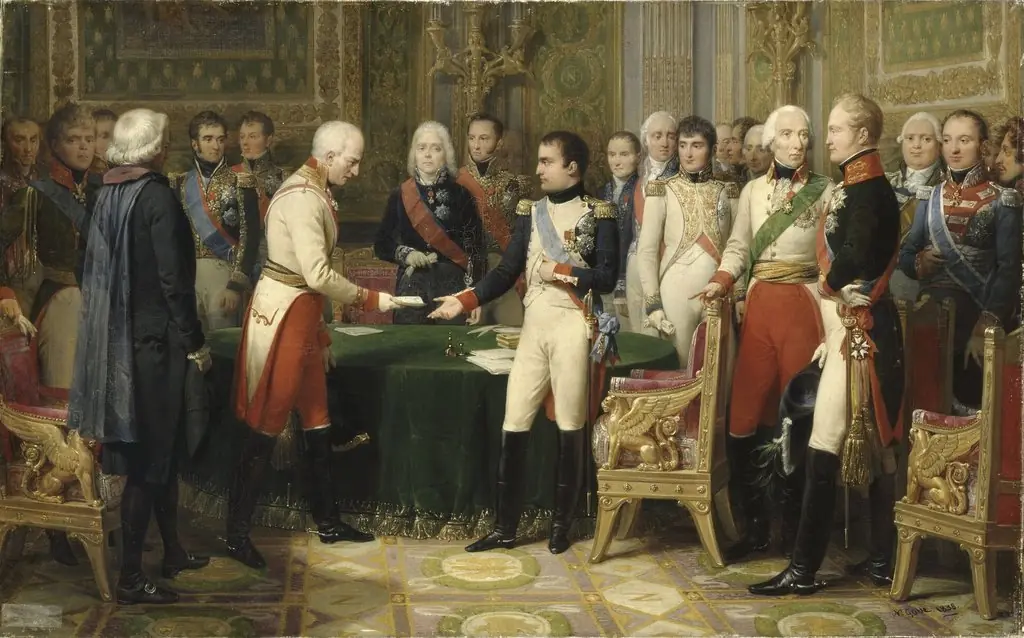 Napoleon I receiving Baron Vincent, the Austrian Ambassador, at Erfurt, 1808
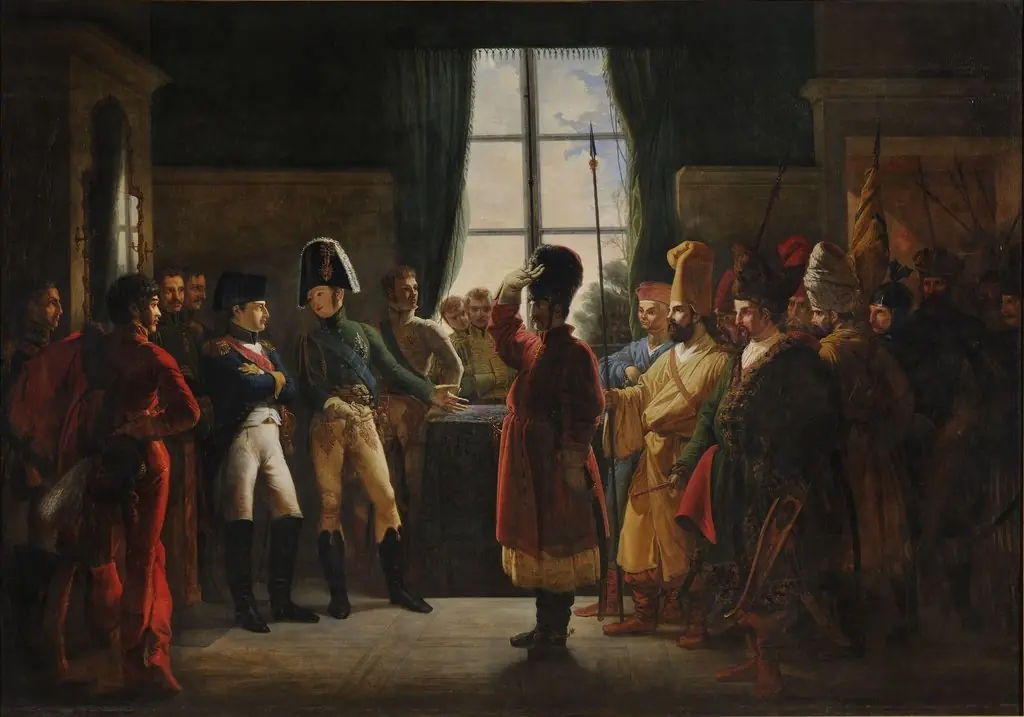 Alexander I presents to Napoleon I the Kalmyks, Cossacks and Baskirs of the Russian army, July 9, 1807
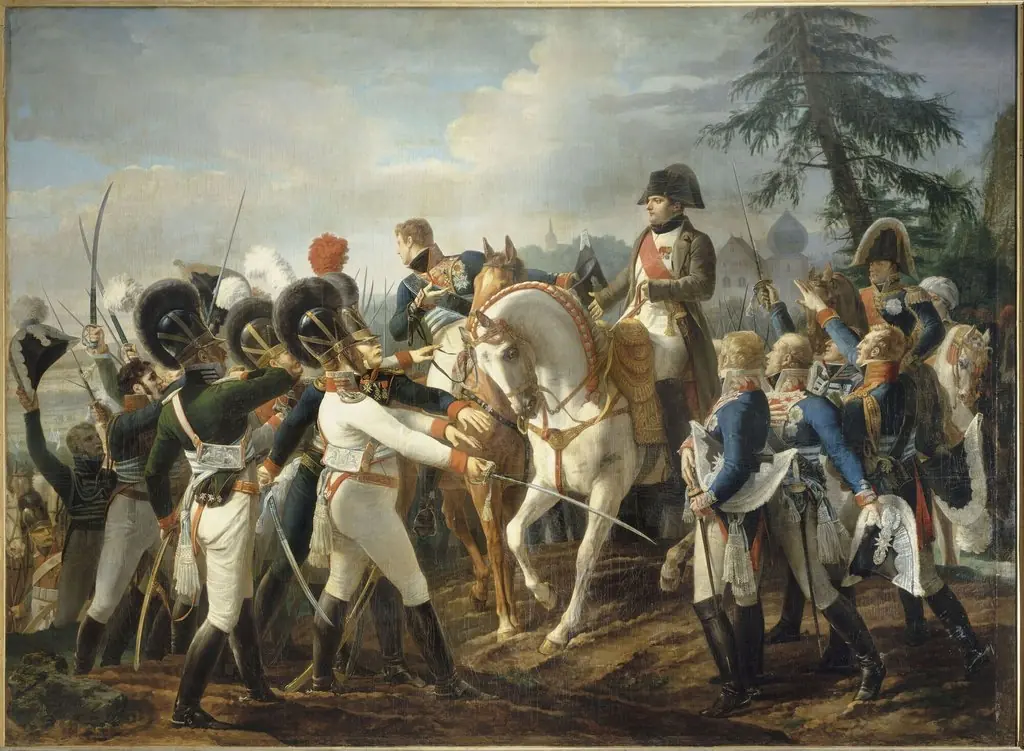 Napoléon harangue les troupes bavaroises et wurtembourgeoises à Abensberg, 20 avril 1809
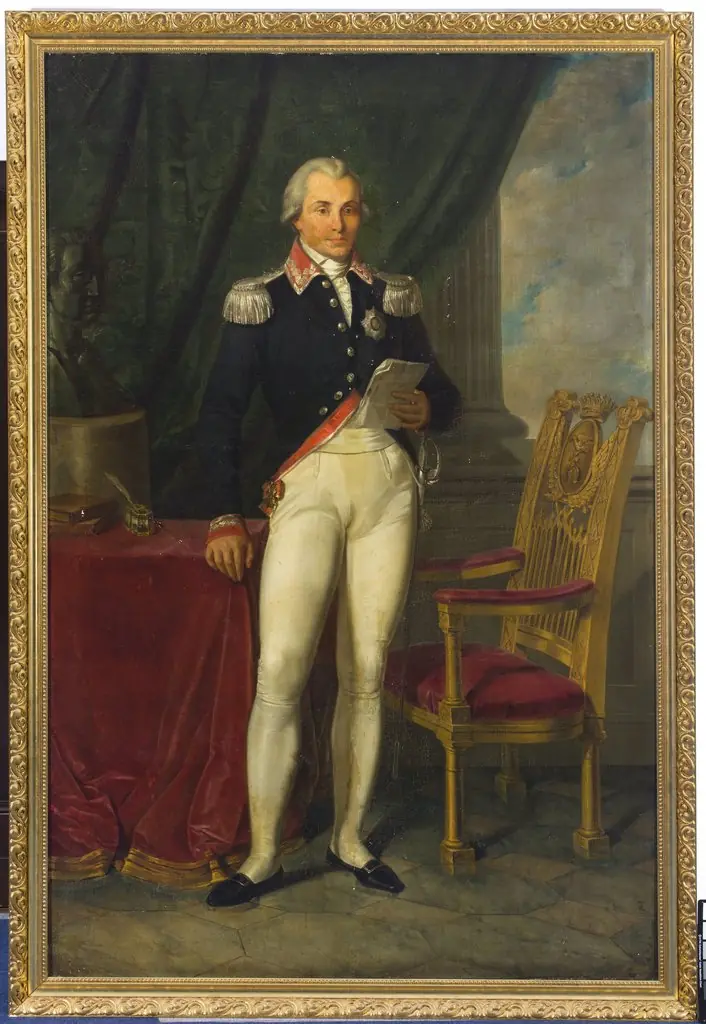 Portrait of Jan Krasiński (1756–1790), starosta of Opinogóra
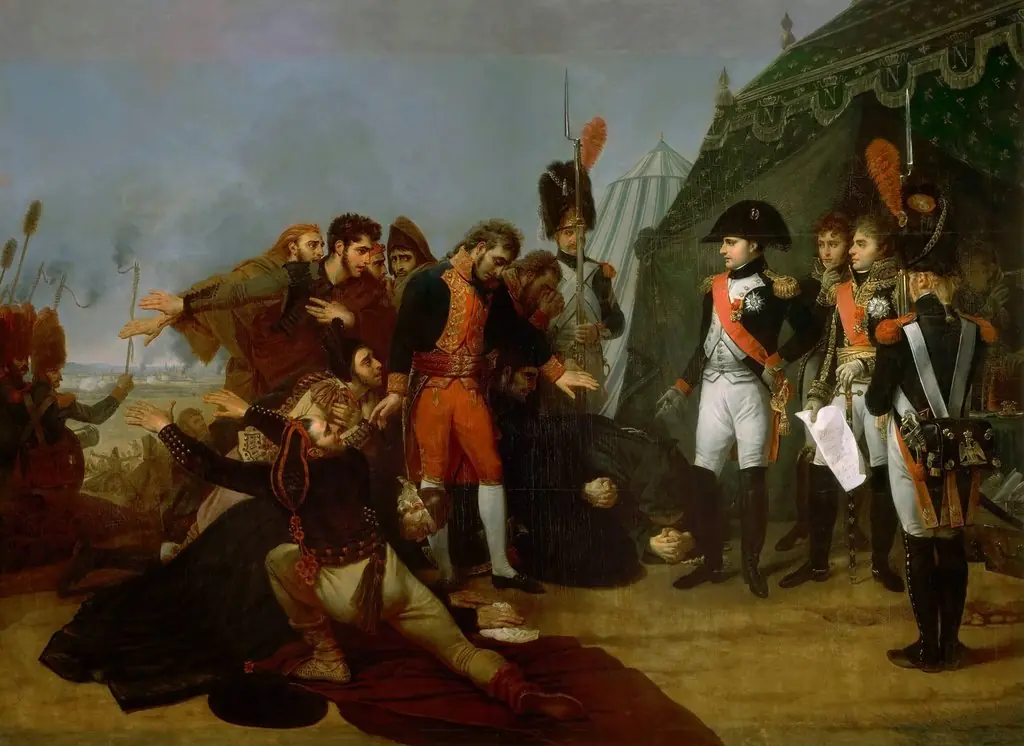 Napoleon accepts the surrender of Madrid, 4 December 1808
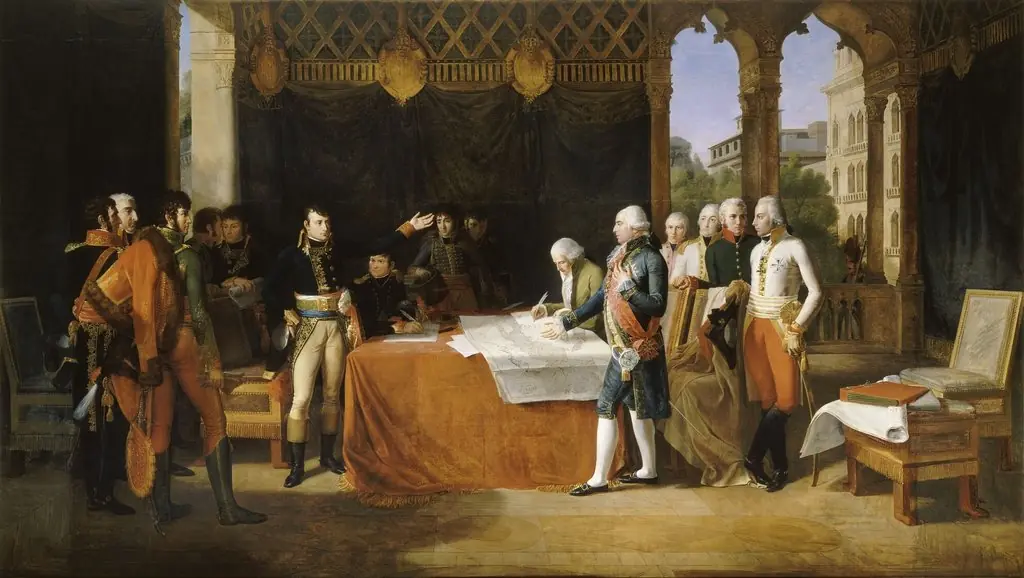 Treaty of Loeben, April 17, 1797
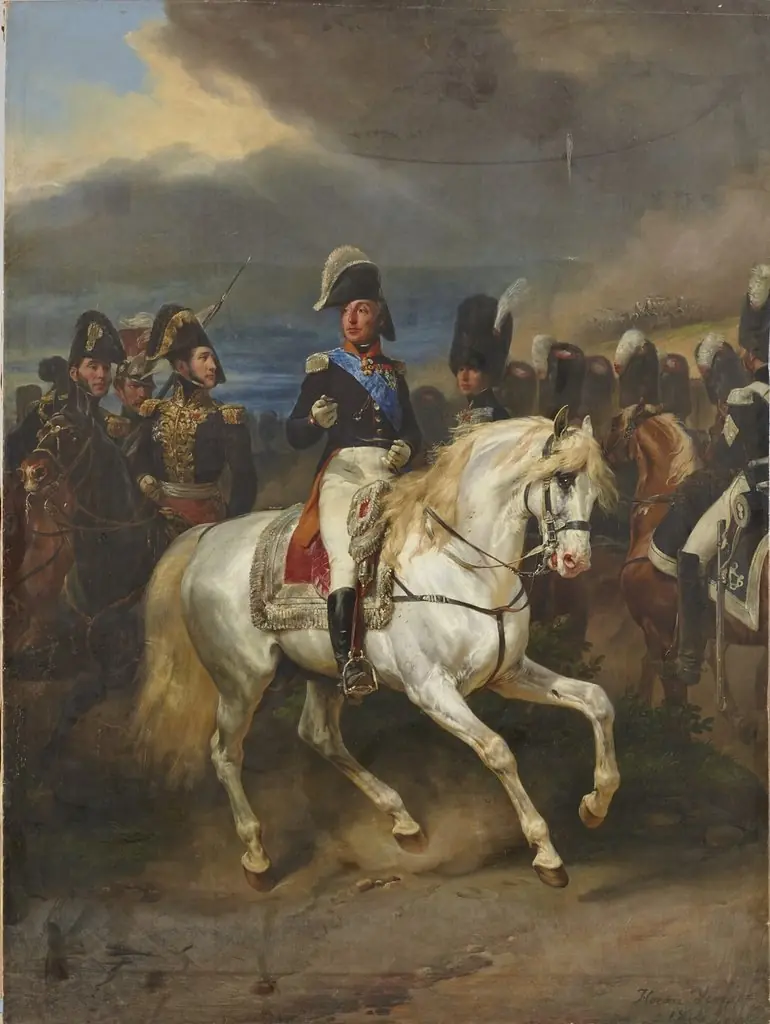 Portrait of the Duke of Angoulême
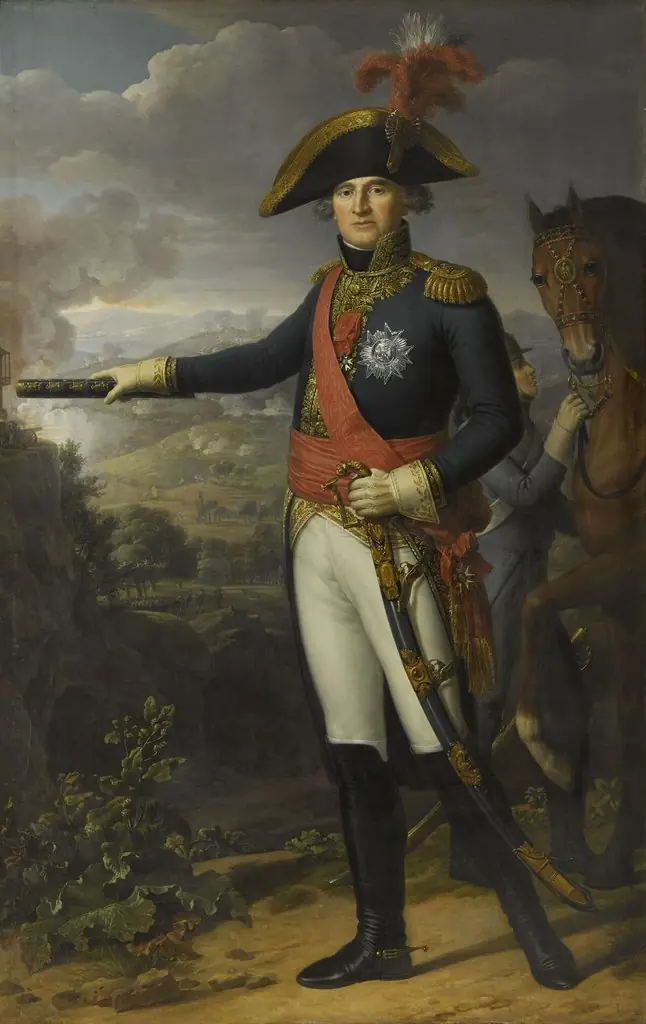 Jean Mathieu Philibert Serurier (1742-1819)