Artwork
Cupid carves the bow
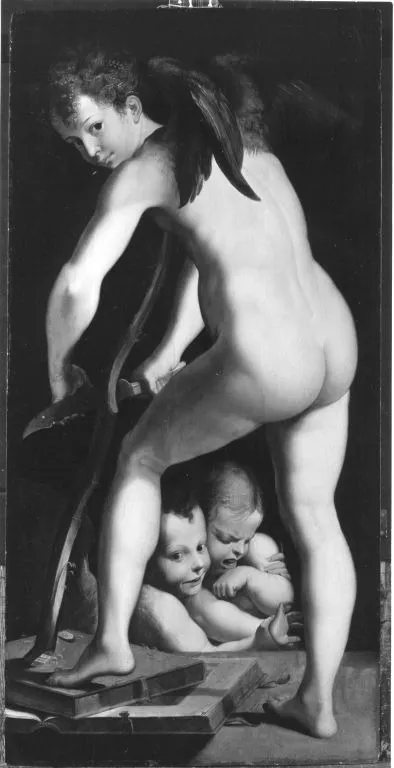
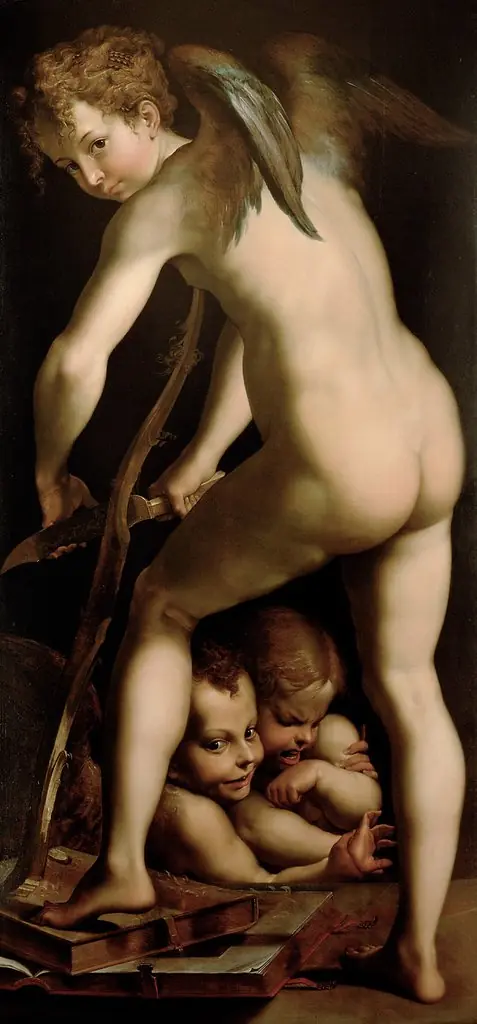
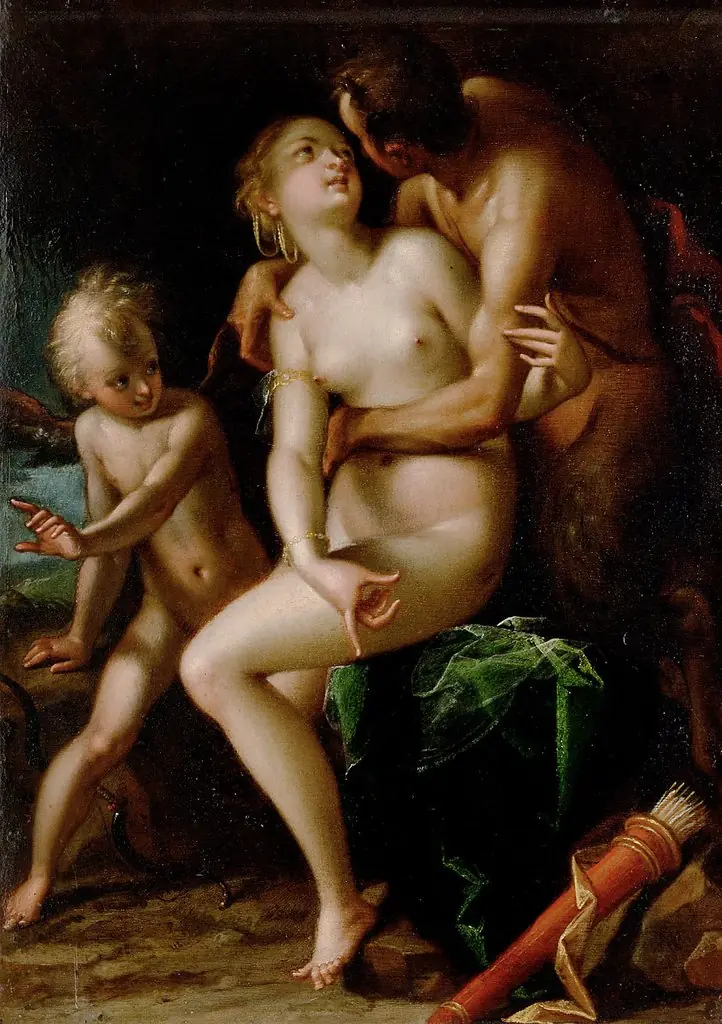
Cupid carves the bow is an unspecified painting by the Mannerist artist Joseph Heintz the Elder. It dates from 1594 and is held in the collection of the Bavarian State Painting Collections.
About this work
Overview
Joseph Heintz the Elder’s 1594 canvas, titled *Cupid Carves the Bow*, presents a mythological scene centered on a winged youth engaged in the craft of bow-making. The work resides in Munich’s Alte Pinakothek, where it exemplifies the artist’s handling of narrative and form.
Subject & Meaning
The central figure is a putto—an infantile Cupid—shown from behind as he carves a bow, his gaze directed downward at the task. Flanking him, two additional putti occupy the background; one looks up toward the artisan, suggesting a quiet observation of the creative act.
Technique & Style
Heintz employs chiaroscuro to model the figures, using contrasts of light and shadow to impart a three‑dimensional presence. The composition balances a restrained palette with careful rendering of anatomy, emphasizing the tactile quality of the carving process.
History & Provenance
Completed in the late sixteenth century, the painting entered the collection of the Alte Pinakothek, one of Germany’s foremost art museums. Its acquisition reflects the institution’s focus on Baroque and Mannerist works from Central Europe.
Context
During the period, depictions of Cupid often served allegorical purposes, symbolizing love’s creative power. Heintz’s choice to portray the deity in a moment of craftsmanship aligns with contemporary interests in merging classical mythology with everyday labor.
Artist & collection

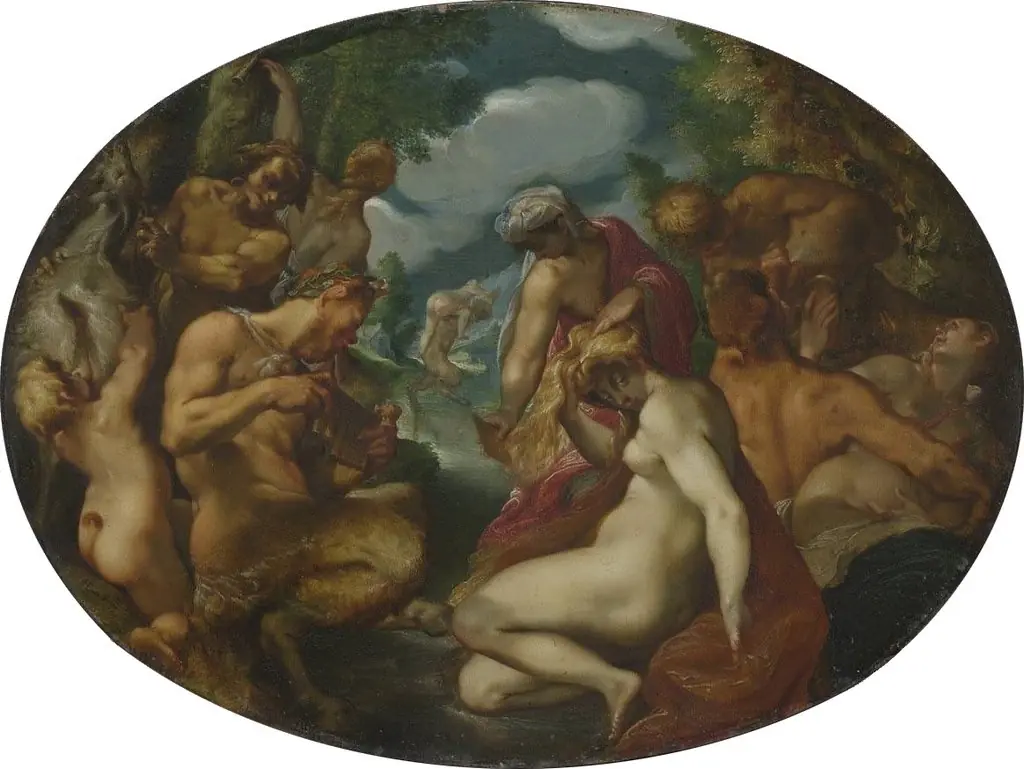 Satyrs and nymphs
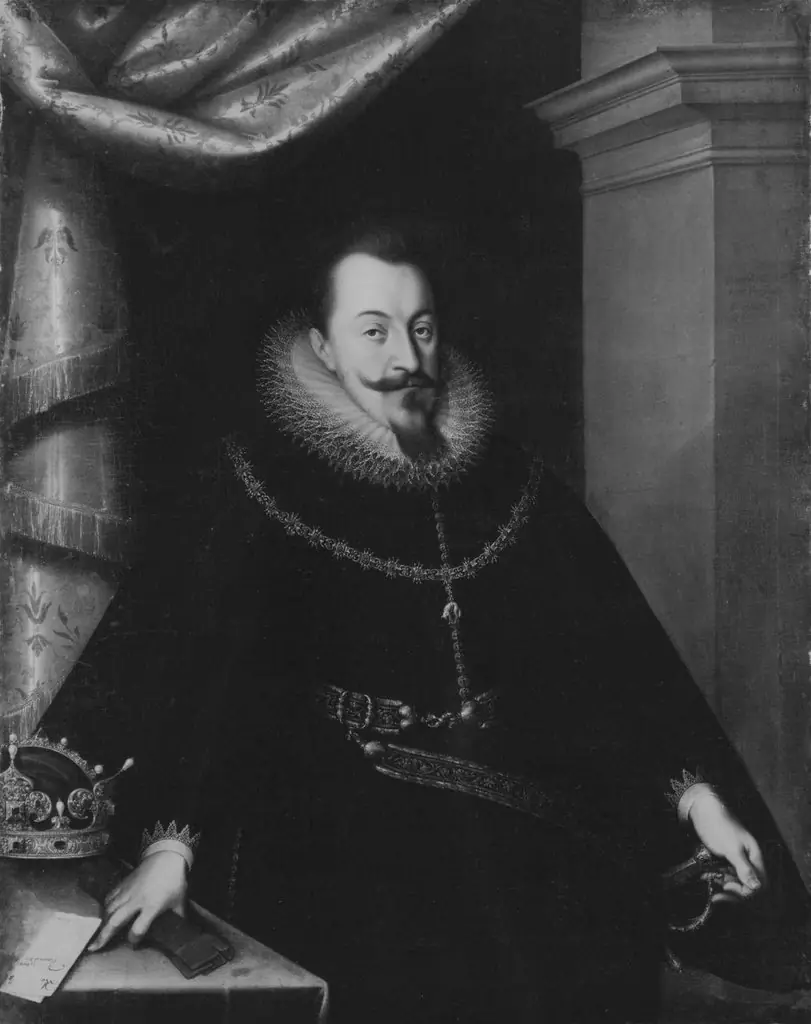 Bildnis des Königs Sigismund III. Vara von Polen und Schweden
 Diana and Actaeon
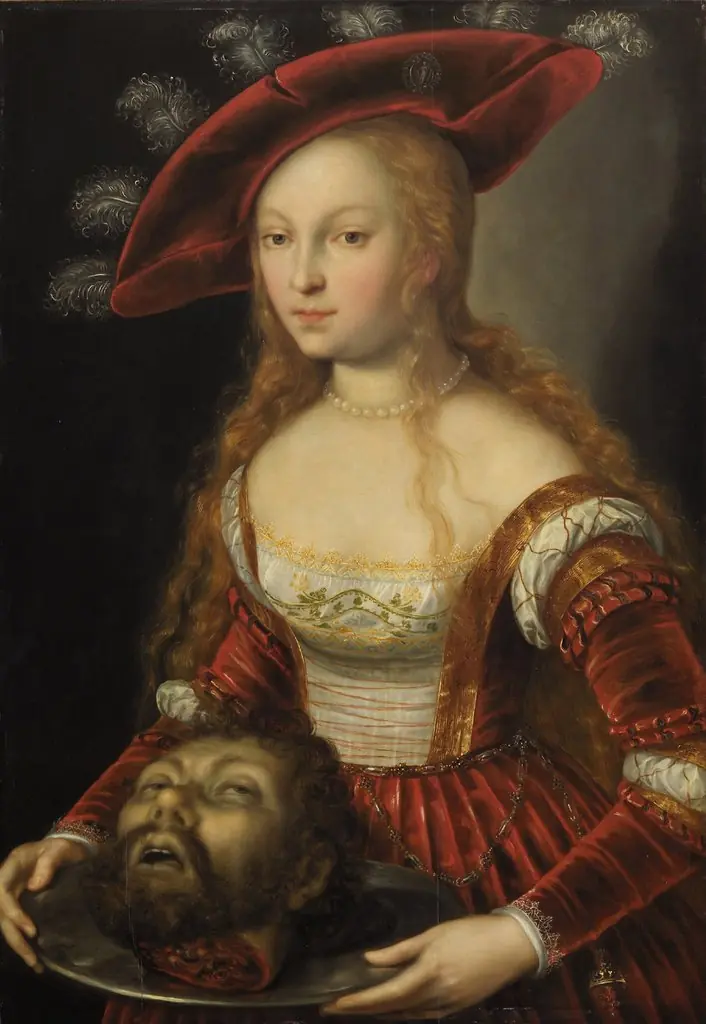 Salome with the head of John the Baptist
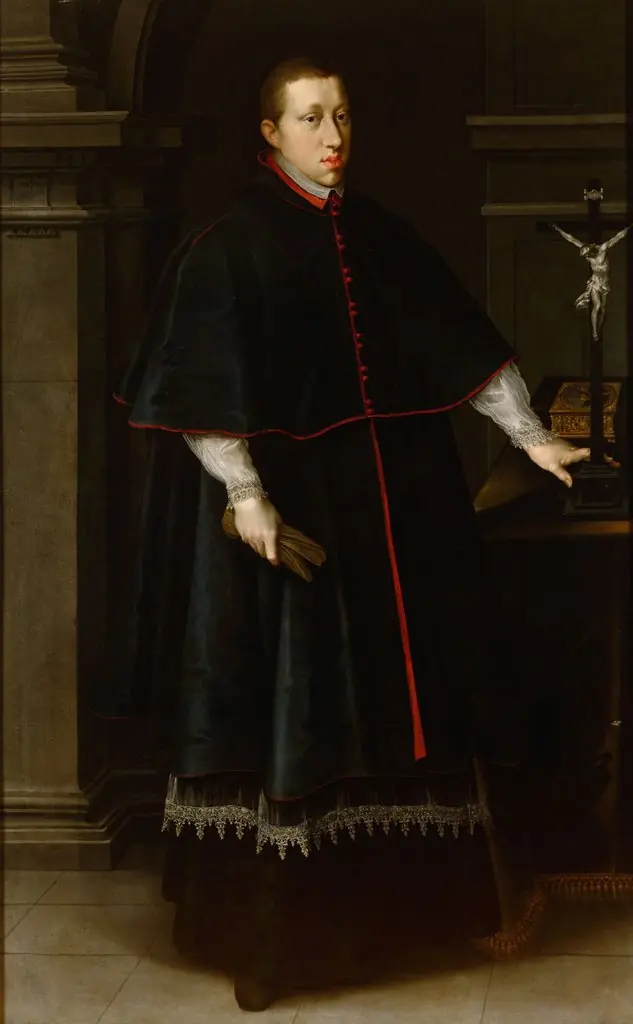 Archduke Leopold V (1586-1632) in the Spiritual Garment
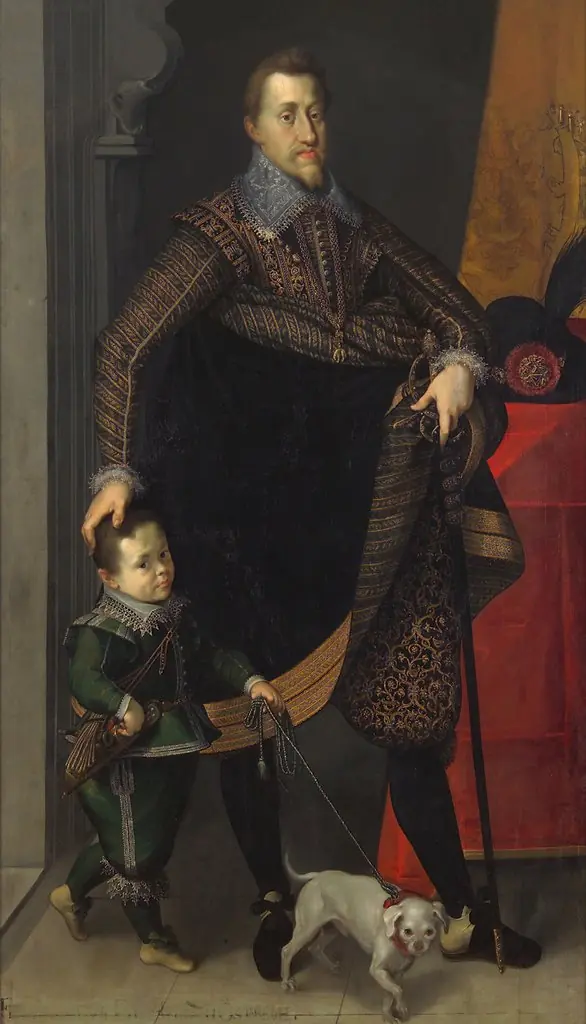 Emperor Ferdinand II (1578-1637) in Full Figure with a Court Dwarf
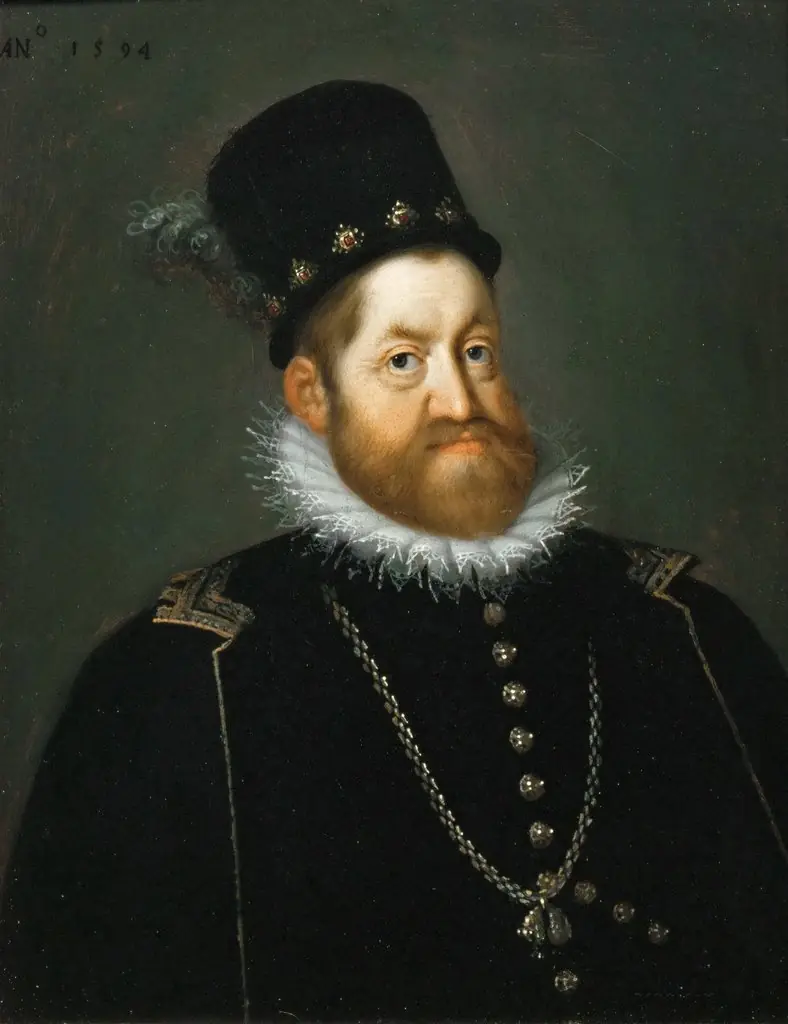 Porträt des Kaisers Rudolf II.
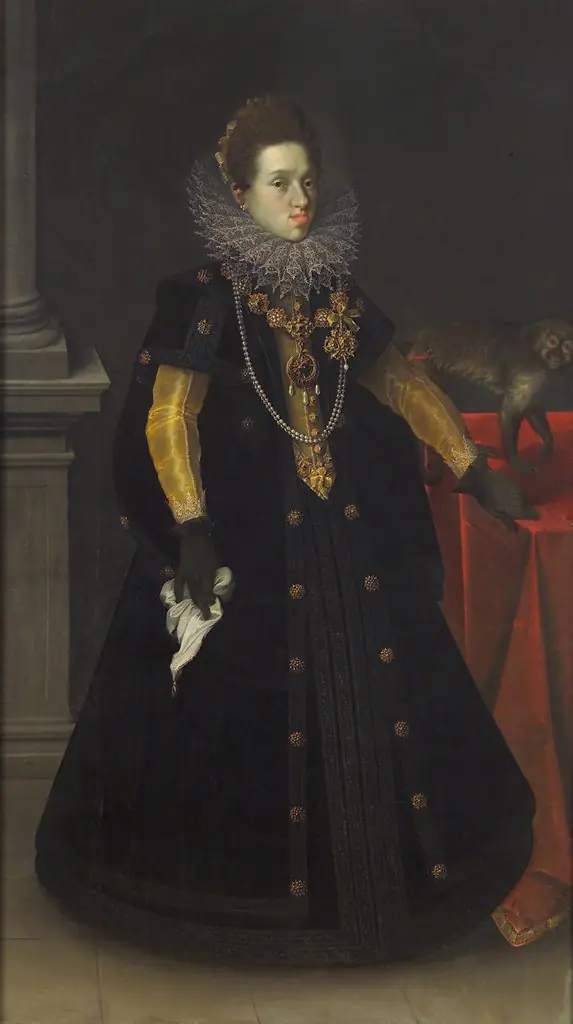 Archduchess Constance (1588-1631), Queen of Poland, with a Monkey